English
 日本語
 한국어
 français
 Deutsch
 Español
 русский
 العربية


May
Learn More
24


Automotive Swiss machining is used to create tiny, intricate, and highly precise parts found in automotive sensors, fuel systems, electrical connectors, fluid control assemblies, and other vehicle components. Swiss-type CNC turning allows close proximity of the workpiece to the cutting process restricting deflection while machining slender pieces, ensuring consistency during the production of parts within several similar orders.
It is imperative to select automotive Swiss machining services based on a myriad of factors that go way beyond the accuracy of machining processes. Automotive manufacturers also have to ponder about the choice of materials, tolerances indicated in the blueprint, surface finish, inspection process(es), batch traceability, and production capacity. From prototype testing to mass production, these requirements guarantee that precise parts meet functional and quality criteria outlined by customers.
This guide explains automotive Swiss machining applications, material options, tolerance considerations, supplier qualification, and production requirements to help engineers and purchasing teams make informed manufacturing decisions.
Automotive Swiss machining is a manufacturing process that implements the use of Swiss CNC lathes in manufacturing precision sized components with more complex geometries. It is in contrast to standard turning where the work piece is fed in from the back which minimizes deflection during machining operations, particularly for long and narrow shapes.
For manufacturers seeking Swiss screw machining for automotive parts, this process is well suited to components that require multiple turned features, precise diameters, fine threads, cross-holes, or secondary milling operations. Based on the configuration of the machines, several features can be made in a single setup, minimizing handling of the parts and helping to keep the features within the strict dimensions.
Automotive Swiss machining is frequently utilized for the manufacturing of sensors components, electrical connector pins, fluid control elements, precision shafts, and other minor elements used in vehicles. Its applicability depends on factors like part shape, component material, requirements related to tolerance, amount of production, and the whole cost of manufacturing.
Swiss-type CNC machining uses synchronized spindle movement, controlled bar feeding, and precision cutting tools to manufacture components from metal stock. Depending on the machine, operations may include:
Turning and facing: Producing precise diameters, shoulders, and end faces.
Drilling and boring: Creating axial holes and internal features.
Threading: Manufacturing external or internal threads where machine configuration permits.
Cross-drilling and milling: Producing side holes, flats, slots, and other complex features.
Parting off: Separating the finished component from the remaining bar stock.
This combination makes precision Swiss turning for automotive components particularly useful when several features must be machined efficiently while maintaining their positional relationships.
The workpiece support known as the guide bushing stabilizes raw material in Swiss machining processes, since it minimises the unsupported part of the material that is subject to machining forces during the manufacturing of slender components.
The advantage is particularly applicable to small shafts, sensor pins, connector contacts, and other automotive components with high length to diameter ratios. Nevertheless, success in achieving accuracy is still dependent on the performance of the material, condition of the tools, set up of the machine, thermal stability as well as methods of inspection. The fact that guide bushing support enables process control does not mean that a specific tolerance is ensured for every component.
For manufacturers evaluating automotive Swiss machining services, the key is matching the machine configuration and machining sequence to the component's critical dimensions, functional features, and production requirements.

The precision of automotive Swiss machining services includes precision turning, secondary machining processes, engineering support, and quality inspection to manufacture automotive components according to specifications and drawings. Manufacturers should consider various aspects when choosing an automotive Swiss machining service provider, not only machine precision but also material availability, processes, inspection features, capability of manufacturing high volumes of parts, etc.
The right automotive CNC Swiss machining supplier can determine geometry, find out critical dimensions, suggest the methods of machining the part, and create a plan of inspection prior to production. This will help lower the risks associated with manufacturing and facilitate the transition from the first sample to mass production.
Automotive Swiss machine shops can combine multiple operations to manufacture small, complex components efficiently. Depending on the equipment and part design, available processes may include:
Precision Swiss turning: Producing small-diameter shafts, pins, connector contacts, and cylindrical features.
CNC milling and cross-drilling: Machining flats, slots, side holes, and other non-turning features.
Threading and tapping: Creating functional threads for fasteners, fittings, and assemblies.
Deburring and surface finishing: Removing machining burrs and applying specified finishes where required.
Inspection and verification: Checking critical dimensions, geometric features, and surface requirements against engineering drawings.
Using complete tool systems for the purpose of precision Swiss turning of automotive parts makes it possible to minimize handling operations and make sure from reliability of coaxiality of machined features. The choice of method depends on design parameters of the part produced, tolerances, and volume of production. Learn more about our Automotive CNC machining capabilities.
Selecting an automotive Swiss machining company requires evaluating its technical and operational capabilities against the specific project. Key considerations include:
Engineering and DFM support: Ability to review 2D drawings and 3D CAD models, identify manufacturing risks, and recommend practical tolerances.
Quality management: Documented inspection procedures, calibrated measuring equipment, and traceability appropriate to customer requirements.
Material and process capability: Experience machining the specified automotive alloys and performing required secondary operations.
Production scalability: A defined process for prototype validation, production ramp-up, and repeat-order consistency.
Documentation and delivery: Clear inspection reports, material certifications, packaging requirements, and agreed lead times.
For automotive programs that necessitate complete supplier qualification, confirm the need for IATF 16949 certification or if PPAP and any other customer-specific quality requirements are required for the project. Be sure to confirm the requirement for every automotive component rather than making assumptions.
Falcon CNC Swiss provides precision CNC machining, in addition to Swiss machining and various other processes. In order to study any potential incoming project, please provide the drawing of the components, specification of the materials, annual/batch number, the required tolerances, and any quality requirements. This information helps to understand which process to select for the manufacturing process.
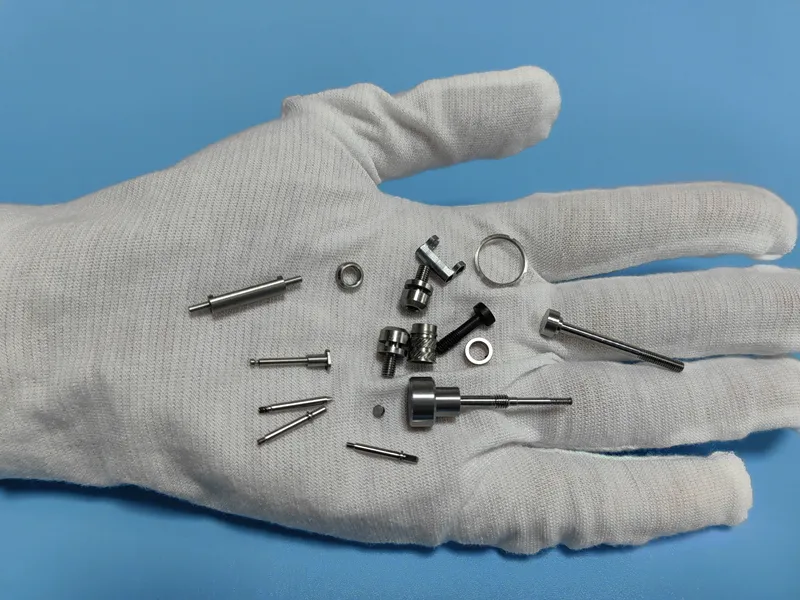
Parts made through Swiss machining are usually small and very precise components that can have cylindrical characteristics, intricate designs, fine threads, or stringent tolerance requirements. Such parts are used in fluid control devices, electronic systems, engine systems, transmission systems, and electric vehicles. Operations that require precise diameters, concentric characteristics, and continuous production of many parts are matched most effectively by Swiss CNC machining.
The most suitable applications depend on part geometry, material, tolerances, and production volume. Common examples include:
Fuel System and Fluid Control Components
Findings in Swiss machining for fuel system parts can be used to manufacture control valves, fittings, pins, injectors and other machined parts used in fluid systems. It is possible that some of these components may contain accurately formed bores, sealing surfaces, grooves or threads.
It is important to maintain dimensional consistency in order for a part to fit perfectly with seals or other components. Selection of the material will depend on the working conditions, which comprise exposure to any fluids, pressure and temperature.
Automotive Sensors and Electrical Connectors
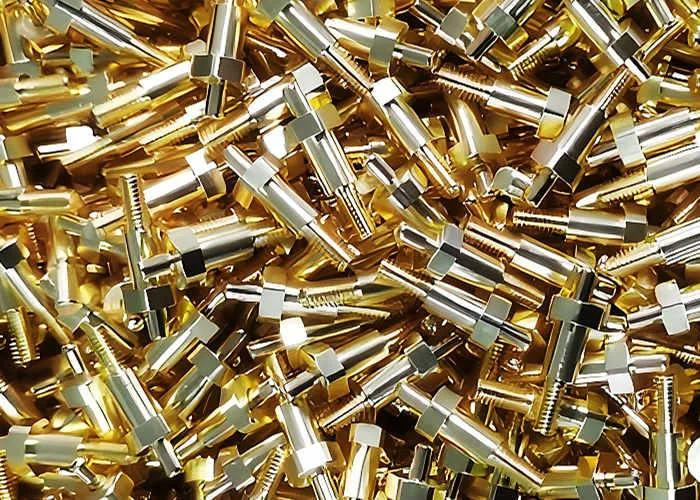
Swiss machining for automotive sensor industry is appropriate for small enclosures, sensor pins, probes, and threaded bodies. Electrical systems may use Swiss-machined terminal contacts, connectors, contact pins, and small conductive elements.
These uses may call for regulated diameters, smooth surface finishes, threaded precision, and constant contact geometry. Depending on performance, strength, and environment, one may select brass, stainless steel, and other relevant alloys associated with conductivity or resistance to corrosion.
Dimensional repeatability, material certification if needed, burr control, and compatibility with assembly will be the major aspects looked for by engineers sourcing Swiss machined components.
Engine, Transmission, and EV Components
Swiss turned parts for engine systems can may include precision shafts, dowel pins, threaded parts, bushings, and other tiny mechanical components. Engine assembly may require machined dowels, spacers, and other cylindrical pieces where accuracy and performance matter.
Electric vehicles are bringing in a number of new applications in small electrical and thermal engineering assemblies. Swiss technology could lead to manufacturing of connector equipment, sensor parts, little rods, and precise fittings depending on the design.
There are some automotive components that cannot be manufactured through Swiss machining. It is advisable to use conventional CNC milling or turning technologies for such components in situations where parts are larger, have complicated prismatic features, or require different economic advantages during manufacturing. In this regard, the process should be defined by assessing element geometry and function.
The decision of whether to use Swiss machining or conventional CNC turning software will rely upon geometry, tolerances, volume and cost. While both processes have the same capability to create precision automotive parts, the different process offers different advantages based upon the shape of components.
Swiss machining is usually suited for small-diameter parts and long shafts and intricate pieces. CNC turning is often employed in the case of larger components, which do not need guidebushing support. Mil-turn machining could be appropriate when the component does extensive turning and complex milling at the same time.
Swiss machining vs. conventional turning for automotive parts is an important consideration when selecting a process for small, high-precision components. Swiss machining is often advantageous when a part has:
A small diameter and long length: Guide-bushing support helps control deflection during machining.
Multiple precision features: Several diameters, grooves, threads, and cross-holes may be produced in a coordinated setup.
Tight dimensional relationships: Integrated operations can reduce handling and help maintain feature alignment.
High production demand: Bar-fed machining can support repeatable production of large quantities.
Complex small-part geometry: Synchronized machining operations can reduce secondary processing for suitable designs.
These benefits make Swiss machining a viable alternative for sensor pins, connector contacts, precision shafts, and small auto parts. Nevertheless, the tolerances and cycle times obtained are determined by the material being used, geometry, configuration of the machine, tooling, and inspection procedure.
If a large workpiece has a big diameter, limited length, or an uncomplicated design that does not need the help of a guide bushing, conventional CNC turning services could be the less expensive option. The tooling requirement of conventional turning could make it suitable for some low-volume jobs.
Mill-turning solutions are preferable when the component requires a significant amount of off-axis milling, angle features, or complex machining when the CNC machine is not able to handle all the tasks.
When deciding when to use Swiss machining for automotive parts, it is essential to examine the entire manufacturing process instead of just machine capabilities. One has to take into account factors like setup costs, utilization of material value and other costs associated with secondary operations, cycle times, and inspection demands together with the production volume. The appropriate process will be the one that fulfills all production and design requirements at reasonable costs.

The material chosen for automotive Swiss machining has an effect on such factors as ease of machining, dimensional stability, and cost of the final part. The decision about which alloy to use ultimately depends on the type of component being manufactured, the environment in which it will operate, how precise the dimensional requirements are, and how many parts must be produced.
| Material | Typical Automotive Applications | Key Advantages | Machining Considerations |
| Stainless steel | Sensor housings, fluid control components, shafts, fittings | Corrosion resistance, strength, durability | Work-hardening and tool wear may require careful cutting parameters |
| Aluminum alloys | Lightweight housings, sensor bodies, precision fittings | Low density, good machinability, favorable strength-to-weight ratio | Alloy selection affects strength, surface finish, and dimensional stability |
| Brass | Connector contacts, terminals, small fittings, threaded components | Good machinability, electrical conductivity, corrosion resistance | Confirm the required alloy, conductivity, and applicable regulatory requirements |
| Alloy steel | Precision shafts, pins, transmission-related components | High strength and wear resistance in suitable grades | Hardness, heat treatment, and tool selection influence cycle time and finishing |
| Carbon steel | Pins, fasteners, and general mechanical components | Cost efficiency and broad material availability | Corrosion protection may be necessary depending on service conditions |
| Copper alloys | Electrical contacts and selected conductive components | Electrical and thermal conductivity | Some grades can be more challenging to machine while maintaining burr control |
Material selection is very important in the field of Swiss machining for automotive components. Rather than focusing on machinability, certain factors must be taken into account. Among such are: exposure to temperature, risk of corrosion, operating temperature, use of fluids, mechanical strains, electrical properties of the materials used as well as any certifications of the materials.
Aluminum Swiss machining for auto parts can be suitable when minimizing weight and maximizing material efficiency are essential aspects. Check Falcon's capabilities in aluminum machining for more on aluminum part production and processes.
Brass and its copper alloys can have desirable properties in terms of conductivity and the ability to be machined. When corrosion resistance, strength, or resistance to wear is an important consideration, stainless steel and alloy steels might be more appropriate for the component. Other considerations in making the decision include tolerances, surface finish, heat treatment, and any subsequent finish work to be done.
When asking for a quotation, be sure to include the precise grade of the material and the relevant standard. This way, the machining supplier can better determine the tooling and processing needs along with the availability of the necessary materials and the cost of manufacturing.

Tolerances in automotive Swiss machining depend on the geometry of the part, material characteristics, configuration of the machine, type of tooling, and method of inspection. It is true that Swiss CNC machining can manufacture highly accurate small-sized components; however, achievable tolerances must be compared to the actual drawings rather than to the process itself.
Important dimensions for automotive parts may consist of shaft diameter, bore diameter, thread features, shoulder locations, concentricity, and runout. All of these features impact the fit during assembling process as well as its sealing quality, alignment, and reliability. Engineers are required to differentiate between critical-to-function definitions and noncritical features for development of production requirements.
Automotive Swiss machining tolerances should be specified according to the component's function and assembly requirements. Small turned parts may require close control of diameters and axial dimensions, while rotating components may also need defined concentricity or runout limits.
Key considerations include:
Dimensional tolerances: Define acceptable limits for critical diameters, lengths, bores, and feature positions.
Concentricity and runout: Evaluate rotational alignment where the component interfaces with bearings, shafts, seals, or other precision assemblies.
Geometric tolerances: Apply relevant GD&T requirements when feature orientation, position, or form affects function.
Thread accuracy: Specify the applicable thread standard, fit class, and inspection method.
Material and geometry: Account for slender features, material behavior, and potential distortion during machining or finishing.
In establishing the tolerances that should apply to auto parts machined in Switzerland, the supplier must take account of the mix of information contained in the drawing, material type, dimensions of the features, and the different methods of measurement. A specific tolerance which is achievable for one feature could be impossible or too costly for use in another.
For further engineering guidance, link this section to Falcon's Swiss machining tolerances guide using the corresponding published page URL.
Surface conditions can influence sealing properties, friction, wear, look, and fit. Therefore, requirement should be set out, when necessary, to achieve a required function in accordance with the surface roughness parameter standards.
The consistency of production is equally important. The component that satisfies the dimensional requirements in a sample must satisfy such conditions afterwards throughout the entire production. Tool wear, heat alterations, material difference and conditions of installation may all contribute to these factors.
To assure repeatability, a manufacturer will use in-line measurements, calibrated control devices, checking of the first item and statistical process control when necessary. The frequency of checks will depend on the importance of the characteristic, how many pieces are produced, its steady state or customer needs.
In the case of automotive industries, our aim is not only to ensure accuracy of measurement but also control dimenisonal protection while satisfying functional requirements and manufacturing expenses.
Quality control in automotive Swiss machining consists of more than just measuring the parts. Manufacturers must develop a process that can be reproduced, inspect essential features, keep proper records, and fulfill the documentation requirements of the customer. Through such controls, the manufacturer can guarantee that all precision automotive parts are manufactured according to the engineering design specifications.
When procuring automotive Swiss machined parts, manufacturers should examine the inspection mechanisms and materials traceability process. Requirements differ depending on customer requests and the application of the product.
In-Process Inspection and Statistical Process Control
Automotive Swiss machining inspection methods should be selected according to part geometry, tolerance requirements, and the consequences of dimensional variation. Common methods include:
Dimensional inspection: Micrometers, calipers, bore gauges, and other calibrated instruments verify critical sizes.
Optical measurement: Optical comparators or vision systems inspect small features and complex profiles.
Geometric inspection: Suitable gauges or coordinate measuring machines (CMMs) verify specified geometric characteristics where applicable.
Surface finish measurement: Profilometers check specified roughness requirements.
In-process monitoring: Scheduled measurements and tool-wear checks help identify process drift before nonconforming parts accumulate.
The implementation of statistical process control can assist in monitoring vital parameters during production runs. Capability studies measure whether a reliable process is able to meet the stated limits. Frequency of sampling and acceptance condition should comply with the control plan and expectations of the customer, instead of following a one-size-fits-all inspection schedule.
The certification for automotive parts for the suppliers of Swiss machining services will depend on the requirements from the customer and the industry in question. Customers may require certificates of material testing, inspection reports, dimensional records, process documentation, or any other record linking the part being delivered to its batch of production.
IATF 16949 represents an automotive quality management standard that may vary from the point of view of the supplier’s role in cooperation with the client. Not every processing of automotive parts requires the supplier to be certified. The client must check the supplier’s certification rather than trusting the certification details provided by the supplier.
Production Part Approval Process (PPAP) can prove that the production procedure can consistently yield components that comply with the requirements specified in the design stage. Depending on the customer’s level of approval and type of the program, the require documentation will differ. The list of required documents may include technical documentation, chart of process flows, control plan, outcome of measurements, and any other documentation deemed important.
Before production commences, the customer’s requirements regarding traceability, document storage, control of changes, handling of nonconformance, and approval should be clearly understood as this helps to avoid delays during parts qualification stage.

High-volume Swiss machining in the automotive sector is applicable for parts that need uniform dimensions, quality, and fast manufacturing on a repeatable basis. Bar-loading Swiss turn mills are used to manufacture many small, precise parts in one process.
Common applications of high-volume Swiss machining are connector contacts, sensor pins, precision shafts, threaded components, and small fluid control parts. The suitability of Swiss machining for various projects mainly concerns the geometry of the part, type of material, cycle times, tooling costs, inspection requirements, and monthly volume of the component.
Automotive manufacturers often need to validate a component before committing to large production volumes. A structured manufacturing process helps identify design and production risks before scaling up.
Prototype machining: Confirm that the proposed process can produce the required geometry and critical features.
First-article inspection: Verify dimensions, material specifications, and other drawing requirements before production approval.
Process optimization: Refine tooling, cutting parameters, cycle time, and material utilization.
Production ramp-up: Establish process controls, inspection frequency, and documentation requirements before increasing output.
Repeat production: Maintain approved process settings and manage changes to materials, tooling, or machining methods.
For organizations searching for contract Swiss machining for automotive manufacturer, early design review will assist making it possible to pinpoint any chances for process integration, cutting down on secondary operations, and enhancing manufacturing efficiency. Both the prototype and production phases need to be compared according to the same key requirements in order to prevent surprises during scaling process. Learn more about our high volume Swiss machining service and high volume CNC production capabilities.
Consistent output requires control over both machining conditions and supporting production processes. Tool wear, material variation, machine temperature, and setup differences can affect critical dimensions over time.
A reliable high-volume production strategy may include:
Standardized setup procedures and documented machining parameters.
Tool-life monitoring and planned tool replacement.
In-process measurement of critical dimensions.
Statistical process control where appropriate.
Batch identification and material traceability.
Final inspection and packaging based on customer specifications.
High volume Swiss machining for automotive parts can be cost-effective when component geometry suits the process and demand supports efficient machine utilization. Nevertheless, simply having a high volume is not sufficient for lower costs. Cost of setup, cycle, risk of scrap, tooling cost, and quality documents all affect prices.
Prior to choosing a supplier, check the production capacity, expected monthly demand, stability of forecast, delivery time, and quality requirements. These criteria will show whether or not the proposed technology can be used for production runs.
There are several factors that contribute to the price of automotive Swiss machining including material used, complications in parts, required tolerances and machining duration as well as secondary operations. If a component needs additional tools or programs because of the presence of fine threading, cross holes and fine geomatric tolerances then the cost is likely to go up.
The total cost for Swiss machining reflects the cost of establishing the process as well as the cost of making the parts afterwards. While there are savings that can be obtained through higher volume of productions there are also many other factors like production cycle time, material usage and efficiency of the process.
To obtain an accurate automotive Swiss machining quote, provide the following information:
Engineering files: A dimensioned 2D drawing and, where available, a 3D CAD model.
Material specification: Exact alloy grade, applicable standard, and certification requirements.
Critical requirements: Tolerances, GD&T, surface finish, threads, and any special inspection criteria.
Order quantities: Prototype quantity, initial order, annual demand, and expected batch sizes.
Secondary operations: Heat treatment, plating, anodizing, deburring, or other specified finishing.
Quality documentation: Inspection reports, traceability, PPAP, or other customer-specific requirements.
Delivery expectations: Target delivery date, recurring schedule, packaging, and shipping destination.
When getting custom pricing for Swiss machining on automotive components, make sure to specify the quantity needed as well as if the prototype and production pricing need to be segregated. Any material limitations or qualification requirements should also be mentioned in the quote.
A comprehensive RFQ provides the manufacturer with information needed to evaluate manufacturability, suggest the correct machining process, and give a more accurate estimate of the production cost and delivery time.
Falcon CNC Swiss provides precision CNC machining solutions for complex components and production requirements. Send us your drawings, material specifications, tolerances, and target quantities for a manufacturing review and quotation.
Contact Falcon CNC Swiss to discuss your automotive component project, from prototype evaluation to repeat production.
Yes, Swiss machining, holds great promise meeting the requirements of the intricate and thin automotive components, which include sensor pins, connector contacts, and fluid-control components. The system of guide-bush support helps in diverting the workpiece from bending, leading to increase in the efficiency of production.
Indeed. Bar-fed Swiss CNC machinery provides enough repeatable and high-rate production if the component design and required milling setup are favorable. It is a must for the buyer to assess machinery capability, processing mechanism, measuring process, raw material accessibility, and shipping efficiency before settling on the vendor.
Assess whether the supplier has a strong background in machining and engineering, material knowledge, inspection procedures, traceability, and ability to meet production requirements. Check whether IATF 16949 certification, PPAP preparation, or customer-specific approvals are needed for the project. Provide drawings, specifications, annual quantity, and tolerances for better assessment of supplier capabilities.