English
 日本語
 한국어
 français
 Deutsch
 Español
 русский
 العربية


Apr
Learn More
17


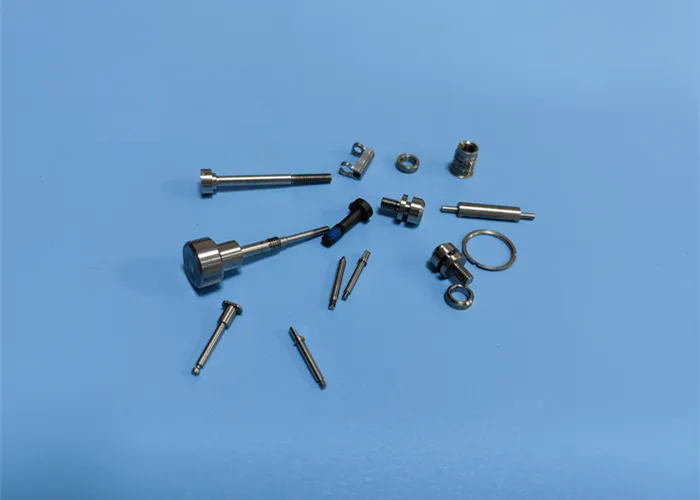
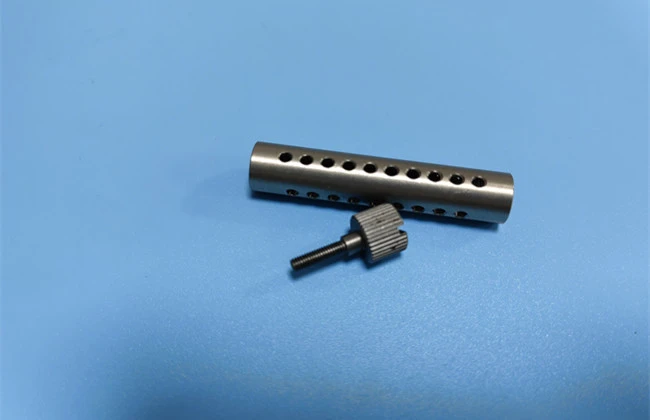
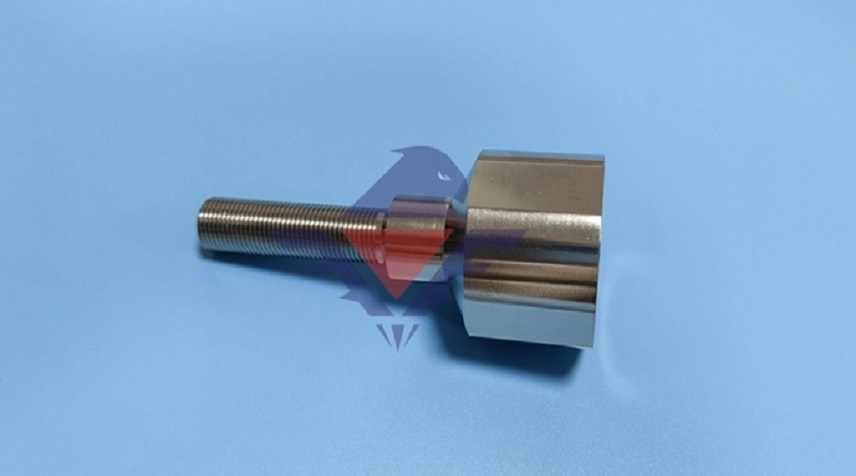
The medical device manufacturing industry often requires parts that feature small sizes and complicated shapes along with maximum reliability in assembling. In the case described, Falcon CNC Swiss produced Swiss machined medical components that involves small assembly where size precision, concentricity, and surface finish are vital.
The project was carried out with the aim of making medical products using precision Swiss machined medical components through the Swiss CNC turning method, where the material used was medical-grade 316 stainless steel and titanium. Small diameters, precision holes, thin wall designs, and important assembly interfaces based on effective process control were some of the features of the device.
The approach adopted in the manufacturing of these small precision medical components was focused on controlling the stability of the machining process, alignment of the features, and repeating the same quality in all production runs. Thanks to the used Swiss CNC techniques, inspection technologies, and manufacturing processes, reliable functioning was achieved for medical precision assemblies and parts.
This study describes the problems encountered in the machining process, the Swiss CNC turning solution, the inspection method, and production results.
This project dealt with the creation of a variety of small precision medical parts for use in a compact medical device that demanded strict controls over dimensional accuracy and part-to-part repeatability. These parts were manufactured by Swiss CNC machining of machinable aluminum alloy, which was used because of its lightweight properties, capability of gaining good machinability, and compliance with the requirements of manufacturing of precision mechanical assemblies.
The components presented profiles of small diameter, precise bores, thin wall sections, and important assembly interfaces that needed stable machining conditions and precise inspection of the whole production process. Swiss machining techniques ensured that the process maintained the same features' relationships while also allowing prototype manufacturing.

| Parameter | Specification |
| Component Type | Precision Medical Assembly Components |
| Manufacturing Process | Swiss CNC Turning |
| Material | Aluminum Alloy 6061-T6 |
| Part Geometry | Small-Diameter Turned Components with Precision Assembly Features |
| Machining Diameter | Ø3–25 mm |
| Overall Part Length | Up to 80 mm |
| Dimensional Tolerance | ±0.01 mm |
| Critical Feature Control | Bore Diameter, Step Features & Assembly Interfaces |
| Surface Finish | Ra 0.8 μm |
| Inspection Methods | CMM, Optical Measurement & Precision Gauges |
| Production Stage | Prototype to Low/Medium Volume Production |
Making small precision medical components means keeping a close watch on the stability of machining, the geometry of parts, and consistency of dimensions. While aluminum alloys make manufacturing easy, still the creation of small parts with thin walls and small features as well as strict assembly conditions raises some difficulties.
The main challenges in this project included:
Maintaining dimensional accuracy: Small features and precision interfaces required consistent control of critical diameters, bore sizes, and mating surfaces throughout production.
Managing thin-wall and lightweight structures: Reduced material thickness increased the risk of deformation during machining and required optimized cutting strategies.
Controlling burrs and edge conditions: Medical assembly components often require clean edges and reliable fit between mating parts, making deburring control an important consideration.
Ensuring repeatable production quality: Prototype-to-production transition required stable process parameters and inspection methods to maintain consistent results.
With respect to tight tolerance medical components which have close tolerances, machining strategies, choices of manufacturing tools, workholding techniques and inspection methods must operate in conjunction with each other. A strong Swiss CNC turning technique is important to help produce miniature Swiss machined components yet fulfil the assembly requirements.

To meet the demands of these small medical assembly parts, Falcon CNC Swiss employed a rigorous medical swiss machining process utilizing Swiss CNC turning technology. The machining process, which was supported by the guide bushing, allowed for greater stability of the workpieces and provided higher accuracy of the characteristics, including critical holes and dimensions, achieved during the assembly.
The manufacturing process included:
Swiss CNC turning setup: Optimized tooling and machining parameters were selected based on the aluminum alloy material and component geometry.
Multi-feature machining: Turning operations were completed within a stable setup to maintain positional accuracy between critical features.
Precision feature control: Bore dimensions, stepped profiles, and assembly interfaces were carefully controlled to ensure consistent part fit.
Prototype-to-production transition: The process was refined during initial production validation to support repeatable manufacturing performance.
Process stability is key for precision Swiss machined medical components. Even the slightest variation can negatively impact functionality and dependability of the finished product. With Swiss CNC turning competence, good machining environment, and then checking for correctness, Swiss turned medical components became available for use in small precision assemblies. Learn more about Falcon's medical CNC machining capabilities.
To ensure dimensional consistency and proper assembly functionality is maintained consistently in the case of precision medical components, an appropriate inspection process has to be adopted during the entire manufacturing process. This task required the introduction of measuring methods to the production process so that all important features during both prototype and production stages could be tested for conformance.
Inspection focused on key characteristics including:
Critical diameter measurements: Verified to maintain proper fit and functional interfaces within the medical assembly.
Bore and feature alignment: Checked to ensure accurate positioning between internal and external features.
Surface quality verification: Confirmed that machined surfaces met application requirements for assembly performance.
Repeatability monitoring: Supported consistent results across production quantities.
The inspection was done using CMM measurement method, Optical measurement systems, and precision gauges to check important dimensions and geometrical requirements. With these systems, process variation was identified early and production performance was stable.
In case of medical components with tight tolerances, machining precision should be supported by proper measuring methods and process control. By ombining Swiss CNC turning capabilities with structured inspection procedures, Falcon CNC Swiss consistently produced Swiss machined medical components suitable for small precision assemblies. Understanding Swiss machining tolerances is also essential when defining critical dimensions, feature requirements, and inspection criteria for small precision assemblies.

Through optimized Swiss CNC turning processes and controlled inspection procedures, Falcon CNC Swiss successfully produced custom Swiss machined medical parts with consistent dimensional accuracy and reliable assembly performance.
The project achieved:
Stable production of small precision components with repeatable quality
Consistent control of critical bores, diameters, and assembly interfaces
Improved manufacturing reliability from prototype validation to production
Verified dimensional performance through CMM and optical inspection
The use of Swiss machining technology, correct material selection, and a proper quality control system made it possible to manufacture Swiss machined medical parts which are reliable for mini precision assembly applications.
While designing precision components for medical devices, engineers should choose to cooperate with a manufacturer having experience in miniature precision machining in order to minimize risks connected with manufacturing processes.
Need small precision medical components for your next project? Falcon CNC Swiss provides custom Swiss machining solutions for prototype and production requirements. Send your drawings, material specifications, and critical requirements for a manufacturing review and quotation.