English
 日本語
 한국어
 français
 Deutsch
 Español
 русский
 العربية


Mar
Learn More
25


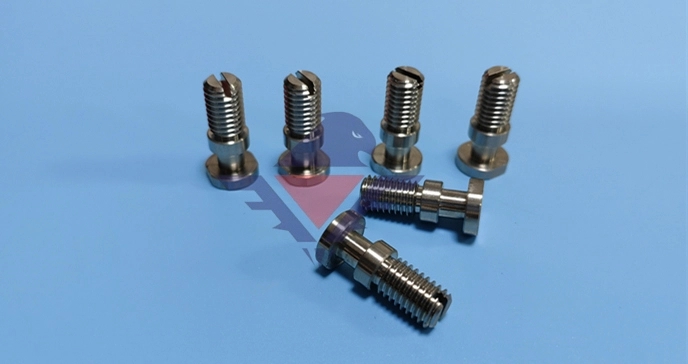
Manufacturing miniature electronic components requires precision accuracy in the production process to achieve high performance levels with regards to electric functionality and long-term reliability. Falcon CNC Swiss provides Swiss machining for connector components, specializing in precision machining of various small metal parts.
By making use of advanced Swiss-type CNC machining, Falcon is able to manufacture custom machined connector parts in accordance with customer drawings and specifications. Our competencies allow for manufacturing small-diameter parts characterized by complex geometries and tight tolerances.
We aid clients in producing micro connector parts, from the prototype stage to actual production runs, using specified materials and surface finishes, and achieving specified dimensional accuracy. With proficiency in precision Swiss machining and small-part production, Falcon offers trustworthy machining solutions to firms sourcing specialized connector parts.
Miniature connector parts are suitable for small electronic systems in which reliability and performance are both really important. These small connector parts need to have very accurate dimensions and quality of surface for proper performance of their function as compared to larger standard connectors.
Key machining challenges for miniature connector components include:
Small Diameter Features
Connector pins, terminals, and contact parts often require machining of small diameters, thin sections, and complex profiles while maintaining dimensional accuracy.
Tight Dimensional Requirements
Critical features such as contact surfaces, mating diameters, shoulders, and concentric areas must be controlled to achieve reliable electrical connections.
Surface Finish and Burr Control
Smooth contact surfaces and clean edges are essential for reducing wear, improving conductivity, and preventing assembly issues.
Production Consistency
Electronic applications often require repeatable quality across large quantities, making process stability an important factor.
The Swiss-style machining process is appropriate for fulfilling these needs due to the fact that the guide bushing provides support to the material right by the cutting zone, thus ensuring the consistency of the production outcomes of long, slender, and preciseion Swiss machining parts and components.

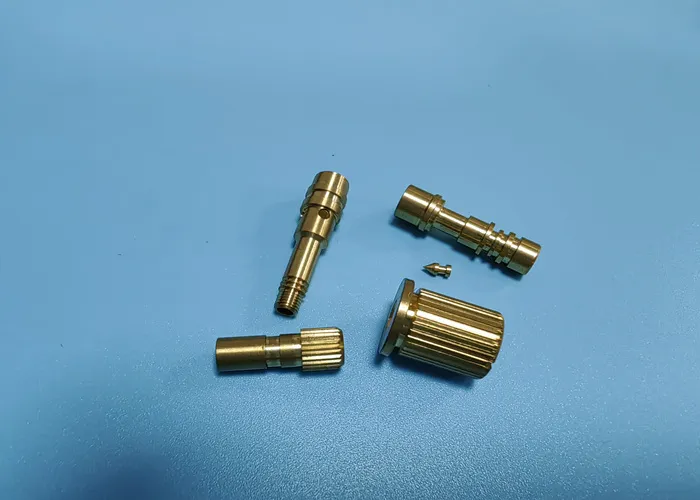
Swiss machining can accommodate numerous tiny metal parts including electrical and electronic connectors. This method ensures precision manufacturing of small elements like pins, contacts, terminals, sleeves, etc., depending on the customer's requirements regarding part geometry, material and dimensions.
| Connector Component | Typical Features | Manufacturing Considerations |
| Connector Pins | Small diameters, stepped profiles, precision tips | Diameter control, concentricity, burr removal |
| Electrical Contacts | Contact surfaces, narrow grooves, complex profiles | Surface quality, material selection, plating compatibility |
| Connector Terminals | Shoulders, grooves, threaded or formed features | Dimensional consistency, assembly fit |
| Connector Sockets | Small bores, internal features, thin walls | Bore accuracy, wall thickness, internal surface finish |
| Precision Sleeves | Concentric inner and outer diameters | Roundness, concentricity, dimensional stability |
| Custom Contact Components | Drawing-specific profiles and features | Manufacturability, tolerance control, repeatability |
If you need components that are small and detailed, one option to consider is Swiss machine technology. This technology ensures high levels of precision and consistency when creating these parts. It is particularly useful for creating rotating parts that feature several different diameters and grooves.
At Falcon CNC Swiss, you can order custom components based on your specific designs, materials, and processes that are necessary for your specific applications. Check out our precision connector pins to find information about our services in the area of electronic and automotive applications.

Swiss machining is a comprehensive method that includes precision material feeding, close-to-cutting edge support, and synchronization between operations for making tiny connector components. This process is excellent for products like tiny power wires, electrical contacts, terminals, and a range of turned components with varying diameters or complex shapes.
The manufacturing process typically involves the following steps:
1. Material Selection and Bar Feeding
Metal bar stock is selected according to conductivity, strength, corrosion resistance, and the component drawing. A bar feeder supplies material to the Swiss-type CNC lathe.
2. Guide Bushing Support
The guide bushing supports the bar close to the cutting zone, helping reduce deflection when machining long, small-diameter components.
3. Precision Turning and Feature Machining
CNC-controlled tools produce diameters, shoulders, grooves, chamfers, and other specified features. Depending on the machine configuration, additional tools can perform drilling, threading, and cross-hole machining.
4. Parting and Secondary Operations
Components are separated from the bar and may undergo deburring, cleaning, heat treatment, or surface finishing as required by the drawing.
5. Dimensional Inspection
Critical dimensions and features are inspected using appropriate measurement equipment and methods. Inspection frequency depends on the drawing, risk level, and production requirements.
Manufacturers who want to use Swiss machining to make small parts should be prepared for process planning. Factors like the tools used and how the part is held together affect the quality of the dimensions produced and the efficiency of production. Falcon CNC Swiss offers Swiss machining services that allow clients to take their product from prototype to production.
Material selection influences the components' electrical conductivity, mechanical strength, resistance to corrosion, and machinability of miniature connectors. The required properties of the machined connector materials depend on the environment of use, contacts, mating cycles, and manufacturing parameters.
| Material | Key Properties | Typical Applications |
| Brass | Good machinability, conductivity, and cost efficiency | Connector pins, terminals, and threaded contacts |
| Copper Alloys | High electrical conductivity with alloy-dependent strength and wear resistance | Electrical contacts, conductive terminals, and contact pins |
| Beryllium Copper | High strength, fatigue resistance, and good conductivity | Spring contacts and components requiring repeated deflection |
| Stainless Steel | Corrosion resistance and mechanical strength | Connector sleeves, housings, and structural contact components |
| Aluminum | Low density and good machinability | Lightweight connector bodies and selected housings |
Brass vs. copper for machined connector contacts: Brass is frequently appealing for high-volume precision turning due to its performance and machinability. Copper and specialized copper alloys may be needed if electrical conductivity or spring performance is prioritized more. The decision ultimately depends on the alloy grade, contact resistance, mechanics, and cost of production of the component.

The appropriate surface finishes for machined electrical connectors depend on the contact interface and operating environment.
Gold plating: Commonly selected for contact interfaces requiring corrosion resistance and stable electrical performance.
Nickel plating: Often used as a barrier layer or for improved surface durability, depending on the plating system.
Tin plating: Used in some electrical contact applications where solderability and compatibility with the mating interface are important.
As-machined finish: May be suitable for non-contact features when permitted by the drawing.
While assessing plating options for machined connector contacts it is essential to identify the plating material, thickness, coverage areas, underplating specifications, and any masking limitations. Knowing all of this helps in avoiding mating dimension brakes and provides the overall requirements for the final component to be satisfied.
Connector products must conform with dimension and geometry specifications in order to assure correct assembly, consistent connection, and reliable connection. The tolerances required for connector components need to obtain depend on the design of contacts, type of mating surface, materials used, and any functional requirements. It should also be noted that not every item must have smaller tolerances than needed; any important parameters must be indicated on the engineering drawing.
Key Tolerance and Design Considerations
Critical Diameters and Fits: Pin diameters, socket bores, and mating surfaces must match the specified fit requirements to prevent loose connections or excessive insertion force.
Concentricity and Runout: Coaxial features may require controlled runout to maintain alignment during assembly and mating.
Surface Finish: Contact surfaces may need specific roughness requirements to support reliable contact and reduce wear.
Burr Control and Edge Quality: Burrs on small pins, slots, and contact edges can interfere with assembly or damage mating components. Deburring requirements should be defined clearly.
Wall Thickness and Small Features: Thin-walled sockets, narrow grooves, and small internal bores require careful tool selection and process planning.
Plating Allowance: Plating thickness can affect final dimensions and mating fits, so finished-part requirements should be considered during machining.
Guidelines for the design of the connector component that can be effectively machined using CNC machining procedures include functional dimension specification, critical-to-quality aspects identification, and unnecessary tolerance avoidance. Whenever possible, practical groove widths, chamfers, and tool-access clearances should be implemented corresponding to the technology to be used in manufacturing the component.
Before the start of production, the engineering team must analyze the drawing, material grade, surface treatment, inspection method, and required volume.
Selection of proper manufacturing technology for miniaturized connectors must take into account such factors as part geometry, material, tolerance level, production volume, and total costs. Although there are several techniques that may be employed for production of electrical connectors, Swiss machining for small parts is popular for tiny components when complexity of shapes, high accuracy, and stability of quality of production are required.
| Manufacturing Method | Advantages | Best Applications |
| Swiss Machining | Excellent for small diameters, complex profiles, and high repeatability | Precision connector pins, terminals, contacts, sleeves |
| Conventional CNC Turning | Flexible for larger turned components and simpler geometries | Standard connector components with less complex features |
| Stamping | Efficient for high-volume thin sheet parts | Flat electrical contacts and simple terminal designs |
| Cold Heading | High production efficiency for formed metal parts | Standardized pins and fastener-like connector components |
Swiss machining, in contrast to normal CNC turning, provides added assistance for thin parts with its guide bushing system, which helps minimize deflection during machining. Because of this, it has proven useful in micro connector machining as it can handle small diameters, large lengths, and multiple precise features.
When it comes to high quantities of standardized parts, stamping or cold heading could be a better choice. On the other hand, when a manufacturer has specific design requirements, prototype production needs, or low-volume production of a part with complex geometry, Swiss machining has the upper hand in terms of flexibility since it does not involve any custom tooling.
Thus, engineers can choose the right production method according to the part specifications to achieve the optimal balance between precision, production efficiency, and cost for custom connector parts.

In various industries that need dependable electrical connections, compact designs and continuous performance, miniature connector parts are utilized. It is essential that a capable custom connector components manufacturer knows not only about machining but also the particular needs of the applications for which components will be utilized.
Falcon CNC Swiss offers custom connector machining services for customers in need of precise metallic components like connector pins, electrical contacts, terminals, sleeves, and other maces.
Common applications include:
Electronic Test Equipment – Precision contact pins and terminals used in testing devices require stable dimensions and repeatable performance.
Medical Electronics – Compact electronic assemblies often require corrosion-resistant and accurately machined connector components.
Automotive Electronics – Sensor connectors and electrical systems require durable components with consistent fit and reliability.
Industrial Controls and Automation – Custom connector parts support compact control systems and demanding operating environments.
Consumer Electronics – Miniature components require efficient manufacturing solutions for space-limited designs.
Swiss machining can enhance the entire production process for engineers creating a new product. The prototypes at the initial stages help in verification of designs, and stable processes result in stable quality when products are started to be produced in bulk.
Falcon partners with clients who require prototype connector parts machining and production run connector component machining, providing services in accordance with plans, materials, tolerances, and quantity specifications.
For a specific example of small electronic component manufacturing, refer to our case study on precision pogo pin components showing Swiss manufacturing capabilities of small precision connector-related components.
Looking for a reliable supplier for miniature connector parts? Falcon CNC Swiss provides custom machining solutions for precision connector pins, electrical contacts, terminals, and other small metal components.
Request a custom connector machining quote by submitting your 2D drawing or 3D CAD file, material requirements, tolerances, surface finish, and estimated order quantity. Whether you need prototype parts or a production run, our team can review your specifications and assess manufacturability.
Contact Falcon CNC Swiss to discuss your custom machined connector parts.
Swiss manufacturing is capable of creating accurate connector pins, electrical contacts, terminals, sleeves, sockets, as well as small scale metal parts. It has advantages when working on items with minor dimensions, multiple precision properties, and stepped or grooved shapes.
Typical materials are brass, copper alloys, beryllium copper, and stainless steel. Brass is characterized by excellent machinability, while copper alloys could be chosen for their good electrical conductance or their spring performance. The correct material will depend on the electrical, mechanical, and environmental properties required for the item.
Feasible tolerances are determined by the geometry, dimensions, materials, machine setup, and inspection options. The essential characteristics, such as diameters of contacts, sockets, and concentric areas, should be marked in the design, making it possible to assess the feasibility of production prior to starting it.
Indeed. Swiss machining can assist with the development of prototypes, as well as low-volume orders and repeat production runs. It can be especially effective with small, complex turned parts. For very large-scale, standard flat contacts and formed parts, stamping or cold heading may be cheaper, depending on design and tooling requirements.