English
 日本語
 한국어
 français
 Deutsch
 Español
 русский
 العربية

Apr
Learn More
25

Swiss machining is an efficient method for producing small and complicated titanium elements with high precision used in medical devices. In this study, the company Falcon CNC Swiss undertook several projects to manufacture titanium Swiss machined components with strict standards of size and features and applied the Swiss type machining method to control the stability of workpieces and ensure high repeatability.
The project needs to ensure precise control of titanium machining parameters, tools used, chip removal, and dimensional control operations. In this way, the material selected, design of components, required tolerance, and production needs have been taken into consideration for process planning.
The research explains the way titanium Swiss machining was applied in a medical component project which includes selection of the material, machining method, tolerance control, inspection, and performance of production.

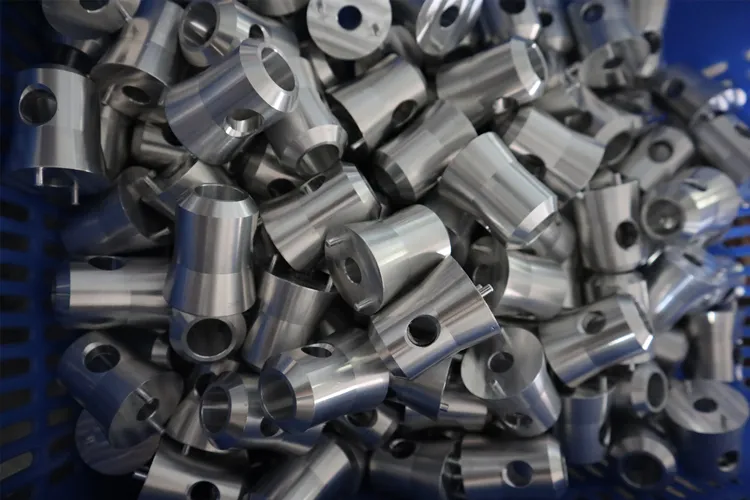
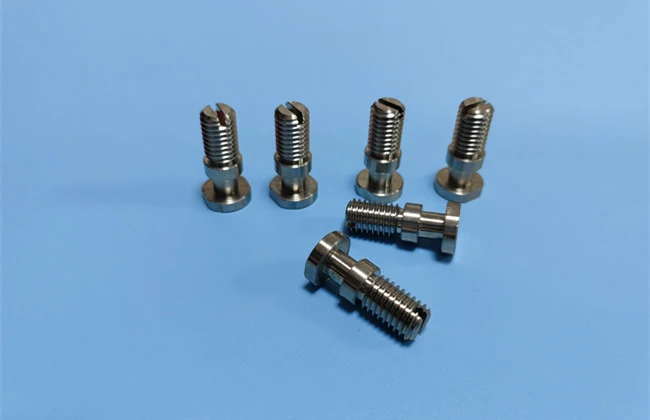
This project involved the production of precision titanium components for medical devices and surgical applications. When executing projects that necessitate small-diameter precision turned parts, which need accurate dimensions, it is best to use Swiss machining services, which guarantee consistent support of the workpieces and high repeatability during work. These worked parts had the dial pieces that were narrow and comprised of different diameters, grooves, threads, long and deep holes and rounded ends.
The component was produced from Grade 5 titanium (Ti-6Al-4V) through the use of Swiss CNC turning. With small and slender features, tight dimensional tolerances, and stringent requirements for the surfaced finish, stability in the manufacturing process was essential. The Swiss machining technology allowed precise positioning and enabled carrying out different processes like drilling, turning, grooving, and threading.
| Parameter | Specification |
| Component Type | Precision titanium medical component |
| Material | Grade 5 Titanium (Ti-6Al-4V) |
| Manufacturing Process | Swiss CNC turning |
| Part Geometry | Slender shaft with stepped diameters, grooves, threads and bores |
| Critical Diameter Tolerance | ±0.005 mm |
| Concentricity / Runout | ≤0.005 mm TIR |
| Surface Finish | Ra 0.8 μm or better on specified surfaces |
| Critical Features | Precision diameters, threads, grooves, deep bores and radiused ends |
| Inspection | Dimensional gauges and optical measurement; CMM where required |
| Application | Medical device / surgical component |
The biggest challenges faced in this project included maintaining dimensional consistency on thin shaft components, managing tool wear during Ti-6Al-4V processing, and ensuring the necessary concentricity between vital features. Threads, grooves, and deep bores additionally needed careful forging and at times chip-control methods be employed to avoid dimensional variation and defects.
Grade 5 titanium (Ti-6Al-4V) has been chosen for its application in this medical device due to its excellent combination of high strength, low weight, and resistance to corrosion, coupled with proven record of success in relation to its reliability and safety in the medical industry. In relation to commercially pure titanium, Ti-6Al-4V has higher mechanical strength while being highly durable, which makes it an appropriate choice for precision components.
From the manufacturing perspective, it should be noted that machining of Ti-6Al-4V involves precise control of the process, owing to the low thermal conductivity of the material, coupled with its high strength, which can lead to higher cutting temperatures and quicker tool wear when being processed. For various parts, cut tooling must be chosen after careful consideration of the mechanical properties of the material.
In the course of carrying out this project, the assessment of materials took place together with the analysis of component geometry and machining specifications. Additionally, engineers may select different types of materials as indicated in the Swiss machining materials reference guide. It should be noted that the consistency that Swiss machining provides helps maintain precise positioning and repeatable performance of machining when manufacturing precise diameters, grooves, threads, and other critical features of titanium components.
One of the main aspects of using Grade 5 titanium along with the titanium Swiss machining technology is the fact that it allows producing components with the appropriate dimensional and functional indices required for medical purposes.

The manufacturing of small and intricate titanium components requires the utilization of a machining technique which ensures stability in dimensions, repeatability, and appropriate alignment of characteristic features. For this project, CNC Swiss machining for titanium components was selected because the Swiss-type machining process provides strong support for slender parts while allowing multiple precision operations to be completed in a controlled setup.
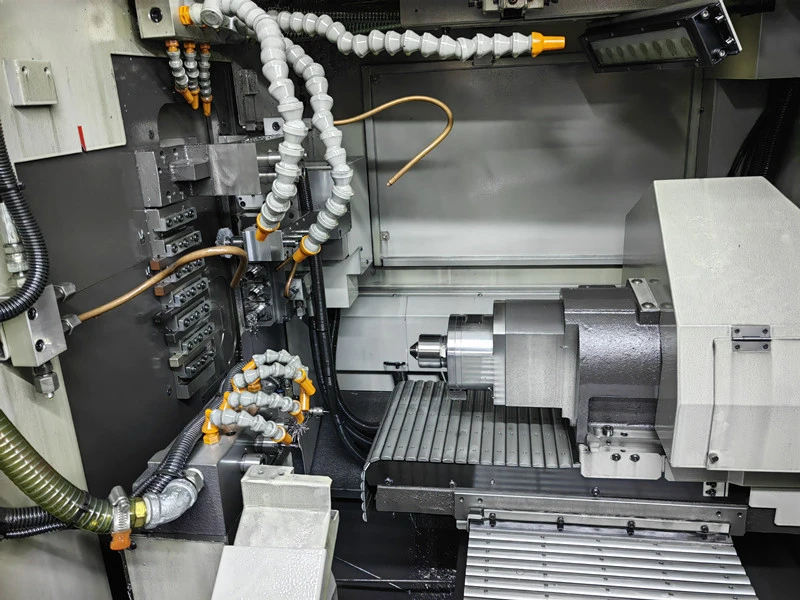
Unlike traditional turning techniques, which may lead to deflected parts with a longer length or small diameter, Swiss machining uses a guide bushing system to provide support of the workpiece adjacent to the machining area. This allows reducing vibrations and optimizing stability of processing.
The fact that titanium Swiss machining makes it possible to do several operations in one run of machining is another benefit. The procedures, including turning, drilling, boring, thread making, etc., can be carried out while being positioned properly without the need for additional operations that might introduce unwanted variations.
For this medical component project, Swiss machining provided several manufacturing benefits:
Improved support for slender titanium geometries
Stable machining conditions for tight dimensional requirements
Reduced setup variation between operations
Consistent production repeatability
Efficient processing of small and complex features
By selecting precision titanium machining, Falcon CNC Swiss was able to develop a controlled manufacturing process for producing titanium Swiss machined components with the required accuracy, surface quality, and production consistency.

The process of manufacturing for this project was created based on the peculiarities of machining titanium Swiss machined components including the properties of the material, the slender geometry, and specific features of the components. The controlled Swiss machining process was employed in order to achieve stability of the components and repeatability of results.
1. Titanium Material Preparation
The Grade 5 titanium bar stock was prepared according to the component requirements. Proper material handling helped maintain stable machining conditions and reduce variation during production.
2. Precision Swiss Turning Operations
Using Swiss-type CNC machining, the workpiece was supported close to the cutting area through the guide bushing system. This support was important for machining slender sections while minimizing vibration and deflection.
Primary turning operations included
Precision diameter turning
Step machining
Groove machining
Threading operations
Radiused feature machining
3. Drilling and Internal Feature Machining
Deep bores and internal features required careful control of tooling conditions, chip evacuation, and cutting parameters. These operations were optimized to prevent surface damage and maintain dimensional accuracy.
4. Deburring and Surface Quality Control
After the machining process, the critical edges and surfaces underwent a thorough finishing process to remove any burrs while keeping the geometries and finish quality intact.
In the course of the process, various machining parameters were changed as needed in view of the properties of titanium, namely its ability to generate heat and contribute to increased tool wear. The combination of stable workholding, controlled tooling strategies, and repeatable Swiss machining operations allowed Falcon CNC Swiss to produce precision titanium Swiss turned parts with consistent quality.

Dimensional precision and precision are important insight for the medical industry since these two characteristics influence assembly and operation of the designed devices. During the experiment, a manufacturing method was developed to ensure that titanium Swiss machining tolerances were achieved and controlled beyond their critical points.
The part was made of precise long diameters having concentric details, threads, grooves, and other features, which have to be position with the same precision all through various operations. Swiss machining enabled to provide stable manufacturing technology ensuring less displacement of parts and maintaining fixed positioning of all the features.
Quality inspection was integrated throughout the production process to verify that each critical dimension met the engineering requirements. Inspection methods included:
Dimensional measurement using precision gauges
Optical measurement for detailed feature verification
CMM inspection for critical geometrical requirements
Thread and feature inspection according to drawing specifications
Key quality checkpoints included:
| Inspection Item | Verification Focus |
| Critical diameters | Dimensional accuracy |
| Concentric features | Alignment and runout control |
| Threads | Functional fit and consistency |
| Surface finish | Required surface quality |
| Overall geometry | Drawing compliance |
Maintaining consistent titanium Swiss machining accuracy required close control of tooling condition, machining stability, and inspection feedback. Following a combination of precision of Swiss machining processes and proper quality checking practices assures that Falcon CNC Swiss correctly manufactured titanium medical components.
The finished project showcased the viability of titanium Swiss processing for fabricating tiny, intricate medical parts that had strict geometric and dimensional specifications. As a result of firm workpiece support, stable machining process, and repeated inspections, the manufacturing method produced stable outcomes throughout the necessary production cycle.
Dimensions and optics inspections were used to check the most important dimensional requirements, along with CMM measuring when necessary. The focus was placed on diameters, concentric features, threads, grooves, and deep holes in order to get products meeting drawing specifications.
The main manufacturing results included:
Consistent dimensional control on critical features
Controlled concentricity and runout
Stable surface quality on specified surfaces
Repeatable machining of slender titanium geometries
Reliable production of complex turned features
Reduced variation through controlled Swiss machining operations
The project showcased the importance of integrating material-specific process control with Swiss-type machining techniques while working on titanium Swiss machined components. Instead of using a one-step machining procedure, the project used different elements such as workpiece support, chip removal and inspection of dimensions in order to get repeatability in the process.
This method can be effective as far as the production of various titanium devices is concerned and cannot be found in the other methods of production of similar devices.

The specifications exhibited in this project apply to numerous precision titanium Swiss made parts used in surgical instruments and medical equipment. Swiss machining is especially effective if the parts possess either thin or small shapes along with strict dimensional standards along with several turned features.
Typical applications include:
Surgical instrument components — precision shafts, pins, sleeves, and other small turned components.
Medical device components — miniature shafts, connectors, housings, and precision mechanical elements.
Orthopedic device components — small titanium components requiring high strength, corrosion resistance, and dimensional consistency.
Minimally invasive equipment — slender and compact components where controlled geometry and repeatable machining are important.
Precision medical mechanisms — threaded, grooved, and multi-feature components manufactured to engineering drawing requirements.
The particular application will determine the correct titanium specifications, shape, tolerance level, finish level, and inspection requirements. Therefore, these aspects must be considered in the design process of parts such as titanium Swiss machined parts for medical devices.
The above-mentioned case is an illustration of how Swiss machining can help manufacture titanium devices that require dimensional consistency, feature accuracy, and repeatable manufacturing.
Need precision titanium components for a medical device project? Send us your 2D drawing, 3D CAD file, material requirements, and target quantity. Falcon CNC Swiss can review your requirements and provide a customized titanium Swiss machining quote.