English
  日本語
日本語  한국어
한국어  français
  Deutsch
  Español
  русский
  العربية
Mar
Learn More
16

7075 aluminum is a high-strength aluminum alloy widely used for precision components where strength-to-weight ratio and mechanical performance are critical. Its combination of high strength, relatively low weight, and good machinability makes 7075 aluminum machining suitable for demanding applications across aerospace, automotive, robotics, and industrial manufacturing.
Compared with 6061 aluminum, 7075 provides significantly higher strength but generally requires more careful machining and process control. The alloy is commonly supplied in heat-treated conditions such as 7075-T6, which further improves its strength and hardness for structural and high-performance applications.
7075 CNC machining can include CNC milling, CNC turning, 5-axis machining, and mill-turn operations. With appropriate tooling, cutting parameters, workholding, and inspection methods, manufacturers can produce accurate 7075 aluminum parts with complex geometries, tight tolerances, and consistent surface quality.
This guide explains 7075 aluminum properties, machinability, CNC machining processes, T6 heat treatment, tolerances, surface finishes, and common applications. It also compares 7075 with 6061 aluminum to help engineers select the appropriate alloy for their specific manufacturing requirements.
Falcon CNC Swiss provides custom 7075 aluminum CNC machining for prototypes, low-volume projects, and production components, supporting customers with precision machining and manufacturing solutions from engineering review through final inspection.
7075 aluminum is a high-strength aluminum alloy in the 7000 series, primarily alloyed with zinc along with magnesium and copper. It is known for its high strength-to-weight ratio and is widely used when mechanical strength is more important than maximum corrosion resistance or weldability.
Compared with general-purpose aluminum alloys such as 6061, 7075 aluminum provides substantially higher tensile and yield strength. This makes it particularly suitable for structural and precision components exposed to significant mechanical loads while still benefiting from aluminum's relatively low density.
One of the most commonly used conditions is 7075-T6 aluminum. The T6 temper indicates that the alloy has been solution heat treated and artificially aged to achieve a higher level of strength and hardness. For applications requiring dimensional stability during precision machining, other tempers such as T651 may also be considered.
The combination of strength, low weight, and good machinability makes 7075 a popular material for 7075 CNC machining. Manufacturers can use CNC milling, turning, and multi-axis machining to produce complex components with accurate dimensions and repeatable quality.
Typical 7075 aluminum parts include aerospace brackets, structural components, high-strength fittings, precision mechanical components, and industrial fixtures.
However, the higher strength of 7075 also creates different machining considerations compared with 6061 aluminum. Tool selection, cutting parameters, workholding, and thermal control become increasingly important when producing precision components from this alloy.
7075 aluminum is primarily alloyed with zinc, with magnesium and copper providing additional strengthening. This composition gives the alloy significantly higher strength than many general-purpose aluminum grades while maintaining the lightweight characteristics expected from aluminum. The balance of alloying elements also affects corrosion resistance, machinability, and heat-treatment response.
The 7075 aluminum composition typically includes approximately 5.1–6.1% zinc, 2.1–2.9% magnesium, 1.2–2.0% copper, and smaller amounts of silicon, iron, manganese, chromium, titanium, and other elements. Exact limits can vary slightly depending on the applicable material specification and product form.
The mechanical properties of 7075 depend significantly on its temper. For example, 7075-T6 is commonly selected when high strength and hardness are required.
| Property | 7075-T6 Typical Value |
| Density | 2.81 g/cm³ |
| Tensile Strength | ~572 MPa |
| Yield Strength | ~503 MPa |
| Elastic Modulus | ~71.7 GPa |
| Hardness | ~150 HB |
| Thermal Conductivity | ~130 W/m·K |
These 7075 aluminum properties make the alloy particularly attractive for components that require high strength without the weight of steel. The alloy's high strength-to-weight ratio is one of the main reasons it is widely used for aerospace and other high-performance applications.
However, strength is not the only factor engineers should consider. Compared with 6061 aluminum, 7075 generally offers higher strength but lower corrosion resistance and weldability. It is also more demanding to machine when tight tolerances, thin walls, or complex geometries are involved.
For this reason, material selection should consider the complete application rather than strength alone. Load requirements, corrosion exposure, machining complexity, surface treatment, production volume, and overall cost should all be evaluated before selecting 7075.
7075 aluminum is widely selected for CNC manufacturing when a component requires high strength without the added weight of steel. Its high strength-to-weight ratio makes it particularly valuable for structural and precision components where reducing weight while maintaining mechanical performance is important.
One of the main advantages of 7075 aluminum machining is the ability to produce high-strength components with complex geometries and accurate dimensions. CNC milling, turning, and multi-axis machining can be used to manufacture components according to detailed engineering drawings and application-specific requirements.
High Strength-to-Weight Ratio
7075 provides substantially higher strength than many commonly machined aluminum alloys. This makes it suitable for components subjected to significant mechanical loads while retaining the lightweight characteristics of aluminum.
Good Machinability for a High-Strength Alloy
Although 7075 is not as easy to machine as 6061, it still provides good overall machinability compared with many high-strength engineering materials. With appropriate tooling and machining parameters, manufacturers can produce accurate 7075 aluminum parts with consistent surface quality.
Suitable for Demanding Applications
The combination of strength, low density, and machinability makes 7075 particularly suitable for aerospace and other performance-critical applications. Aerospace aluminum machining commonly uses 7075 for structural brackets, fittings, housings, and other components where weight and strength are important design considerations.
7075 is also used in automotive, robotics, industrial equipment, and other applications requiring lightweight, high-strength components.
7075 should not automatically be selected simply because it has higher strength. Compared with 6061, it generally has lower corrosion resistance, poorer weldability, higher material cost, and somewhat more demanding machining requirements.
For applications where moderate strength, excellent machinability, corrosion resistance, and lower cost are more important, 6061 may be a more practical choice.
This balance between material performance and manufacturing requirements is particularly important when planning 7075 CNC machining for precision production.
7075 aluminum has good overall machinability for a high-strength alloy, making it suitable for a wide range of CNC manufacturing applications. However, its higher strength and hardness compared with 6061 aluminum require more careful process control. Understanding 7075 aluminum machinability is important for achieving consistent dimensions, surface quality, and tool life.
7075 is generally considered machinable, but it is more demanding than 6061 aluminum. The alloy's higher strength can increase cutting forces and accelerate tool wear when machining parameters or tooling are not properly optimized.
When machining 7075 aluminum, manufacturers typically pay particular attention to:
Cutting speed and feed rate
Tool geometry and material
Depth of cut
Coolant or lubrication
Chip evacuation
Machine and fixture rigidity
Proper process optimization allows CNC manufacturers to maintain efficient material removal while controlling heat, vibration, and dimensional variation.
Tool Wear: High-strength 7075 can generate greater cutting loads, making appropriate carbide tooling and tool condition important for consistent production.
Heat Generation: Excessive cutting heat can affect surface quality, tool life, and dimensional stability. Effective cooling and chip evacuation help maintain stable machining conditions.
Burr Formation: Burrs can occur around holes, slots, and sharp edges, particularly when tools become worn. Proper cutting strategies and secondary deburring can improve final part quality.
Thin-Wall Deformation: Lightweight 7075 components may include thin walls or delicate features. Excessive clamping force or cutting pressure can cause deformation, requiring carefully designed workholding and machining sequences.
Dimensional Stability: High-precision components may require additional process control to minimize movement caused by residual stress, temperature changes, or material removal.
7075 generally offers lower machinability than 6061, but the difference does not prevent efficient CNC production. Instead, it means that 7075 machining benefits more from optimized tooling, stable workholding, and carefully controlled cutting parameters.
For applications where maximum strength is not required, 6061 may provide a simpler and more economical machining solution. When high strength-to-weight performance is the priority, 7075 can justify the additional manufacturing considerations.
7075 CNC machining can be performed using different CNC processes depending on part geometry, dimensional requirements, production volume, and the number of features that need to be machined. Because 7075 aluminum combines high strength with relatively low weight, it is commonly used for precision components that require controlled material removal and repeatable dimensional accuracy.
Selecting the appropriate machining process can also reduce setup time, improve surface quality, and control manufacturing costs.
7075 CNC milling is widely used for producing brackets, housings, plates, structural components, fixtures, and other complex parts. CNC milling can create pockets, slots, holes, contours, threads, and other precision features from 7075 aluminum stock.
For complex components, optimized toolpaths and appropriate workholding help control cutting forces and reduce vibration. This is particularly important when machining thin walls or small precision features.
7075 CNC turning is suitable for cylindrical and rotational components such as shafts, pins, bushings, spacers, and precision fittings.
During turning, proper tool selection and chip control are important for maintaining surface quality and dimensional consistency. CNC turning can also be combined with secondary milling operations when components contain both rotational and milled features.
7075 5-axis CNC machining is useful for complex components with multiple angled surfaces, deep features, and difficult-to-access geometries. Simultaneous multi-axis movement can reduce the number of setups and improve positional accuracy between features.
This process is particularly valuable for aerospace and high-performance components where complex geometry and tight dimensional requirements must be achieved from a single workpiece.
7075 mill-turn machining combines turning and milling capabilities within a single CNC platform. It can be used for complex components that require both rotational surfaces and precision milled features.
By completing multiple operations in fewer setups, mill-turn machining can reduce workholding changes and improve consistency between critical features.
The appropriate process depends on the component's geometry and manufacturing requirements:
| Process | Typical Applications |
| CNC Milling | Brackets, housings, plates, structural parts |
| CNC Turning | Shafts, pins, bushings, fittings |
| 5-Axis Machining | Complex aerospace and precision components |
| Mill-Turn | Complex rotational components |
7075 is commonly supplied in heat-treated conditions because heat treatment significantly improves its strength and hardness. Among these conditions, 7075-T6 aluminum is one of the most widely used for high-strength components and precision manufacturing.
The T6 temper indicates that the alloy has been solution heat treated and artificially aged to develop its required mechanical properties. This treatment gives 7075-T6 its high strength and makes it suitable for components exposed to substantial mechanical loads.
7075-T6 is not a separate aluminum alloy. 7075 identifies the alloy composition, while T6 identifies its heat-treated condition.
For CNC machining, the temper is important because it affects the material's hardness, strength, residual stress, and machining behavior. Engineers should therefore specify both the alloy and temper when ordering material for precision components.
7075 T6 machining requires appropriate tooling and process control because the material is harder and stronger than many general-purpose aluminum alloys.
Important considerations include:
Sharp carbide cutting tools
Stable workholding
Controlled cutting parameters
Effective chip evacuation
Thermal control
Proper machining sequence
These factors become particularly important when producing thin-wall components, deep pockets, or tight-tolerance features.
For precision CNC components, 7075-T651 can also be an important material option. T651 is a stress-relieved condition designed to reduce residual stresses after heat treatment.
This can provide advantages when machining large plates, thin sections, or components where dimensional stability is critical. Material selection should therefore consider not only strength requirements but also the expected machining process and part geometry.
Whether additional heat treatment is appropriate after CNC machining depends on the required material condition and engineering specification. Additional thermal processing can affect dimensions and mechanical properties, so it should be considered as part of the complete manufacturing process rather than treated as a separate operation.
For precision 7075 T6 CNC components, confirming the required alloy, temper, material certification, and dimensional requirements before production helps ensure the finished parts meet the intended application.
Achieving consistent results in 7075 CNC machining requires more than selecting a suitable machine. Tool geometry, cutting conditions, workholding, cooling, and machining sequence all affect tool life, surface finish, and dimensional accuracy. Because 7075 is stronger than many commonly machined aluminum alloys, process optimization becomes particularly important for precision components.
Carbide cutting tools are commonly used for machining 7075 aluminum because they provide good wear resistance and maintain a sharp cutting edge during production. Tool geometry should be selected according to the operation, material removal rate, feature size, and required surface finish.
Sharp tools with appropriate flute geometry can help reduce cutting forces, heat generation, and built-up material on the cutting edge.
Cutting Parameters
There is no single cutting speed or feed rate that is suitable for every 7075 component. Machining parameters should be optimized according to:
Tool diameter and geometry
Machine spindle capability
Workpiece rigidity
Depth and width of cut
Part geometry
Required surface finish
Coolant and lubrication conditions
Using overly aggressive parameters can increase heat, vibration, and tool wear, while excessively conservative settings can reduce productivity and increase machining costs.
Coolant and Chip Evacuation
Effective chip evacuation is important when producing pockets, slots, and deep features. Accumulated chips can interfere with cutting, increase heat, and damage the machined surface.
Appropriate coolant or lubrication can help control cutting temperature and improve tool life. High-pressure coolant or optimized coolant delivery can be particularly useful for difficult-to-reach machining features.
Workholding and Vibration Control
Stable workholding is essential for precision 7075 CNC machining. Excessive clamping force can deform thin sections, while insufficient rigidity can cause vibration and chatter.
For thin-wall or complex components, manufacturers may use specialized fixtures, optimized machining sequences, and multiple finishing passes to gradually remove material while maintaining dimensional stability.
A reliable process typically combines:
Rigid workholding and stable machine conditions
Sharp and properly selected cutting tools
Application-specific cutting parameters
Effective chip evacuation and thermal control
Roughing and finishing strategies suited to the part geometry
These practices help manufacturers maintain consistent quality while balancing machining efficiency, tool life, and production cost.
The achievable tolerance and surface finish of a 7075 aluminum part depend on part geometry, precision aluminum machining process, equipment capability, tooling, material condition, and inspection requirements. For precision components, tolerances should be established according to the function of each feature rather than applying unnecessarily tight tolerances to the entire component.
Standard CNC machining can typically achieve tolerances around ±0.05 mm, while precision machining can achieve approximately ±0.02 mm under suitable conditions. Tighter tolerances, such as ±0.01 mm, may be possible for selected features when machine capability, tooling, temperature control, workholding, and inspection methods are properly controlled.
For complex 7075 components, engineers should identify critical dimensions and functional features on the drawing. This allows the machining process and inspection plan to focus on the dimensions that directly affect assembly and performance.
CNC machining can produce a clean and consistent surface finish on 7075 aluminum when appropriate cutting tools and finishing strategies are used. Additional finishing processes may be selected according to appearance, corrosion protection, wear resistance, or functional requirements.
Common options include:
Anodizing
Hard anodizing
Bead blasting
Brushing
Chemical conversion coating
Anodizing can improve surface protection and provide additional appearance options. However, the final appearance and color can vary depending on the 7075 alloy composition and finishing process.
For 7075 precision machining, dimensional inspection may include calipers, micrometers, height gauges, optical measurement systems, and CMM inspection for complex or critical components.
Combining controlled machining processes with appropriate inspection methods helps ensure that 7075 aluminum parts meet drawing requirements and maintain consistent quality during production.
The combination of high strength, low density, and good machinability makes 7075 aluminum suitable for components where mechanical performance and weight reduction are important. Its properties make it particularly valuable for aerospace and other applications that require a high strength-to-weight ratio.
Aerospace aluminum machining is one of the most important applications for 7075. The alloy can be used for structural brackets, fittings, frames, housings, and other precision components where high strength and low weight are critical.
CNC machining allows manufacturers to produce complex geometries and accurately controlled features for aerospace components while maintaining repeatable dimensional quality.
7075 aluminum can be used for high-performance automotive components where reducing weight without sacrificing strength is important. Typical applications include brackets, structural components, mounting components, and specialized mechanical parts.
In robotics and automation equipment, 7075 is suitable for lightweight structural components, arms, brackets, fixtures, and other parts exposed to repeated mechanical loads. Its high strength-to-weight ratio can help reduce component weight while maintaining structural rigidity.
Other 7075 aluminum uses include industrial machinery, precision fixtures, sports equipment, and high-strength mechanical components. CNC machining can produce custom parts with complex profiles, precision holes, threads, and other functional features.
The choice of 7075 should always be based on the actual application requirements. If corrosion resistance, weldability, or lower manufacturing cost is more important than maximum strength, another aluminum alloy such as 6061 may be more appropriate.
For this reason, engineers should evaluate material strength, environment, geometry, machining requirements, and production cost together when selecting an aluminum alloy for custom components.
Choosing between 7075 and 6061 aluminum depends on the application's strength, machining, corrosion, finishing, and cost requirements. Although both alloys are widely used for CNC manufacturing, they serve different engineering purposes.
| Property | 6061 Aluminum | 7075 Aluminum |
| Strength | Good | Excellent |
| Strength-to-Weight Ratio | Good | Excellent |
| Machinability | Excellent | Good |
| Corrosion Resistance | Excellent | Moderate |
| Weldability | Good | Poor |
| Material Cost | Lower | Higher |
| Typical Applications | General CNC components | High-strength components |
7075 is generally a better choice when high strength and low weight are the primary requirements. It is particularly suitable for aerospace components, high-performance mechanical parts, structural components, and applications subject to significant mechanical loads.
The alloy's higher strength can allow engineers to reduce material thickness or component weight while maintaining the required mechanical performance.
6061 is often preferable when excellent machinability, corrosion resistance, weldability, and cost efficiency are more important than maximum strength.
For general brackets, housings, fixtures, electronic components, and many industrial parts, 6061 can provide sufficient performance while being easier and more economical to machine.
From a manufacturing perspective, 6061 generally has better machinability than 7075. It can be easier to process at high production rates and may provide more flexibility for complex or thin-walled components.
7075 can still be efficiently CNC machined, but its higher strength requires greater attention to tooling, cutting conditions, workholding, and thermal control.
There is no universally better alloy. The right choice depends on the component's functional requirements.
Choose 7075 when:
High strength is critical
Weight reduction is important
The component experiences high mechanical loads
Aerospace or high-performance applications are involved
Choose 6061 when:
Machinability is a major priority
Good corrosion resistance is required
Welding may be required
Lower material and manufacturing costs are preferred
Material selection should therefore consider the complete application rather than strength alone.
For a more detailed discussion of 6061 properties and machining characteristics, see our 6061 aluminum machining guide.
For projects that require high-strength aluminum components, selecting an experienced 7075 CNC machine shop is important for achieving consistent dimensional accuracy and reliable production quality. Falcon CNC Swiss provides custom 7075 CNC machining for prototypes, low-volume projects, and production components.
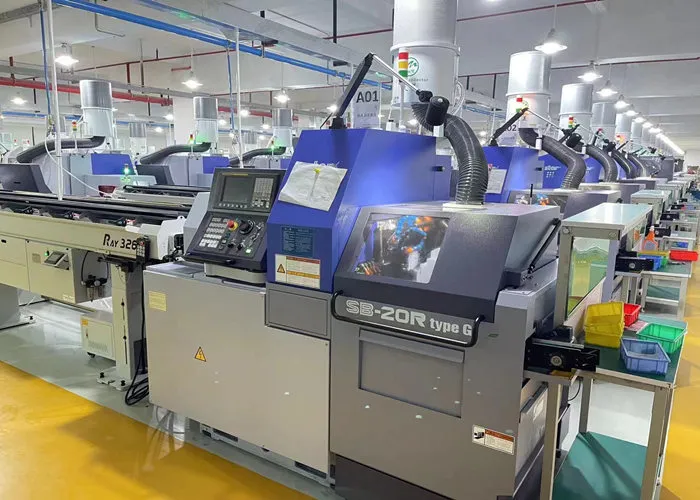
Our manufacturing capabilities include CNC milling, CNC turning, 5-axis machining, and mill-turn machining for a wide range of precision 7075 aluminum parts. Depending on component geometry and requirements, machining processes can be optimized to control cutting forces, tool wear, vibration, and dimensional variation.
Falcon CNC Swiss can support different production stages, including:
Prototype machining for design verification and functional testing
Low-volume production for product development and initial market requirements
Production machining for repeat orders and consistent component supply
Precision machining for components with tight dimensional requirements
Engineering requirements such as material grade, temper, tolerances, surface finish, and inspection specifications can be reviewed before production to establish an appropriate manufacturing process.
7075 components can be produced with specified dimensional tolerances and surface finishes according to application requirements. Additional processes such as anodizing, bead blasting, or other surface treatments can also be coordinated when required.
For projects requiring reliable 7075 aluminum CNC machining, Falcon CNC Swiss combines CNC manufacturing capabilities with engineering and quality control to produce custom components according to customer drawings and specifications.
Request a quote for your custom 7075 aluminum parts and discuss your machining requirements with our engineering team.
Yes. 7075 aluminum provides good machinability for a high-strength alloy and is widely used for precision CNC components. With appropriate tooling, cutting parameters, and workholding, manufacturers can produce accurate and complex 7075 aluminum parts.
Generally, yes. 7075 aluminum machining typically requires more attention to cutting forces, tool wear, heat control, and workholding than 6061. However, 7075 can still be efficiently CNC machined when the process is properly optimized.
Both are heat-treated conditions of 7075 aluminum. 7075-T6 provides high strength, while T651 is a stress-relieved condition that can provide improved dimensional stability during precision machining, particularly for larger or thinner components.
Yes. Its high strength-to-weight ratio makes 7075 widely used for aerospace components such as brackets, fittings, structural parts, and precision mechanical components where strength and weight are important.
Yes. 7075 aluminum can be anodized to improve surface protection and appearance. However, its alloy composition can result in different anodizing characteristics and color compared with 6061 aluminum, so the required finish should be specified before production.
Yes. Falcon CNC Swiss provides custom 7075 CNC machining for prototypes, low-volume projects, and production components using CNC milling, turning, 5-axis machining, and other precision manufacturing processes.