English
  日本語
日本語  한국어
한국어  français
  Deutsch
  Español
  русский
  العربية

Apr
Learn More
18

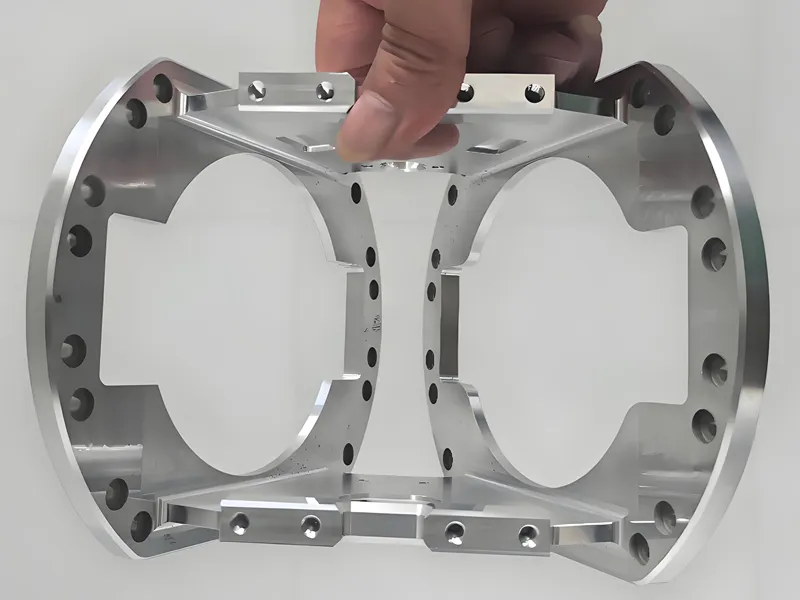
With the demand for compact electronic devices driving extreme performance requirements, thermal management has become essential for developing products. The optimum aluminium heat sink prototype allows engineers to check the cooling efficiency, mechanical compatibility, and design feasibility of aluminium heat
sinks before beginning large-scale production.
Modern solutions from custom CNC machining services have several times larger capabilities than regular cooling solutions in terms of designing complex cooling systems, which include fin optimization, mount construction, and integration of a case unit. Through prototype aluminum heat sink machining, manufacturers are able to check the efficiency of various designs before production.
Custom aluminum heat sink enclosure can be used in cases, when cooling is to be combined with some mechanical protection features since it serves for heat dissipation and structural functionality in one. By making the right design of an enclosure it is possible to reach high cooling efficiency and at the same time comply with space and durability requirements.
Falcon CNC Swiss is ready to assist in the development of custom aluminium thermal components using advanced precision machining from prototype validation to production.
It often takes several revisions of a cooling solution design before the final product is produced. In its turn, an aluminum heat sink prototype enables engineers to assess the thermal performance, mechanical suitability, and manufacturability of the heat sink before starting mass production.
Prototype parts differ from conventional heat sinks in that they can be customized for specific needs. For example, during the development stage, features such as the shape of the fins, location of the mounting points, and airflow patterns can be changed.
Design Verification: Engineers can evaluate the physical structure, assembly compatibility, and thermal performance before production.
Performance Optimization: Prototype testing helps improve fin design, material selection, and heat dissipation efficiency.
Manufacturing Validation: Early prototypes identify potential machining challenges and allow design improvements before mass production.
Faster Product Development: CNC machining enables quick production of customized aluminum thermal components without expensive tooling.
For complex electronic systems, prototype aluminum heat sink machining provides gives engineering teams the flexibility to modify the design and to remain viable in production. This method is particularly helpful for power electronics, industrial controls, LED systems and semiconductor products.
Prototyping lowers the risks of design and enhances the thermal performance of products made in the later stages of development.
CNC machining offers necessary precision and flexibility for creating customized thermal components at a stage of product development. Model-making engineers benefit from the speed of manufacturing complex designs as the need for tooling costs disappears before production.
When compared to traditional production methods, CNC machining provides a number of benefits for aluminum heat sink prototypes.
| Advantage | Description |
| Design Flexibility | Supports complex fin structures, mounting features, and customized geometries |
| Fast Iteration | Enables engineers to modify and test different thermal designs quickly |
| High Precision | Maintains accurate dimensions for assembly and thermal interface requirements |
| Low Volume Capability | Suitable for prototypes and small batch production before mass manufacturing |
When there is need for an ultimate component essential features which cannot be made by means of casting or extrusion, a CNC heat sink prototype proves to be of utmost importance. In the process of CNC milling, manufacturers are capable of producing one-piece assemblies, maximizing cooling fin designs, and the designs of through holes and enclosure interfaces.
It is important for engineers to account for the following aspects at the machining stage: materials, fin design, accessibility of the process, and surface requirements. To make sure that prototype elements correspond to the design of the future product, precision aluminum heat sink machining is required.
In case you need customized aluminum thermal components, choice of the right manufacturer can significantly reduce the timeline required for development and make the production easier. Falcon CNC Swiss offers modern precision machining solution dedicated to aluminum parts production.
For an efficient custom aluminum heat sink enclosure it is important to achieve a balance between thermal efficiency, mechanical safety and production capability. While traditional heat sinks are used solely for cooling purposes, integrated heat sink enclosures combine the effect of heat dissipation structure together with protection functions.
When developing an aluminum heat sink enclosure design, engineers should consider several key factors:
| Design Factor | Considerations |
| Thermal Path | Ensure efficient heat transfer between heat-generating components and the aluminum enclosure |
| Wall Thickness | Balance structural strength, weight, and thermal conductivity |
| Fin Design | Optimize fin height, spacing, and geometry for improved heat dissipation |
| Mounting Features | Include accurate interfaces for PCB, components, and system assembly |
| Ventilation Requirements | Consider airflow and operating environment when designing cooling structures |
Correct design of aluminum heat dissipators begins with realizing the heat sources and the working conditions. Engineers must analyze thermal requirements at the first stage of design in order to select the right enclosure type, material thickness, and cooling methods.
For applications such as power electronics, industrial controllers, and communication equipment, an integrated heat sink enclosure can reduce assembly complexity by combining thermal management and mechanical protection into one CNC Machined Aluminum Enclosures solution.
Application of practically verified aluminum heat sink design techniques makes it possible to improve the heat process efficiency while keeping accuracy of the dimensions and product quality at the same level. Thanks to CNC machining it is possible to manufacture aluminum casings with complicated inner structures and mounting requirements.
As the devices around us become smaller and more capable, we need both to protect our products structurally and to deal with thermal management. A CNC machined heat sink enclosure provides an integrated solution by combining an aluminum housing with heat dissipation features in a single precision component.
An aluminum enclosure with integrated heat sink brings the benefit of enhanced thermal paths, minimized assembly process, and better protection of a sensitive electronic device as opposed to using separate heat sinks and housings. Moreover, CNC machining enables engineers to design enclosures with significant variation in dimensions, mounting interfaces, inner spaces, and cooling designs in accordance with project requirements.
Common applications include:
| Application | Typical Components |
| Power Electronics | Inverter housings, power module enclosures, control units |
| Industrial Controls | PLC housings, automation controllers, embedded systems |
| LED Systems | LED driver housings and lighting thermal solutions |
| Communication Equipment | RF modules, network devices, electronic control units |
A precision aluminum heat sink housing with high precision characteristics is ideal for the situations when standard options for heat exchangers cannot meet the requirements of size, functioning, or integration. CNC machining enables complex designs with accurate mounting features and optimized thermal interfaces through customized CNC Machined Parts manufacturing.
For engineers working on different electronics, the possibility of designing custom aluminum heat sink for electronic enclosures opens up many options at the stages of prototyping and manufacturing. By combining the functions of an enclosure with thermal efficiency of the heat sink, it is possible to create solutions that are efficient and reliable.
Choosing the appropriate aluminium alloy is important to achieve a required combination of thermal performance, machining ability, strength, and expense. The best aluminium alloy for CNC heat sinks will depend on the needs of the application such as cooling capability, structural requirements, and complexity of manufacturing.
Common aluminum materials used for heat sink prototypes and enclosures include:
| Application | Typical Components |
| Power Electronics | Inverter housings, power module enclosures, control units |
| Industrial Controls | PLC housings, automation controllers, embedded systems |
| LED Systems | LED driver housings and lighting thermal solutions |
| Communication Equipment | RF modules, network devices, electronic control units |
The choice of 6061 aluminum heat sink machining is based on its ability to achieve thermal conductivity, dimensional stability and good CNC machining capabilities. The 6061 aluminum is particularly ideal for custom prototyping and low-volume manufacturing where complex shapes are necessary.
When comparing 6063 aluminum heat sink vs 6061, it is evident that the 6063 is often used for extrusion heat sinks on account of its forming capabilities while the 6061 is mostly used in CNC machining owing to its high strength and good machining abilities.
Moreover, it is necessary to consider the finishing requirements when choosing the material including anodizing which serves to enhance the durability of the heat sink.
Surface finishing is a key factor in enhancing longevity, looks, and performance in the long run of thermal parts produced from aluminum. Choosing a correct surface finish for aluminum cooling fins will be determined by the specific requirements of the application, the environmental factors, and any additional protection that needs to be added.
Common finishing options for aluminum heat sink components include:
| Surface Finish | Benefits | Applications |
| Anodizing | Improves corrosion resistance and surface durability | Electronic housings and general heat sink applications |
| Hard Anodizing | Provides enhanced wear resistance and surface protection | Industrial equipment and demanding environments |
| Bead Blasting | Creates a uniform appearance and removes machining marks | External enclosures and visible components |
| Machined Finish | Maintains precise dimensions for thermal interfaces | Prototype and precision components |
Out of those listed, aluminum heat sink anodizing techniques are among the most popular as anodizing not only protects aluminum's surface but also gives it lightweight benefits at the same time. In products that experience water, chemical action, or constant handling, anodizing provides longer lifetime.
During implementation of surface treatments, engineers should take into consideration the film thickness and dimension requirements, especially in terms of precision mount areas and thermal contact surfaces. Correct selection of the finishing is helpful to maintain mechanical performance as well as cooling effectiveness of CNC machined aluminum heat sink parts.
A shift from the stage of developing the prototype to that of producing the item necessitates a manufacturing partner who is capable of ensuring constant quality while endorsing the design changes. An efficient custom aluminum heat sink manufacturer is bound to provide technically sound engineering support and manufacturing capabilities.
The typical development process includes:
| Stage | Key Activities |
| Prototype Development | Validate thermal performance, dimensions, and assembly requirements |
| Design Optimization | Improve machining efficiency, reduce cost, and refine component performance |
| Small Batch Production | Manufacture initial production quantities for market testing |
| Production Scaling | Support repeat manufacturing with stable quality and process control |
Small batch aluminum heat sink machining is especially useful for manufacturers of new electronic devices as it allows them to assess their effectiveness prior to making big volumes of production. CNC milling machinery offers the required versatility enabling modifications of designs without substantial financial investments in tooling.
If production capacity requirements grow, machining processes must be uniform that guarantees stability of manufacturing operations and accuracy of measurements of every aluminum thermal component produced.
With precision CNC machining capabilities, Falcon CNC Swiss supports customers from prototype validation through production manufacturing, helping develop customized aluminum thermal solutions through Aluminum Precision Machining expertise.
Aluminum prototype heat sinks and integral casing are found in many applications, where efficient thermal stability and compact build are of utmost importance. By combining the cooling system with precision aluminum casing, engineers can develop effective solutions for demanding electronic systems.
Common applications include:
| Application | Typical Components |
| Power Electronics | Inverter housings, power module cooling plates, control units |
| Semiconductor Equipment | Thermal housings, testing equipment components, precision cooling structures |
| Industrial Controls | PLC enclosures, automation controllers, embedded electronics housings |
| LED Systems | LED driver housings and lighting heat dissipation components |
| Battery Systems | Lightweight cooling structures and thermal management housings |
Custom solutions are necessary for high-performing systems that require a heat sink that is not standard. Custom heat sinks applied to semiconductor components can have complex machining details, mounting interfaces that are accurate, and thermal paths that are optimal.
Using CNC machinings, aluminum heat sinks can be adapted for various industries from developing new products to full-scale production.
Selecting the appropriate manufacturing partner is important for designing quality aluminum thermal components. At Falcon CNC Swiss, we offer expertise in precise machining and provide our clients with engineering support that enables them to transform the idea stage to a stage of product realization.
As a custom aluminum heat sink manufacturer, we facilitate the development of custom cooling components, inclusive of prototypes, small batches, and final production level aluminum thermal products. Our capabilities involve high-precision CNC machining, aluminum machining, and complex component manufacturing for challenging applications.
Customers benefit from
Engineering Support: Assistance with design reviews and manufacturing optimization.
Precision Manufacturing: Accurate CNC machining for complex aluminum components and thermal structures.
Prototype to Production Capability: Support from initial aluminum heat sink prototype development through repeat production.
Quality Control: Inspection processes to ensure consistent dimensions and reliable performance.
With experience in precision aluminum machining, Falcon CNC Swiss helps engineers develop custom heat sink components and integrated enclosures for electronics, industrial equipment, and advanced thermal applications.
Contact our engineering team to discuss your aluminum heat sink project and request a manufacturing consultation.
An aluminum heat sink prototype is the initial model of the thermal device made to test the efficiency of cooling, evaluate mechanical compatibility of design and as well as check whether the product is suitable for mass production. A common method of making prototypes is computer numerical control technology, or simply CNC, which provides engineers with the chance to work on unique designs at a lower cost.
The distinguishing attributes of CNC machining include flexibility of design, strict dimensional accuracy, and rapid change of design. These benefits prove this approach to be perfect for complex structures of heat removal devices, mounting features, as well as limited volumes of projects where traditional heat sinks fail to meet certain requirements.
An effective aluminum heat sink enclosure design considers such factors as heat flux paths, design of walls, air-cooling requirements, installation interface details, and operation conditions of the product. This helps find a good balance between safety and effectiveness.
The best aluminum for CNC heat sinks depends solely on requirements of the application. It is widely acknowledged that 6061-T6 aluminum is the most popular and efficient solution for the CNC machining of heat sinks because of the excellent machinability of this metal and its good physical characteristics. However, other alloys may also be used in case of extrusion-based cooling products.
Yes, using CNC machining, manufacturers can produce a heat sink enclosure where the housing and heat sink are united in one part. This technique serves the needs of various equipment: electronics, energy production, process control, etc.