English
  日本語
日本語  한국어
한국어  français
  Deutsch
  Español
  русский
  العربية


Apr
Learn More
27

By: Falcon CNC Swiss | April 18, 2026
A recent large-scale auction of late-model CNC machining equipment in the United States highlights a structural shift in manufacturing capacity.
The liquidation of assets from a former Fortune 500 powertrain facility reflects changing demand patterns in precision CNC machining.
This transition signals a broader move toward automated, high-efficiency, and digitally integrated CNC machining services.
In the past week, a major two-day auction in the U.S. featured advanced CNC machining systems, fabrication tools, and robotics equipment from a former Fortune 500 automotive powertrain plant.
The auction included:
Late-model CNC machining centers
Automated production systems
Robotics-integrated manufacturing equipment
Such large-scale liquidation events typically indicate a shift in production strategy rather than simple downsizing. In this case, the move reflects broader industry changes including electrification in automotive manufacturing and the reconfiguration of supply chains.
As legacy production lines are phased out, manufacturers are reallocating capital toward more flexible, precision-oriented CNC machining environments.
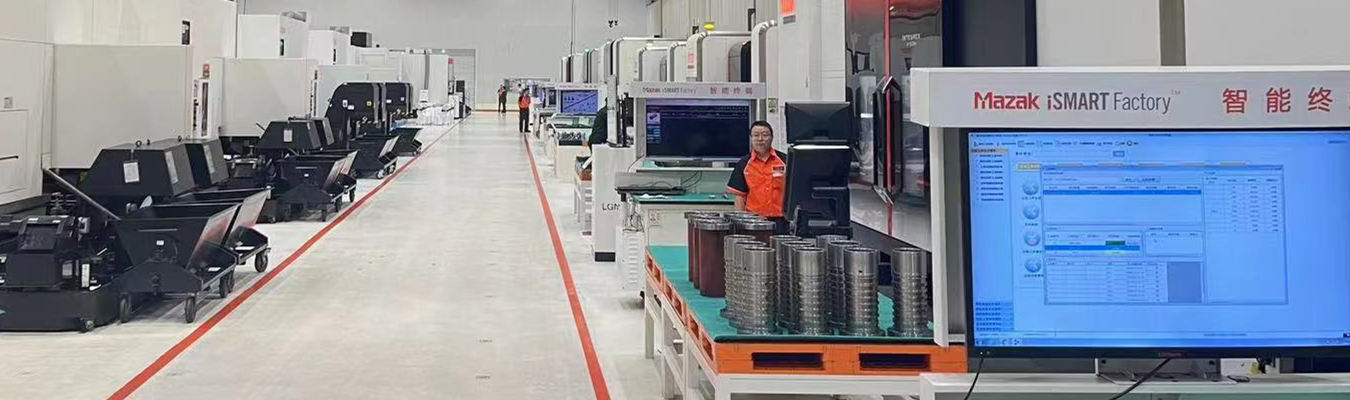
Traditional CNC machining systems were designed for stable, long-cycle production with limited flexibility.
Today’s CNC machining landscape is evolving toward:
Automation-driven production → reduced labor dependency and 24/7 operation
Digital integration → CAD/CAM systems like Mastercam enabling advanced toolpath optimization
Multi-process machining → combining milling, turning, and Swiss machining in one workflow
Data-driven control → real-time monitoring and predictive maintenance
Modern machining technologies significantly improve:
Production efficiency
Dimensional accuracy
Repeatability across batches
These capabilities are essential for delivering high-quality components in industries requiring tight tolerances and complex geometries.
For manufacturers, integrating both CNC machining and Swiss-type machining—such as in our precision CNC machining services—enables efficient production of both complex and micro-precision parts within a unified system.
This event highlights several important industry trends:
1. Shift from Legacy Production to Flexible Manufacturing
Traditional high-volume production lines are being replaced with adaptable CNC machining systems capable of handling diverse part geometries.
2. Growth of Precision Component Demand
Industries such as aerospace, medical devices, and electronics increasingly require complex, tight-tolerance components—driving demand for advanced machining solutions.
3. Automation as a Competitive Standard
Manufacturers are investing in robotics and smart systems to maintain competitiveness in cost, quality, and delivery speed.
Additionally, broader industry insights show that CNC machining is becoming more data-driven and automated, reinforcing its role as a core manufacturing technology.
From an engineering perspective, the transition toward advanced CNC machining introduces new challenges that must be carefully managed:
Tolerance stability across batches
Maintaining micron-level precision during extended production runs
Thermal variation control
Continuous machining generates heat, affecting dimensional accuracy
Tool wear management
Predictive monitoring is required to avoid drift in part quality
Process integration complexity
Combining CNC machining with Swiss machining requires synchronization of multiple processes
In high-precision environments, consistency is more critical than speed. Even minor deviations can scale into significant quality issues in large production volumes.
This is why advanced process control, automation, and engineering expertise are essential—not just machine capability.
For procurement teams sourcing precision CNC machined parts, this industry shift changes how suppliers should be evaluated:
Key evaluation criteria:
Process capability
Can the supplier handle both complex geometries and tight tolerances?
Technology integration
Do they combine CNC machining with Swiss machining for optimal results?
Scalability
Can they maintain consistent quality from prototype to high-volume production?
Automation level
Are systems in place to ensure repeatability and efficiency?
Working with advanced suppliers—such as our precision CNC machining services and Swiss machining capabilities—helps ensure stable quality, reduced lead times, and optimized cost structures.
• https://finance.yahoo.com/markets/articles/major-two-day-auction-features-125400277.html