English
  日本語
日本語  한국어
한국어  français
  Deutsch
  Español
  русский
  العربية


Jul
Learn More
23

By: Falcon CNC Swiss | April 16, 2026
Recent U.S. manufacturing analysis reveals a critical inefficiency in CNC machine shops: low utilization rates.
Most shops are operating at only 35–45% spindle utilization, significantly below optimal production capacity.
This gap is accelerating adoption of automation, Swiss machining, and high-efficiency CNC workflows to improve throughput and profitability.
According to a recent industry report, the majority of CNC machine shops in the United States are underutilizing their equipment.
Key findings include:
Average spindle utilization ranges between 35% and 45%
Significant downtime occurs during setup, programming, and material handling
Many shops lack visibility into true production efficiency
The report highlights that improving utilization—rather than simply adding machines—is now the primary lever for increasing output.
This issue is especially critical for shops producing high-volume screw machine parts, where small inefficiencies scale into major cost losses.
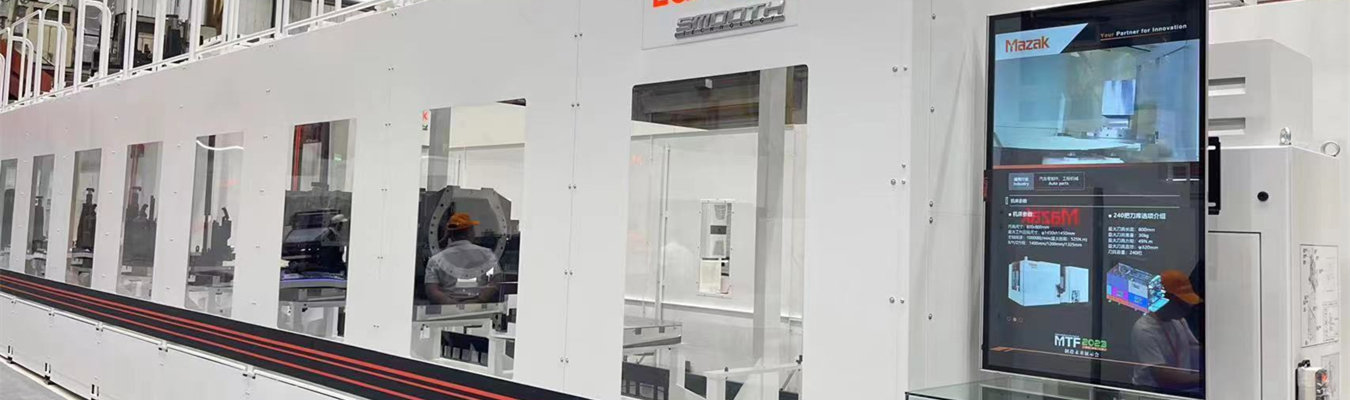
Traditional CNC machine shops often rely on segmented workflows:
Separate operations for turning, milling, and secondary processes
Manual intervention between setups
Limited automation integration
This structure creates bottlenecks and idle machine time.
In contrast, modern Swiss machining and CNC machining systems are designed for continuous, high-efficiency production:
Swiss-type lathes enable complete part machining in a single cycle
Bar-fed automation supports uninterrupted production
Multi-axis capability reduces repositioning and setup time
Integrated inspection systems ensure consistency during long runs
For example, adopting advanced solutions like our Swiss machining services allows manufacturers to produce complex, small-diameter components with exceptional precision and repeatability.
Additionally, combining Swiss machining with broader CNC machining capabilities enables flexible production across both high-volume and complex-part requirements.
The low utilization trend is reshaping how CNC machine shops compete in the U.S. market.
Key impacts include:
Shift from capacity to efficiency
Shops are focusing on maximizing output per machine rather than expanding floor space
Automation as a necessity
Robotics and unattended machining are becoming standard for competitive shops
Rising demand for Swiss-type production
High-volume, precision components—especially in medical, aerospace, and electronics—require stable, continuous machining processes
Higher expectations from buyers
Customers now expect shorter lead times, tighter tolerances, and consistent quality at scale
As the U.S. machine shop industry continues to grow in 2026, efficiency improvements will define market leaders.
From an engineering perspective, low utilization is not just a scheduling issue—it is a process design problem.
For screw machine parts and Swiss-type components, the biggest challenges include:
Setup time vs. batch size mismatch
Frequent changeovers reduce effective machine time
Tool wear variation in long runs
Impacts dimensional consistency in high-volume production
Material handling inefficiencies
Manual loading introduces delays and variability
Process fragmentation
Multiple machines increase cumulative error risk
Swiss machining addresses these issues by:
Minimizing setups through complete machining cycles
Enabling continuous bar-fed production
Maintaining tight tolerances over extended runs
In high-volume environments, improving utilization from 40% to even 65% can dramatically reduce per-part cost and lead time.
For procurement teams sourcing screw machine parts or precision components, this trend changes how suppliers should be evaluated:
Utilization strategy
Does the supplier optimize machine uptime or rely on excess capacity?
Swiss machining capability
Can they handle small, complex, high-volume parts efficiently?
Automation level
Are processes designed for continuous production?
Process integration
Do they combine CNC machining, inspection, and finishing in a streamlined workflow?
Working with a supplier that integrates Swiss machining and CNC machining—such as our Swiss CNC machining services—ensures higher efficiency, better consistency, and more competitive pricing in large-scale production.
• https://www.manufacturingmag.com/article (CNC Machine Utilization Report)
• https://www.ibisworld.com/united-states/industry/machine-shop-services/645/