English
  日本語
日本語  한국어
한국어  français
  Deutsch
  Español
  русский
  العربية
Apr
Learn More
08

The automobile is today a work of art that has been meticulously crafted with utmost precision and accuracy through its engineering abilities. Every component or part, no matter how large or how small, has to function properly in order for the entire vehicle to operate as a whole. On average, an automobile has approximately 30 thousand parts and each part/manufactured from a process specific to that part in order to achieve the required levels of quality and safety.
CNC (Computer Numerical Control) machining technology has changed the way automotive manufacturers use their CNC machining capabilities. It allows automotive manufacturers to manufacture complex shapes and high-accuracy components in mass quantities.
Whether you are currently an engineer developing new electric vehicle drivetrains or a procurement agent or buyer looking for improved opportunities within your supply chain, it is critical that you develop a complete understanding of the current landscape of the CNC machining automotive components you may be working with.
This guide will provide you with a complete overview of the most popular auto components produced via CNC machining technologies, current material types available for machining, and the benefits of partnering with a specialized CNC machining supplier. Lastly, it will also highlight why many major global automotive manufacturers continue to source from Chinese manufacturers of CNC machined automotive components to achieve balance between quality, price, and ability.
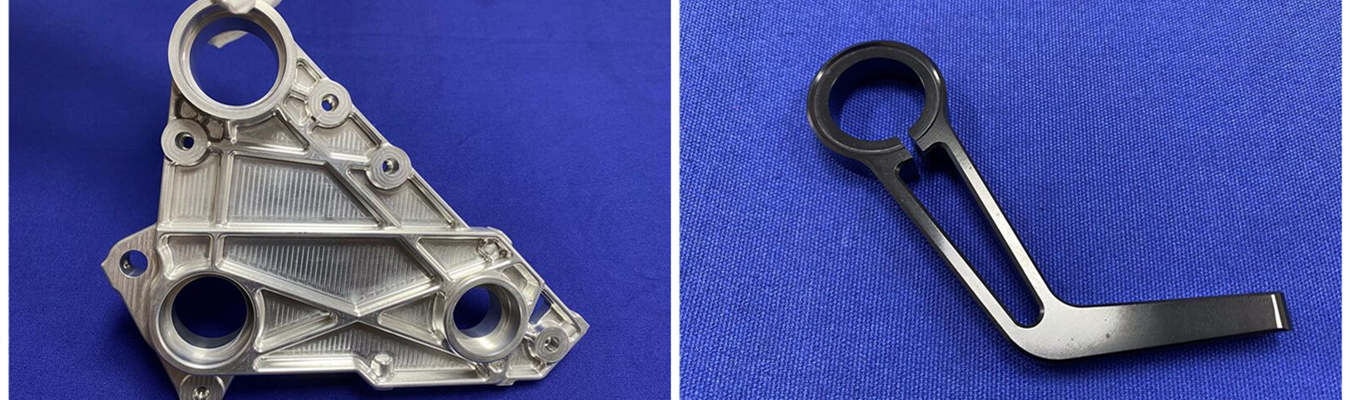
CNC machining car parts are automotive components manufactured using computer-controlled machine tools.The method of manufacture is an subtractive type; that is, manufactured by removing material from a solid block of material (or blank) until the desired part is made with extremely tight tolerances and precise dimensional characteristics.
Unlike additive manufacturing (such as 3D printing), CNC machining is extremely repeatable, thus making it the accepted method of manufacture for prototype and mass manufacturing in the automotive industry.
CNC machining is used across nearly every system in a vehicle. Here are some of the most common applications:
| Automotive System | Common CNC Machined Components | Why CNC is Preferred |
| Engine and Powertrain | Cylinder heads, engine blocks, pistons, camshafts, connecting rods, intake manifolds | Requires high heat resistance and precision to ensure performance and longevity |
| Transmission and Drivetrain | Gearbox components, differential housings, clutch plates, shafts, valve bodies, planetary gears | Needs micron-level accuracy for smooth shifting and power transfer |
| Suspension and Steering | Steering knuckles, control arms, tie rod ends, suspension mounts, chassis components | Demands high strength and fatigue resistance for safety and handling |
| Braking System | Brake calipers, master cylinders, ABS components, brake pistons | Requires precision and pressure-tight components for reliable stopping power |
| Electrical and Electronics | Sensor housings, connectors, battery terminals, heat sinks, motor components, EV battery trays | Necessitates high precision for proper fit and electrical conductivity |
| Interior and Exterior | Dashboard frames, door handles, lighting fixtures, mirror housings, gear shift knobs | Combines aesthetic requirements with structural integrity |
As the automotive industry shifts toward electric vehicles, the demand for CNC machining car parts has expanded to include new components like electric motor housings, battery trays, and intricate cooling system parts, all of which require micron-level precision-.
Choosing the right material is a critical decision that impacts the performance, weight, and cost of your CNC machining car components. The automotive industry relies on a range of materials, each with its own specific properties.
Most Common Materials and Their Applications
| Material | Key Properties | Common Automotive Applications |
| Aluminum Alloys (e.g., 6061-T6, 7075-T6) | Lightweight, excellent corrosion resistance, good strength-to-weight ratio, highly machinable | Cylinder heads, engine blocks, pistons, intake manifolds, structural brackets, heat sinks, wheels |
| Stainless Steel (e.g., 303, 304, 316) | High strength, excellent corrosion resistance, good heat resistance | Exhaust components, fuel system parts, structural parts requiring high durability |
| Steel Alloys (e.g., 4140, 4340) | Very high strength and hardness, excellent wear resistance, cost-effective | Gears, shafts, axles, crankshafts, connecting rods, suspension components |
| Brass & Copper | Excellent electrical and thermal conductivity, good corrosion resistance, high machinability | Electrical connectors, radiator cores, sensors, bushings |
| Titanium Alloys (e.g., Grade 5) | Highest strength-to-weight ratio, superior corrosion resistance, biocompatible | High-performance valves, connecting rods, suspension springs, racing components |
| Engineering Plastics (e.g., PEEK, Delrin, Nylon) | Lightweight, chemical resistance, electrical insulation, good wear properties | Bearing cages, seals, electrical insulators, lightweight structural components |
Aluminum is the most widely used material when it comes to CNC machining car parts due to its low weight and great strength; making it suitable for producing fuel-efficient vehicles. However, hardened steel alloys are usually used for parts that are subject to extreme forces (e.g., engine or transmission) or under high-temperature conditions. A reputable CNC machining car parts manufacturer will have a wealth of experience with these materials.
Japanese automotive companies have chosen China as their preferred source for OEMs and Tier 1 supplier manufacturing of CNC Machined Automotive Parts. The advantages of sourcing CNC Machined Automotive Parts from Japan include:
Cost Savings: One of the main reasons for sourcing CNC machined automotive parts from Japan is the significant savings that companies can expect. Chinese manufacturers are able to provide competitive prices due to lower wages and an optimized working environment while still maintaining exceptional levels of quality.
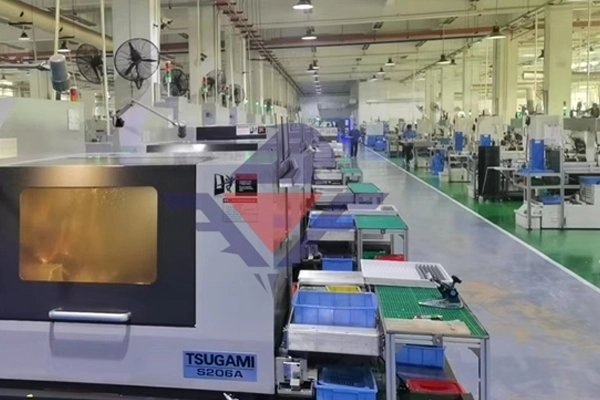
Cutting Edge Technology: Leading manufacturers of CNC Machined Automotive Parts have made substantial investments in order to become leaders in the industry and are fully equipped with advanced CNC machines, multi-axis CNC machines, Swiss-style lathes and fully automated assembly lines, enabling them to manufacture complex geometries and extremely precise tolerances for today automotive applications.
Scalability and Speed: World-Class manufacturers of CNC Machined Automotive Parts can easily transition from the production of a few hundred prototypes to millions of production parts at a rapid rate, thus helping OEMs and Tier 1 Suppliers meet aggressive timelines on automotive production.
Vertical Integration: The largest CNC Machined Automotive Parts manufacturers are vertically integrated and are able to provide surface finishes such as anodizing, plating, heat treatments, and assembly under one roof. Therefore, by minimising the supply chain.
Quality Certifications: Top tier manufacturers usually have the following quality management certifications (ISO 9001 and IATF 16949, the global quality standard for automotive manufacturers); therefore, they can demonstrate that they maintain superior levels of quality control through these certifications.
Selecting a partner to supply your CNC machining car parts is a strategic decision. Here is a checklist to help you evaluate potential CNC machining car parts suppliers.
| Selection Criteria | What to Look For | Questions to Ask |
| Certifications | ISO 9001, IATF 16949, ISO 13485 (if applicable) | Are you IATF 16949 certified? Can you provide your quality manual? |
| Equipment and Technology | Multi-axis CNC mills, Swiss-type lathes, 5-axis machining centers, automated CMM inspection | What is the age and condition of your CNC equipment? Do you have in-house measurement capabilities? |
| Material Experience | Extensive experience with aluminum, steel, stainless steel, brass, copper, plastics | Which aluminum alloys do you machine most frequently? Do you have experience with my required material? |
| Quality Control | In-process inspection, CMM verification, First Article Inspection (FAI) reports, Statistical Process Control (SPC) | What is your defect rate? How do you ensure part-to-part consistency? Can you provide full inspection reports? |
| Scalability | Ability to handle both prototyping and high-volume production runs | What is your monthly production capacity? What is your typical lead time for 10,000 parts? |
| Communication and Support | English-speaking project managers, responsive quoting, Design for Manufacturing (DFM) feedback | How quickly do you respond to RFQs? Do you provide DFM feedback before production? |
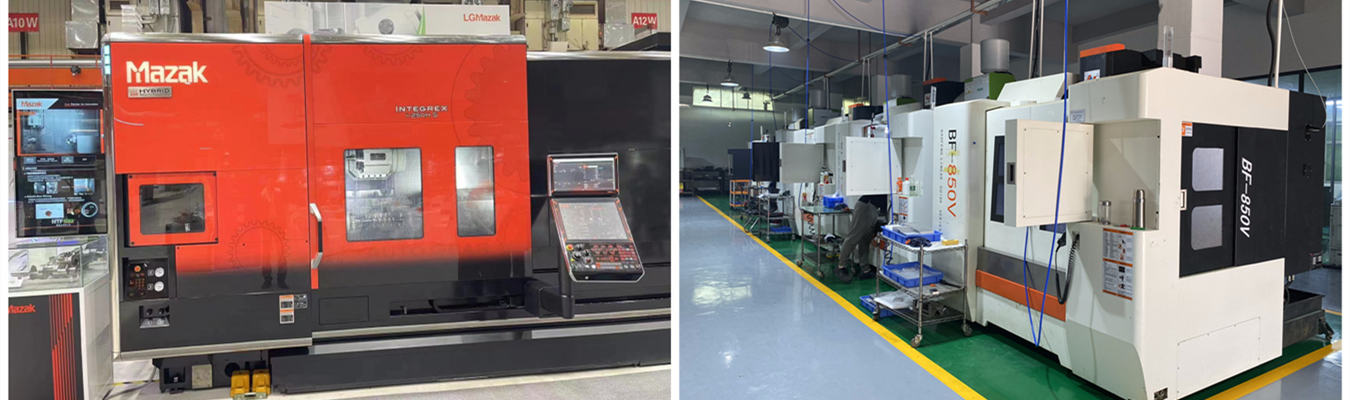
At Falcon CNC Swiss, we are more than just a CNC machining car parts factory; we are a strategic partner for automotive engineers and buyers around the world. Our advanced Swiss machining centers are specifically designed to produce the small, complex, high-precision components that modern vehicles demand.
Our Core Capabilities for Automotive Parts
| Capability | Falcon CNC Swiss Advantage |
| Precision | We achieve tolerances as tight as ±0.001mm (±0.00004inches) on critical automotive components, ensuring perfect fit and function-. |
| Advanced Equipment | Our shop floor is equipped with Citizen Cincom and Star Swiss-type CNC lathes, including multi-axis and 5-axis machining centers. We utilize 12-axis Swiss lathes for producing parts with complex geometries in a single setup-. |
| High-Volume Production | Our automated production lines are designed for high-volume manufacturing. We can produce over 1,000,000 precision parts per month, ensuring on-time delivery for large-scale orders-. |
| Material Expertise | We have deep experience machining the full range of automotive materials, including all grades of aluminum, steel, stainless steel, brass, copper, and engineering plastics. |
| In-House Finishing | We provide a true one-stop shop with in-house capabilities for anodizing, passivation, bead blasting, and other finishing processes. |
| Quality Assurance | We are ISO 9001:2015 certified. Our quality process includes First Article Inspection (FAI), in-process SPC monitoring, and final CMM inspection to ensure every part meets your specifications. |
| DFM Engineering Support | Our engineering team provides free DFM analysis. We review your design early to suggest improvements that can reduce cost and accelerate production. |
We manufacture CNC machined automotive parts for the automotive industry. We have years of experience in the automotive sector and know that you require strict quality control, close tolerances, and the ability to scale production up or down depending on your project’s requirements. Whether you require a prototype for an electric vehicle part or an initial run of 10,000 engine parts, Falcon CNC Swiss has the technical know-how and materials to deliver your product.
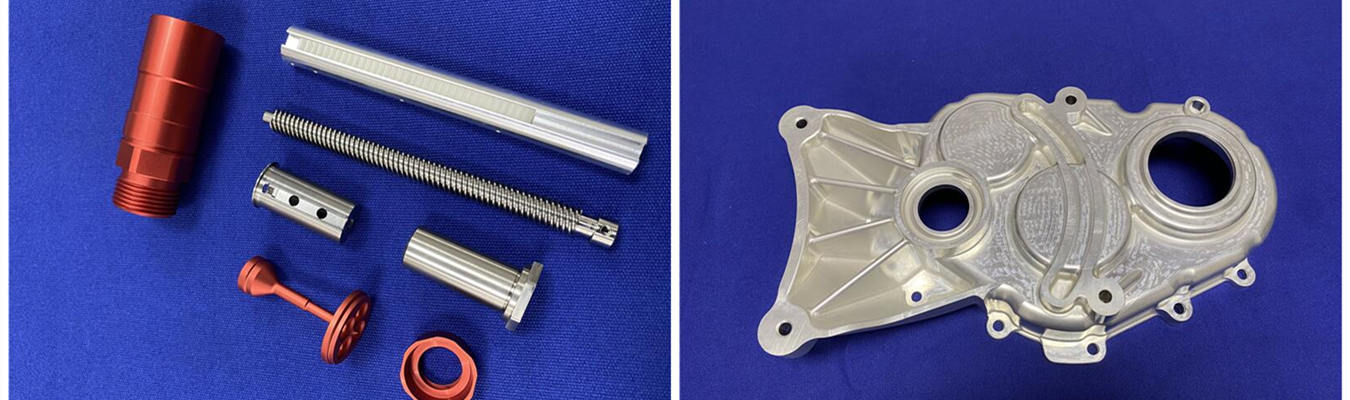
Cost is always a critical factor in automotive manufacturing. Here are proven strategies to reduce the cost of your CNC machining car parts components.
| Strategy | How It Saves Money | Implementation |
| Design for Manufacturability (DFM) | Avoids costly features like deep, small-diameter holes, sharp internal corners, or excessively tight tolerances on non-critical surfaces | Work with your manufacturer early. Ask for DFM feedback to optimize the design before quoting. |
| Choose the Right Material | Using a more common or easier-to-machine material can drastically reduce cycle time and tool wear | Evaluate if a high-strength steel is truly necessary, or if a more machinable aluminum or brass could meet the functional requirements. |
| Consolidate Parts | Reduces assembly time and the number of individual components that need to be machined and tracked | Redesign your assembly so that multiple parts are combined into a single, complex CNC machined component. |
| Plan for High Volume | The cost of programming and setup is amortized over a larger number of parts, significantly lowering the per-unit cost | Consolidate annual demand into a single, larger production run to maximize the benefits of automation. |
| Optimize Secondary Operations | Finishing steps like deburring, tapping, and anodizing add time and cost | Work with a supplier that offers these services in-house to reduce coordination costs and lead times. |
Precision, reliability, and cost effectiveness are essential in the automotive industry. When you work with a specialized CNC machining car part manufacturer, such as Falcon CNC Swiss (known for their cutting-edge swiss-style machines) you will have access to advanced technology and an experienced engineering team, as well as a dedication to quality from prototype through production.
Need to source high precision CNC machined car parts from China? Call Falcon CNC Swiss today and let’s talk about how we can meet your needs.
Upload your CAD file for a free DFM analysis and quote
Explore our precision CNC machining services for your automotive components
Contact our engineering team to discuss your specific requirements
CNC Machine Parts: Tolerances, Materials, Machining Types, Finding Suppliers
CNC machining tolerances for automotive components usually vary from ±0.005 inches (±0.127 mm) to ±0.001 inches (±0.025 mm) based on part functionality and application. Engine and transmission parts, however, often require much tighter tolerances of ±0.0005 inches (±0.0127 mm) to ±0.0001 inches (±0.0025 mm).
CNC machining can be done using aluminum, such as 6061 and 7075 alloys, commonly found in automotive applications because of their superior strength-to-weight ratio and capability to be machined.
CNC turning utilizes a rotating workpiece and a non-moving cutting tool; therefore it is perfect for parts with a cylindrical shape such as shafts, pins and bushings. CNC milling utilizes the stationary workpiece and rotating cutting tool; thus it is ideal for creating complex geometries and flat surfaces with pockets.
In order to find a reputable CNC machining automotive component supplier in China, look for ISO/IATF 16949 certification, advanced equipment (Swiss turning machines, 5-axis milling machines), rigorous quality assurance practices and proven capabilities in providing products to the automotive industry.
Lead times for custom CNC machined automotive parts will depend upon the complexity and quantity of the parts required. Simplified prototype orders can typically be completed within 3 to 5 days, while larger quantity production orders can take up to 3 to 6 weeks. Be sure to address your timeline with your manufacturer early in the process.
Design for Manufacturing (DFM) is the evaluation of a designed part to identify manufacturing processes or features that will be difficult to manufacture or very costly. The DFM review may also provide suggestions for modifications to the design to reduce production costs while preserving function and lower manufacturing times.