English
  日本語
日本語  한국어
한국어  français
  Deutsch
  Español
  русский
  العربية

Jul
Learn More
14

China is the preferred option when purchasing CNC machined components and will likely continue to be. You have probably considered this question if you have sourced custom metal or plastic components before - should you source from your local supplier or an overseas supplier? For many engineers, purchasing managers and business owners, this question is being answered with a greater frequency of Yes! to sourcing from China.
China has become a true manufacturing power over the last several decades by moving beyond simply being cost effective. It now accounts for about 30 percent of global manufacturing output. Low labour costs were there but the significant benefits are derived from the integrated supply chains and infrastructure supporting the manufacturers in China. The Chinese manufacturers are also utilising state-of-the-art equipment to manufacture parts, including 5-axis mills and Swiss lathes with precision tolerances of +/- 0.005 millimetres as good as those produced by manufacturers in Germany and the United States.
The challenge with sourcing from Chinese manufacturers is that finding reliable suppliers does not happen automatically - you must learn what you need to know concerning sourcing materials and manufacturing techniques, cost structures, quality control, and how to select the right supplier. This guide will provide you with the information you need to prepare yourself to buy CNC machined parts from Chinese manufacturers, regardless of whether you require a prototype run or high-volume manufacturing.
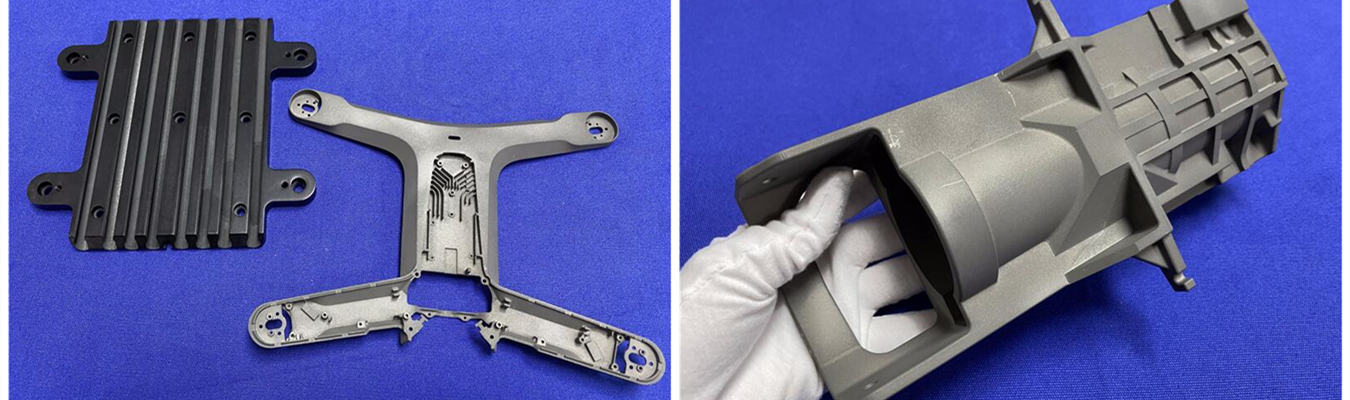
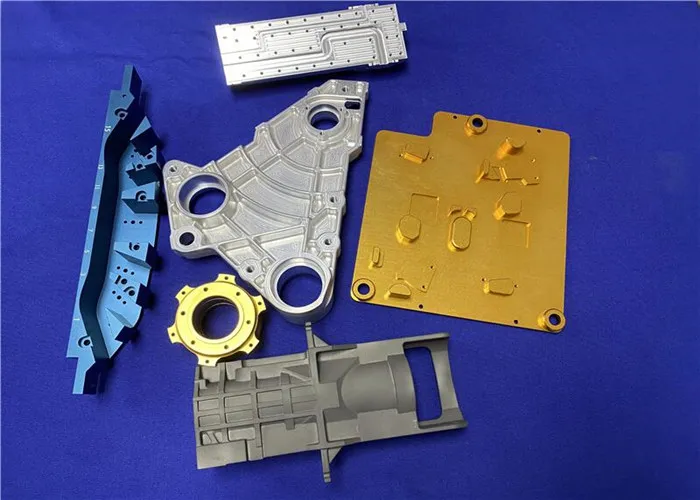
CNC machining parts will always begin with the best material. Chinese manufacturers produce parts in different metals and plastics; however, they primarily produce in aluminium.
CNC machined aluminium parts from china can be found in almost every type of manufactured product (e.g., enclosures for electronics) due to their light weight, ability to resist corrosion, and ability to be machined with relative ease.
| Alloy | Best For | Key Properties |
| 6061 | General-purpose parts, structural components | Good strength-to-weight ratio, weldable, easy to machine |
| 7075 | High-stress aerospace and defense parts | Very high strength, similar to some steels |
| 5052 | Marine and chemical environments | Excellent corrosion resistance, good formability |
Stainless steel (303, 304, 316): Utilized in medical applications as well as for food grade products; also used in applications that require corrosion resistance.
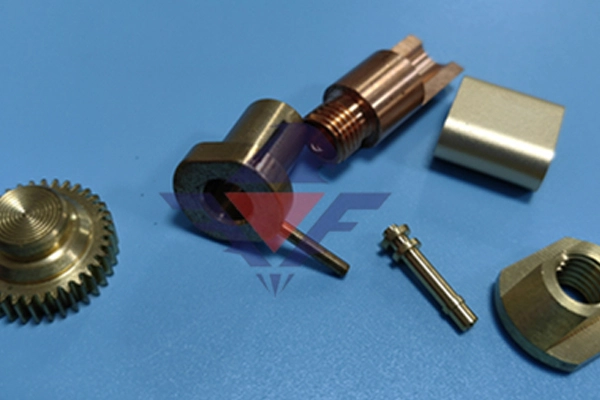
Brass and Copper: Provide great electrical conductivity for use in electrical components as well as fittings.
Titanium (Grade 2 Titanium and Grade 5 Titanium): Used extensively in aerospace applications and for use in medical implant applications where the strength to weight ratio is of importance.
Engineering Plastics (PEEK, Delrin, Nylon): Very light weight/insulate/electrically non-conductive and chemically resistant materials.
In the case of working with a China CNC machining parts factory, talk to them about how they source materials from China. Many Chinese suppliers will have established relationships with local mills and therefore can provide material for use on your project with potential savings of 10% to 15% compared to sourcing from North America.
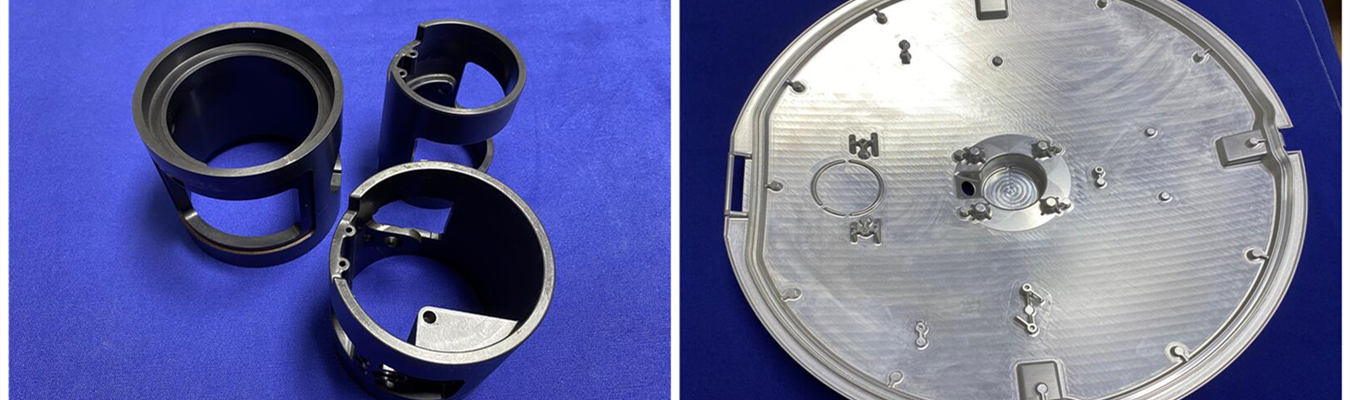
Not all CNC machining metal parts factory operations are the same. Understanding the core processes helps you match the right method to your part.
| Process | How It Works | Best For | Typical Parts |
| CNC Milling | Rotating cutting tool removes material from a stationary workpiece | Flat surfaces, slots, pockets, complex 3D shapes | Enclosures, brackets, housings, manifolds |
| CNC Turning | Stationary cutting tool shapes a rotating workpiece | Cylindrical or round features | Shafts, pins, bushings, connectors |
There are a number of modern CNC machining part suppliers in China who offer multi-axis machining, which combines both types of machining in one setup, reducing the risk of handling errors and significantly increasing production time.
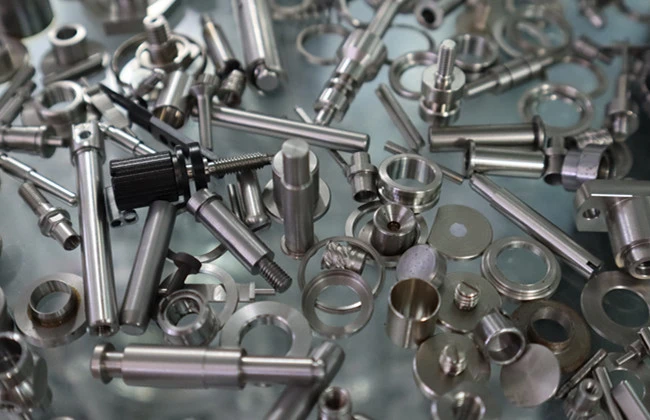
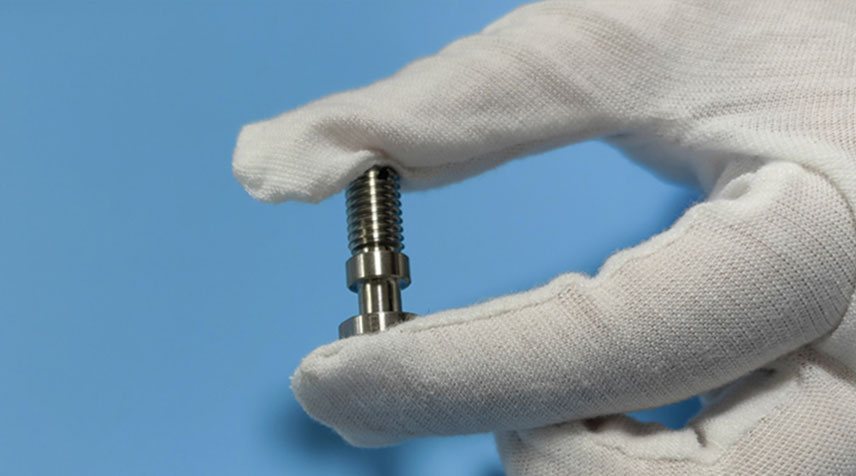
Swiss-type CNC lathes are also known as the gold standard for small diameter, long and highly complex parts. The use of a Swiss-type CNC lathe supports the workpiece directly at the cutting point, thus eliminating deflection, which makes them the ideal choice for making medical bone screws, miniature shafts and precision electronic parts. Learn more about our precision CNC machining capabilities.
Cost is probably one of your top priorities if you are looking for suppliers of CNC machining parts in China. However, the least expensive quote may not be your best option for value. Knowing what makes up the cost of a part will help you determine the best value to help you stay within your desired quality level.
CNC machining can be costly for at least four reasons:
1. How long it takes to machine a part: The more complicated the geometry of a part, the longer it will take to be machined. Therefore, while a 5-axis machine will typically charge more per hour than a 3-axis machine, it may also provide fewer set-ups so that overall machining time is less.
2. The type of material you are machining: The cost of titanium and stainless steel (raw material) and how long it takes to machine those types of materials will be considerably greater than both cost and time to machine aluminum.
3. Programming Setup: Setup costs are fixed and are amortized across your total number of purchased parts. For example, if you are creating five prototype parts, the programming setup may represent 50% of your total cost. Conversely, if you are manufacturing parts in high volume (10,000 parts), the programming setup will represent only $0.04 per part.
4. Parts with tighter tolerances and surfaces require slower cutting speeds and additional inspections. Additional surface treatments (anodizing, passivation, etc.) will also increase total part costs, but they will improve the longevity of the part.
1. Design for Manufacturing: Work with an experienced custom manufacturer of CNC machining parts plant that will provide free feedback on designing for manufacturing principles (adding chamfers) or standardizing hole sizes, or reducing unnecessary tight tolerances, will dramatically reduce the machining time.
2. Select the Proper Material: If 6061 aluminum complies with the specifications for your end product, there is no need to specify titanium.
3. Consolidate Parts: Instead of ordering multiple parts that require assembly, consider the feasibility of designing one machined part that could replace the multiple parts.
4. High Volume Commitment: Ordering large quantities of product will reduce the average programming setup costs per part. Many precision CNC machining parts manufacturers are able to provide less expensive pricing per part when multiple parts ordered at once.
Generally speaking, a cooperative relationship with a CNC machinist in China can achieve savings of approximately 20%-50% without affecting quality or tolerances.
Not all providers of china cnc machining parts are the same, here is what to look for.
1. Certification and Quality System
If the business does not have ISO 9001:2015 certification then they lack the minimum process control standards to sell to Western markets. Automaker use IATF 16949 and medical device manufacturers must have ISO 13485.
2. Machinery and Capabilities
High-end machines from manufacturers like Citizen, Star, Tsugami, Mazak, or Haas show a commitment to precision. Ask for their list of machines because they will be unable to machine complex designs if they are only using manual lathes or old 3-axis milling machinery.
3. Quality Control and Inspection
Be sure to request to inspect CMM (Coordination Measurement Machine) reports for each production run. This will validate that the part will approximate the dimension provided on your CAD file. Good manufacturers in China should be able and willing to provide material certifications (mill test reports) confirming that the aluminum, steel, or titanium used for your part meets the requirements specified in your CAD file.
4. Engineering Support/Communication
Excellent china cnc machine parts suppliers provide free DFM (Design For Manufacturing) evaluations. They will identify manufacturing defects/design issues before production starts. Good communication should be expected. If they are unable to provide clear answers to your technical questions during the quoting process, usually this will become a problem later.
5. In-house Finishing
Using an integrated supplier that performs finishing operations such as anodizing, passivation, bead blasting, and silk screening will reduce the possibility of delays that often occur when outsourcing and will simplify your supply chain.
Supplier Selection Checklist
| Criteria | What to Ask |
| ISO Certification | ISO 9001? ISO 13485 for medical? IATF 16949 for automotive? |
| Equipment | Do they have 4/5-axis CNC mills? Swiss-type lathes? |
| Inspection | Do they provide CMM reports and material certifications? |
| DFM Support | Will they review your design before quoting? |
| In-House Finishing | Anodizing, passivation, plating—under one roof? |
| Export Experience | Have they shipped to North America or Europe before? |
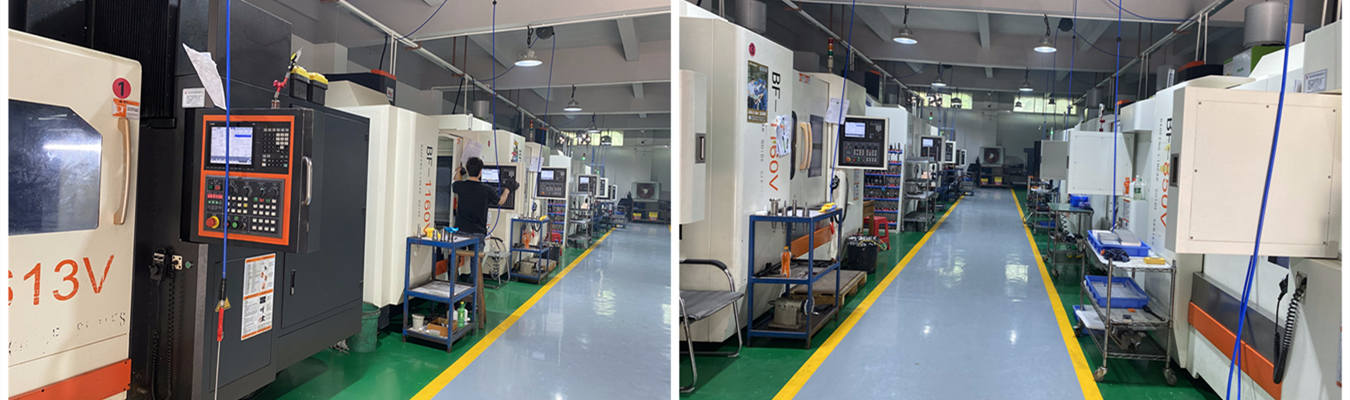
At Falcon CNC Swiss, we are not just another China CNC machining parts factory. We are a precision manufacturing partner with over 20 years of experience serving medical, aerospace, automotive, electronics, and industrial clients worldwide.
Our Core Capabilities
| Capability | Detail |
| Equipment | Citizen, Star, and Tsugami Swiss-type CNC lathes; multi-axis CNC milling and turning centers |
| Tolerances | As tight as ±0.0001inches (±0.0025mm) for critical features |
| Materials | Aluminum, stainless steel, titanium, brass, copper, engineering plastics |
| In-House Finishing | Anodizing, passivation, bead blasting, silk-screening |
| Quality System | ISO 9001:2015 certified; full CMM inspection; material traceability |
| DFM Support | Free engineering review before quoting—we optimize your design for manufacturability and cost |
We perform work with an engineering-centric mindset versus a production-centric mindset; meaning we review your CAD design file and give feedback on design for manufacturability (DFM) while making suggestions to reduce costs.
Our production capacity can scale from one prototype through to 50,000+ machined pieces produced.
We can ship throughout North America, Europe and Asia in a competitive lead-time manner.
While working with Falcon CNC Swiss on your China CNC machined parts for either medical device prototypes or automotive production in large volumes, you will experience consistent communication with live updates on processing, inspection reports and a dedicated PM assigned to your project.
You don not have to take chances on sourcing China CNC machining parts. By partnering with the right cnc precision machining parts manufacturer who has the proper equipment, certifications, engineering assistance, and quality assurance systems, you can get the best of both worlds in terms of price and precision.
When you partner with Falcon CNC Swiss, we are here to help make that partnership easy by handling everything from DFM analysis to final inspection under one roof.
Upload your CAD file for a free DFM analysis and 24-hour quote
Explore our precision CNC machining service for custom parts
Contact our engineering team to discuss your requirements
A: To start, take a look at their certifications (ISO 9001, ISO 13485, IATF 16949). Follow that up with an overview of their equipment list — you want to look for multi-axis CNC machines as well as Swiss-type lathes. Request CMM reports and material certifications. Test out their communication skills since this is the most important step; Suppliers that can answer technical questions so they are clear and provide good feedback on DFM should be a good choice.
A: Yes, if you take the time to find the right partner. The majority of Chinese manufacturers run on the same level as many Western manufacturers by using similar equipment and quality systems today. Verifying certification credentials, inspection practices and export history are the essential steps in determining if a particular company will meet your requirements.
A: A successful partnership usually produces a savings between 20% and 50% with no impact on tolerances-4. This savings will have come from reduced labor costs, established supply chains and the ability to purchase raw materials at much lower prices due to higher volume.
A: The most commonly used material to machine in China is aluminum (6061, 7075, 5052). Other materials such as stainless steel, brass, copper, titanium, and engineering plastics are also readily available to machine.
A: Require First Article Inspection (FAI) prior to any full production to get answers regarding CMM reports and material certifications (as well as additional documents). A number of end users of machined parts use independent inspection services, and/or ask for video of their manufacturing facilities.
A: Prototype lead-times can take an average of 5 to 10 business days. Production parts will depend on volume; however, most suppliers have standard lead-times of 15-25 days, and sometimes offer expedited service as well.