English
  日本語
日本語  한국어
한국어  français
  Deutsch
  Español
  русский
  العربية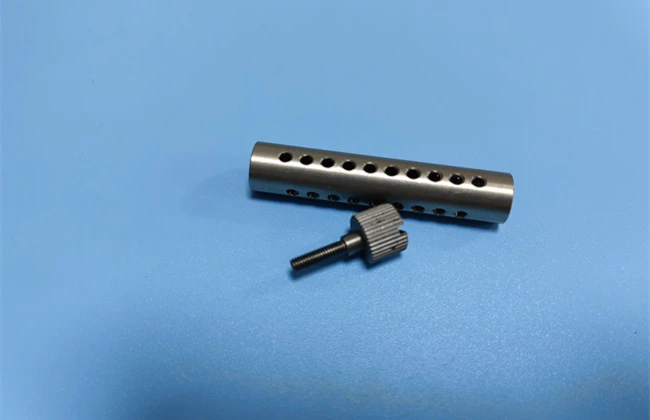

Aug
Learn More
08

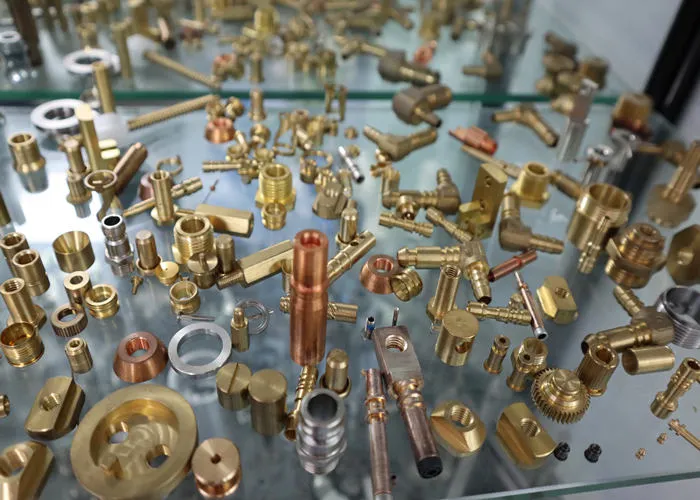
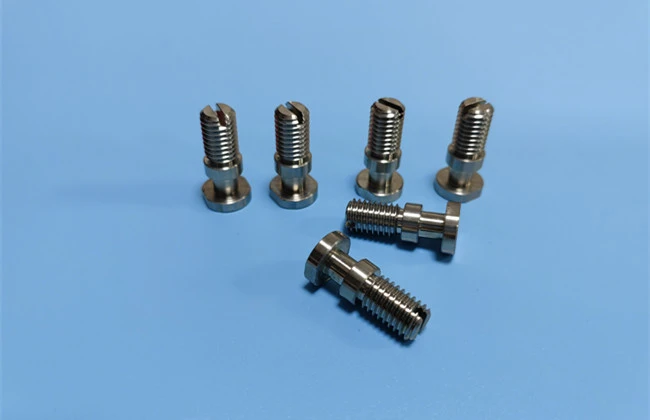
Small metal contact pins are used to make electrical connections between electronic devices or in the bare circuit board or module there will be some connection made between one PCBA and another PCBA; many examples are found in a smartphone dock and also they can be found in the battery compartment of laptop computers.
Spring loaded contact pins have an internal spring that applies a steady amount of force against the mating surface (the mating pins). This means that even with consistent movement or minor misalignment, the spring will keep the pin in place. In comparison, the battery contact pin has fewer parts and simpler construction.
Probe contact pins (which are sometimes referred to as test contact pins) are also spring pins and are specifically designed for use in test fixtures to test PCB.
When creating permanent connections, connector contact pins can be soldered (usually by hand-soldering) or they can be press-fit into connector housings. These types of contact pins are present in everything from general automotive wiring harnesses to medical devices.
When creating custom or unique contact pins for a specific application, the method of manufacture is also of great importance as the method of manufacture will determine the end quality of the contact pin produced. The best manufacturing method for manufacturing small diameter pins with tight tolerances and consistent high quality is through Swiss-made CNC machines.
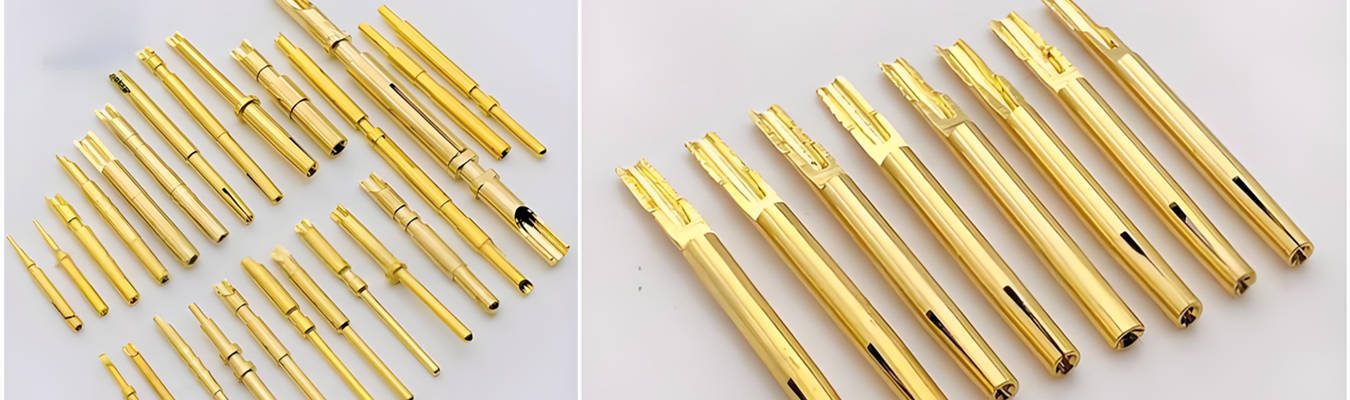
The performance and longevity of any contact pin depend heavily on two things: the base material and the surface finish. The right combination ensures low contact resistance, high cycle life, and consistent performance.
Base Material Comparison
| Material | Conductivity (% IACS) | Key Advantages | Best For |
| Beryllium Copper | 0.38 | High strength, excellent elasticity, fatigue resistance | High-cycle applications, spring contact pins, probe contact pins |
| Brass | 0.28 | Good strength and spring properties, lowest cost | General-purpose connector contact pins, cost-sensitive projects |
| Phosphor Bronze | 15% | Superior elasticity, excellent fatigue resistance | Battery contact pins, high-flex applications |
| Pure Copper | 1 | Highest conductivity, soft | Applications where maximum conductivity outweighs mechanical strength |
The IACS (International Annealed Copper Standard) measures electrical conductivity with pure copper having a value of 100% at 20 degrees Celsius. Beryllium copper contact pins represent an excellent compromise between conductivity and strength, as they provide much greater strength and flexibility than pure copper, making them perfect for use as spring contact pins that will endure thousands of mating cycles. For general-use connector contact pins, it is often most economical to use brass contact pins if extreme cycle life is not necessary.
Surface plating is equally critical. The base material provides structure, but the plating determines how the pin interacts with its mating surface.
| Plating Type | Conductivity (% IACS) | Key Advantages | Best For |
| Gold Plating | 76% | Excellent corrosion resistance, low contact resistance, durable | High-reliability applications, gold contact pins for medical/defense |
| Nickel Plating | 24% | Good corrosion and wear resistance, excellent underplate for gold | Nickel plated contact pins as base layer, industrial applications |
| Silver Plating | 85% | Highest conductivity among platings, excellent thermal transfer | High-current applications, RF connectors |
| Tin Plating | ~15% | Good solderability, cost-effective | PCB contact pins, applications requiring soldering |
Contact pins that are gold-plated are considered the highest-quality option (manufacturers tend to use the term gold standard) for applications that rely on their reliability and performance being maintained over an extended timeframe. Unlike silver and copper, gold does not oxidize or tarnish, which means contact resistance stays low throughout the lifetime of the product.
When constructing contact pins, some manufacturers use nickel-plated contact pins as an initial layer before applying the gold to provide a diffusion barrier to prevent base metals from migrating through the gold and onto the face of the contact pin.
Many manufacturers will use selective plating to maintain a balance between cost and performance. For example, using only gold plating on the actual contact area of the pin and tin or nickel on the termination area, allows the manufacturer to provide the advantage of a gold contact pin where it is vital (at the electrical connection) without the cost associated with the gold being applied to the entire part.
If you require custom contact pins, Falcon CNC Swiss provides you with the option of working with all of these materials and their associated plating methods to ensure that you receive the proper combination of performance and price.
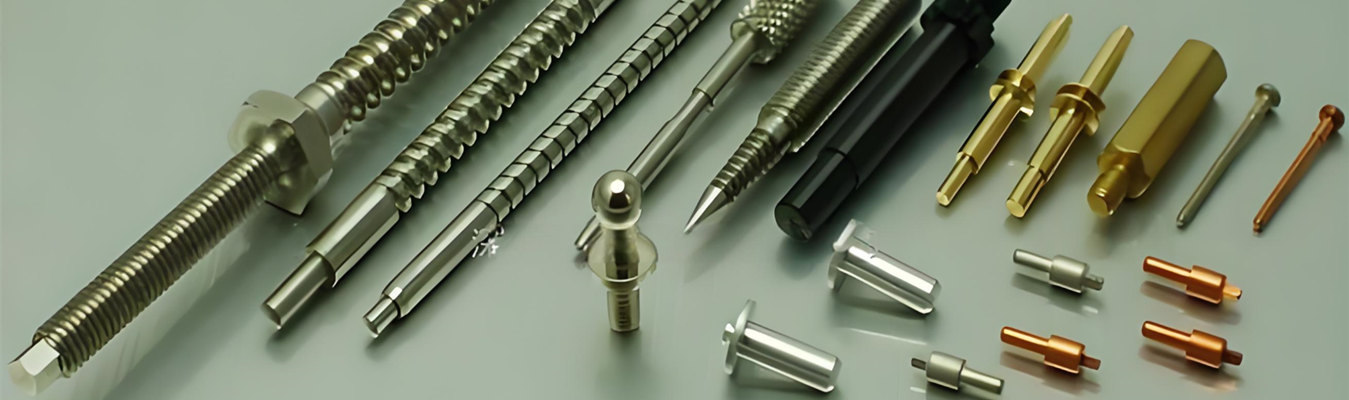
Contact pins have a variety of purposes across all industries using electronics. Each purpose needs its own special type of contact pin.
PCB contact pins allow for specific electrical connection points on printed circuit boards (PCBs) to perform functional testing, in-circuit testing (ICT), programming, signal monitoring, or grounding-19. For example, when you want to test a PCB during the manufacturing process, you may use test fixture pins (also referred to as beds of nails) to make temporary connections to the test points on the PCB.
Probe contact pins are, in fact, a type of spring-loaded contact pin. They are the actual probe contact pins used in test fixtures. Designed to withstand thousands of compression cycles while maintaining consistent contact resistance, these pins are typically arranged in dense arrays to contact multiple test points (potentially hundreds) on a single board-4.
Connector contact pins provide the electrical path for all electrical connectors. Regardless of whether you require a D-Sub industrial connector or a high-speed data connector for networking applications, connector contact pins are necessary for creating the electrical path.
They can come in either a male configuration (with a protruding contact surface) or female (with a receptacle where you can plug in a male configuration). To ensure they provide the proper mating force, alignment, and electrical performance, all connector contact pins must comply with precise dimensional specifications.
Charging contact pins are spring-loaded contacts designed for repeated connecting and disconnecting. You typically find them in various applications, such as smartphone charging docks, wireless earbud cases, wearable devices, and medical device charging stations.
Automotive contact pins must experience the most severe operational environments of all contact pins. They must maintain a reliable electrical connection while exposed to extreme temperature ranges (-40°C to +125°C), high vibration, moisture, and chemicals. Modern vehicles house hundreds of automotive contact pins within various components (e.g., ECUs, sensors, battery monitoring systems, and ADAS modules).
High-current contact pins are constructed to transmit electrical power versus just signal level currents. As a result, high-current contact pins typically consist of larger cross-sectional areas, beryllium copper (due to its superior combination of conductivity and strength), and silver or gold plating to minimize resistive heating.
Low-resistance contact pins are very important in applications where even milliohms of resistance are significant. Keeping electrical contact resistance to the minimum possible is essential in precision measurement instrumentation, battery monitoring systems, and high-reliability connectors, as it ensures the integrity of the signal and prevents heat from being generated through excess resistance.
SMD contact pins are manufactured for surface-mount assembly, where the contact pin is located directly on the surface of the PCB and soldered in. Through-hole contact pins are inserted into drilled holes on the PCB prior to soldering, providing additional mechanical strength for components that may be subjected to mechanical stress.
The basic unit of measure for an electrical pin configuration is pitch. For instance, in high-density connector applications, you could have a 1mm pitch contact pin. This means that the center-to-center distance between adjacent contact pins is 1 mm. The smaller the pitch between adjacent contact pins, the more pins can fit into a given space; however, manufacturing requires higher degrees of precision with smaller pitch contact pin configurations. Explore our pins and shafts manufacturing capabilities.
If you need to buy contact pins for your next project, whether wholesale contact pins for production or custom contact pins for a unique design, choosing the right partner is critical. Here is what to look for.
Supplier Selection Criteria
| Criteria | What to Look For | Why It Matters |
| Manufacturing Capability | Swiss-type CNC lathes, multi-axis turning centers | Enables tight tolerances (±0.005mm) and complex geometries |
| Material Expertise | Experience with brass, beryllium copper, phosphor bronze, and plating | Ensures proper material selection for your application |
| Quality System | ISO 9001 certification; ISO 13485 for medical applications | Provides documented quality assurance and traceability |
| In-House Finishing | Gold, nickel, silver, tin plating capabilities | Reduces lead times and ensures plating quality |
| Volume Flexibility | Supports both prototyping and high-volume production | Allows you to scale from development to production without switching suppliers |
Custom contact pins require a manufacturer with the engineering expertise to interpret your design requirements and the production capability to execute them consistently.
Engaging with a Contract Manufacturer (CM) during your design phase will allow you to receive potential feedback on your design from a CM prior to receiving a quote. Implementing minor alterations (i.e., modifying radius/dimension size, changing diameter size to a standard-size) to the design can lead to stimulating machine tool processing times while also maintaining the target design operating features.
Using Proper Material: Application specific copper-alloyed (brass with gold plating) contact pins may provide equivalent performance characteristics as beryllium copper contact pins while yielding lower material costs. When selecting a material to be utilized in your contact pin application consider utilizing the material that meets the design requirements of the intended application.
Utilizing Selective Plating: Where applicable, use selective plating (plating only the contact area) in lieu of complete gold overlay. Selective electroplating can reduce your plating costs by up to 30 - 50%.
Planning Production Quota: Your fixed costs associated with electroplating set-up will be at a defined level regardless of unit quantity; in the situation where you can foresee that you will have an ongoing requirement for your contact pins, we encourage you to purchase initial larger quantities with known forecasted quantities. Doing so will provide you with a lower unit price.
Utilizing Experienced Manufacturers: Falcon CNC Swiss (manufacturing in China) may provide your project with significant cost savings relative to manufacturing at facilities located in North America. Chinese manufacturers make up about 70% of the global precision contact pin manufacturer due to established manufacturing clusters with advanced manufacturing infrastructure and cost-effective labor.
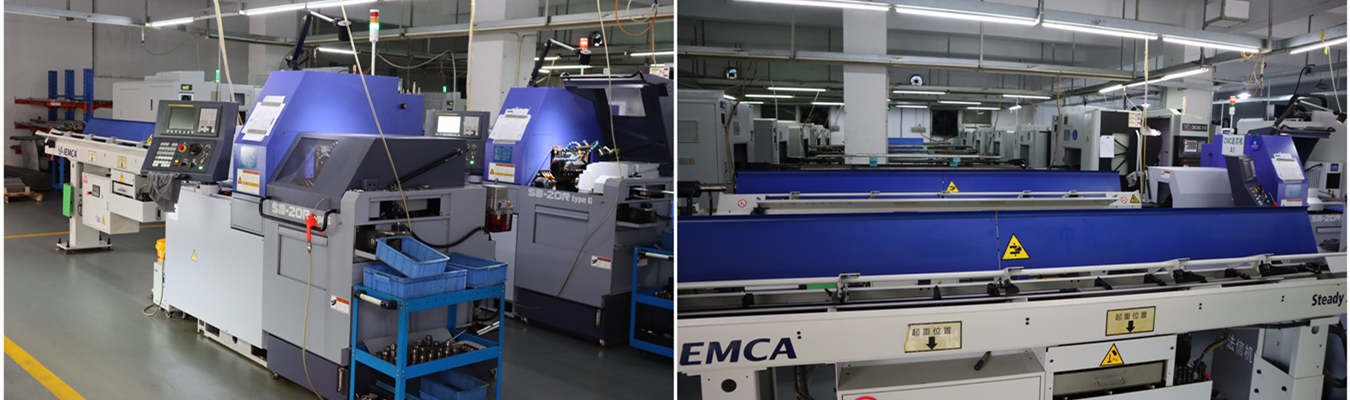
Falcon CNC Swiss uses high-tech Swiss type machines and multi-axis machining (Swiss-Turning) to manufacture custom contact pins. We use Citizen, Star and Tsugami Swiss Lathes designed to make contact pins at high precision and with superior quality.
The reason Swiss Machining is ideal for contact pins is that the guide bushing supports the material right at the cut point which prevents any kind of deflection and allows for consistent accuracy on long thin parts. For probe contact pins and connector contact pins concentricity and surface finish will affect electrical performance directly.
Contact Pin Capabilities:
up to a 0.5mm diameter with tolerances of ±0.005mm
multiple material options; brass, beryllium copper, phosphor bronze, stainless steel, copper
in-house finishing; gold plating, nickel plating, silver plating, passivation, bead blasting
fully documented ISO 9001:2015 quality system with full CMM inspection
from prototype to production - 1 prototype or millions we will grow with your needs!
If you need spring contact pins, battery contact pins, PCB contact pins or any other type of custom contact pin our engineering team will provide you with DFM feedback to help you optimize your design for manufacturability and costs before giving you a quote.
Upload your CAD file for a free DFM analysis and quote
Explore our Swiss machining services for precision components
Contact our engineering team to discuss your custom contact pins requirements
A: A contact pin, which is the male part of an electrical connector contact arrangement, is a metal pin that plugs into the female socket of the connector. Another way to describe a contact pin is that it is the actual metal conductor that carries electrical current or signals through connected devices.
A: Contact pins are usually created via CNC turning (computer numerically controlled turning) or Swiss-style manufacturing. First, a metal rod (brass, beryllium copper, etc.) is passed through a CNC lathe. Next, using various cutting tools, the rod is turned into a contact pin with precise dimensions for tip shape, retention features, and length. Finally, after turning, each contact pin is plated with a finish (gold, nickel, or tin), inspected, and packaged.
A: A pogo pin (also known as a spring-loaded pin) is a type of contact pin. While contact pins are typically rigid (fixed position), pogo pins contain a spring that compresses to apply constant contact pressure between the pin and its mating connector regardless of slight misalignment.
A: Gold plated contact pins are recommended for applications where there will be frequent cycles with low and stable contact resistance such as in corrosive environments; these include medical, aerospace, and marine applications. As for nickel plated contact pins, they are suitable for cost-sensitive projects requiring some level of corrosion resistance, but not necessarily lasting for extremities due to lengthy cycles. Nickel plated pins may also be used as an underplate for gold.
A: Yes! With advanced Swiss CNC machining techniques, there are ultra-small custom contact pins available down to a 1 millimeter (mm) pitch (center-to-center spacing). Additionally, the capability to manufacture contact pins to tolerances of +/- 0.005mm helps provide reliable electrical connectivity when installing custom and high-density connector assemblies by ensuring proper alignment between connector components.