English
  日本語
日本語  한국어
한국어  français
  Deutsch
  Español
  русский
  العربية


Apr
Learn More
08

Falcon CNC Swiss | March 27, 2026
Fanuc America will invest $90 million to build a new facility in Michigan. This facility will have over 840,000 square feet of space and allow Fanuc to increase the capacity it has in the U.S. to make robots and automation equipment. This change is a reflection of the increased demand in North America for automated solutions that provide high-volume CNC machined goods and industries such as automotive, aerospace and medical device manufacturing will benefit directly from this expansion.
On March 24, 2026, Fanuc America Corporation—a subsidiary of Japan's Fanuc Corporation and a world leader in CNC systems and industrial robotic manufacturing—announced plans to invest $90 Million in building a new facility located in Michigan. The new facility will occupy approximately 840,000 square feet and is projected to be finished by late 2027; it will also generate approximately 225 new jobs.
Over the last several years (including 2018), Fanuc America has contributed nearly $300 million to expanding its business in the United States, thus expanding its total square footage in the US to 3 million square feet, and creating more than 700 new jobs. In addition, in 2026, Fanuc America is also expected to open an expanded Fanuc Academy located in Auburn Hills, Michigan, which will be the largest robotics training facility in the US.
“This investment is an important step toward furthering our Michigan manufacturing footprint, which has included manufacturing paint application robotics in the US for over 40 years,” said Mike Cicco, Fanuc Americas President and CEO. “This expansion will help us become a more responsive supplier to our domestic market while ensuring we provide competitive options to customers who find themselves somewhat limited by automation.”
The backbone of high-volume production is automation. Manufacturing large quantities of products using CNC (computer numeric control) machines requires being able to repeat the process accurately, create very little downtime, and maintain a consistent quality. The only way to accomplish this sustainably is to automate the process rather than rely on human individuals to do the same tasks day in and day out at scale.
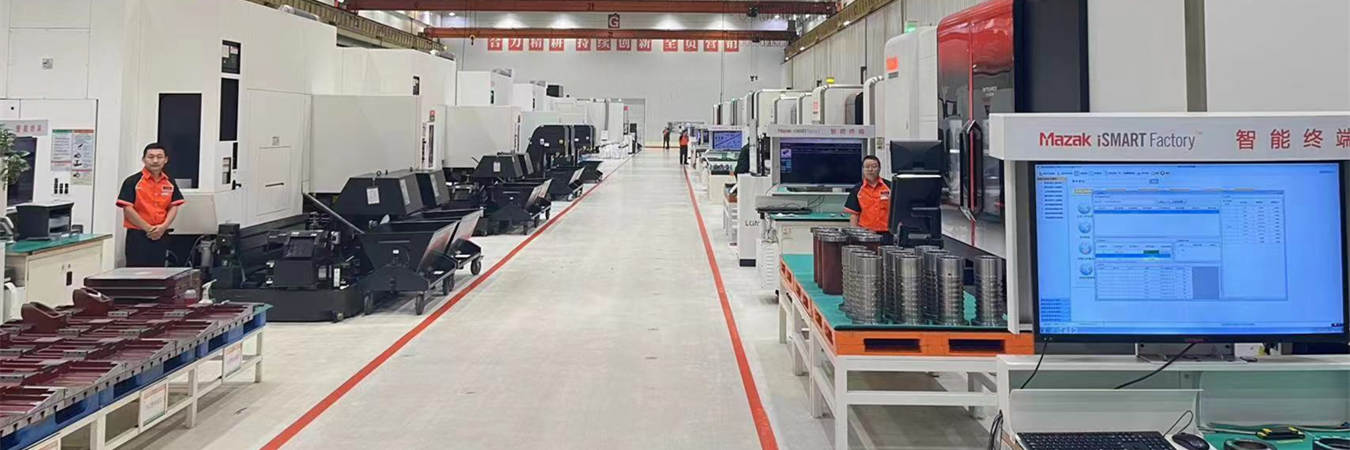
High-volume CNC machining demands repeatability, uptime, and consistency—qualities that direct human operation cannot sustainably maintain at scale. Automation bridges this gap.
Fanuc’s investment focuses on three technology pillars critical to high-volume manufacturing:
1. The use of physical AI and autonomous operation.
The latest generation of robots, for example, have AI-based vision systems or AI-based mode of operation that allows for lights out or unattended end-to-end manufacturing, that therefore increases total spindle time which reduces cost-per-part charges.
2. The use of virtual commissioning and digital twins.
Before any physical robot is actually installed, a programmer can use the digital twin of the robot to create workflows, identify collisions with other equipment, reduce cycle time and generally optimize the workflow to get production up and running as quickly as possible when transitioning from pilot runs to production runs at full volume.
3. Integrating CNC-Robotic workcells.
Fanuc is both a manufacturer of CNC and robotic systems, allowing them to integrate the automation process much more closely than other manufacturers. By directly integrating robotic loaders into the CNC control systems, consolidation of the automation processes is completed and the level of reliability of the robots is improved. For example, Falcon's high-volume plant has over 300 machines, by automating the loading and unloading process of the CNC workstations into the robotic loaders, the company is able to drastically improve the OEE or overall efficiency of the entire plant's operations.
For those purchasing high-volume machined parts, these processes will directly affect the lead-times the customers experience, the consistency of the pricing from lot to lot, and the overall predictability of the entire supply chain.
This expansion indicates a larger trend happening within the manufacturing industry in North America; companies are increasingly investing in automation technologies that will help them produce goods domestically at scale.
Decrease reliance on offshore supply chains: High-volume automated machining enables reshoring (moving production back to the U.S.) due to narrower wage gaps compared to low-wage countries.
Acceleration of Adoption Among Automotive/Aerospace: Fanuc's investment also aligns with demand for precision machined components at scale from both electric vehicle (EV) manufacturers and aerospace tier suppliers.
Workforce Development: The expanded Fanuc Academy will be able to train engineers and technicians on advanced automation, which provides solutions to a significant shortage of skilled workers in the U.S. manufacturing sector.
This announcement also coincides with a dramatic increase in capital investments made in machine tools by U.S.-based companies. Though there was a seasonal decline in January 2026 orders for automated machining systems, demand continues to remain far above levels seen from one year ago.
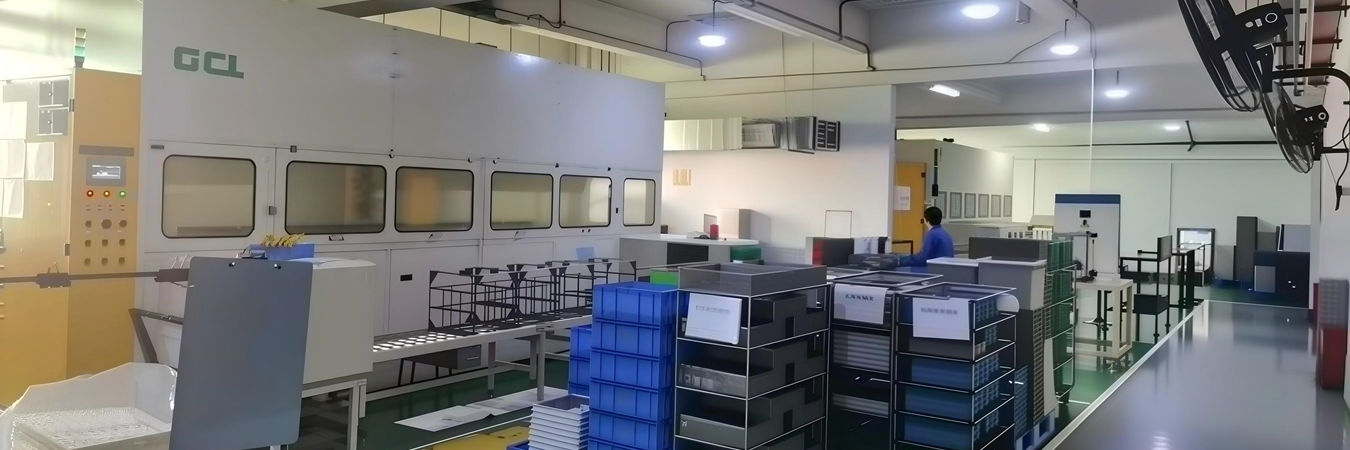
Falcon CNC Swiss believes automation is the basis for scalable high-speed production and should be an integral part of every manufacturer’s capabilities. The $90 million investment committed by Fanuc supports our perspective that manufacturers are seeking strong partners with the ability to provide repeatable quality at scale through automated workflows.
From the perspective of engineering, there are three key areas of enablement for achieving high-volume success:
1. Process Stability: By using robots to load parts, you remove variability in the positioning of a part, resulting in a decrease in unpredictability of tool wear and improved SPC outcomes.
2. Changeover Efficiency: The ability to automate workholding and utilize standard fixturing allowing for mixed production runs without productivity loss, are capabilities that will allow high-volume production facilities to sustain throughput.
3. Data Continuity: Integrated MES/ERP systems collect real-time production data to allow for predictive maintenance and traceability – fulfilling the requirements that we meet through our ISO 9001 and IATF 16949 certifications.
Automation at this scale is not optional; it’s the competitive baseline for high-volume production machine shops with 300 or more multi-axis Swiss lathes and machining centers.
Buyers of High Volume CNC Machined Parts Should Manage this Automation Expansion with Their Suppliers
**If You Are a High-Volume CNC Machined Parts Buyer**
The expansion of Fanuc's manufacturing capabilities is evidence that the U.S. automation ecosystem is maturing.
Here's how to benefit from this trend:
Inquire About Suppliers' Automated Processes: The suppliers who have invested in developing robotic workcells and digital process controls will provide the most consistent lead times and quality. The high-volume CNC machining process that we provide is based on these principles.
Prioritize Supplier Traceability: By implementing automated data collection, your suppliers will be able to offer you total lot traceability - this is especially important for the Aerospace, Medical, and Defence sectors.
Evaluate Supplier's Automation Infrastructure Based on Their Ability to Scale: Make sure your supplier has an appropriate automation infrastructure to be able to scale volume without sacrificing tolerances.
When evaluating potential suppliers as partners, request documentation regarding their automated systems, in-process inspection frequency, and changeover capabilities, as they will provide an accurate indication of suppliers' readiness for high-volume production, beyond what they might offer in their brochures.
Fanuc America $90M investment announcement – Evertiq:Fanuc America invests $90M to boost robot manufacturing
Fanuc America expansion details – GuruFocus:FANUY Plans $90M Expansion in U.S. Robot Manufacturing
Answer: The automation process decreases costs per part by maximizing spindle run time, reducing waste due to human error in material handling, and allowing for "lights out" manufacturing. Therefore, as the total cost of manufacture decreases through these three elements, high volume runs become more economical.
Answer: The automotive industry (electric transportation components, powertrain components), the aerospace industry (airframe and trim components), the medical device industry (surgical tools, implants), and the industrial equipment industry all rely heavily on high precision manufacturing that takes place on a large scale.
Answer: Some methods include: review of quality management certifications (ISO 9001, IATF 16949), request for case studies that involve similar high-volume programs, inquire about the number of robotic cells, in-cycle statistical process control (SPC), and the use of digital traceability.