English
  日本語
日本語  한국어
한국어  français
  Deutsch
  Español
  русский
  العربية


Jun
09
Engineering Guide: Precision CNC Turning – Machining Brass vs Aluminum for Optimized Swiss Machining
Learn More

Though the speed at which injected molded items are manufactured is extremely fast, ejector pins are one of the few pieces that do not receive much attention until an issue arises. If a part gets stuck in a die, an ejector pin breaks, or there is premature wear on the pin, a production line can be stopped and thousands of dollars can be lost in scrap parts and production delays.
An ejector pins injection molding is a slender, precision ground, steel or aluminum part that will push the finished plastic component from the mold cavity after it has cooled. While the ejecting of a plastic component from a mold seems fairly simple, the workmanship involved in creating each ejector pin is anything but simple. Ejector pins must endure millions of injection cycles and provide a mechanism to push the completed part out of the mold while preventing any excessive wear on the mold tooling and maintaining any necessary alignments from the die to the molded component.
The purpose of this guide will be to provide the information necessary to differentiate high quality mold ejector pins from those that will fail. The technical explanation will provide you with the practical information necessary to specify, procure and maintain these critical components with confidence.
There are several types of ejector pins available, including stainless steel ejector pins for medical applications and straight ejector pins for general production. The better you understand the engineering of the ejector pin, the better you will be able to make sound decisions and reduce your total costs of owning those critical components.
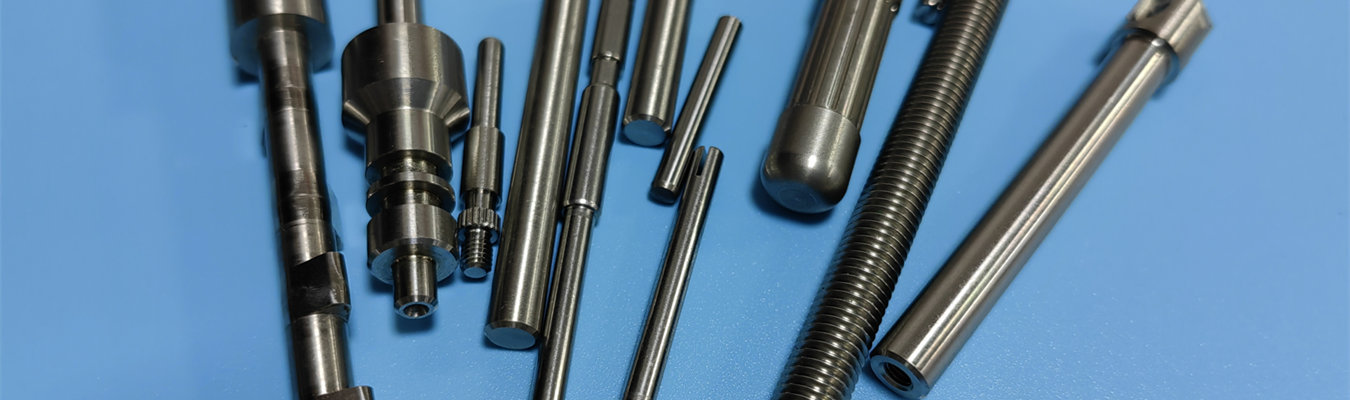
Ejector pins face some of the most difficult conditions during manufacturing. They slide in and out of closely controlled clearance holes thousands of times per shift; they withstand extreme temperature and pressure levels; and they must effectively respawn plastic parts without hanging up on or galling against them. Achieving this reliability requires overcoming several fundamental machining challenges.
Unlike standard fasteners, injection molding ejector pins must fit in their respective guide holes that are measured in microns. If they are too loose in their guide holes, flash will escape through the pin into the molded part, creating defects. If too tight, the pin will freeze up or gall, causing catastrophic damage to the mold.
There are international standards (ISO 6751 (2011)) that specify tolerances and dimensions of injection molding and die casting ejector pins. In critical applications, there must be tight control over concentricity of head, body, and tip of the pin.
Standard machining tolerances for ejector pins is typically ±0.02mm, while many high-volume suppliers will do custom machining down to ±0.005mm if requested. At Falcon CNC Swiss, our multi-axis CNC machines and precision grinding methods generally achieve these tolerances through full production runs.
Ejector pins are long thin and slender cylindrical objects. Errors in straightness or slight bends on the pin will bind the pins in their guide holes causing inconsistent part ejection rates, increased wear rates, and eventual breakage.
Surface finish has a direct effect on wear rate. Smoother surfaces reduce friction and galling potential. High precision CNC machining, which achieves an Ra equal to or less than 0.2μm, produces smooth surfaces that minimize friction and increase the lifespan of the pin and mold.
Ejector pins need to be hard enough to withstand excessive wear but tough enough to absorb the repeated impact without cracking. If the pins are over-hardened, they become very brittle, and under-hardened pins wear out rapidly.
The most common general-purpose material for ejector pins is SKD61 and H13 hot work tool steels, with hardness ratings typically between 48-52 HRC. For high-volume applications (or abrasive applications) manufacturers specify ASP30 powder high-speed steel (62-64 HRC) and through-hardened stainless steel variants. Surface nitriding creates a hard outer layer (up to 900 HV) for high-volume / high-wear applications while maintaining a tougher core.
When a customer orders 50,000 ejector pins, every single one must be dimensionally the same as the first, and to achieve this requires automated manufacturing processes and stringent statistical process control, not traditional machining. Explore our CNC precision machining service for mold pins manufacturing.
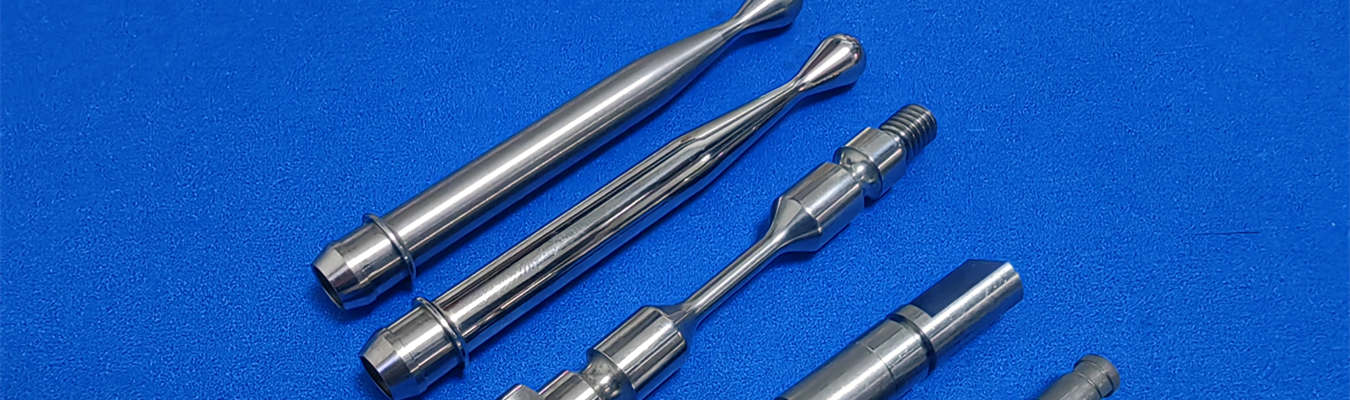
It is important to choose the appropriate type of ejector pin for a particular molding job by considering several factors: the part geometry, the ejection force, and how the surface finish should look after it comes out of the mold.
The vast majority (more than 99%) of all ejector pins are straight, with a circular cross-section. They are very cost-effective, widely available and highly standardised. These types of ejector pins are appropriate for most general-use plastic parts, small to medium-sized components, and applications where visible ejector pin impressions will not be a problem. However, the limitation of straight ejector pins is that the ejection area is quite small, so it may leave an impression on a sensitive surface or cause concentrated stress in a thin wall part.
Flat ejector pins, also called blade ejector pins, have a rectangular or square cross-section. They are used when a long rib, a narrow edge, or an elongated product cannot use standard round pins to provide sufficient ejection area. Flat ejector pins have a larger ejection area than straight ejector pins so that they can distribute stress more evenly, reducing the risk of part deformation. The geometry of flat pins is more complicated than that of round pins (for example, requires more precision in machining), usually requiring wire EDM or precision milling, rather than regular lathe machining.
Step ejector pins include a section that reinforces the base of a small diameter pin to provide increased bending strength. This design is recommended for pins with a diameter of less than 3mm because they can deflect or break when subjected to repeated impact, making them prone to deflection or breakage.
Spring ejector pins have a spring mechanism incorporated into them that allows for delayed and/or progressive ejection. This is advantageous for very intricate part profiles in which all of the pins cannot be ejected simultaneously or could potentially distort the part. Spring-loaded ejector pins are also often used for angled lifters, which are also typically made from spring steel, to withstand repeated flexing.
Air ejector pins use air pressure rather than mechanical force to assist in the ejection of the part. This is particularly useful for thin-walled or fragile components that cannot be contacted by standard pins. A compressed air system functions by directing compressed air through a poppet-type valve, which places special importance on the need to properly seal the air ejector pin and fit it to the mold to retain the proper operating characteristics.
Progressive ejector pins are designed for use in multi-stage ejection systems where the various pins will advance and eject the parts during the various stages of ejection to provide forceful removal of parts from complex undercuts and/or very deep cavities without causing damage to the parts.
| Ejector Pin Type | Best Application | Key Advantage |
| Straight or Cylindrical | General-purpose parts, high-volume runs | Low cost, high availability |
| Flat or Blade | Deep ribs, narrow slots, thin wall sections | Large ejection area, reduces marking |
| Stepped | Pins < 3mm diameter | Reinforced root prevents bending |
| Sleeve | Bosses around screw holes | Uniform ejection, no localized stress |
| Air | Thin-wall or cosmetic parts | Zero contact, no ejection marks |
| Spring-Loaded | Angled lifters, delayed ejection | Enables complex undercut release |
Learn more about our CNC machining mold pins manufacturing.
The life of the ejector pin, up-time of the mold, and total cost of ownership are all directly measurable with regard to the selection of the base material and surface coating.
Most commonly, hot work tool steel (SKD61 / H-13) is used for general-purpose mold ejector pins, which normally has a hardness between 48 and 52 HRc. Hot work tool steels will provide excellent heat resistance for the molding of engineering plastics including PA, PPS, and PC.
Loss of ejector pin life can also be prevented by using ASP30 powder high speed steel. With high vanadium content, ASP30 forms hard carbide particles that significantly increase wear resistance as compared to traditional tool steels. ASP30 also achieves a hardness of 62 - 64 HRc, making it suitable for use with abrasive resins and glass-filled materials, as well as production runs exceeding 10 million cycles. Reports show that ejector pins made from ASP30 can provide a lifespan improvement of 100% or better than traditional tool steels, with a 60% reduction in frequency of replacement.
Stainless steel (SUS440C / 17Cr Hardened) is another material with good corrosion resistance, with a hardness range of 52 to 55 HRc. Type 17Cr stainless steel can be hot worked at 500 degrees Celsius and has the added benefit of being necessary for molding certain corrosive resins, as well as medical parts which will be sterilized. Additionally, ejector pins made of stainless steel are necessary for producing transparent plastics when any type of surface corrosion or discoloration would render the molded parts unacceptable.
The nitriding process adds nitrogen to the surface of the steel to create an extremely hard outer layer (up to 900HV), while leaving the core tough and impact-resistant. Nitrided ejector pins are available in large supply from companies such as Misumi; nitrided equivalents to SKD61 will have surface hardnesses of 900HV and base material hardnesses of approximately 40+/-3 HRc and are suggested for molds with a life expectancy of 10 million to 50 million cycles.
Titanium Nitride (TiN) hard coating creates a gold-colored, hard, wear resistant surface which reduces friction and prevents galling. TiN is ideal for general-purpose applications; using TiN will improve the surface finish, and therefore reduce the amount of polishing required after EDM or grinding.
Diamond-like carbon (DLC) is an ultra hard coating with excellent lubricity. Therefore, DLC is ideal for use in contamination-sensitive and clean environments such as in the semiconductor packaging and medical molding industries.
Titanium carbonitride (TiCN) has a higher hardness and abrasion resistance than standard TiN. Therefore, TiCN is suitable for aggressive molding applications, where tools must be durable.
Overall, PCB coating cycles including TiN and TiCN have been proven to significantly increase tool life, decrease downtime, eliminate galling, and reduce demolding forces. In the case of very demanding applications, DLC films can be specified to achieve ultra-low friction and extremely high wear resistance when ultimately utilizing a molding tool.
At Falcon CNC Swiss, we combine precision CNC turning, grinding, and finishing under one roof to produce ejector pins that meet or exceed ISO standards for dimensional accuracy, concentricity, and surface finish.
Precision CNC Turning: Initial shaping of pin blanks from certified tool steel or stainless steel, with consistent diameter control and feature geometry.
Precision Grinding Sequence: A full-process grinding approach including centerless grinding, punch grinding, and surface grinding. Centerless grinding is particularly effective for producing uniform cylindrical pins in high volume.
Threading and Feature Machining: Execution of threaded features, stepped diameters, and complex geometries on multi-axis CNC equipment.
Heat Treatment and Nitriding: In-house or tightly controlled partner processes for hardness optimization and surface treatment.
Inspection: CMM and optical measurement equipment verifies diameter, concentricity, and length to ensure every pin meets your specifications.
Every batch of ejector pins leaves our facility with full material traceability. We provide hardness certification, dimensional inspection reports, coating documentation as applicable, and CMM reports upon request. Our quality system complies with ISO 9001 standards, ensuring that your precision CNC machining service requirements are met with complete documentation.
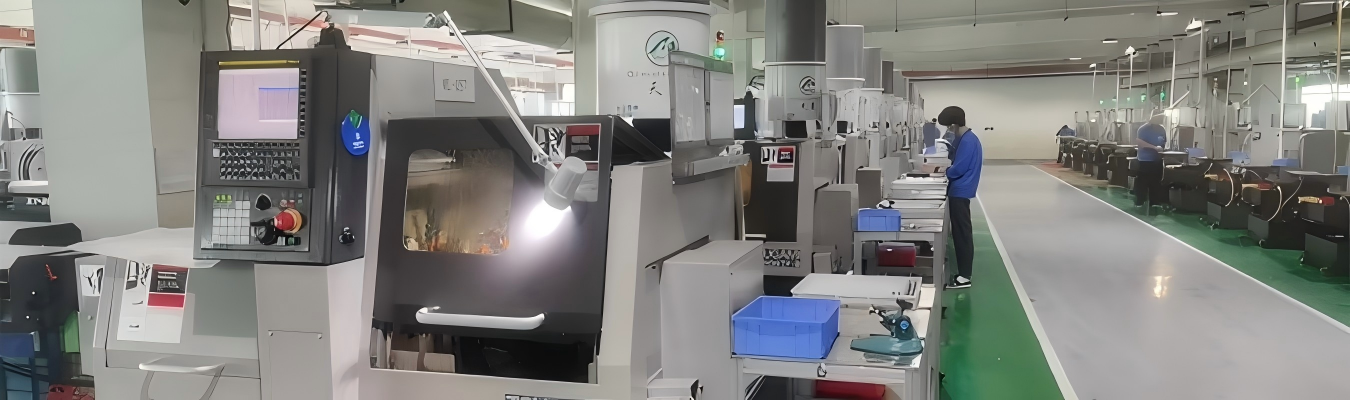
Pin failure may affect the manufacturer significantly and can impact both the quality of the output and length of production cycle times.
Listed below are some recommendations to enhance the lifespan of the ejector pin:
Adjust the Ejector Pin to the Hole Clearance - Too much pin play can lead to an abundance of excess flash and too little play will lead to galling of the ejector pin. Consult with the manufacturer of the ejector pin as to how much pin play that will be needed for each material being used to manufacture the part(s) – there are several materials of construction for the pins, different numbers of injection cycles, and different amount of play – reference an ISO guide.
Use the Correct Coating - Resins that have abrasive properties (such as glass-filled nylon) shall utilize hard coatings (i.e., titanium carbide (TiCN), nitriding) on the ejector pins. Applications such as a cleanroom or hospital may require an ejector pin made of stainless steel due to the enhanced lifespan over non-stainless steel based materials.
Maintain Ejector Pins - Develop a plan to check the ejector pins (weekly, monthly, etc.) for galling (excessive wear) and bent pins. Replace worn pins with new sets to ensure the timing of ejection stroke consistency. Develop a record of used pins’ locations for pattern development.
Utilize Adhesives for Tough Applications - For instances when the standard ejector pin has excessive wear, upgrade to high-performance ASP30 through-hardened stainless steel ejector pins can typically result in more uptime, but the initial cost of the above pin is larger (expendable).
Nitriding Ejector Pins for High-Volume Molds - For molds to run a significant amount of cycles producing parts and piece for a prolonged period of time (10,000,000 - 50,000,000 cycles), it is highly recommended to put into service hardened and nitrided ejector pins. Nitriding provides enhanced surface hardness (and wear resistance), toughness and endurance for ejector pins to sustain millions of repeating impacts.
Mold ejector pins that are of high quality are extremely important in most Injection Molding operations; therefore it is important to understand the precision requirements, as well as the various materials and coating strategies to use. By fully understanding these factors you will be able to specify ejector pins correctly and identify a manufacturer who can reliably produce them.
Falcon CNC Swiss utilizes state-of-the-art CNC machining technology, advanced precision grinding capabilities and extensive quality control procedures to manufacture reliable ejector pins that withstand millions of cycles of use.
Upload your CAD drawing for a free DFM analysis and competitive quote
Explore our precision CNC machining ejector pins service to see our complete capabilities
Contact our engineering team to discuss your specific material and coating requirements
The most common types include straight ejector pins (cylindrical, general-purpose), flat ejector pins for deep ribs and narrow slots, step ejector pins for small-diameter applications, and ejector sleeves for boss features around screw holes.
SKD61 / H13 tool steel is suitable for most general-purpose applications. ASP30 powder high-speed steel is recommended for high-volume runs with abrasive resins. Stainless steel is essential for corrosive environments or medical molding requiring sterilization resistance.
Reduce wear by optimizing pin-to-hole clearance, applying TiN or TiCN coatings, using nitriding on high-volume molds, upgrading to ASP30 or stainless steel materials when needed, and following a preventive maintenance schedule with regular inspection intervals.
Yes. We manufacture custom shapes including flat, stepped, and square cross-section pins to your exact specifications. All custom tooling is machined on our multi-axis CNC equipment to achieve required tolerances.
Yes. We coordinate in-house or with certified partners to provide TiN, TiCN, DLC, and nitriding surface treatments as specified by your application requirements.