English
  日本語
日本語  한국어
한국어  français
  Deutsch
  Español
  русский
  العربية

Jun
Learn More
18

A manifold block is a manufactured piece that moves fluid, air, or vacuum between pumps, valves, actuators, and sensors. Instead of creating a large number of potential leaking points with dozens of fittings and hoses, a carefully engineered manifold combines the necessary passages directly inside of a single piece. Creating fewer leaking points, providing a smaller footprint for the total system, and quicker assembly are obvious benefits.
However, the risk of one improper manufacturing feature on the inside of that block can cause major problems with the entire system. Manifold blocks are judged by their performance (constant flow rates; properly sealing all connections; and free of contamination in their internal passages) instead of appearance like many other manufactured parts.
This guide to CNC machined manifolds will identify how different industries use them; how to identify materials that should be utilized; and more importantly for engineers, how to ensure that every piece meets the precision requirements necessary for hydraulic, pneumatic and other fluid systems.
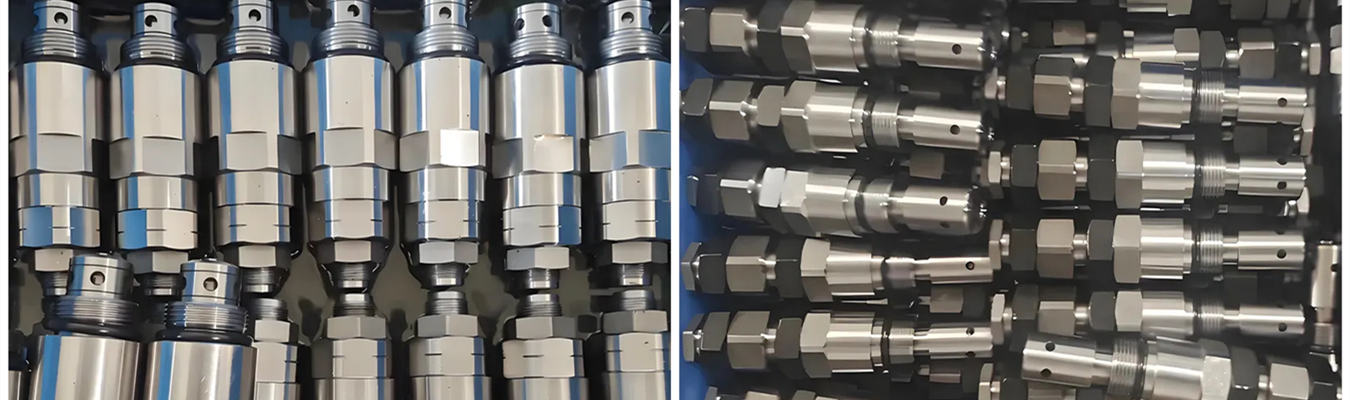
Hydraulic and pneumatic systems use the same basic principle—moving media through a central distribution block—but their machining requirements could not be more different. Understanding these differences helps you specify the right automotive CNC machined manifold blocks or industrial CNC manifold blocks for your application.
| Feature | Hydraulic Manifold Blocks | Pneumatic Manifold Blocks |
| Operating Pressure | Up to 5,000 PSI (345 bar) | Up to 250 PSI (17 bar) |
| Primary Material | 4140 Alloy Steel, 1018 Carbon Steel, Ductile Iron | Aluminum 6061-T6, Brass |
| Core Concern | High cycle fatigue, contamination sensitivity | Small leaks, long cycle frequency |
| Critical Machining Requirement | Burr control, sealing face quality | Port thread quality, O-ring groove integrity |
| Wall Thickness | Minimum 3mm for pressure cycling | Less critical |
Hydraulic CNC machined manifold blocks are often made of 4140 alloy steel because it’s been proven time after time as the most reliable material for this type of application, especially when there will be many cycles of load and pressure change. In addition, 1018 carbon steel is generally an acceptable choice for these types of applications. 316 stainless steel is the preferred choice when manufacturing marine machined manifold blocks due to its ability to resist corrosion and ease of cleaning.
When it comes to pneumatic manifold blocks or CNC machining projects; hydraulic valves are best made from aluminum (6061-T6) primarily because of its light weight, resistance to corrosion, machinability, and relatively low cost as compared to other materials. If you need a CNC-manufactured hydraulic valve for your manufacturing operations, aluminum is usually the ideal material for the valve body. As an additional note, many hydraulic valve CNC machining processes in the beverage dispensing industries also use either aluminum or 316L stainless steel, contingent upon the requirements of the liquid media used.
Achieving precision in the machining of manifolds is not just a matter of meeting the basic dimensions. While manifolds can be “in spec” on a CMM report, internal measurements can reveal hidden issues which will result in complete system failure. Here are some of the critical methods for ensuring reliability.
Deep Hole and Gun Drilling
Standard drilling methods fail when depth-to-diameter ratios exceed 5:1 because they are having a hard time dissipating heat and removing chips efficiently. High quality hydraulic manifold blocks that are properly machined will have gun drilled holes with a straightness tolerance of .1mm per 100mm for a depth-to-diameter ratio of 20:1 or higher; most CNC manufacturers of hydraulic manifold blocks use a specialized gun drill to produce a straight finish and prevent wall breakout.
Cross Drilling and Burr Control (Cross Drilling)
Burrs produced at cross drilled intersections can be the cause of a restriction in flow, and can also break off and cause contamination of valves+. Tiny pieces of metallic debris found in your hydraulic system are responsible for the greatest portion of jammed proportional valve spools. According to statistics compiled within the industry, as much as 90% of the failures of solenoid valves are due to contamination, and much of the contamination comes from poorly deburred hydraulic manifold blocks^+.
Robust deburring strategies are essential to prevent these contamination issues. Leading suppliers of CNC hydraulic manifold blocks typically use thermal deburring to eliminate all possibility of burr contamination.^+ Vibratory deburring is also effective at producing burr-free parts; however, thermal processes will be able to reach burrs located in internal voids that cannot be reached with mechanical or vibratory deburring.
Surface Finish Standards For Valve Mounting
If valve mounting surfaces have not been machined to the correct surface finish, leaks will develop when the valve is torqued to the recommended torque spec. The surface finishes for steel CNC hydraulic manifold blocks within high-pressure hydraulic systems are:
Ra = 0.4 µm max for valve mounting surfaces
Flatness = ≤ 0.01 mm max for the valve mounting surface
Ra = 3.2 µm max for the O-Ring grooves
Ra = 0.8 µm for all of the threads on the ports and mounting holes.
Without these standards, a properly torqued valve will leak over time due to normal heat expansion and contraction of the system.
Material Stress Relief
Prior to machining, blocks made of cast iron or steel undergo a process of aging to relieve internal commensurate level of stress in the block/part +. Failure to relieve these stresses prior to machining can result in dimensional drift after the raw material has been subjected to the heat generated from machining. The interaction of the residual stresses within the raw material, as a result of the heat from machining, can warp a part slightly after it has been completely machined. Stress relief is not optional for hydraulic CNC machined manifold blocks as they must still maintain leak free sealing for extended periods of time.
In Process and CMM Inspection
What You Cannot Measure You Cannot Control. Due to the high level of precision required for manlifts, the quality assurance program includes:
First Article Inspection (FAI) - verification of all critical dimensions per part program.
In Process Probing - Checking of hole positional location and depths during the machining cycle.
Final CMM Inspection - Full dimensional report for every production run of parts produced.
Typical precision CNC machining of hydraulic manifolds produces positional tolerances of ± .02 mm for positional features and hole diameters of ± .01 mm for all reamed or precision bored passages within the hydraulic manifold +. Critical features found within high precision applications such as industrial CNC hydraulic manifold blocks used with hydraulic presses can hold ± .005 mm.
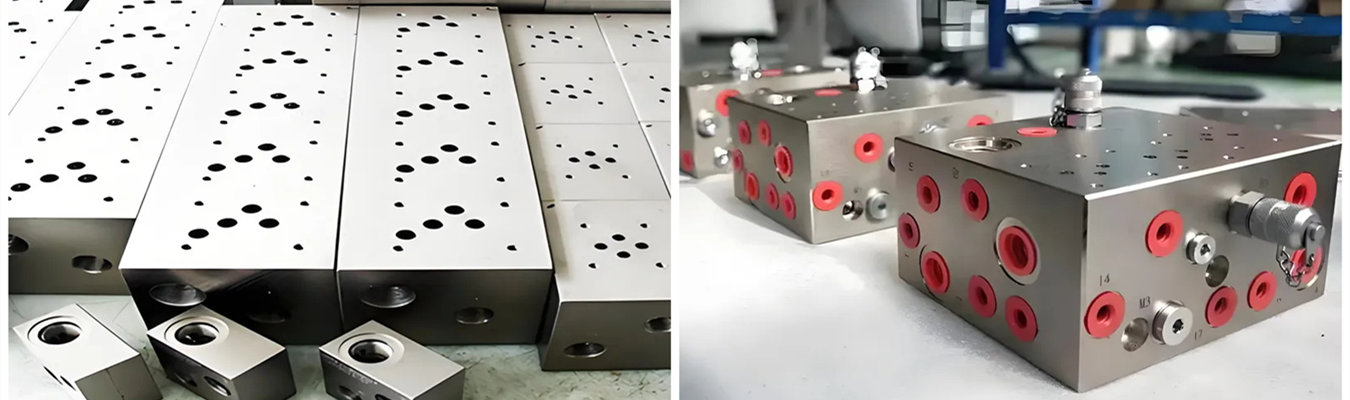
Our CNC machined manifold blocks expertise covers every major industry, each with unique material requirements.
| Manifold Type | Primary Materials | Pressure Rating | Key Properties | Typical Applications |
| Hydraulic | 4140 Alloy Steel, 1018 Carbon Steel | Up to 5,000 PSI | High strength, fatigue resistance | Heavy equipment, injection molding, industrial machinery |
| Pneumatic | Aluminum 6061-T6, Brass C36000 | Up to 250 PSI | Lightweight, corrosion-resistant, cost-effective | Factory automation, robotics, air control systems |
| Water/Coolant | 316 Stainless Steel, Aluminum 6061 | Up to 500 PSI | Excellent corrosion resistance, cleanable | Laser cutters, CNC machining centers, cooling systems |
| Fuel and Oil | 304/316 Stainless Steel | Up to 1,000 PSI | Hydrocarbon resistance | Engine test stands, fuel dispensing, lubrication systems |
| High-Purity | 316L Stainless Steel, PEEK | Varies | Non-reactive, sterilizable | Semiconductor, pharmaceutical, food beverage |
At Falcon CNC Swiss, we are a trusted CNC machined manifold blocks manufacturer, combining engineering expertise with advanced CNC manifold machining capabilities.
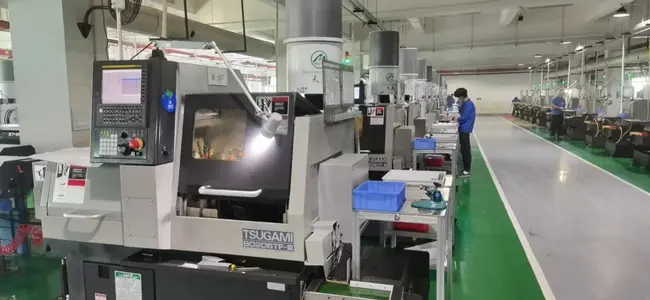
Equipment: We have 5-axis CNC milling centers to create complicated internal passageways from complete CAD designs; Swiss lathes are great for precise work in terms of diameter and depth; deep-hole gun drilling creates internal passageways with high length/diameter ratios.
Precision: We can create and manage tolerances up to +/-0.005 mm for critical features and finish surfaces to Ra = 0.2 μm
Materials: 4140 Alloy Steel, 1018 Carbon Steel, 6061-T6 Aluminum, 304/316 Stainless Steel, Brass C36000 & C110 Copper, PEEK
Quality Assurance: ISO 9001:2015 certification, all CMM inspected; material traceability; inspection report with each shipment.
Deburring and Cleaning: Our advanced deburring capabilities create 100% contaminant-free internal passageways in all processed components.
Learn more about our advance custom manifold blocks manufacturing capabilties.
Automotive CNC machined manifold blocks used on engine testing floors, Oil and Gas CNC machined manifolds used on offshore equipment, Industrial CNC machined manifold blocks used in factory automation, Marine CNC machined manifold blocks used on board ships/hydraulic systems. We are here to meet your needs from prototype through high-volume production runs; we are often selected by buyers looking to purchase CNC machined manifold blocks from China due to our unique combination of state-of-the-art machinery, DFM engineering support and stringent quality control processes.
Free DFM (Design For Manufacturing) Analysis – Our engineers will conduct a free review of your CAD model (or equivalent) before quoting to maximize the optimization of your part in regards to port locations, wall thickness and materials
In-House Finishing – We perform anodizing (clear, black and custom colors), passivation (for stainless steel) and bead blasting on site.
Scalable Production – Prototype quantities from 5 to production quantities of 50,000+ units per month.
Traceability and Documentation – Material Certifications, CMM Reports and complete traceability is provided with every order shipped.
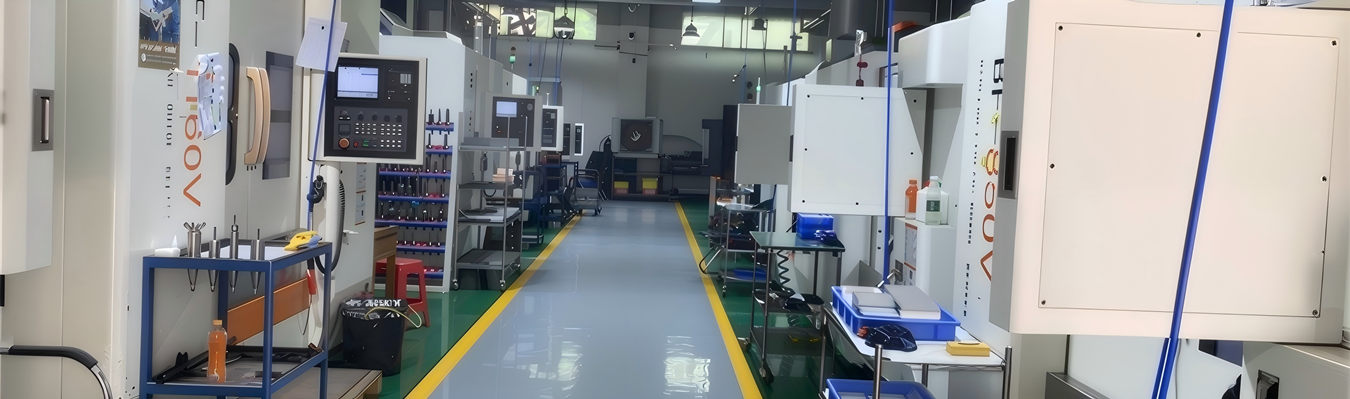
Choosing the right manufacturer for CNC machined steel hydraulic manifold blocks requires careful consideration of the application and operational requirements. Falcon CNC Swiss utilizes state-of-the-art five-axis machining, deep hole drilling, stringent quality control processes and engineering DFM assistance to assure you receive the high quality components you need for your application.
Upload your CAD file for a free DFM analysis and competitive quote.
Explore our full precision CNC machining service for additional capabilities.
Contact our engineering team to discuss your specific material and precision requirements.
A manifold block is a single metal-piece, which contains precisely machined passages that route fluid, air, or vacuum between the many components in a system (e.g., pumps, valves, actuators, sensors). A manifold block replaces multiple hoses/fittings, therefore the manifold block reduces the number of leak points, saves space, and makes assembly of the system easier.
Yes. Hydraulic manifold blocks must handle high-pressure oil and are designed to withstand fatigue. Pneumatic manifold block are used with compressed air and are designed for a leak-tight seal. Vacuum manifolds' first priority is absolute leak-free performance. Grease manifolds must remain away from clogging to avoid uneven lubrication.
Typically, a CNC machining operation will produce manifolds with ±0.02 mm positional tolerances and hole diameter tolerances of ±0.01 mm. Precision tolerances for critical features in high-pressure applications can be held to within ±0.005 mm.
A cross-drilled intersection typically results in burrs. Top manufacturers will use thermal deburring or special vibratory processes to remove every burr particle. After thermal or vibratory deburring, the interior passages are then either bore-scoped or inspected using fiber-optic cameras to ensure cleanliness prior to final assembly.
The specific application will determine the best material to be used for a manifold block. For most hydraulic applications that require high pressure and fatigue resistance, the common material used is 4140 alloy steel. The most commonly used material utilized for pneumatic applications and lower pressure hydraulic systems is 6061-T6 aluminum due to its weight and cost. For marine or chemical environments where corrosion resistance is of utmost importance, the most commonly used material is standard 316 stainless steel.
Designing for manufacturability (DFM) includes designing corners that have proper radius to eliminate stress risers, adequate wall thickness for safety, following port standards (ISO4413), drilling straight where possible, and using a material appropriate for the type of pressure and media (gas, liquid) for which it is intended. Our engineering staff will perform free DFM analyses on each of your designs prior to providing pricing estimates for the manufacture of your designs.