English
  日本語
日本語  한국어
한국어  français
  Deutsch
  Español
  русский
  العربية
Mar
Learn More
13

A manifold block may look uncomplicated on the outside—it can simply appear to be a rectangular block of ports and holes—but on the inside, it serves as a pressure bearing traffic control system for either fluid, air, or hydraulic systems. With proper machining, there is an excellent opportunity for systems to run clean, stable, and leak-free. If improperly machined, symptoms can be severe—such as invisible pressure drops, unpredictable valve operation, contamination and leaks that are not evident until after thermal cycling.
Rather than having a multitude of fittings and hoses connecting components together, the manifold block combines all passages and ports into one compact assembly. The advantages of integrating all passages and ports into one compact assembly are apparent: fewer places for leaks to occur, more compact assemblies, quicker assembly; however, there is greater risk by having all components contained within one single assembly—if there is a defect in any one of the passages or ports, that will affect the entire assembly and system operation. This guide will detail the most important factors relative to CNC manifold blocks machining from the engineering perspective: channel accuracy; sealing design; material selection; and how to select a partner that understands how to do it correctly (and has a consistent record of quality).
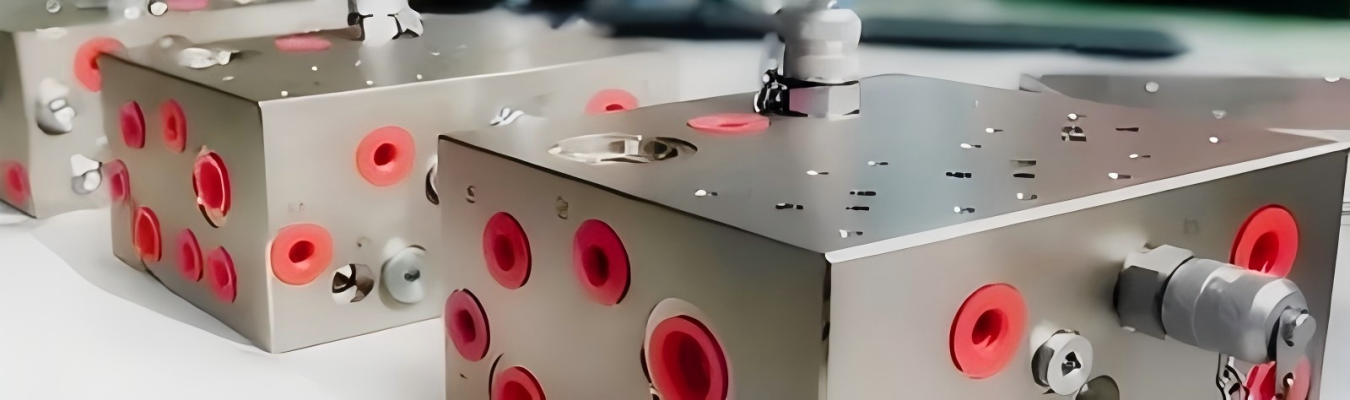
A manifold block is a machined component that routes flow between pumps, valves, actuators, and reservoirs. Instead of using dozens of separate fittings and hoses, a manifold consolidates everything into one precision-machined block.
| Manifold Type | Operating Media | Key Challenge |
| Hydraulic | High-pressure fluid (up to 345 bar / 5000 PSI) | High-pressure sealing, burr control, O-ring groove precision |
| Pneumatic | Compressed air (lower pressure, high cycle frequency) | Micro-leak prevention, consistent port geometry, thread quality |
| Vacuum | Vacuum (leak-sensitive) | Leak-tight sealing, zero-contamination, no micro-pores |
| Grease/Lubrication | Grease or oil | Internal debris control, clog prevention, chip-free passages |
Most vacuum manifold blocks have the highest cleanliness and surface finish standards. The next closest category to vacuum manifold blocks with respect to cleanliness and surface finishing standards are hydraulic systems used for sealing applications.
More specifically, CNC machined manifold blocks are used on many different pieces of industrial equipment including manufacturing equipment, factory automation, robotics, hospitals, aerospace equipment, and energy applications. Selecting a manufacturer is an important decision if you intend to use a custom-designed CNC machined manifold block in your hydraulic, pneumatic or other fluid-handling systems.
When a manifold block is machined incorrectly, it may have defects you won’t see until it breaks! The most common causes of failure are:
Misaligned through-holes that create turbulence in the control system, as well as noise and loss of pressure;
Retained burrs from manufacturing processes, which are the primary cause of jams in proportional valve spools
The lack of flat and/or smooth sealing surfaces can cause O-ring blowouts in high-pressure systems.
Industry statistics show that the vast majority of solenoid valve failures occur due to some form of contamination, and a significant amount of that contamination comes from poorly deburred and finished manifold blocks produced by the valve manufacturer.
Sealing Surface Finish
Valve mounting surfaces generally require an Ra ≤ 0.4 µm and a flatness of ≤ 0.01 mm to create a leak-free seal. If an air system can accept a scratch in its valve mounting surface, then it can create a leak path in a hydraulic system.
O-Ring Groove Tolerances
A proper-fit O-ring groove (width, depth, and radius) prevents the extrusion of an O-ring. A hydraulic manifold block can “look perfect,” yet the block may fail in service if the radiused corners of O-ring grooves are not consistent.
Port Inspection Condition
Inconsistent chamfers at the port(S) of a valve can create variability in assembly and damage the valve’s sealing system, therefore; standardized chamfers should always be utilized to maintain the integrity of both assembly and the sealing system.
Thread Quality
Assembly defects and inconsistencies in sealing are often created as a result of thread drift during tight assembly procedures. For proper sealing performance from precision machined manifold blocks throughout the assembly process, consistent thread formation and proper thread entry conditions must always exist.
Cross-drilled intersections must be planned and controlled, and burrs and chips must never be created within intersections. Failure to properly manage cross-drilled intersections can create chip-trapping (creating a restriction in the line) and burr fragments downstream of the control system. Each precision CNC machined manifold block must be:
Drill depth and intersection planned and managed
Deburred thoroughly on all internal areas
Cleaned and cleanliness verified completely post-assembly
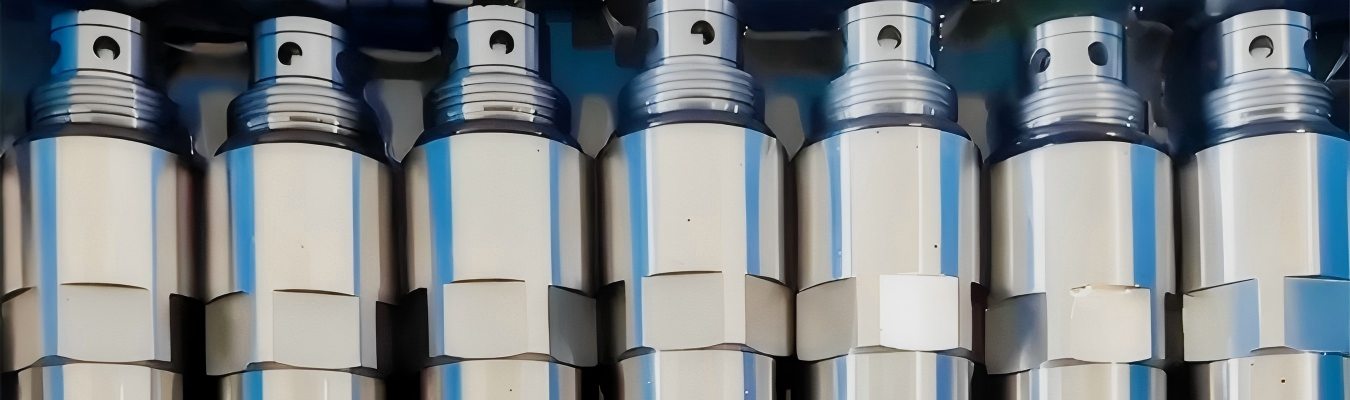
The right material for your CNC manifold blocks depends on pressure requirements, operating environment, corrosion resistance needs, and cost considerations.
| Material | Best For | Strength | Corrosion Resistance | Machinability | Cost |
| Aluminum (6061-T6) | Pneumatic systems, low-pressure hydraulic, lightweight applications | Medium (lightweight) | Good | Excellent (fast cutting, low tool wear) | Low |
| 4140 Alloy Steel | High-cyclic hydraulic, high-pressure systems | Very high | Fair (needs coating) | Good (treatable for hardness) | Moderate |
| 304/316 Stainless Steel | Corrosive environments, water/coolant, chemical, marine | High | Excellent | Challenging (high tool wear) | High |
| Brass (C36000) | Low-pressure pneumatic, instrumentation, water | Medium | Good | Excellent | Moderate |
| Titanium (Grade 5) | High-strength, lightweight, extreme corrosion needs | Very high (strength-to-weight) | Excellent | Difficult (work hardening, heat) | Very high |
In hydraulic applications (both low and medium pressure), aluminum CNC machined manifold blocks made from aluminum alloy 6061-T6 are the most common material. The benefits of aluminum 6061-T6 include an excellent strength-to-weight ratio, excellent machinability and outstanding corrosion resistance—all at a relatively inexpensive price point.
Best applications for aluminum CNC machined manifold blocks: pneumatic systems; automation; factory automation; robotics; control systems.
Pressure ratings: Pneumatic: up to 250 psi (17 bar), which is lower for hydraulic applications than conventional brass or stainless steel manifolds.
Finish type: either anodized or finished with a thicker coating to provide additional hardness and corrosion resistance.
For processes such as clean manufacturing and controlling the use of chemicals in various industrial settings, stainless steel is quickly becoming the standard material for creating CNC machined manifolds.
316 stainless steel is known for its exceptional resistance to corrosion from hydrocarbons and aggressive chemicals.
Best applications for stainless steel CNC machined manifolds: pharmaceutical, clean rooms, water and coolant distribution, foodservice and marine.
Pressure ratings: Water systems: 500 psi (34 bar) and hydraulic systems: 350 bar.
Stainless steel's unique non-reactive properties and ability to be sterilized very easily are two key benefits.
The benefits of brass CNC machined manifold blocks include ease of machining, good corrosion resistance and low cost.
Brass CNC machined manifolds can be utilized in all types of low pressure pneumatic systems, instrumentation and water distribution systems.
Best applications of brass CNC machined manifolds: Low pressure pneumatic systems, instrumentation, and water distribution systems.
Key benefits of brass CNC machined manifolds: natural corrosion resistance and excellent threading characteristics.
CNC machined titanium manifolds are designed for specific, highly specialized applications that require outstanding performance in very extreme environments and/or where a weight advantage is paramount.
CNC machined titanium manifolds are used almost exclusively in aerospace, marine and medical gas systems, but can be found in other extreme environments as well.
Best applications of titanium CNC machined manifolds: aerospace, marine, medical gas systems and extreme environments.
Key benefits of titanium CNC machined manifolds: unmatched strength-to-weight ratio and corrosion resistance.
Important note: To effectively manage the work hardening characteristics of titanium and prevent heat build-up, titanium requires exceptional cooling practices.
Producing custom CNC machined manifold blocks requires a well-planned approach. The best strategy combines proper workholding, controlled drilling sequences, and thorough cleanup processes.
| Operation | Focus Area | What Matters |
| Op10 - Datum and Squaring | Create reference faces | Datums are the foundation of repeatability |
| Op20 - Primary Drilling and Ports | Drill main passage network | Control heat and chip evacuation |
| Op30 - Cross-Drilling | Sequence cross holes | Plan intersections to reduce burr size |
| Op40 - Threading and Entry Chamfers | Thread after geometry stable | Standardize entry chamfers for sealing |
| Op50 - Finish Seal-Critical Faces | Finish sealing interfaces | Controlled passes, avoid random toolpaths |
| Op60 - Deburr, Clean, Protect | Treat cleanliness as part of route | Packaging protection matters as much as machining |
CNC Machined Manifolds with 5-Axis Capabilities
The ability to machine multiple axes is critical for complex manifolds featuring multiple mating points and different types of piping or tubing. The ability to make these manifolds using 5 axis CNC machines means all operations can be performed in a single setup, eliminating the problem of stacking tolerances by multiple clamping setups.
Deep Hole Drilling
Because conventional drilling operations are limited on the standard ratio of 5:1 (depth-to-diameter), deep hole drilling is a requirement for precision-type manifolds because deep hole drilling can create air gaps and minimize material buildup.
In-Process Measurement
Using both in-process measurement probes and CMM inspection during the machining of manifold components guarantees that all critical dimensions of the manifold components remain accurate prior to going to the finish operation. All precision CNC machined manifolds must be completely inspected prior to shipping.
High Pressure Coolant
To eliminate the use of lubricants, like water-based cooling fluids, high-pressure coolants can actually be used to remove debris from the cutting zone and to maintain the temperatures in the cutting zone to avoid the potential for work-hardening when machining stainless steel and titanium.
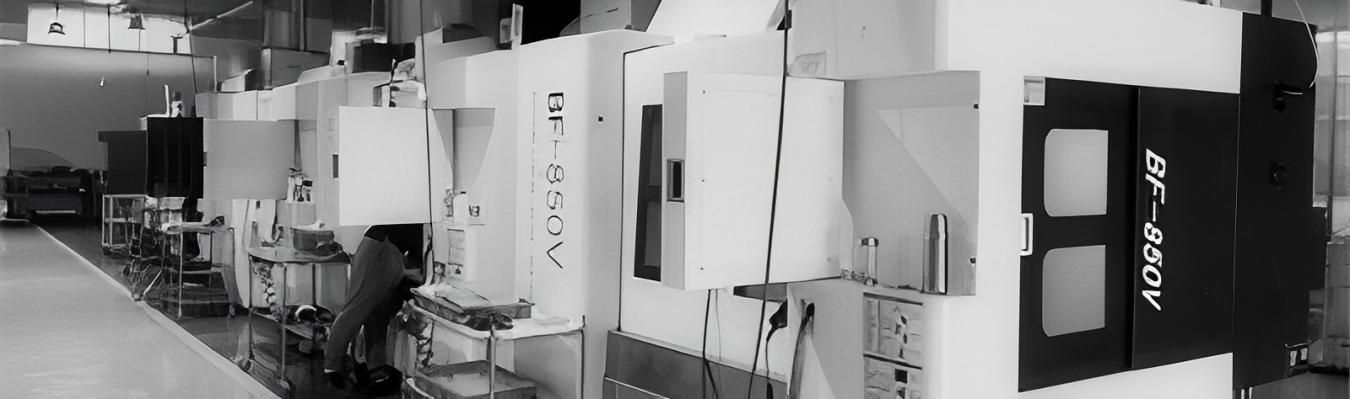
At Falcon CNC Swiss, we combine advanced Swiss-type and multi-axis CNC machining with rigorous quality control to deliver CNC manifold block fabrication that meets the tightest specifications.
| Capability | Specification |
| Equipment | 5-axis CNC mills, Swiss-type CNC lathes (Citizen, Star, Tsugami), multi-axis turning centers |
| Materials | Aluminum (6061-T6, 7075), 4140/4340 alloy steel, 304/316 stainless steel, brass C360, titanium (Grade 2, Grade 5, Grade 23), engineering plastics (PEEK, Delrin) |
| Tolerances | Down to 卤0.005mm for critical features; standard 卤0.01mm |
| Surface Finish | Ra 0.2 to Ra 0.8 on seal-critical faces |
| Inspection | CMM, optical comparators, full inspection reports available |
| Quality System | ISO 9001:2015 certified; full traceability and material certifications |
Design Collaboration: Our engineers review your CAD model for manufacturability and suggest cost-saving design improvements.
Material Sourcing: We procure certified materials that meet your specifications.
CNC Machining: Using 5-axis CNC mills and Swiss-type equipment for precise channel drilling, threading, and port finishing.
Deburring and Cleaning: Thorough internal passage deburring and specialized cleaning to prevent contamination.
Inspection: CMM verification of all critical dimensions, surface finish measurement, and pressure testing as required.
Finishing: In-house anodizing, passivation, or other surface treatments available.
Packaging and Shipping: Clean, protected packaging to prevent handling damage.
Whether you need prototype CNC manifold blocks for testing or production quantities for full-scale manufacturing, we offer the flexibility and quality you need. Explore our CNC machining manifold blocks capabilities.
Choosing the right CNC manifold blocks supplier is critical for project success. Here is what to look for:
| Selection Criteria | What to Ask |
| Materials experience | Can they machine aluminum, stainless steel, brass, and titanium? |
| Equipment depth | Do they have 5-axis capability for complex port layouts? |
| Quality systems | Are they ISO certified? Do they provide CMM inspection reports? |
| Deburring and cleaning | Do they have a documented process for internal passage cleaning? |
| In-house finishing | Can they anodize, passivate, or plate in-house? |
| Volume flexibility | Can they handle both prototypes and production runs? |
| DFM support | Will they review your design and suggest improvements before quoting? |
A reliable CNC manifold block fabrication partner will offer free DFM analysis, provide material certifications and inspection reports, and maintain rigorous quality control at every stage.
Fluid and air systems rely on high-quality CNC machined manifold blocks to provide consistent flow, no-leak sealing, and maximum service life when produced correctly according to specification. Without proper manufacturing methods, manifold blocks can create a greater risk of hidden failures.
Falcon CNC Swiss uses state-of-the-art 5 axis machining, extensive material knowledge, and stringent quality control processes to manufacture custom, high-quality CNC machined manifold blocks that will perform consistently over time in real world conditions.
Upload your CAD file for a free DFM analysis and competitive quote
Explore our precision CNC machining services for more on our full capabilities
Contact our engineering team to discuss your specific manifold block requirements
A manifold block is a part used to connect fluid or compressed air systems between different components such as pumps, valves, actuators and reservoirs. The manifold block eliminates the use of multiple fittings and hoses by providing one integrated part and reducing the number of leak points while providing space savings.
Aluminum 6061-T6 is the most common material used for pneumatic systems and low pressure hydraulics. 4140 alloy steel and stainless steel are better suited for high pressure hydraulic systems. Stainless steel also provides corrosion protection in water, chemical and marine environments. Brass is also a good choice for instrumentation applications under low pressures and water applications.
Holes (O-ring groove dimensions) and seal-critical faces are typically held ±0.005 mm (±0.0002 in) tolerances. Standard precision tolerances are ±0.01 mm (±0.0004 in). Flatness of mounting surfaces and surface finish are also closely monitored to prevent leaks.
Deburring and cleaning are key steps. We employ a combination of mechanical deburring, specialized cleaning processes, and 100% inspection to guarantee there are no chips or burrs present in any of the internal passages when shipped.
Yes. Utilizing our 5-axis CNC machine and our deep-hole drilling capabilities we can produce manifolds with complex intersecting passageways, multiple port orientations, and high aspect ratio (depth to diameter).
Yes. All finishing is done in-house including anodizing of aluminum, passivation of stainless steel, and other forms of surface treatment. This provides you with a more simplified supply chain and consistent quality control.