English
  日本語
日本語  한국어
한국어  français
  Deutsch
  Español
  русский
  العربية
Aug
Learn More
10

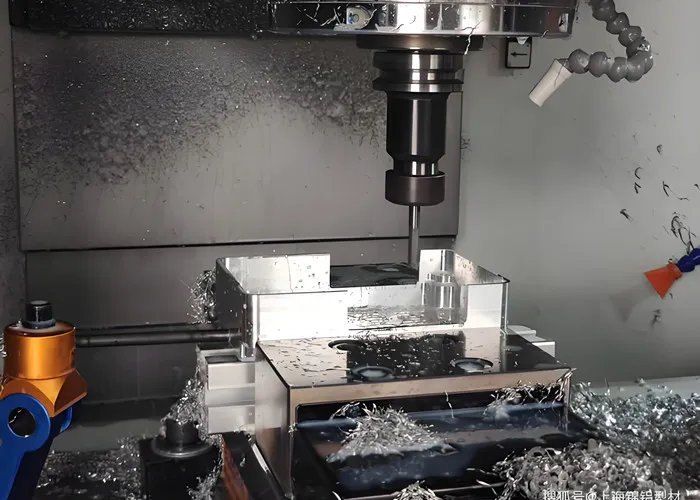
Heat sinks are found in many places, such as your computer, and under various types of light bulbs, and in your automotive electronic environments. Their only purpose is to draw heat away from sensitive components, allowing the operation of all things to run efficiently. Designing a quality heat sink, however, is not an easy task; machining deep cooling fins, maintaining thin wall architecture won't compromise tool integrity, and maintaining a flat surface to ensure high thermal conductivity do require significant planning.
In this guide, we will discuss what works (and what does not work) when machining aluminum and copper heat sinks. We will look at things like tooling options and RPMs, feeds per revolution, the difference between aluminum and copper as materials, and also design considerations that ensure a good engineer perspective, but little in the way of filler material.
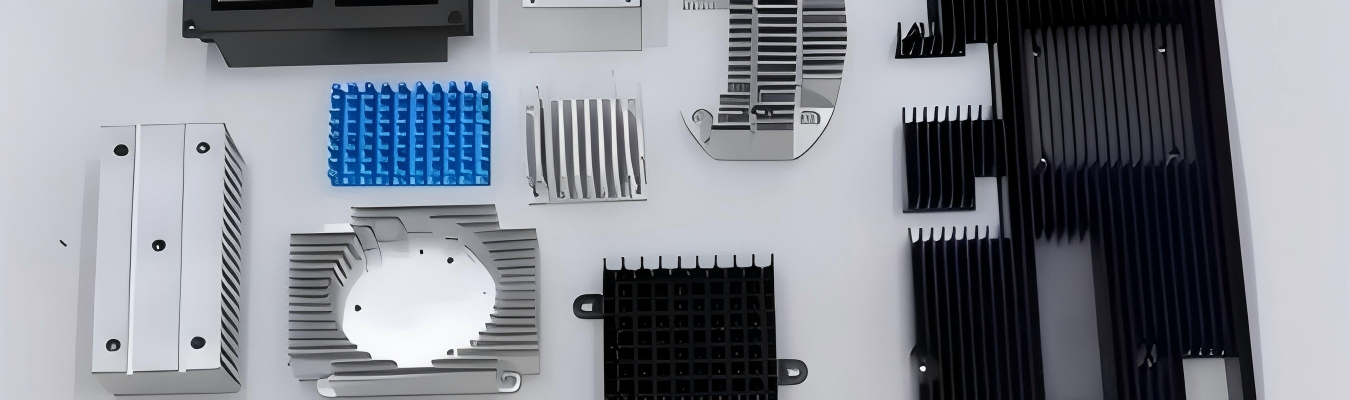
CNC machined heat sinks are made of the popular material of choice: aluminum. Aluminum is forgiving, provides excellent machining characteristics, and has great thermal performance at an economical cost. There are two common alloys used in heat sink fabrication, 6061 and 6063, both providing good machined finishes, but 6061 will produce a slightly stronger finished part.
Use carbide end mills with either 2 or 3 flutes.
To evacuate chips from deep fin pockets, use a 2-flute tool.
To avoid aluminum from sticking to the cutting edge of your tool you can apply either a polished finish or a ZrN (Zirconium Nitride) coating to your cutting tools.
Modern CNC machining will allow aluminum to handle very high spindle speeds—typically exceeding 10,000 RPM—and will still produce excellent finishes. For high-speed milling, faster cutting speeds will typically produce better material removal rates so that you use your time more efficiently.
Spindle Speed: Start at 10,000–14,000 RPM. For small-diameter tools (3 mm or less), start above 20,000 RPM.
Feedrate: 0.05 mm–0.15 mm per tooth, depending on the diameter of the tool being utilized.
Depth of Cut: Axial depth should be 0.5–1.0× the diameter of the tool to minimize excessive deflection of the cutting tool due to an excessively long tool length relative to the height of the fin.
Stepover (Radial depth): 0.5 mm–1.5 mm for finishing passes.
In one case recently, a shop machined Al6061 heat sink with very thin fins at a spindle speed of 14,000 RPM that yielded an Ra of 0.7 µm and the part did not warp at all after machining. This is the desired surface finish for the mounting of heat sinks used in CPUs or GPUs.
Where fins fail in design is when they are made too thin. Engineers often pack the fins closely together or design them too tall. If the cutting tool must reach deep to the bottom of the fin channel, a long, thin tool will deflect and chatter excessively.
Follow these conservative limits for reliable aluminum heat sink machining:
| Parameter | Recommended Minimum |
| Fin thickness | ≥ 0.8 mm |
| Fin spacing | ≥ 1.5 mm |
| Fin aspect ratio (height ÷ spacing) | ≤ 6:1 |
If your design exceeds a 6:1 aspect ratio in aluminum, you risk significant vibration and poor surface finish.
Copper is unique when it comes to machining. It has a very high thermal conductivity of approximately 400 W/mK which is approximately double that of aluminum at around 205 W/mK, however, it is also considerably heavier and more expensive. It has very gummy and abrasive characteristics which causes it to stick to cutting tools ultimately ruining the surface finish and quickly wearing the tool down.
Speed and Feed Rates (conservative suggested starting ranges):
Spindle speed: By decreasing the cutting speed by 10-20% from baseline will substantially reduce tool wear and prevent premature failure of the tool.
Spindle speed: decrease spindle speed to approximately 80-90% of what you would use for aluminum. For smaller tools 8000-12000 RPM is considered safe and reasonable.
Feed rate: Moderate Chip loads (see tool manufacturer’s recommendations).
Depth of cut: Shallow passes will provide additional security in machining smaller tools.
Coolant: Use flood coolant to prevent chips from welding to the tool.
Tools Required for Machining Copper:
Use sharp carbide end mills – blunt tools will smear copper rather than cut it cleanly.
Typically a 2-flute cutter will be preferred as they clear the chips most effectively.
Do not use high-feed cutters with polished edges as copper will gum them up very quickly.
Design for Manufacturability Guidelines for Copper Fins:
Machining copper is more difficult than machining aluminum, therefore minimum thickness of fin and spacing between fins should be increased and aspect ratio maintained at a lower ratio.
| Parameter | Recommended Minimum |
| Fin thickness | ≥ 1.0 mm |
| Fin spacing | ≥ 1.8 mm |
| Fin aspect ratio (height ÷ spacing) | ≤ 4:1 |
If your thermal requirements exceed the surface area that CNC can provide within these limits, consider a hybrid design—an aluminum base with a copper insert—rather than machining a solid copper block.
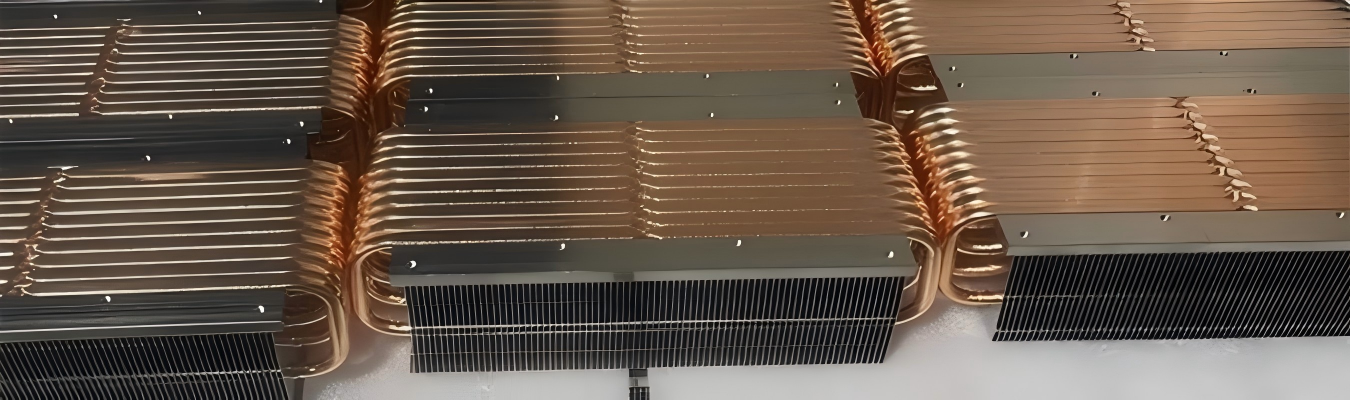
Simple and linear heat sink shapes can be made by metal extrusion at large volume but extrusion is not able to create complex geometries, non-uniform cross-sections, or fins that are multi-directional. Custom designs or small-to-medium manufacturing runs can be done more efficiently using CNC machining.
Another approach is to use an extruded near-net shape and machine any critical features such as mounting holes, precision surfaces, or localized fin adjustments. The combination of these two methods allows for a good balance between cost and performance.
| Method | Best For | Pros | Cons |
| Full CNC | Prototypes, low to medium volumes, complex geometries | No tooling cost, high precision, design flexibility | Higher per unit cost at very high volumes |
| Extrusion | High volume, simple profiles | Low per unit cost, fast cycle times | High upfront die cost, limited geometry |
| Hybrid (Extrusion + CNC) | Medium to high volumes with some complexity | Balance of cost and precision, good for custom mounting features | Longer lead time than pure extrusion |
For most custom heat sink projects, starting with CNC machining is the safest path—it allows design iteration without heavy upfront investment.
Cost is often the deciding factor between these methods. The table below shows typical relative costs for each approach. Extrusion + CNC finishing numbers assume an extruded profile plus secondary CNC operations for precision features like mounting holes and flat surfaces.
| Volume Tier | Estimated Relative Cost (per unit) | Method |
| 1–10 units | High | Full CNC |
| 10–250 units | Medium High → Medium | Full CNC |
| 250–2,000 units | Medium → Medium Low | Full CNC or hybrid |
| 2,000+ units | Low (after die amortization) | Extrusion or hybrid |
CNC machining is often more cost effective than using tooling or dies for small production runs and prototypes, this is due to the fact that there are no charges for tools or dies, and reliable results can be achieved without incurring significant non-recurring engineering costs.
Extrusion is more economical than CNC machining on a per part basis when producing more than 2000-5000 units; however, this only occurs if the part design is suited to the extrusion process. Learn more about our custom heat sink manufacturing.
At Falcon CNC Swiss, we manufacture custom heat sinks for a wide range of electronics and high power applications. Our Swiss type CNC lathes are ideal for small, precision components, and our multi axis milling centers handle complex fin designs with tight tolerances.
| Capability | Detail |
| Equipment | Citizen and Star Swiss type lathes; 3, 4, and 5 axis CNC mills; multi axis turning centers |
| Tolerances | ±0.005mm to ±0.01mm for critical features; Ra ≤ 0.4 µm surface finishes |
| Materials | Aluminum (6061, 6063, 7075); copper (C101, C110, T2) |
| In house finishing | Anodizing (clear, black, custom colors), passivation, bead blasting, nickel plating |
| Quality system | ISO 9001:2015; full CMM inspection and traceability |
| Volume flexibility | From single prototype (3-5 days) to high volume production |
LED heat sink machining – High power lighting systems with deep cooling fins
CPU heat sink machining – Computer processors and server cooling
GPU heat sink machining – Graphics cards for gaming and workstation uses
Power electronics heat sink machining – EV chargers, industrial drives, motor controllers
Electronics heat sink machining – General thermal management for compact devices
Our engineers review your design before quoting. We spot manufacturability issues early—things like fin aspect ratios that exceed recommended limits or tool access problems—and suggest practical fixes.
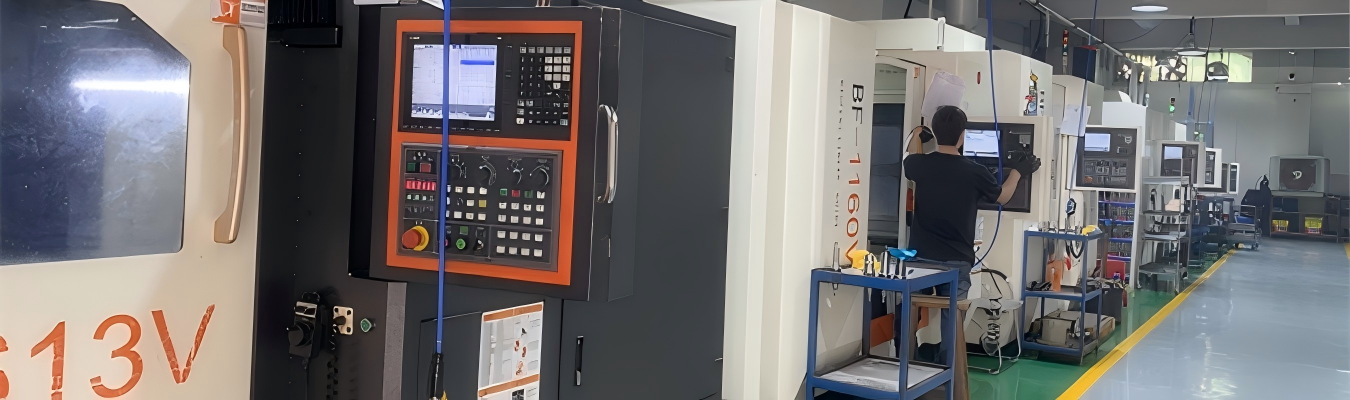
When it comes to getting a heat sink to cool properly, the proper machining of the heat sink breaks down into three components: the selection of the appropriate material, proper design for manufacturability (DFM) for the fins, and selecting a machining supplier with experience with thermal management.
By using both precision Swiss-style and multi-axis CNCmachining techniques combined with true engineering support, this will help you avoid some of the most common problems - such as extremely thin fins and unmachinable aspect ratios - before the purchase of tooling.
Upload your CAD file for a free DFM analysis and competitive quote
Explore our full precision CNC machining service to see our complete capabilities
Contact our engineering team to discuss your thermal management requirements
A: When comparing aluminum and copper for your heat sink, aluminum is more lightweight, economical and machinable than copper is. Aluminium will be adequate for 90%-95% of applications. Copper is twice as effective at transferring heat as aluminum, however, this benefit comes at a much higher cost and difficulty to machine. Only use copper if your application has extremely high heat load and very limited space such as a high-wattage CPU or power module.
A: Yes, but usually with a lot of risk involved. Fins thinner than 0.8 mm are susceptible to breakage and flexing during machining processes. The resultant vibrations (tool chattering) can negatively impact the surface finish of the product being machined. To aid reliable manufacturing, it is advisable to keep the design parameters as close as possible to 0.8 mm.
A: It is highly recommended you utilize tools made of sharp, uncoated carbide materials or diamond-like carbon (DLC) coatings. Do not use conventional TiAlN coated tooling because copper will suck onto the coated surface during machining. The key factor here is to maintain sharpness of your tooling and use adequate levels of coolant.
A: To provide a good thermal interface material (TIM) bond with the die of the CPU, you'll want to maintain a flatness tolerance of 0.050 mm or better. Many high-performance applications will require at least 0.025 mm (0.001") flatness across the entire mounting area. Our CNC machined products can provide a flatness tolerance of ±0.005 mm for high power applications.
A: Yes, we can anodize aluminum heat sinks to improve its corrosion resistance and to increase its ability to emit thermal energy. Anodizing and finishing the aluminum substrate with a black color, will further increase the heatsinks ability to dissipate thermal energy. The average increase in thermal dissipation capability compared to uncoated aluminum is 25% to 30%.
A: Yes, we can manufacture prototypes to large volume production runs for custom heat sink projects. Typical lead time for most prototypes will be 3 to 5 business days depending upon the complexity of the design and tooling.