English
  日本語
日本語  한국어
한국어  français
  Deutsch
  Español
  русский
  العربية

Apr
Learn More
22

Electronics rely heavily on heat sinks to dissipate heat, as heat can be a major cause of electronics failure. The performance of a heat sink is heavily determined by how well it transfers away heat from the electronic component and processor.
Although there are many different types of heat sinks available, the most widely used type is an extruded aluminum heat sink. In contrast, the performance of a custom CNC machined heat sink is unparalleled, especially when it comes to compact spaces.
CNC machining provides the designer with the ultimate amount of design freedom, allowing for complex fin designs, improved base flatness, and, as a bonus, an ability to combine several mounting features into a single setup. In other words, CNC heat sink machining provides a manufacturer with the ultimate flexibility to provide exactly what the product requires to be effectively cooled without adding material or costs.
This guide provides you with a series of suggestions on what design strategies to employ, material selections to utilize, as well as the key DFM guidelines that will help you design high-performance products rather than costing you excessive amounts of money due to designing a product that is difficult to manufacture.
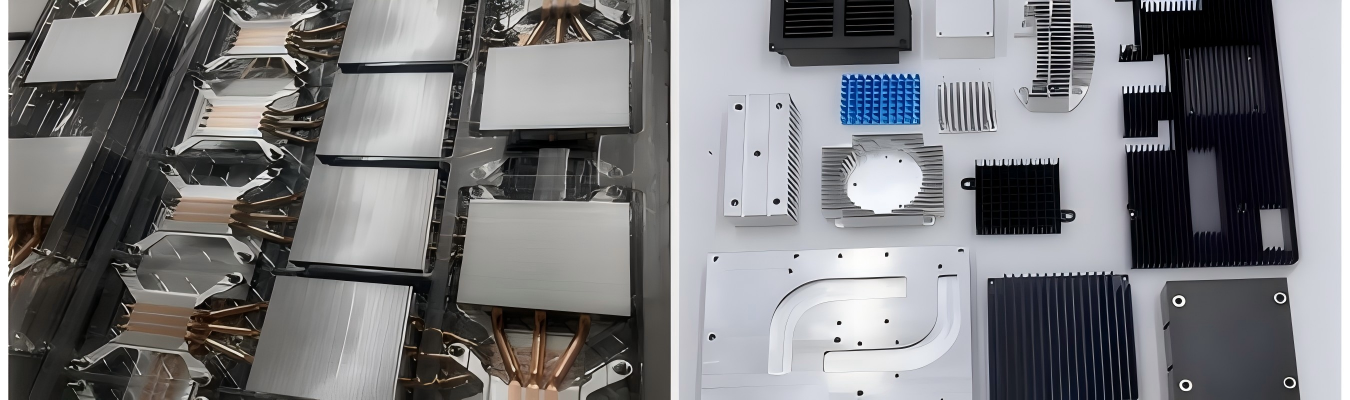
To plan design advice, it is essential first to understand the two-step process of every heat sink; heat must be absorbed from the component and then removed through the air.
Thermal conductivity is what determines how quickly heat travels through the heat sink material with copper being around 400 W/m·K and aluminum being around 200 W/m·K - so theoretically copper will outperform aluminum, but not all the time.
Here is an area that many engineers might overlook; the airflow surrounding the heatsink fin is what limits the amount of heat that can be removed from the heatsink and not thermal conductivity once the heat reaches this area. In fact, aluminium is more rigid (when in thin cross section), lighter weight, and far more cost-effective as compared to copper; therefore, in almost all air cooled systems, the use of aluminium allows the best overall balance for the heatsink performance.
| Property | Aluminum (6061-T6) | Copper (C110) |
| Thermal Conductivity | ~167 W/m·K | ~385–400 W/m·K |
| Weight (density) | 2.70 g/cm³ | 8.96 g/cm³ |
| Relative Cost | 1x (baseline) | 3x–4x higher |
| Machinability | Excellent | Moderate (gummy) |
So when do you pick copper? When you have a tiny, concentrated heat source - a high-power CPU or laser diode - and you need to pull heat away extremely fast before spreading it. For everything else, aluminum 6061 or 6063 delivers the best performance-to-weight ratio without wrecking your budget.
Different manufacturing techniques will work well for different methods of cooling - but they will all have their own trade-offs in price, design flexibility and thermal performance.
During skiving, the metal blade of a knife will cut thin strips of flake off of the original block of material. The metal from which the heat sink is made, then, can be bonded to the opposite side of the base piece with no thermal joint. Thus, the heat travels directly from the base to the fins without any resistance.
Reasons to purchase skived fin heat sinks:
The most thermally efficient (no bonded joints)
Very thin fins can be created (down to 0.5mm)
Very dense fins enable compact designs
Fins can be taller than what extruded heat sinks can provide.
The only downside here is that the fins may be prone to bending under rough handling. Nevertheless, for those applications in which every degree of cooling will be critical, skiving is often the ideal method (i.e., Automotive IGBT modules, laser diodes, high-power LED arrays).
An extruded heat sink consists of straight fins manufactured as a single linear piece, by passing heated aluminum material through an extrusion die, creating an elongated profile which will then be cut into proper lengths after exiting the extrusion die. This method is considered the fastest and most cost-effective method of producing heat sinks. While it is limited in terms of the types of aspect ratios and geometries that you are able to produce, i.e., you will not be able to manufacture an extruded heat sink with cross-cuts, angled fins, or pin fin arrays.
With bonded fin and zipper fin heat sink machining, the individual fins are fabricated separately and then inserted or bonded into the grooves in the machined base, which allows for significantly denser and taller fins than extruded heat sink machining would allow. By folding the fins together in a zipper fin heat sink, you will have a very tightly packed design of fins.
The trade-off with both bonded and zipper methods is that the bonding joints will produce a very small amount of thermal resistance in comparison to a one-piece design. However, for high volume applications in which the available airflow is limited, the benefit of additional surface area will usually outweigh this small increase in thermal resistance.
The pin fins are fabricated as a cylindrical or square post and are arranged in such a manner that they will produce excellent cooling performance in all directions by using omni-directional airflow. The use of pin fins will provide a more compact heat sink design while maximizing the overall surface area, therefore pin fin heat sink machining is the most desirable compressed heat sink option.
Learn more about our precision CNC machining services for heat sink manufacturing.
| Requirement | Extruded Heat Sink | CNC Machined Heat Sink |
| Volume | Medium to high | Low to medium |
| Complexity | Simple straight fins | Pin fins, cross-cuts, angled fins, complex bases |
| Precision | Moderate (extrusion die limits) | High (tight tolerances) |
| Prototyping | Slow (dies take weeks) | Fast (no tooling) |
| Material choices | Aluminum only | Aluminum, copper, brass, plastics |
For heat sink prototype machining, CNC is the clear winner. You get a functional metal part in days, not weeks. And when you move to heat sink high volume machining, the same CNC program scales up seamlessly.
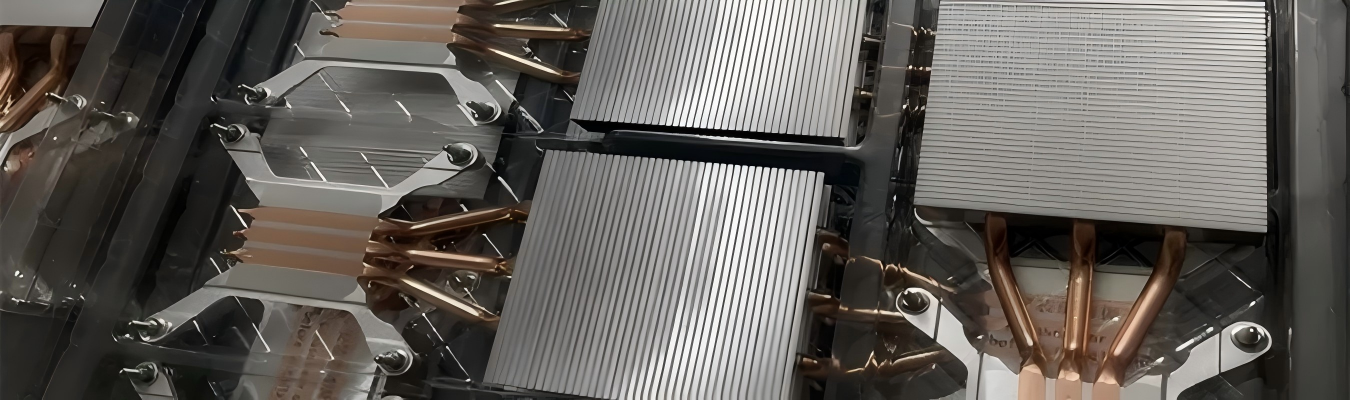
Boosting thermal performance is not just about adding more fins. Bad airflow completely defeats good geometry. Here are the design rules that actually work.
Your fins must be machinable. Too thin, and they deflect during cutting. Too tight, and chips get trapped, heating your part instead of cooling it.
| Parameter | Aluminum Minimum | Copper Minimum |
| Fin thickness | 0.8mm | 1.0mm |
| Fin spacing | 1.5mm | 1.8mm |
| Aspect ratio (height : thickness) | 6:1 max | 4:1 max |
These numbers are not suggestions - they are the real limits of manufacturing. Push beyond them, and your part quality drops or your machining costs skyrocket.
The aspect ratio (fin height divided by fin thickness) is probably the single most important number for your wallet. A 6:1 ratio in aluminum requires long, flexible tools running at slow feeds to avoid breakage. Exceed 6:1, and you risk visible chatter and surface defects that hurt cooling performance.
If your thermal model demands fins taller than these limits, stop. Look at pin fin heat sink machining instead, or consider a bonded fin assembly. Adding more surface area that your machine cannot cleanly cut is wasted engineering.
Airflow should guide your fin design, not the other way around.
Passive cooling (no fan): Vertical fins with wider spacing to let hot air rise naturally
Active cooling (fan): Tighter fins and staggered or angled shapes to force air through
Omni-directional airflow: Pin fin arrays work best when air comes from all sides
Do not design a dense straight-fin heat sink for passive cooling. The air simply cannot flow. Your CFD simulation will catch this, but your customer will catch it first.
You can have perfect fins but still end up with a dead product. Here is why.
Thermal Resistance In Base Flatness Control Increases With Air Gap Between Heat Sinks And Components. It has been shown that each air gap can add up to 30% - 50% additional thermal resistance to your thermal interface material (TIM), ruining a great design.
Base flatness for a high-power electronic application should be held to ±0.05mm, and hole positions should be held to ±0.02mm so that your TIM will properly operate. Falcon CNC Swiss routinely achieves these specifications through precision machining and CMM verification.
Black anodizing increases the surface emissivity of your heat sink, allowing more heat to be radiated from the heat sink to the environment, which is desirable when using a passive means of cooling your heat sink.
However, anodizing is an electrochemical process that adds microns to the total thickness of your material. This means that if your critical dimensions are mounting holes or sealing surfaces then you will want to include this thickness in your original design. We recommend an anodizing thickness between 10 and 15 microns, which provides sufficient corrosion protection and emissivity while also being thin enough to minimize thermal resistance.
You don’t need to use exotic materials or impossible geometries to fix your problems. Start with these proven fixes first:
Tip 1: Add fillets to fin base. Internal sharp corners produce stress concentrations which lead to cracks and chip accumulation. A small radius (0.5mm to 1.0mm) will improve structural integrity while not hindering airflow.
Tip 2: Use symmetrical toolpaths for thin-walled parts. It is best to approach cuts on thin features from both sides as opposed to making one full cut on one side; this will balance out cutting force and significantly reduce part deflection.
Tip 3: Cross cut fins on machining channel. After machining all straight fins, add cross-cuts on a 90-degree plane to all main channels; this will help break up the laminar airflow from the main channels, increasing turbulence, and improving heat transfer - simply through a secondary operation.
Tip 4: Strategically hybridize Copper and Aluminum. Design the part so that Copper is located directly below the heat source (heat spreading) and Aluminum is utilized for the fins (heat dissipating). This provides absorption of heat from Copper without the added weight of Copper. This will keep custom manufacturing costs for your heat sink reasonable.
Tip 5: Plan finishing early. Communicate with us if your heat sink requires anodizing or passivation prior to quoting; we will adjust machining allowances so that your part is made to the correct dimension after surface treatment, not before.
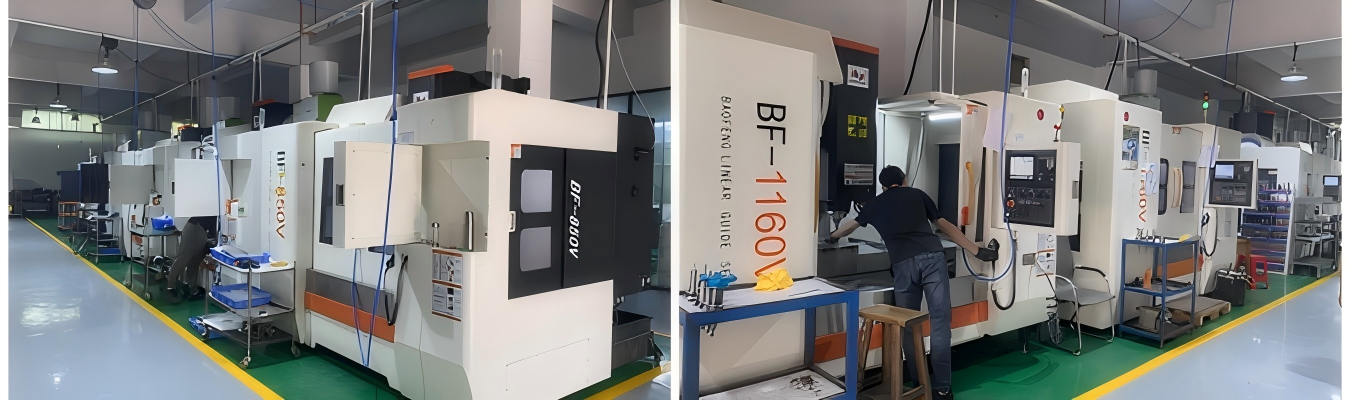
CNC machining works perfectly for heat sink prototype machining. There are no tooling costs, no minimum order quantities, and you can iterate fin designs in days rather than weeks.
But heat sink high volume machining is where we really shine. Once your design is locked, we scale production using automated CNC cells while maintaining the same tight tolerances and surface finishes. Whether you need 10 units or 100,000, the process - and the quality - stays identical.
That consistency matters when your customer's thermal performance depends on your heat sink year after year.
Great heat sink design is more than just putting more fins on a heat sink. It is about ensuring that each fin has a purpose and that the geometry of a heat sink is designed for actual airflow and can be manufactured at actual manufacturing capabilities.
At Falcon CNC Swiss, we incorporate these design criteria into everything we do. We use precision machining in Swiss CNC technology and 5-axis CNC in our manufacturing to design custom heat sinks that effectively cool products without creating unnecessary design complexity, which leads to delays in production schedules for customers.
Contact us for a free review of the DFM for your CAD file of custom machined heat sinks. We will review your CAD files including fin geometry and tolerances, then provide a quotation for the machining of your custom heat sinks.
Contact us today for a free DFM analysis of your project and receive an accurate quotation on manufacturing costs.
Also check out our complete line of precision machined custom heat sinks.
A: CNC Machining enables you to produce intricate pin fin configurations, baffle cuts, fin angles, and mounting features that cannot be made by extrusion methods. Furthermore, it is the simplest method for manufacturing heat sink prototypes as well as small to medium size production runs where tooling is not feasible.
A: For the vast majority (80%) of air-cooled type applications, either of Aluminum 6061 or 6063 provides the best overall characteristics in terms of performance, weight, and cost. Copper should only be used when a concentrated amount of heat must be quickly dissipated, when space is constricted, or when there are extremely compact dimensions required for an air cooled system.
A: The minimum allowable thickness of fins for aluminum is 0.8mm, and for copper it is 1.0mm; thinner thicknesses will lead to tool deflection, chatter, as well as poor final finish.
A: Custom heat sink milling, CNC mill machining of heat sinks, electrical-discharge machining when required to produce internal machining features, and all secondary machining functions such as skiving can be performed to manufacture successfully produce a custom heat sink prototype.
A: Yes, we are equipped to manufacture either prototype or production quantities of heat sinks to OEM requirements with the accompanying documents indicating complete material certification, manufacturability through to finish in-house, and using CMM for all batches manufactured.