English
  日本語
日本語  한국어
한국어  français
  Deutsch
  Español
  русский
  العربية
Jul
Learn More
20

Falcon CNC Swiss | March 29, 2026
The current investment in five-axis machining is on the rise among United States based contract manufacturers. More mid-sized machine shops are now using multi-axis machine systems to manufacture complicated and highly precision parts. These manufacturing advancements demonstrate that there is a shift to develop more sophisticated CNC machining capabilities, particularly in response to demand within the aerospace, medical, and high-mix manufacturing industries.
A mid-sized shop in Ohio placed an order for approximately $4.2 million worth of advanced 5-axis machine equipment. In addition, significant investments in five-axis machine equipment have taken place across other U.S. regions such as Oklahoma and Tennessee.
Historically, many companies avoided using five-axis machines for several reasons:
1. High Initial Cost of Equipment
2. Long Lead Time (14–18 Months)
3. Complexity of Programming
With the increasing requirement for precision and complex geometries, the requirement for five-axis machine capabilities continues to grow (now considered a necessity instead of a luxury).
5-Axis CNC machining lets you move on all five axes at the same time so you can produce complicated pieces in one pass.
Compared to 3-Axis CNC machining:
- Fewer setups → less chance to misalign the part.
- Better surface finish → More accurate cutting tool position.
- More efficient → Shorter cycle time.
- You can make really complicated shapes → Great for making aerospace parts.
Thanks to new technology like automated 5-Axis systems and integrated CAM software, companies can reduce the cost of programming, which means they will see a better return on investment.
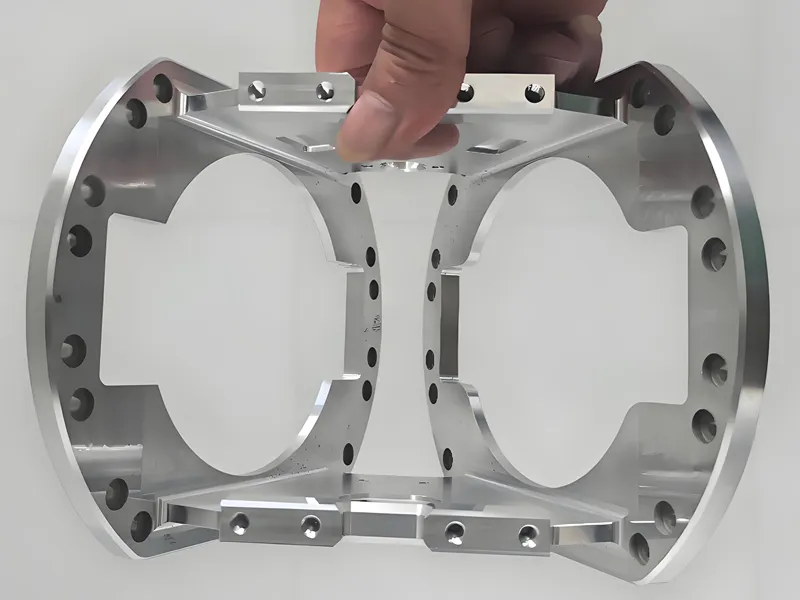
Companies who want to take advantage of these higher level of machining capabilities can take advantage of our ability to manufacture complicated parts accurately and consistently by using our 5-axis CNC machining services.
The US Precision Machining Market is growing and continues to do so due to an increase in demand for precision parts used in aerospace, military and medical devices, three of the largest industries buying 5-axis machined parts.
The primary effect of this growth has been:
More people require 5-axis machining for making complicated parts
Multi-axis (5-axis or 6-axis) machining is necessary to make more sophisticated parts such as turbine blades, impellers and all structural elements in an aircraft.
The trend is moving toward fewer higher capability suppliers.
Buyers prefer working with partner(s) that can process complicated parts in-house.
Barriers to entry are increasing.
Any shop that does not have 5-axis machining capability risks losing valuable contracts.
Consequently, 5-Axis machining has evolved from a "niche" capability into a strategic differentiator for manufacturers.
5-axis machining offers many benefits; however, it comes with its own set of engineering challenges that must be properly managed:
Complex toolpaths require sophisticated CAM strategy creation to prevent collision, as well as maximize efficiency while machining complex geometries.
The introduction of a multi-axis (rotary) machine increases heat generated, which can affect the accuracy of the final product.
The accuracy of the rotary axis on the machine directly impacts the tolerance on the final part.
Proper fixturing is critical to maintain stability during multi-directional machining processes.
To achieve consistent output during real-world production, the appropriate integration of the machining strategy, tools, and process control must be implemented in conjunction with the specific machine capability.
With the growing trend of increasing complexity within CNC machined parts, the standard for how procuring teams should evaluate their 5-Axis CNC suppliers has shifted:
Supplier Capability Depth
Does the supplier provide true continuous 5-Axis machining or simply perform indexed operations?
Engineering Support
Is the supplier willing and able to assist with optimizing toolpaths and reducing production risk?
Production Scalability
Can they consistently maintain the same level of accuracy for all parts produced regardless of part quantity, or will they see a decrease in part accuracy over a long production run?
Process Integration
Where do machining and inspection/automation processes overlap? Can the supplier combine the two processes seamlessly?
Working with a trusted, experienced supplier for your 5-axis CNC machining can provide you with consistent quality, shortened lead times, optimized costs associated with part(s) manufacturing. An example is Falco Precision's precision 5-axis CNC Machining Services.