English
  日本語
日本語  한국어
한국어  français
  Deutsch
  Español
  русский
  العربية


Oct
Learn More
02

Have you ever thought about how complex metal parts for cars and trucks, medical devices, electronics and more are manufactured with such precision? Much of the answer lies inside the CNC milling machine. The backbone of modern manufacturing takes solid blocks of material and cuts them away to leave the required parts in their wake—in extraordinary numbers and with amazing accuracy.
But what does a CNC milling actually contain? Knowing your CNC milling machine parts and components isn’t only for technicians. If you are purchasing CNC milling machine parts, or shopping for CNC milling machine component suppliers, having an understanding of the basics will help you ask better questions and select more wisely.
We’re going to introduce you to the primary parts of CNC/Milling machine. We’ll explain what they do, why they matter, and how basic knowledge of them will benefit you when ordering parts for your CNC milling machine components from a vendor.
Before getting into the CNC milling machine parts, we should cover one last basic question:
Put simply, a CNC mill is like a robot-controlled drill and cutter that follows a computer program to cut slots, holes, flat surfaces, and even complex 3D shapes out of a material. Generally, the bulk of CNC mills rotate their cutting tools to do the work of removing material from a workpiece.
The phrase simply means a milling machine controlled by a computer; instead of old-school manual mills where a person had to turn wheels to move the cutter, CNC “does what it’s told” and goes to exactly the right spot every time, accurately, and often without any human getting involved during the run.
How do CNC programming and CNC g-code prevail in this technological world? CNC Mill Programming: CNC mill programming used for coding a CNC mill involves writing a set or g-code instructions that tells the machine where and how fast to move and when to make actual cuts. Programmers use CAM (Computer-Aided Manufacturing) software to convert 3D models into “toolpaths”. It sounds complicated, but with great software tools, it’s not prohibitive. Many CNC milling machine parts manufacturers have expert programmers on staff to analyze and develop optimal paths suitable for the cutting.
Most of the time this means sitting in a classroom, hearing someone say “Be sure to wait three seconds for the spindle to speed up” or “If your workpiece starts to smell burnt its probably not getting enough lubricant.” But many technical schools offer classes to learn. Luckily, because we have the internet now there’s some online courses made up of studies of actual running software and simulators that do the same thing with zero risk to you, the programmer. It is important to get good at the software and the hardware (i.e., the parts we discuss next).
If your project requires prismatic parts or complex surface profiles, you can explore our precision CNC service capabilities for a broader range of machining options.
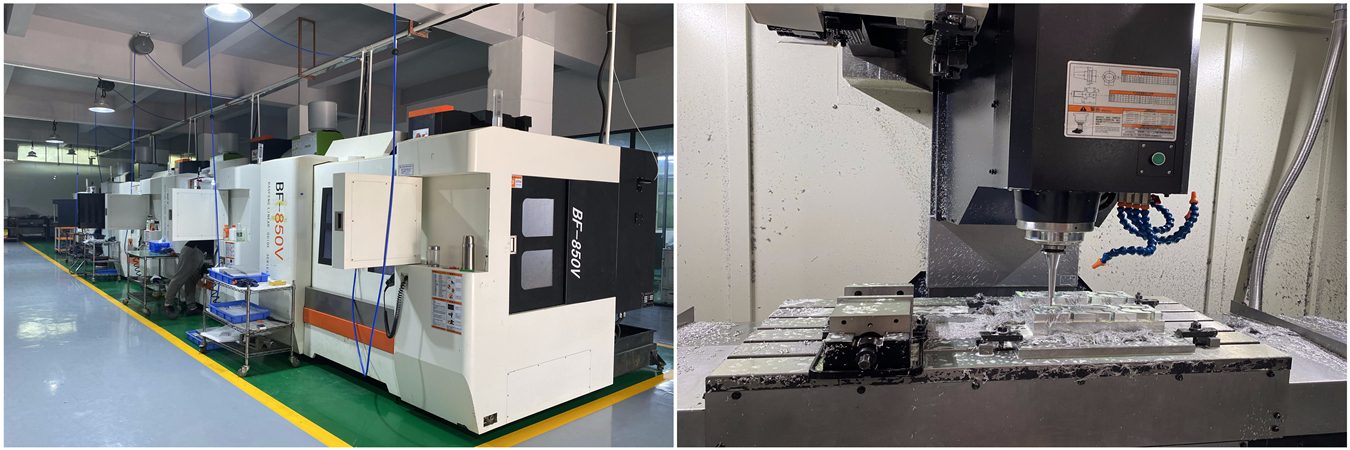
Let’s dive into the core CNC milling machine parts that are present in every machine. These are the essential building blocks that dictate what the machine is capable of.
The frame is what it stands on. The frame is traditionally heavy cast iron or welded steel. Why so heavy? To absorb vibration. When the machine is doing cutting work, it creates all kinds of forces. A more rigid, heavier frame stabilizes things, which translates directly into a better surface finish and tool life. Just think of it as a skeleton that holds everything else up.
The spindle is the heart of the machine. The rotating assembly that holds and spins the cutting tool. Spindles are rated by:
Power – How much torque it delivers (important for cutting tough materials).
Speed – In RPM (revolutions per minute). Higher speeds are good for fine finishes and small tools.
Accuracy – The spindle must run true with very little runout or your cuts won’t be accurate.
It’s easy to understand why a good spindle is essential for producing good CNC milling machine parts. Experienced CNC milling machine parts manufacturers take care of their spindles to keep producing quality results.
The tool holder is the critical juncture between the spindle and the tool cutting piece of business. A precision collet or chuck, this tightly grips the cutting tool (like an end-mill). If the tool holder isn’t clean or becomes worn, the tool can slip or wobble creating scrap and potentially damaging the machine. Look for CAT, BT and HSK holders among others.
The brain and muscles that make it move what and where precisely.
The controller is the computer that reads the G-code program and feeds signals to the motors. This is where the user interfaces to load programs, sets tool offsets, and start the machine. Brands like Fanuc, Siemens, and Haas are common. A good controller makes programming the machine easier and more reliable.
These are the muscles. Servo motors drive the movement of the machine’s various axes (X, Y and Z). Acted on by signals from the controller, they rotate by exact degrees moving the table or spindle into the correct programmed position. They’ve got feedback devices that tell the controller “I’ve gone exactly where you asked me to,” so any slop there is detrimental to a precise cut.
“The rails” and the “screws” – the precision bits that make it work! Linear guides support and make these moving parts a straight shot. Ball screws are threaded shafts with recirculating balls and move the table with very little friction and back-and-forth movement. WornLinear guides and ball screws are a common culprit of inaccuracies on old machines.
These are the parts that actually touch your material and do the cutting!
The cutting tools you will be using for cnc milling are most often “end mills,” which look like drill bits but can cut in all directions (sideways, as well as plunging!). End mills come in many shapes, but most common are:
Square end mills: For cutting sharp, square shoulders.
Ball nose end mills: For creating curved surfaces.
Roughing end mills: For quickly removing large amounts of material.
The shape selected affects the speed, finish, and cost of your cnc milling machine parts.
As noted above, these are critical items. In cnc jargon you may hear these spoken of as the item in a tool changer on the cnc which holds the specific end mill for the intended operation.
Cutting metal creates heat that can destroy tools, or at the very least, begin to distort your part. To deal with this cutting area heat, coolant systems pump some type fluid (or sometimes spray a mist), on and about the cutter to:
Lubricate: Fatting the friction between tool and material to reduce heat.
Cool: Carrying heat away by means of the added fluid. Perhaps allowing higher speeds and feeds.
Flush your chips: Washing away the little cut off chunks of metal so that they do not get back into the cutter penetration.
Proper use of coolant is a “big deal” to “discriminating” CNC milling machine parts manufacturers, and you need to pay attention.
Like any machine, mills need parts replaced, if not occasionally, at least in the normal course of definite time intervals in order to maintain good accuracy in production.
Wear Components
These items of necessity wear out, and are thus considered:
Way wipers: Rubber wiper seals keep debris from becoming abrasive in the linear guides.
Filters: In the coolant and lubrication systems.
Belts! And perhaps even bearings in the drive system.
Spindle drawbar: Clamps tool holder.
A good maintenance schedule will guarantee no nasty surprises. These are typical:
Daily: Check coolant levels if refillable; Clean chips from machine; Lubricate ways.
Monthly or so: Check and clean filters; Inspect way wipers.
Yearly or less, check spindle alignment, inspect ball screws for backlash, replace wear parts as necessary.
If you are running a shop, reliable sources for replacement parts is a “must.” The typical CNC milling machine parts suppliers have handy stocks of common items, belts, filters, tool holders, etc.
For larger and more complex geometries, precision CNC milling services offer greater flexibility in material removal and surface profiling.
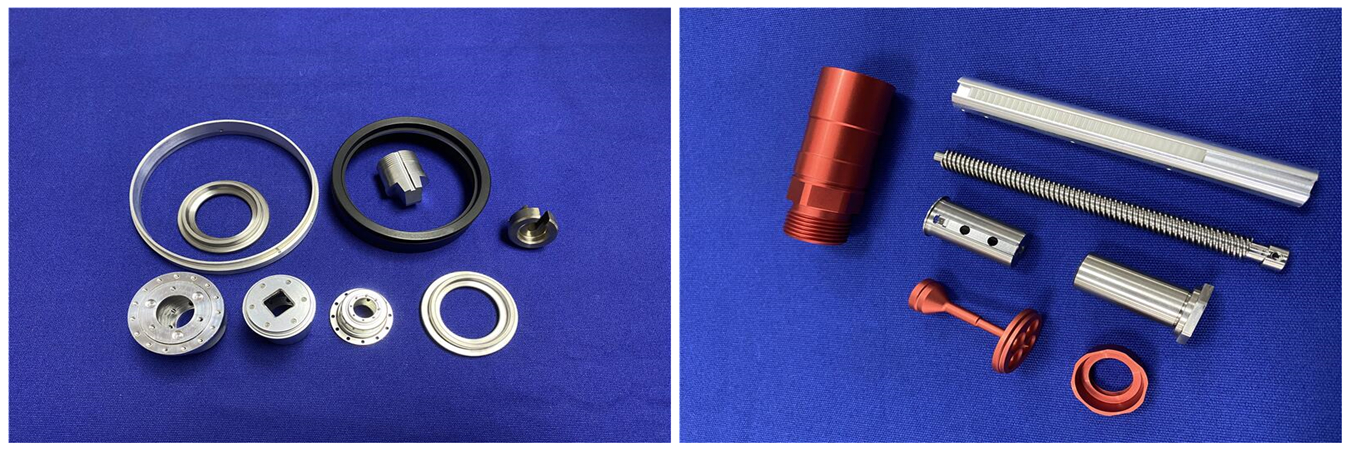
So you’ve decided to have parts made—not parts for the machine, but the parts you make with the machine! When it comes to choosing a partner, what are the right criteria?
How do you know if they’re any good? Look for…
Certifications: ISO 9001 is the entrylevel standard for quality management
Inspection equipment: Use of CMMs (Coordinate Measuring Machines) to check parts?
Experience: Have they made parts like yours before?
Documentation: Will they provide material certifications and inspection reports?
Falcon CNC Swiss is trustful and reliable CNC milling machine parts manufacturers, explore our CNC milling machine parts manufacturing capabilities.
The best cnc milling machine parts manufacturers will help you choose the best material for your part’s function. Some common materials for milled parts:
Aluminium (6061, 7075): Lightweight, easy to machine, ideal for brackets, enclosures, etc.
Steel (4140, 1018): Very strong, for structural parts
Stainless Steel (303, 304): Corrosion resistant, used in medical/food work
Plastics (Delrin, Nylon, PEEK): Lightweight, insulating, used for bearing, housings
An experienced and complete manufacturer will also do a Design for Manufacturing (DFM) review, suggesting tweaks to your design that make it easier (and cheaper!) to machine without degrading its function.
When you are choosing a cnc milling machine parts manufacturer, you want more than a machine shop. You want a partner with expertise, quality systems, and equipment.
At Falcon CNC Swiss we can provide
Advanced Equipment: Our mills are available in 3, 4, and 5axis rigs, suitable for complex geometries and tight tolerances
Material expertise: Everything from Aluminium through to Titanium and engineering plastics
Quality Assurance: We are ISO 9001,16949,13485 certified, using CMM for all critical dimensions
DFM Help: Our engineers will gapread your part design up front, to optimise for manufacturability, both in and out of cost.
Scalability: We can partner with you whether you need 5 prototype parts or 50,000 produce units!
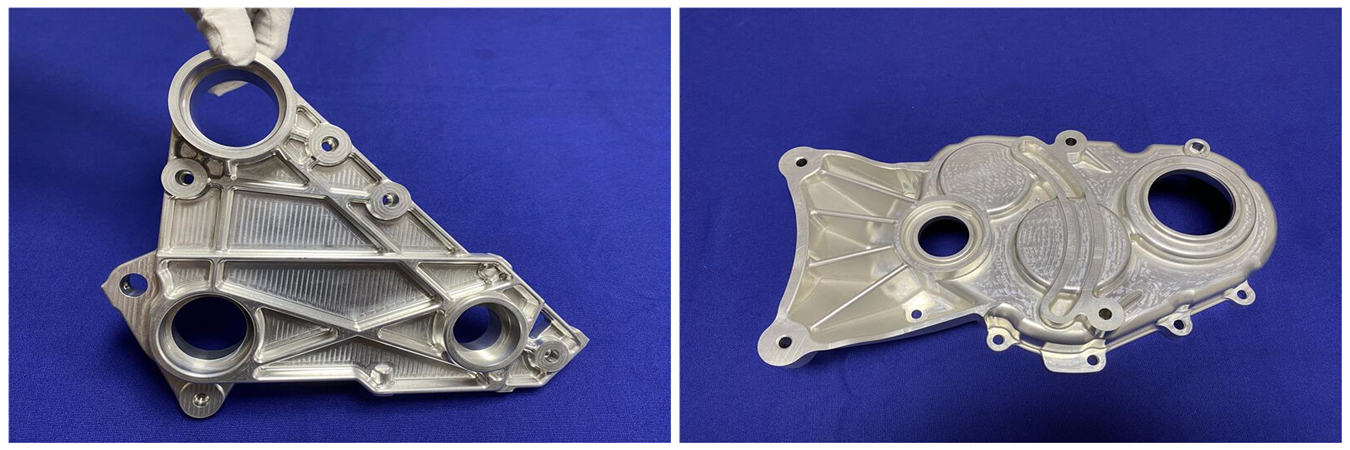
We’ve helped clients in medical, aerospace, electronics and industrial markets get accurate and costediansical cnc milling machine parts, on time.
Now that you understand about our cnc milling machine parts and components, get in touch to let us put that knowledge into action!Get in touch to download a quote?
Upload your file for DFM and 24hr quote Now
CNC milling machines contain several vital components, such as the CNC controller, spindle assembly, tool changer, worktable, axes and guideways, and coolant system. The individual parts work together to provide the necessary cutting, feeding and positioning during their operation.
Another component that falls into the essential category is the spindle, the part that contains, possibly cools, and rotates cutting tools at high rpm. The “housings” of spindles must be strong and stiff, especially at high speeds that improve surface finish and accuracy and allow endmills and similar tools to cut tougher materials.
CNC controllers are the “brains” of CNC machines. Taking machine language (often called G-code), the controller must send just the right commands to the axes and the feeding or cutting tools. A problem in basic commands will be multiplied in commands for individual tools later.
No. In fact, many milling components (especially) are custom to the particular part geometry or machining “workflow”—such fixtures, tool holders and the like. Consider the aerospace bracket or medical device housing, for example, that would otherwise be made from a churned-out commodity.