English
  日本語
日本語  한국어
한국어  français
  Deutsch
  Español
  русский
  العربية

Apr
Learn More
23

By: Falcon CNC Swiss | April 25, 2026
The U.S. government is accelerating investment in humanoid robotics, signaling a major shift in advanced manufacturing and defense automation.
A Silicon Valley startup secured a $24 million Pentagon contract to test humanoid robots for military applications, highlighting the growing importance of physical AI systems.
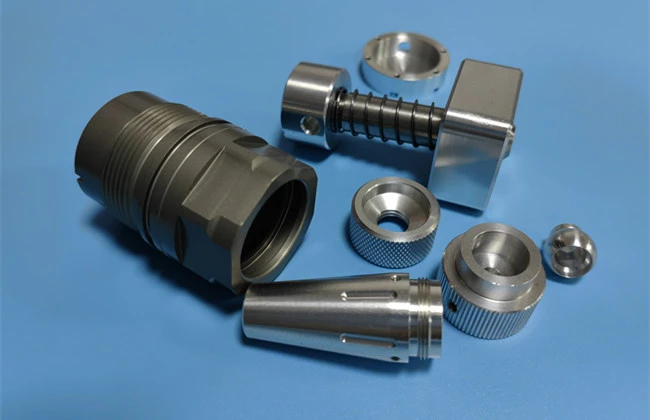
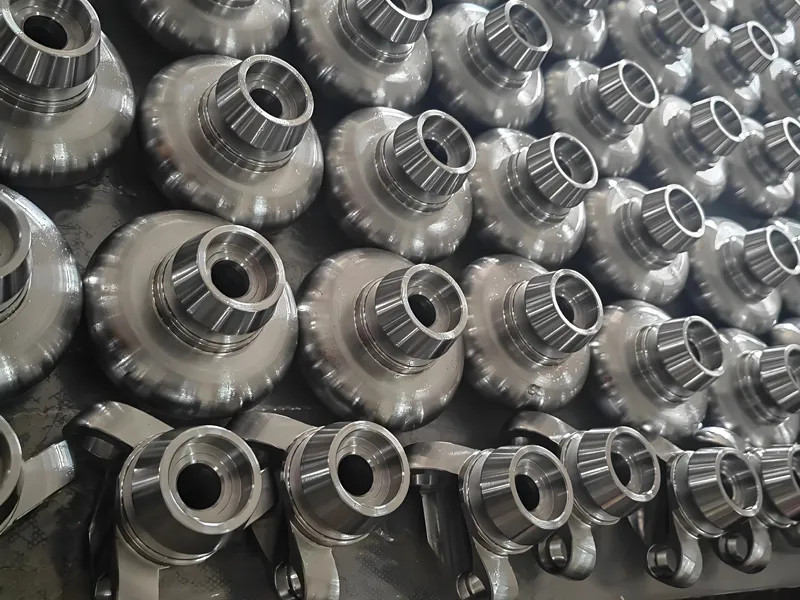
Behind this trend lies a critical but often overlooked layer: high-precision CNC machined humanoid robot parts, which enable durability, motion accuracy, and scalable production.
In April 2026, a U.S.-based robotics startup received a $24 million contract from the Pentagon to develop and test humanoid robots for the U.S. Marine Corps.
The project is part of a broader national initiative focused on autonomous systems and next-generation defense technologies.
Government officials emphasized that humanoid robots could play key roles in logistics, hazardous operations, and physically demanding tasks in both military and industrial environments.
This development reinforces a clear trend: humanoid robots are moving from experimental prototypes to real-world deployment scenarios.
Traditional robotics development focuses on prototyping and testing. However, humanoid robots require a shift toward repeatable, high-volume precision manufacturing.
Key CNC-driven components include:
Multi-axis machined joint housings
High-strength actuator brackets
Lightweight structural frames
Precision transmission components
These parts must meet strict requirements:
Micron-level tolerances
High fatigue resistance
Lightweight yet rigid materials
For example, robotic joint components demand extreme precision to ensure smooth motion and long-term durability in dynamic environments.
This is where advanced capabilities—such as 5-axis machining and Swiss-type turning—become essential for producing complex geometries at scale.
Solutions like CNC machined humanoid robot parts enable consistent production of these critical components.
1. Humanoid robots entering industrial reality
Government-backed funding is accelerating commercialization, especially in logistics, defense, and manufacturing.
2. Supply chain shifting toward precision component suppliers
As humanoid robot adoption grows, demand is shifting upstream toward CNC machining suppliers capable of tight tolerances and batch production.
3. Manufacturing competitiveness becomes component-driven
The real bottleneck is no longer AI—but whether robots can be manufactured reliably at scale.
This places CNC machining at the center of the humanoid robotics value chain.
From an engineering perspective, the biggest challenge in humanoid robotics is not design—it is repeatability under motion stress.
Key machining challenges include:
Multi-axis alignment errors in joint assemblies
Tolerance stack-up across complex mechanisms
Material deformation under cyclic loads
To address these, high-end CNC manufacturing must integrate:
5-axis machining for complex surfaces
Swiss machining for micro-precision joints
Controlled surface finishing to reduce friction and wear
At Falcon CNC Swiss, we apply these principles in producing custom humanoid robot components, ensuring:
±0.005mm tolerance control
Consistent batch quality
Scalable production from prototype to mass manufacturing
In humanoid robotics, precision is not a feature—it is a prerequisite for functionality.
For companies sourcing humanoid robot parts, this trend changes how suppliers should be evaluated:
1. Look beyond prototyping capability
Can the supplier transition from prototype to high-volume production without losing precision?
2. Evaluate multi-process integration
Suppliers should combine milling, turning, Swiss machining, and finishing—not rely on a single process.
3. Verify tolerance and consistency
Ask for:
CMM inspection reports
Process control documentation
Batch consistency data
Working with experienced providers of precision CNC machining for robotics ensures both design feasibility and production scalability.