English
  日本語
日本語  한국어
한국어  français
  Deutsch
  Español
  русский
  العربية

Apr
Learn More
17

According to notable features, the basic task of precision nuts and standard nuts functioning is the same, but there is a remarkable difference in the thread accuracy, dimension control, fit, and assembly requirements of precision vs standard nuts. This paper for engineering specialists is meant to highlight the features of the comparison of precision and standard nuts while being able to find the requirements for the application of nuts when the thread fit is important, the alignment characteristics matter, and repeatability and dimensions’ correctness matter too.
An overview of precision nut tolerance, as well due to the thread engagement aspect and the materials’ specification, together with the CNC production and control of nuts offer a helpful tool for engineers and procurement services to analyze the fastening characteristics of precision assemblies.
Both precision nuts and standard nuts fulfill the same task of fastening.The difference comes in the aspect that during their production process different level of dimensional and thread control is utilized.In the case of standard nuts their production is rather regulated so that they meet established requirements, while on the other hand the production process of precision nuts is carried out under strict regulations concerning the critical dimensions, thread geometry and fitting.
| Feature | Precision Nuts | Standard Nuts |
| Thread accuracy | Tighter control | Standard tolerance |
| Dimensional consistency | Higher | General-purpose |
| Thread fit | Controlled for specific assemblies | Standard mating fit |
| Customization | Available for application-specific requirements | Usually standardized |
| Typical use | Precision machinery and critical assemblies | General fastening |
The definition of "precision nut" refers to several designs of nuts depending on the application and may involve use of fine-thread nuts, custom machined nuts, or nuts produced with special dimensions or fit requirements. Therefore, precision nuts should be chosen based on the mating bolt, the level of tolerance required, work conditions, and usage rather than based on the word "precision" alone. Precision nuts are capable to provide better control over thread coupling and aligning in situations where reliable operation is required.
The accuracy of the thread is an essential factor to consider while choosing precision nuts. The size, pitch, tolerance class, and fit of the nut must match that of the bolt it is used with. Too much clearance may decrease positional stability of the assembly, while too little clearance would increase the assembly force and the danger of damaging the threads.
Precision nut threads are manufactured with controlled thread geometry and dimensional tolerances to achieve predictable engagement with the mating fastener. Key factors include:
Thread diameter and pitch
Thread profile and geometry
Internal thread tolerance
Thread class and fit
Surface finish
For precision assemblies, the required precision nut tolerances should be specified together with the mating bolt rather than considered independently.
The necessary precision thread fit will depend on the particular application. For instance, a tighter fit is more advisable in cases where alignment and repeatable positioning are required, but higher clearance may be needed where the frequent assembly is expected or where the issues of contamination, deformations due to heat, and ease of assembly occur.
The complete threaded joint, which includes not only the bolt and nut, but also the position of the hole, the material, and the working conditions, should be taken into consideration in the specs.
Correctly engaging threads is critical to ensure that precision fastening applications operate properly. The way in which there is interaction between the threads on bolts and nuts will affect load distribution, alignment and stabilization, as well as resistance to vibrations
For precision nut assembly, engineers need to consider several key factors:
Thread engagement length: Sufficient engagement ensures that the applied load is distributed across multiple threads and helps prevent thread failure.
Bolt and nut alignment: Accurate thread alignment reduces uneven loading and minimizes wear during assembly or operation.
Preload requirements: The correct tightening force helps maintain joint stability without causing excessive stress on the threads.
Assembly environment: Temperature changes, vibration, repeated installation, and operating conditions can influence the required thread fit.
In precision applications where component placement and consistent assembly are vital, bolt and nut assembly fit becomes more important compared to regular fastening applications. Precision nuts and bolts ensure continuous operation as well as limit problems like loosening, misalignment, and early breakdowns.
When it comes to machines, systems of automation and other important systems, proper selection of thread engagement and fit requirements guarantees that the fastening functions properly through the entirety of its life cycle.
The selection of proper dimensions and design of a precision nut depends on the fit bolt, installation space, objectives of load and conditions of assembly. Precision nuts are manufactured differently from ordinary nuts because their dimensions are determined by the manufacturer.
| Design Factor | Key Considerations |
| Nut size | Across flats, thickness, outer diameter, and available installation space |
| Thread specification | Diameter, pitch, thread class, and required fit |
| Nut type | Hex, flange, thin, lock, shoulder, or custom designs |
| Thread type | Coarse or fine thread precision nuts based on application requirements |
| Material | Strength, corrosion resistance, weight, and operating environment |
Common precision nut types include hexagonal nuts, thin nuts, flange nuts, lock nuts, and made nuts. The correct type of precision nut depends on the conditions of use, requirements for locking, loading, and methods of assembling the nut.
In custom applications, precision nut sizes can be produced according to engineering drawings rather than limited to standard catalog dimensions. This is required when a product needs a particular shape of the outer surface, threaded surface, thickness, or connection interface.
When choosing a precision nut, make sure to specify the complete threading and determining dimensions needed for successfully matching it with the bolt and intended assembly.
The selected material and manufacturing approach for precision nuts affect the accuracy of their thread, dimensional stability, durability, and quality. Falcon CNC Swiss manufactures CNC machined nuts from various engineering materials depending on the application, type of thread, and volume of production.
Common materials include:
Stainless steel: Suitable for applications requiring strength, durability, and corrosion resistance.
Brass and copper: Offers good machinability and corrosion resistance for electrical and mechanical components.
Aluminum: Lightweight and easy to machine, making it suitable for weight-sensitive assemblies.
Carbon and alloy steel: Used when higher strength and wear resistance are required.
Engineering plastics: Suitable for lightweight, low-friction, or electrically insulating applications.
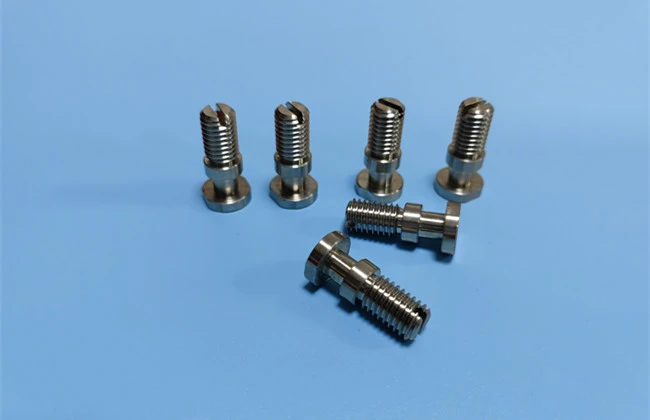
CNC turned nuts are commonly produced through precision turning when the component has rotational geometry and requires consistent thread and dimensional control. For small, high-precision nuts with demanding dimensional and thread requirements, Swiss machining can provide excellent control during production.
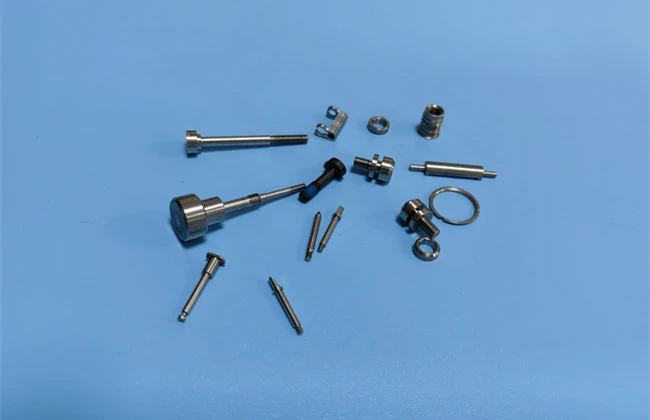
When you have unique requirements, CNC machining for custom nuts makes it possible for the producer to incorporate dimensions, threads, and external shapes that are suited for the required application and are not available in standard catalogs. Additionally, small precision nuts made as part of a bigger family of turned parts can be done with the help of Swiss machining because they need high repeatability and precise dimensions. Explore our Swiss machining products.
Consistent precision nut inspection is essential for verifying thread accuracy, critical dimensions, and overall part conformity. Falcon CNC Swiss employs both dimensional inspection and thread inspection to guarantee that the nuts manufactured will meet the details defined in the customer drawings.
Key inspection areas include:
Thread inspection: Verifying thread size, pitch, profile, and fit using appropriate gauges or measurement equipment.
Dimensional inspection: Checking critical dimensions such as outer diameter, thickness, across-flats dimensions, and other specified features.
Visual and surface inspection: Checking for burrs, machining defects, surface damage, and other conditions that could affect assembly.
Final verification: Comparing measured results with engineering drawings and specified tolerances before shipment.
In order to guarantee better control of its processes, precision nut measurements might be incorporated in the production process to check significant characteristics and ensure they are the same throughout all batches that are being produced.
Precision nut thread inspection plays an important role because even minute mistakes in parameters and geometry may jeopardize the operation of a part. It is therefore critical to follow the requirements of inspection in accordance with the specifications and applications of the product.
When it comes to choosing custom precision nuts, you want to go with the precision kind if the threaded fastener needs tighter processing of thread fitting, size accuracy, alignment or repeated assembly. Standard nuts will usually do the trick when it comes to regular fastening needs because the dimensions and tolerances are standard enough for the application.
Precision nuts are particularly suitable for:
Precision machinery where accurate positioning and stable fastening are important.
Robotics and automation where repeated movement can make thread fit and alignment critical.
Electronic and mechanical assemblies with limited installation space or application-specific dimensions.
Custom equipment requiring non-standard nut dimensions, thread configurations, or specialized features.
Critical assemblies where consistent preload, alignment, and repeatable installation are required.
When deciding how to choose precision nuts, one should think about bolt relation, the thread characteristics, the level of accuracy, load factors and external conditions. There is no requirement to choose precision nuts just for the sake of tight tolerances since the costs of production will have to be justified by some benefits for the usage.
In normal production, regular nuts may turn out to be more cost-efficient. In cases where precision, accuracy and uniformity are critical elements of the functioning process, precision nuts can be a better option.
Precision nuts are not automatically better than standard nuts; they are designed for applications where thread accuracy, dimensional control, fit, and assembly consistency are important. The right choice depends on the mating bolt, required tolerances, operating conditions, and assembly requirements.
For precision applications, consider:
Thread tolerance and fit
Required thread engagement
Nut dimensions and type
Material and manufacturing method
Inspection and quality requirements
When standard fasteners cannot provide the required fit or dimensional consistency, custom precision nuts can be manufactured to application-specific specifications.
Need custom precision nuts for your application?
Contact Falcon CNC Swiss to discuss your drawings, specifications, and production requirements.