English
  日本語
日本語  한국어
한국어  français
  Deutsch
  Español
  русский
  العربية

Mar
Learn More
19

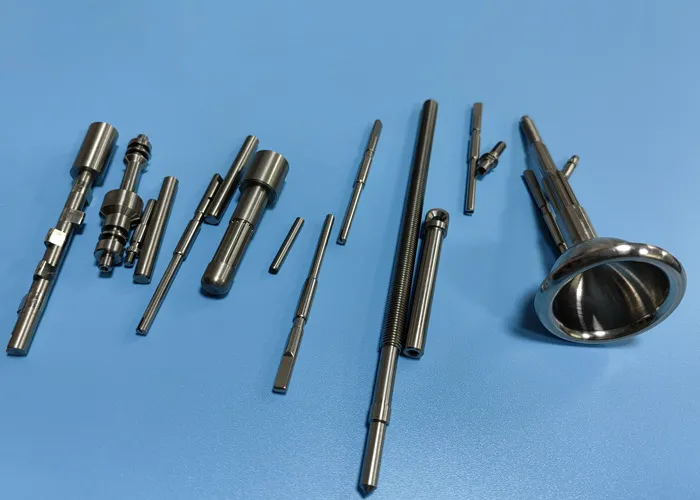
Precision pins have significantly contributed to the ability to accurately align and transfer loads in a wide variety of systems, from the simple to the complex. When machines require positioning accuracy of a few microns, all locators, guides, and shoulder pins must hold tight tolerance positioning due to the stresses imposed by dynamic loading. At Falcon CNC Swiss Engineering, we engineer and manufacture custom precision pins with the use of Swiss-type CNC technology. Using state-of-the-art technology, we can provide diameters with tolerances as low as ±0.0002 inches( 5 microns) and surface finishes below Ra 0.2 µm. This document will address your most technical questions about precision pin machining manufacturing, including the types of materials that can be used and the process capabilities available.
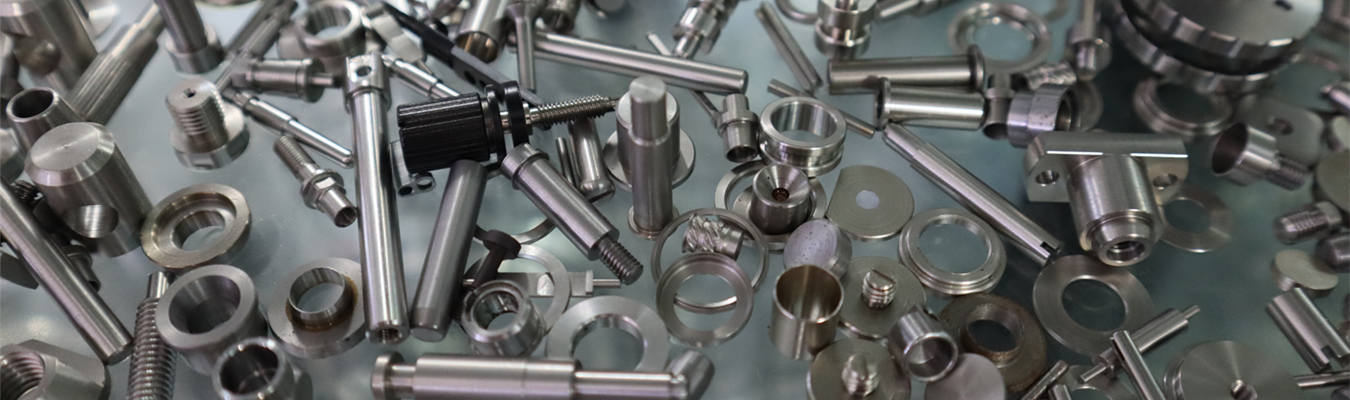
Precision pins are specialized machined components designed to establish the positional relationship of one part to another, either moving or stationary. An example of this type of engineered machine element would be a pin in a jig, fixture, die set or a robotic joint. In all these applications, a single locating pin can contribute to assembly error, increased wear, or positional drift when its deviation from the nominal tolerances is just a few microns. There are three main characteristics of precision positioning systems that must be satisfied: diameter tolerance, roundness, and surface condition. To ensure that your GD and T requirements are maintained on any pin that you need manufactured (including dowel and more complex stepped and threaded geometries), we use Falcon Swiss type sliding headstock lathes and in-process laser measurement equipment.
From a mechanical engineering perspective, precision pins fall into two primary functional categories:
Locating / Alignment Pins – These define a fixed position between two components. Examples include dowel pins, locating pins, tooling guide pins, and alignment pins. They typically have tight diametral tolerances (h6, g6, or custom) and may include tapered lead ins for easy assembly.
Fastening / Retaining Pins – These resist shear and tensile loads while allowing disassembly. This group includes shoulder pins, clevis pins, spring loaded pins, and cotter type fasteners. They often combine a precision ground shank with a threaded or grooved end.
Many CNC machined pins blur the line – e.g., a shoulder pin that locates a bushing (alignment) and also clamps a sandwich assembly (fastening). Falcon designs and machines both types, often integrating features like cross holes, flats, or internal threads.
Material selection directly impacts wear resistance, corrosion protection, strength, and cost. Below is a comparison of the most common alloys we machine for precision pin fabrication.
| Material | Advantages | Typical Applications | Hardness (as machined / heat treated) |
| Stainless steel precision pins (303, 304, 316, 17-4 PH) | Corrosion resistance, cleanability, moderate strength | Medical devices, food equipment, marine positioning systems | 180-220 HB / up to 45 HRC |
| Hardened steel CNC pins (O1, A2, 52100, 4140) | High wear resistance, core strength, dimensional stability | Tooling dies, punches, high cycle fixtures, automotive guide pins | 200-250 HB / 58-62 HRC |
| Titanium precision pins (Grade 5 Ti6Al4V) | High strength to weight ratio, biocompatible, non magnetic | Aerospace actuators, orthopedic instruments, robotics links | 320-380 HB / 36-42 HRC |
| Chrome plated machined pins (steel + hard chrome) | Extremely low friction, corrosion and galling resistance | Hydraulic positioners, linear guide pins, high speed automation | Base steel 55 HRC + chrome 70 HRC |
| Aluminum CNC pins (7075, 6061) | Lightweight, fast machining, anodizable | Semiconductor positioning stages, portable tooling | 80-110 HB (anodized surface to 60 HRC) |
| Carbide precision pins (micro grain tungsten carbide) | Ultimate compressive strength, elastic modulus ~600 GPa | High precision v groove locators, EDM tooling, wear pads | 89-93 HRA |
| Alloy steel dowel pins (8620, 9310) | Case hardenable, tough core, good fatigue life | Aerospace jigs, automotive transmission fixtures | 150-200 HB / case 58-62 HRC |
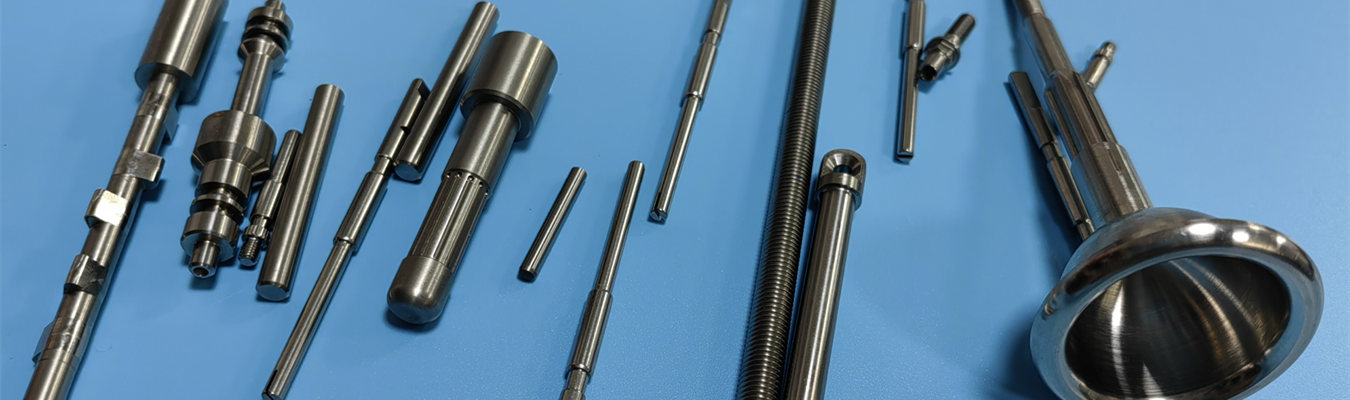
The strongest material for resisting permanent deformation from compressive or shear loads is tungsten carbide, tungsten carbide precision pins are the strongest. The compressive strength of carbide exceeds 4,500 MPa (650 ksi), or roughly three 3 times stronger than hardened tool steel; however, it is both expensive and brittle. When both strength and toughness are needed, such as in a locating pin that also takes an impact, hardened steel CNC pins made of either 52100 or 2A tool steel (58 - 62 HRC) represent the best engineering choice. For lightweight and high-strength applications, Grade 5 titanium precision pins exhibit a superior strength-to-weight ratio.
Achieving tight tolerance precision pins requires more than a standard lathe. Falcon CNC Swiss uses multi axis Swiss type CNC turning centers equipped with guide bushings, live tooling, and in process gauging. Below is our standard process for high tolerance pin machining.
Production Preparation - Ground and Centerless Turned Stainless Steel, Titanium, Carbide and an Assortment of Bar materials are fed to Swiss Lathes as Raw materials. The barreled Tolerances are held to H8 or better.
CNC Or Swiss Turned Parts for Precision Pins - The Guide Bushing supports the Material 5-10 mm from the Cutting Tool, virtually Eliminating deflection. The outer Diameter surface is Rough and Finished Turned (the amount left to be Ground is usually from 0.05mm to 0.10 mm).
Secondary Features - Live Tooling Machines (Mills) Flats, Cross Holes, Slots and Threads without Removing the Part from the Main Spindle, keeping Concentricity.
Heat Treatment - The Heat treatment process for Steel Pins requiring 45 HRC, they are Able to be Vacuum Hardened and Tempered. Carbide and some Stainless Steel pins are used as Machine Tool.
Precision Grinding - Once Heat-treated for precision Grinding Pins, they are Required to Meet H6 Tolerances or Better (≤ 5µm) using Centerless or Cylindrical grinding.
Surface Finish - Mechanical polishing, micro lapping, or chrome plating to achieve mirror finish precision pins (Ra ≤ 0.1 µm).
Inspection - Every lot undergoes laser micrometer measurement (all diameters), roundness test, and precision pin hardness testing (Rockwell or micro Vickers).
Passivation or Cleaning - Stainless Steel Pins are Passivated, all Pins are Ultrasonically Cleaned and Vacuum Sealed for Shipping.
Falcon CNC Swiss specializes in CNC turning for precision pins from 0.5 mm to 32 mm diameter, with lengths up to 300 mm. Our Swiss type machines allow us to machine the entire pin in a single clamping operation, including:
Tapered CNC pins with up to 10° taper per side.
Shoulder pins manufacturer – precise shoulder length control ±0.01 mm.
Guide pins for tooling with chamfered lead in and oil grooves.
Locating pins CNC with hemispherical or conical tips.
Because Swiss turning uses a sliding headstock and guide bushing, we hold CNC pin diameter tolerances down to ±0.002 mm (2 µm) on critical features – a level unattainable with conventional lathes.
For tight tolerance positioning systems, the pin’s fit class and surface finish directly affect positioning repeatability. Below are standard tolerances and finishes we routinely produce.
| Tolerance Class | Diameter deviation (mm) | Typical application | Inspection method |
| h9 | ±0.030 | Clearance fit, low cycle alignment | Laser micrometer |
| h7 | ±0.015 | General locating pins | Laser + air gauge |
| h6 tolerance machined pins | ±0.010 | Precision jigs, die sets | Air gauge + CMM |
| h5 | ±0.006 | High end positioning stages | Laser + CMM |
| Custom (e.g., ±0.002) | ±0.002 | Semiconductor wafer aligners | CMM + optical comparator |
Our industrial pin manufacturing serves sectors where a single misplaced micron causes system failure.
Medical device precision pins come in many forms, including pins that are used in surgical robotics, orthopedic jigs, and the insertion tools for implants. Medical device precision pins can be manufactured from 17-4 PH material or titanium. Falcon will provide full material certification, passivation, and laser marked UDI codes for our customers in the Medical Device industry.
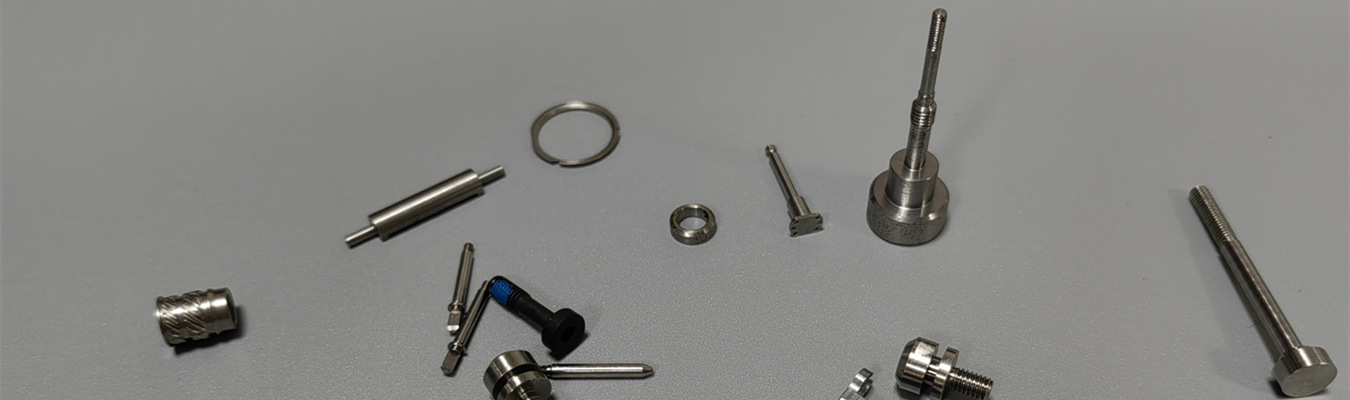
Automotive precision pins are used for applications such as locating pins for valve body transmissions and aligning dowels for fuel injectors. Automotive precision pins must be able to withstand millions of cycles. Our company manufactures hardened steel pins with controlled case depth and runout of less than 0.005 mm.
Robots are equipped with robotics locating pins to enable repeat accuracy in their pick and place operations. Our locating pins are tapered at the entry and have an H6 tolerance for the shank.
Semiconductor equipment pins must be made ultra-clean and non-magnetic for use in wafer handling robots and inspection stations. To achieve the above properties, we manufacture our semiconductor equipment pins from either 316L stainless or titanium with an electropolished finish.
Core pins, ejector pins, shoulder guide pins, etc. are examples of tooling and die precision pins used in progressive dies, injection molds, and checking fixtures. Our dedicated pins or shafts provides standard die set dimension information.
Electronic assembly pins are commonly found in fixtures used for assembling mobile devices. Electronic assembly pins locate printed circuit boards (PCBs) and housings. Our precision machining for consumer electronics page provides information on how we maintain micron tolerances with our miniature pins.
As a precision pins manufacturer with over a decade of Swiss CNC experience, we do not limit you to catalog sizes. Custom precision pin fabrication includes:
Any head style: round, hex, square, or custom profile.
Any tip shape: conical, radius, flat, spherical, or stepped.
Integrated features: cross holes, threads (internal/external), knurling, slots, and snap ring grooves.
Coatings: hard chrome, electroless nickel, TiN, DLC, or passivation.
Lot sizes: prototype (1-50 pcs) to production (50,000+ pcs).
Need precision pins with tight tolerances for your positioning system? Send your print or 3D model to our engineering team. We provide free DFM feedback and a quick turnaround quote. Contact Falcon CNC Swiss now →
| Material family | Specific alloys |
| Stainless steel | 303, 304, 316, 17 4 PH, 416, 440C |
| Hardened steel | 12L14, 1144, 4140, 4340, A2, D2, O1, 52100 |
| Titanium | Grade 2, Grade 5 (Ti6Al4V), Grade 23 |
| Aluminum | 6061, 7075, 2024 |
| Carbide | Micro grain tungsten carbide (6% – 12% Co) |
| Alloy steel | 8620, 9310, 17CrNiMo6 |
| Exotic | Inconel 718, Monel K500, Kovar |
Precision pin hardness testing – Rockwell HRC (per ASTM E18) or micro Vickers.
100% dimensional inspection – Vision system with 0.001 mm resolution.
Bead blasting and passivation – For stainless pins.
Vacuum heat treat – Distortion free hardening up to 62 HRC.
Ground and polished pins – Centerless grinding for true cylindrical geometry.
Core pins are precision pins used in injection molds and die casting dies to form internal holes, cavities, or undercuts. They project into the mold cavity, displacing material to create a hollow feature. Core pins must resist high injection pressures (up to 2,000 bar), thermal cycling, and ejection wear. Typical applications: plastic connector housings, hydraulic valve bodies, and automotive fuel rails.
The best core pin materials balance hot hardness, wear resistance, and toughness:
H13 tool steel – Most common for core pins operating below 600°C. Heat treated to 48-52 HRC.
Stainless steel (420, 440C) – For corrosive plastics (e.g., PVC, glass filled).
Carbide – For extremely high volume molds (millions of shots) or pins with diameters <1 mm.
Beryllium copper – For rapid heat dissipation in localized areas (rare due to toxicity concerns).
Here at Falcon, our production capabilities include producing core pins to be used in molds for the medical, automotive, and consumer electronics industries. Our ability to manufacture Swiss machined components provides for perfect concentricity of a pin from base to tip. A gallery of all of our Swiss machined component examples can be viewed on the associated gallery page.
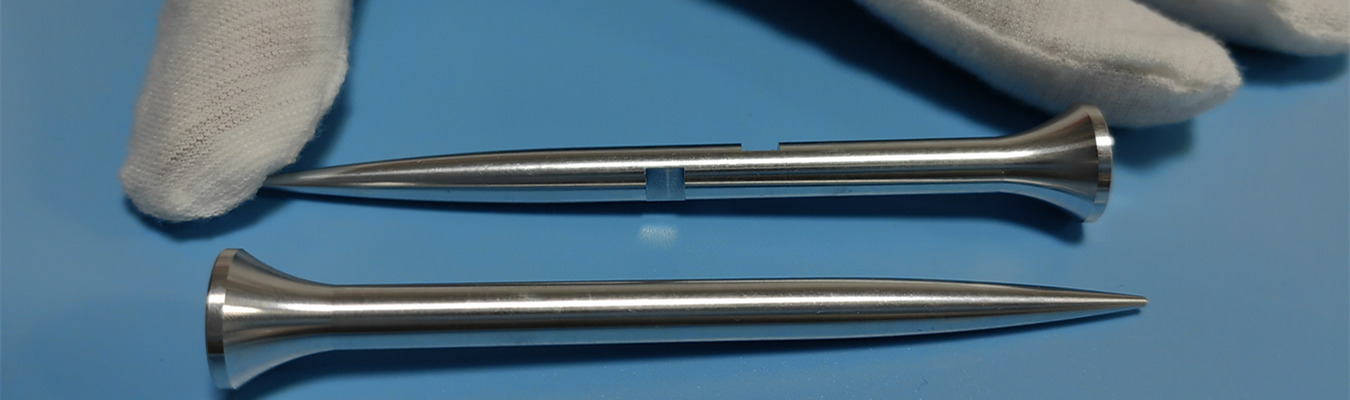
For any tight tolerance positioning system – whether it’s a semiconductor aligner, a surgical robot, or a high speed pick and place gantry – start with your pins. Specifying a precision pins manufacturer that controls the entire process from raw material to final inspection eliminates the largest variable in your stack up. Falcon CNC Swiss combines CNC turning for precision pins, in house grinding, and metrology to deliver h6 tolerance machined pins with documented repeatability. Leverage our Swiss machining expertise for your next locating, guiding, or fastening pin application.
Contact us to discuss your pin’s functional requirements. Our engineers will respond within 24 hours with a feasibility analysis and quotation. Stop compromising with loose tolerance pins. Let Falcon CNC Swiss engineer your custom precision pin fabrication – from tapered guide pins to spring loaded locating pins. Request your engineering consultation →
A: With Swiss turning, we comfortably hold 10:1 without support, and up to 30:1 with a secondary steady rest. For a 1 mm diameter pin, 30 mm length with h6 tolerance is routine.
A: Yes. Our Swiss lathes can machine pins down to 0.2 mm diameter. These miniature machined pins are often used in optical alignment systems and micro positioning stages.
A: We manufacture the precision body and plunger components for spring loaded pins. The spring assembly can be integrated by you or through our partner vendors.
A: No minimum. We equally support prototype runs of 5 pieces and high volume orders of 100,000+ pieces.
A: We use a combination of laser micrometers (non contact, ±0.5 µm accuracy), air gauging tools (for internal bores), and a Zeiss CMM with a 0.3 µm probe.
A: Standard ground pins – 15 days. Mirror finish (lapped) – 20 days. Expedite options available.