English
  日本語
日本語  한국어
한국어  français
  Deutsch
  Español
  русский
  العربية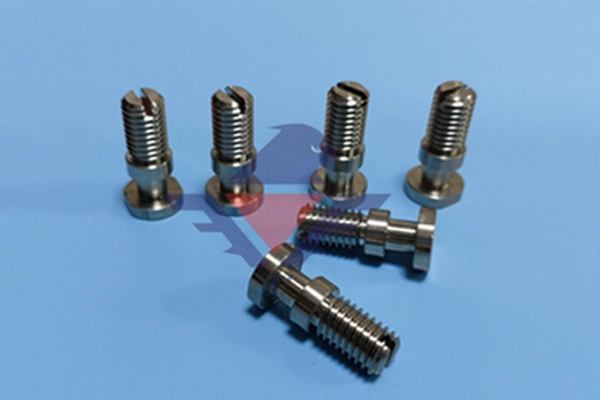

Mar
Learn More
29

CNC Swiss Lathes are the best choice for engineering professionals needing precision shafts; Swiss precision shafts have a tolerance often of ±0.0002 inches or sometimes even greater. Typical CNC manufacturing lathes do not have the ability to maintain precise geometric integrity on small diameter machined shafts; these include all of the long slender shaft machining applications. Whether you require a stainless steel precision shaft for a surgical instrument or a titanium machined Swiss shaft for an aerospace actuator, understanding how to choose the right materials, control runout, and utilize the full potential of Swiss CNC machining are critical factors affecting your ability to succeed.
In the section below, we answer some of the questions commonly asked by engineers, along with how Falcon CNC Swiss transforms raw material into high-performance components used in rotation.
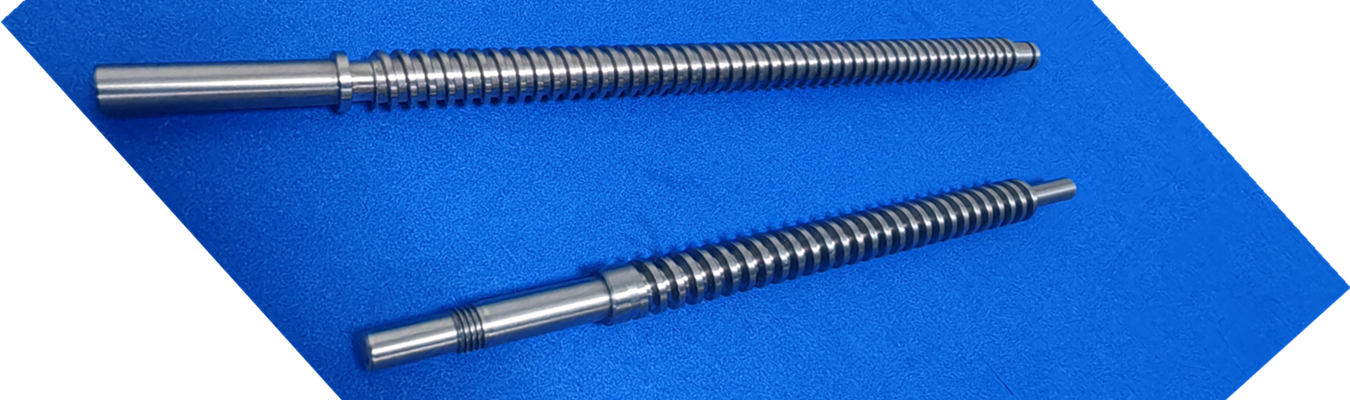
A precision shaft is a cylindrical component machined to exacting dimensional, geometric, and surface finish standards. Unlike general-purpose rods, precision shafts maintain tight control over:
Diametral tolerances (often ±5 microns or less)
Total Indicator Runout (TIR) – typically below 0.005 mm for high-speed applications
Surface finish (Ra 0.2 µm or smoother)
Concentricity between multiple diameters
A machine shaft is an element of motion, torque or power that rotates and delivers them to the component within the assembly (for example: motor armatures, input shafts for gearboxes, actuator drive shafts). All of these parts can be machined using Swiss-style automation. The result is the ability to create parts with an accuracy that cannot be reproduced with a traditional lathe.
Shafts vary by geometry, load, and application. Below is a technical breakdown:
| Shaft Type | Primary Function | Typical TIR Requirement | Common Industries |
| Drive Shaft | Torque transmission | 0.01 – 0.05 mm | Automotive, industrial |
| Precision Ground Shaft | Linear motion / guiding | 0.002 – 0.005 mm | Robotics, medical |
| Step Shaft | Multi-diameter component location | 0.005 – 0.01 mm | Pumps, compressors |
| Hollow Shaft | Weight reduction + fluid passage | 0.01 – 0.02 mm | Aerospace, motors |
| Eccentric Shaft | Oscillating motion | 0.01 – 0.03 mm | Printing, packaging |
A precision ground bar must be completed with abrasive finishing after the turning process, which produces an ultra-smooth surface finish and sub-micron roundness. Also, grinding removes the remnants of the turning operations by polishing, provides a more consistent microhardness, and repairs damage from heat (heat affected zones).
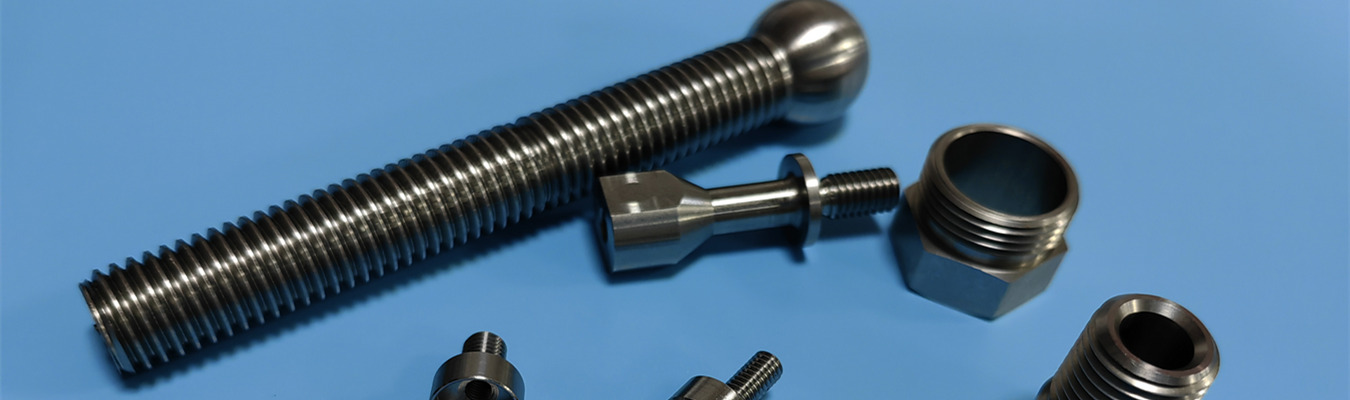
Many conventional CNC lathes have difficulty machining long, thin shafts due to increased amounts of deflection as the Length-to-Diameter (L/D) ratios exceed 4:1. Due to their unique mechanism of a guide bushing, Swiss lathes can support the material in way that the workpiece does not flex, immediately adjacent to the cutting tool.
Benefits include:
Support for L/D ratios up to 20:1 without steady rests
Simultaneous live tooling for milling, cross-drilling, and thread whiling
Sub-spindle transfer for complete part completion in one cycle
Thermally stable operation – coolant flows through the guide bushing
For CNC turned axles or CNC lathe shaft machining, Swiss machining automation reduces handling errors and improves concentricity between turned diameters.
Engineers who request micron tolerance shafts typically request three levels of control:
1. Diametric Tolerance - Swiss turning can consistently hold the following tolerances: ±0.0002 in. (±5 µm). With compensated tool paths and temperature-controlled coolant, Falcon can achieve ±0.0001 in. (±2.5 µm) on small-diameter, less than ½ in. (12 mm) machined parts.
2. Geometric Tolerance - Roundness (e.g., dimensional accuracy about its centerline) and Cylindricity (i.e., measuring the degree of taper and straightness combined) control vibration. For example, Swiss guide bushing supports limit roundness error to less than ≈ 0.00012 in. (3 µm). Cylindricity is kept within 0.0002 in. over 4 in. length.
3. Runout - Total Indicator Runout (TIR) is the measure of surface deviation in the form of rotational run-out. For high-precision drive shafts, we guarantee the radial total indicator runout (TIR) to be less than or equal to ±0.0002 in. (±5 µm) between any two diameters.
Note to Engineers: When specifying runout, always reference functional datum surfaces (e.g., bearing journal) instead of arbitrary features.
Material choice affects machinability, heat treat response, and final performance. Below are proven options for custom CNC shafts:
| Material Family | Alloy Examples | Swiss Machinability | Typical Hardness | Key Applications |
| Stainless Steel | 303, 304, 316, 17-4 PH | Good – Excellent | 20–45 HRC | Medical, marine, food equipment |
| Titanium | Grade 2, Grade 5 (6Al-4V) | Fair (requires sharp tools) | 30–41 HRC | Aerospace, surgical, racing |
| Brass | C360, C464 | Excellent | 80–90 HRB | Valve shafts, electronic components |
| Aluminum | 6061, 7075 | Excellent | 60–95 HRB | Robotics, drone axles |
| Hardened Steel | 4140, 4340, 52100 (pre-heat treat) | Fair – Good | 45–62 HRC | Heavy-duty drive shafts |
| Carbon Steel | 12L14, 1144, 1045 | Excellent – Good | 15–25 HRC | General industrial shafts |
Plated and anodized options: For corrosion or wear resistance, Falcon offers plated machined shafts (zinc, nickel, electroless nickel) and anodized CNC shafts (Type II or Type III hard coat on aluminum).
Components: Surgical instrument shafts, bone drill drivers, biopsy needle guides.
Requirements: Biocompatible materials (316 SS, Ti6Al4V), no sharp edges, passivation.
Typical diameter range: 0.5 mm – 12 mm.
Components: Joint actuator shafts, harmonic drive wave generators, encoder mounting shafts.
Requirements: Low runout (0.002 mm), high fatigue life, lightweight (7075 Al or Ti).
Swiss advantage: Complex features (flats, cams, cross-holes) in single setup.
Components: Fuel pump plungers, steering pinions, turbocharger shafts.
Requirements: High volume (10,000+ parts), consistent hardness, thread rolling.
Material: 4140 hardened steel or 303 stainless.
Components: Potentiometer shafts, encoder axles, cooling fan spindles.
Requirements: Extremely low torque drag, mirror finish, non-magnetic options (brass).
Typical tolerance: ±0.0002 in.on diameter, 8 Ra finish.
Components: Gearbox input shafts, conveyor drive axles, pump rotors.
Requirements: Keyways, splines, snap ring grooves.
Swiss capability: Live tooling for milling keyways without second ops.
Components: Rotary encoder shafts, flow meter spindles, potentiometer axles.
Requirement: Concentricity ≤0.0005 inches between bearing seats.
Material: Non-magnetic stainless (316) or brass C360.
Components: Laparoscopic tool shafts, endoscopic rotators, micro-debrider tubes.
Requirements: Hollow construction (0.020inches – 0.125inches ID), electropolished finish.
Special process: Through-coolant drilling on Swiss lathe.
Explore more information about Falcon Swiss machined precision components.
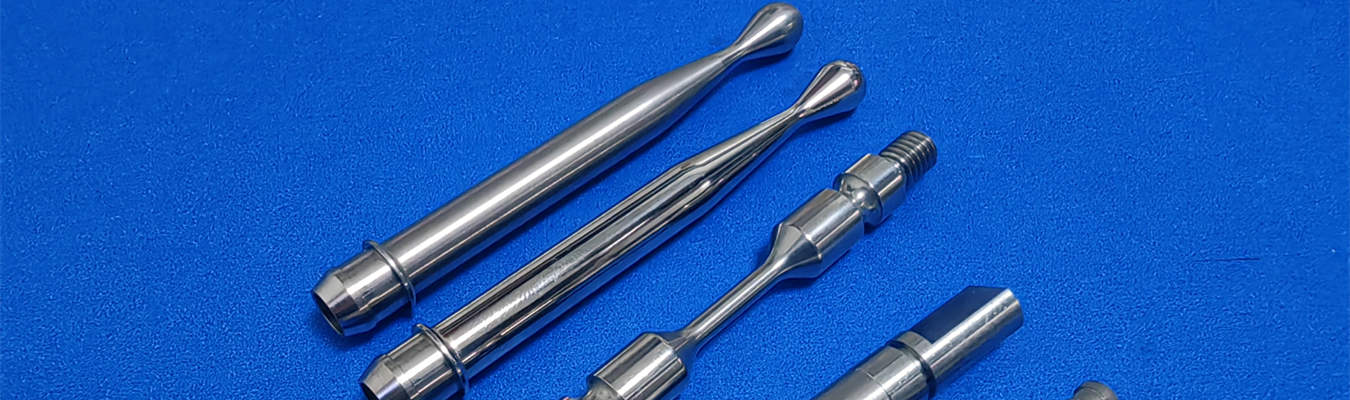
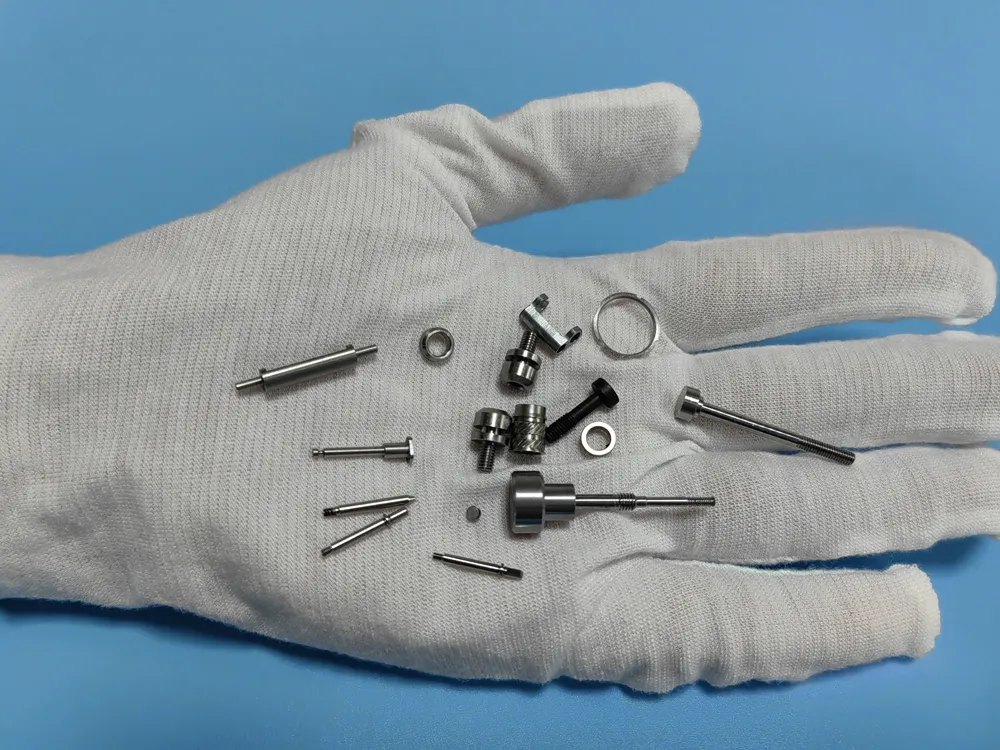
Want to know if producing CNC shafts quickly is from high-quality materials? Yes! At Falcon CNC Swiss, we have a minimum of 15 sliding headstock lathes using automatic bar feeders; we can produce with short lead times on custom shafts with less than 100 parts (approximately five-7 business days). Moreover, if you need to run larger (1,000-50,000) parts consecutively we will use dedicated spindles to ensure your parts will maintain similar tolerances throughout the entire run of swiss turned parts.
Need swiss machined shafts with CMM reports and certifications for material? Please contact our engineering department for review of your print and you can expect to receive a complete analysis of the product feasibility immediately.
Every precision shaft fabrication order follows a documented inspection plan:
First Article Inspection (FAI) – Full dimensional report per AS9102 (including runout, concentricity, surface profile).
In-process SPC – Key diameters measured every 25–50 parts.
Final 100% inspection for critical features (threads, undercuts, snap ring grooves).
CMM certification – Zeiss Contura G2 with rotary table for true position and concentricity.
Surface finish verification – Hommel-Etamic T8000 profilometer (Ra, Rz, Rmax).
For high precision drive shafts, we offer optional:
Hardness testing (Rockwell or micro-Vickers).
Magnetic particle inspection (for cracks in hardened steel).
Salt spray testing (for plated or anodized shafts).
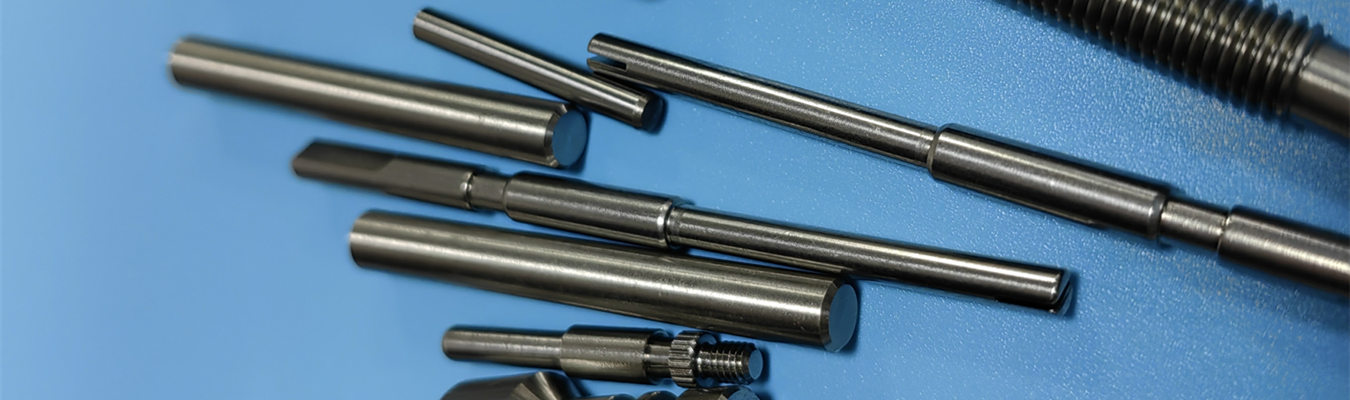
Choosing the right partner for CNC swiss lathe services affects your product’s reliability, assembly speed, and total cost. Falcon CNC Swiss combines:
Swiss expertise – Average 18 years of setup experience per machinist.
Tolerance capability – Routine ±0.0002inches (5µm), achievable ±0.0001inches (2.5µm) on small diameters.
Material versatility – From brass to titanium to 62 HRC hardened steel.
Secondary operations – Grinding, plating, anodizing, heat treat under one roof.
Documentation – Full traceability, CMM reports, material certs.
Ready to move your precision shaft project forward? Upload your 2D/3D drawing using the form below. Our engineers will respond within 4 business hours with a quote, tolerance analysis, and production schedule. Request a Quote Now!
Turned shafts are generated by single-point cutting — suitable for most applications with tolerances ±0.0005inches. Precision ground shafts are finished after turning using abrasive wheels, achieving ±0.0001inches diameter tolerance and 4–8 Ra surface finish. For Swiss machined shafts with high hardness (45 HRC), grinding is often required after heat treat.
Swiss-type lathes use a guide bushing that supports the material within 0.0004 inches of the cutting tool. Additionally, we apply:
Balanced cutting tools to reduce radial forces.
Low-tension collet pressure (adjustable per material).
Stress-relieved raw stock (especially for 12L14 and 303SS).
Yes. Live tooling on Swiss lathes performs milling, drilling, and tapping without repositioning. For custom CNC shafts requiring hex flats, wrench flats, or through-holes, we program synchronized spline and subspindle operations.