English
  日本語
日本語  한국어
한국어  français
  Deutsch
  Español
  русский
  العربية
Apr
Learn More
29

Falcon CNC Swiss | March 29, 2026
The U.S. manufacturing sector is rapidly adopting automation and advanced CNC turning technologies to support high-volume production.
Recent industry developments highlight increased investment in multitasking lathes, robotics, and closed-loop process control.
These changes reflect growing demand for scalable, precision turning solutions in automotive, aerospace, and industrial supply chains.
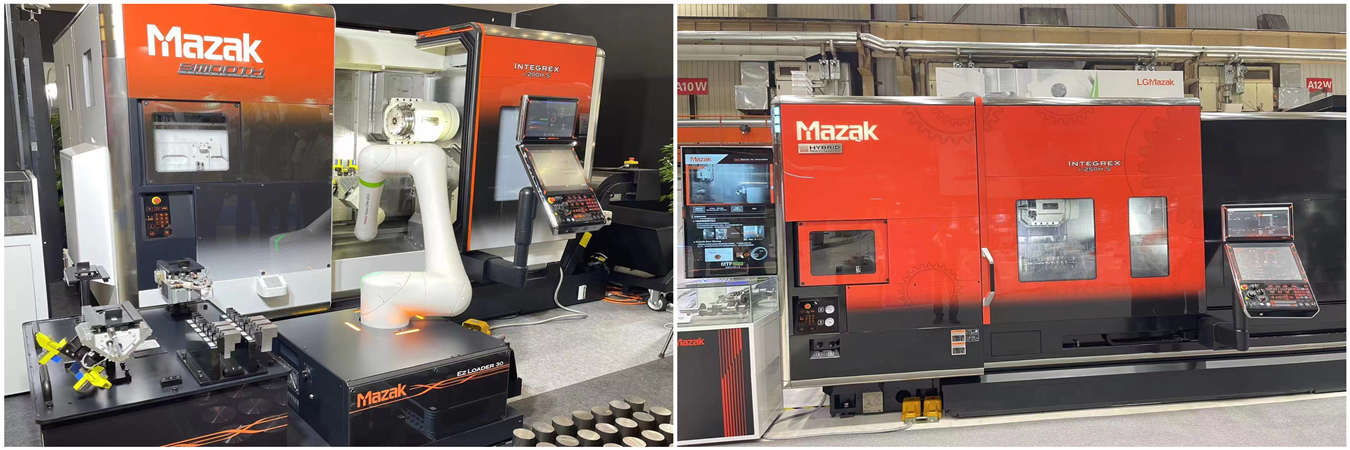
Over the past week, industry updates and market reports indicate a continued push toward reshoring and automation-driven manufacturing in the United States.
Machine shops are increasingly investing in:
Multitasking CNC lathes capable of completing parts in a single operation
Robotics systems enabling 24/7 unattended production
Smart controls that reduce setup time and operator dependency
These investments are driven by labor shortages and rising demand for consistent, high-volume output.
At the same time, the U.S. CNC machine market is expanding steadily, supported by Industry 4.0 technologies such as IoT connectivity and data-driven production systems.
Traditional CNC turning relied heavily on operator skill and sequential machining steps.
Today’s high-volume CNC turning systems are evolving into integrated production cells featuring:
Multitasking turning centers → combining milling, drilling, and turning
Automation integration → robotic loading/unloading for continuous production
Real-time monitoring → sensors tracking tool wear and machine performance
Closed-loop feedback systems → automatic adjustment of machining parameters
These advancements significantly improve:
Cycle time reduction
Dimensional consistency
Scrap rate control
Modern turning environments now align with smart factory principles, where machines, software, and inspection systems operate as a unified system.
For manufacturers scaling production, adopting solutions like our CNC turning services enables efficient, repeatable, and cost-effective part production at volume.
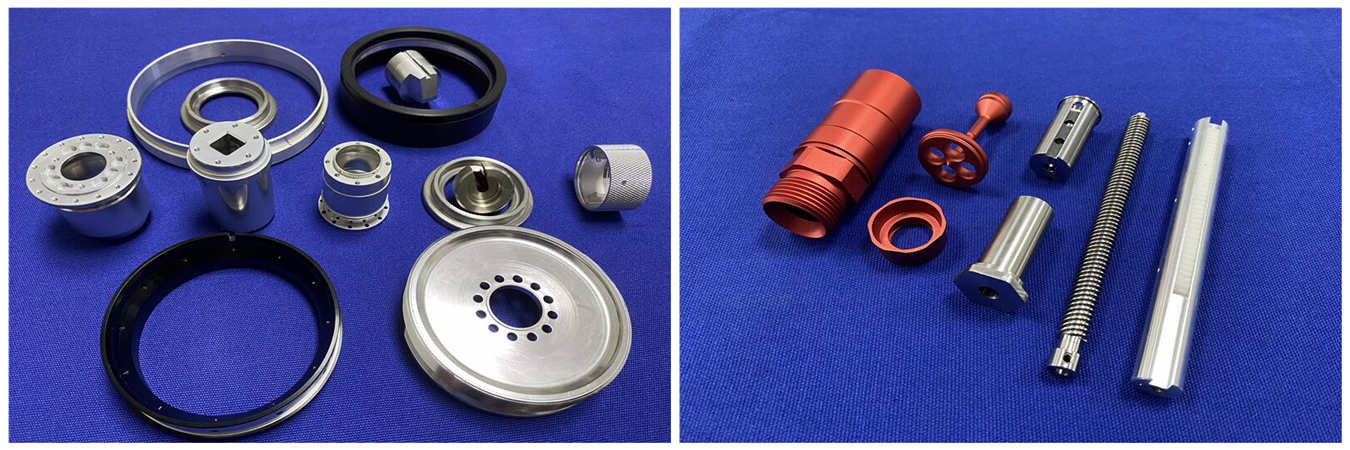
CNC turning plays a critical role in producing cylindrical and rotational components—core elements in industries such as:
Automotive (shafts, bushings, fasteners)
Aerospace (precision rotational parts)
Energy and industrial equipment
As production volumes increase, turning operations are often the throughput bottleneck.
The shift toward automation and advanced turning centers helps address this by:
Increasing spindle utilization
Reducing idle time between operations
Improving batch-to-batch consistency
Additionally, reshoring trends are pushing more high-volume component manufacturing back to the U.S., creating new demand for reliable CNC turning capacity across supply chains.
From an engineering standpoint, scaling CNC turning is not simply about running machines faster—it is about maintaining process stability at volume.
Key challenges include:
Tool wear progression
Long production runs lead to gradual dimensional drift
Thermal expansion
Continuous spindle operation affects tolerance control
Chip management
Poor chip evacuation can damage surface finish and tools
Machine-to-machine variation
Multi-machine production lines require tight calibration consistency
Advanced turning environments solve these challenges through:
Predictive tool monitoring
In-process measurement systems
Standardized machining parameters across cells
In high-volume scenarios, even micron-level deviations can scale into significant quality and cost issues—making process control more critical than machine speed.
For procurement teams sourcing high-volume CNC turning parts, the industry shift toward automation changes supplier evaluation criteria:
Automation capability
Can the supplier support continuous, lights-out production?
Process consistency
Do they use in-process inspection and feedback systems?
Scalability
Can they maintain tolerance across large batch sizes?
Engineering expertise
Are they capable of optimizing tooling, fixtures, and cycle times?
Suppliers offering integrated turning solutions—such as our precision CNC turning services—are better positioned to deliver stable quality, competitive pricing, and shorter lead times in high-volume production environments.