English
  日本語
日本語  한국어
한국어  français
  Deutsch
  Español
  русский
  العربية

Apr
Learn More
18

By: Falcon CNC Swiss | May 20, 2026
Recent U.S. manufacturing data shows renewed momentum in industrial production, driven largely by automation investments, automotive output growth, and increased demand for precision-engineered components. According to Reuters, U.S. factory production recorded its strongest increase in more than a year, supported by rising demand in vehicle manufacturing and high-tech equipment sectors.
This trend directly impacts the precision screw machine parts sector, where manufacturers are scaling production capacity to support automotive, aerospace, electronics, medical, and industrial automation supply chains. As companies accelerate reshoring and smart factory adoption, the demand for consistent, high-volume precision turned parts continues to grow.
For suppliers specializing in Swiss machining and CNC turning, the shift represents both an opportunity and a technical challenge: producing tighter-tolerance components at higher speeds while maintaining repeatability across large production runs.
Over the past week, one of the most significant manufacturing developments in the United States came from renewed industrial production growth and rising automation-related investment activity. Reuters reported that U.S. manufacturing output increased sharply in April 2026, fueled by motor vehicle production and growing AI-related technology demand.
At the same time, manufacturers across North America are increasing investment in:
Robotics-assisted machining cells
AI-enabled production monitoring
High-speed CNC turning systems
Automated inspection technologies
Smart factory integration
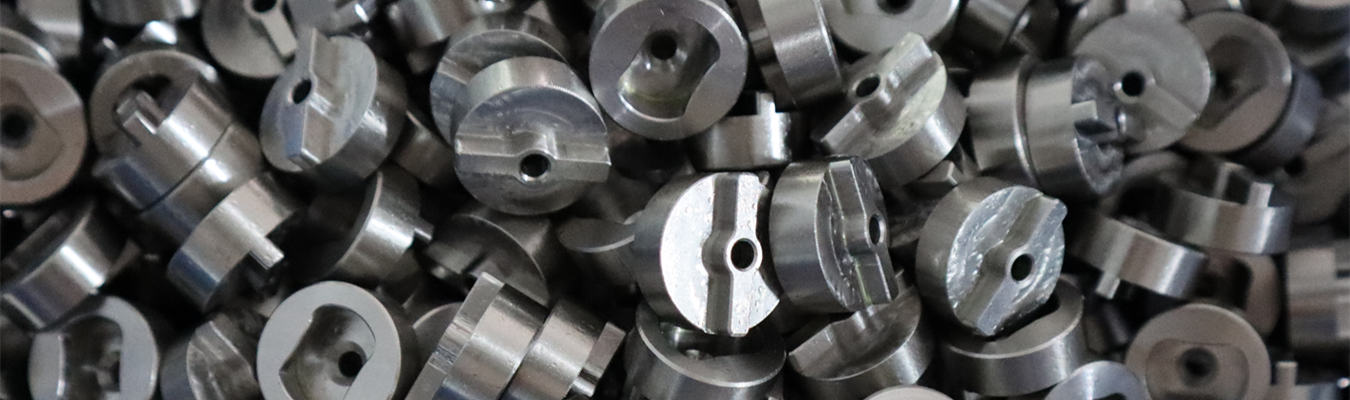
These investments are especially important for industries relying on large volumes of precision screw machine parts, including:
Automotive fasteners and shafts
Aerospace fittings
Medical connectors
Electrical contacts
Hydraulic and pneumatic components
As automation adoption accelerates, screw machine parts suppliers are being pushed toward higher throughput, better traceability, and improved process stability.
Although advanced manufacturing often focuses on robotics and AI, production systems still depend heavily on small precision components manufactured through CNC turning and Swiss machining.
Screw machine parts remain essential because they provide:
Tight-tolerance rotational geometry
High repeatability in large quantities
Efficient material usage
Fast cycle times
Excellent concentricity and surface finish
Modern manufacturing sectors increasingly rely on miniature and complex turned parts that must operate reliably under demanding conditions.
For example:
EV systems require precision conductive terminals and connectors
Aerospace assemblies depend on lightweight high-strength fittings
Medical devices require burr-free miniature components
Automation equipment relies on wear-resistant shafts and bushings
These applications demand advanced production methods such as Swiss machined components that can maintain micron-level tolerances across high-volume runs.
Traditional screw machines were designed primarily for high-volume production with limited flexibility. Today’s CNC Swiss machining systems combine automation, digital monitoring, and multitasking capability to support far more complex geometries and tighter quality standards.
Modern Swiss machining environments now include:
Sliding headstock technology for long, slender parts
Live tooling for milling and drilling in a single cycle
Bar feeders for unattended production
In-process measurement systems
Closed-loop compensation for thermal variation
These technologies significantly improve:
Dimensional consistency
Surface finish quality
Tool life management
Cycle time reduction
Scrap reduction
The transition toward smart CNC production aligns closely with the broader U.S. manufacturing shift toward automation and reshoring. Industry reports also indicate that precision turned product manufacturing is expected to continue growing as aerospace, automotive, and healthcare industries increase demand for custom machined components.
Manufacturers seeking scalable production increasingly rely on suppliers capable of integrating automation with precision turning processes, similar to the capabilities offered through Swiss screw machining services.
The current wave of automation investment is reshaping sourcing priorities throughout the U.S. manufacturing sector.
Three major trends are emerging:
Manufacturers are bringing production closer to U.S. assembly operations to reduce supply chain risk and improve lead time predictability.
Suppliers capable of producing millions of identical precision parts with stable quality are gaining stronger long-term contracts.
Buyers increasingly evaluate suppliers based on automation integration, inspection capability, and engineering support—not simply machine capacity.
These changes are particularly important for industries where screw machine parts function as safety-critical or performance-critical components.
In sectors such as aerospace and medical manufacturing, even small dimensional variation can impact assembly fit, sealing performance, conductivity, or fatigue life.
As a result, suppliers with advanced CNC turning expertise and integrated quality systems are becoming more valuable throughout the supply chain.
From an engineering perspective, producing screw machine parts at scale is far more complex than simply increasing spindle speed.
Several technical factors become increasingly difficult during long production cycles:
As tools gradually wear, dimensions can drift outside tolerance limits.
Continuous machining generates heat that affects machine stability and part geometry.
Poor chip evacuation can damage surface finish and interrupt unattended production.
Differences in bar stock hardness or straightness can affect consistency across batches.
High-volume production often involves multiple machines producing identical parts simultaneously, requiring extremely tight process standardization.
At Falcon CNC Swiss, high-volume Swiss machining projects are optimized through:
Standardized tooling strategies
Real-time inspection processes
Statistical process control
Automated bar-feeding systems
Stable fixture and coolant management
This engineering-driven approach helps maintain repeatability across large-scale production while minimizing scrap and downtime.
For procurement teams sourcing precision screw machine parts in 2026, supplier evaluation criteria are evolving rapidly.
Buyers should now assess suppliers based on:
Can the supplier support lights-out or unattended production?
Do they use in-process inspection and closed-loop quality systems?
Can they maintain tight tolerances during large-volume production runs?
Can they optimize part design for manufacturability and cycle-time efficiency?
Do they understand machining behavior for stainless steel, brass, titanium, aluminum, and engineering plastics?
Suppliers offering integrated CNC turning and Swiss machining capabilities—such as precision Swiss machined components manufacturing—are increasingly positioned to support reshoring initiatives, automation-driven manufacturing, and long-term production programs.
The latest U.S. manufacturing expansion signals continued momentum for automation, reshoring, and high-volume precision production. As industrial output rises and AI-driven manufacturing systems become more common, demand for high-quality screw machine parts will continue to increase.
For manufacturers and buyers alike, the focus is shifting toward process reliability, automation integration, and scalable precision machining capability.
Companies capable of combining engineering expertise with advanced Swiss machining technology will play a critical role in supporting the next phase of American manufacturing growth.
• Reuters — U.S. manufacturing production rises on automotive and AI demand: https://www.reuters.com/business/autos-transportation/us-manufacturing-output-accelerates-auto-production-april-2026-05-15/
• HMaking — CNC Machining Industry Trends 2026: https://hmaking.com/cnc-machining-industry-trends-2026/
• Precedence Research — Precision Turned Product Manufacturing Market: https://www.precedenceresearch.com/precision-turned-product-manufacturing-market