English
  日本語
日本語  한국어
한국어  français
  Deutsch
  Español
  русский
  العربية

Jan
Learn More
17

By: Falcon CNC Swiss | May 20, 2026
U.S. manufacturers continue to increase their investments in Swiss-based machine and CNC operations in an ever-increasing number of sectors including the aerospace, medical, electronics and defence, as we see evidence from recent news events.
A recent example of the continued growth in investment for these two areas are new industry developments showing the continued growth of automated Swiss-type CNC lathes, multi-axis machining centres and micro-precision manufacturing techniques.
This is part of a larger movement toward automation within U.S. manufacturing; as industries shift towards more automated and precise production environments with scalability and repeatability as critical success factors.
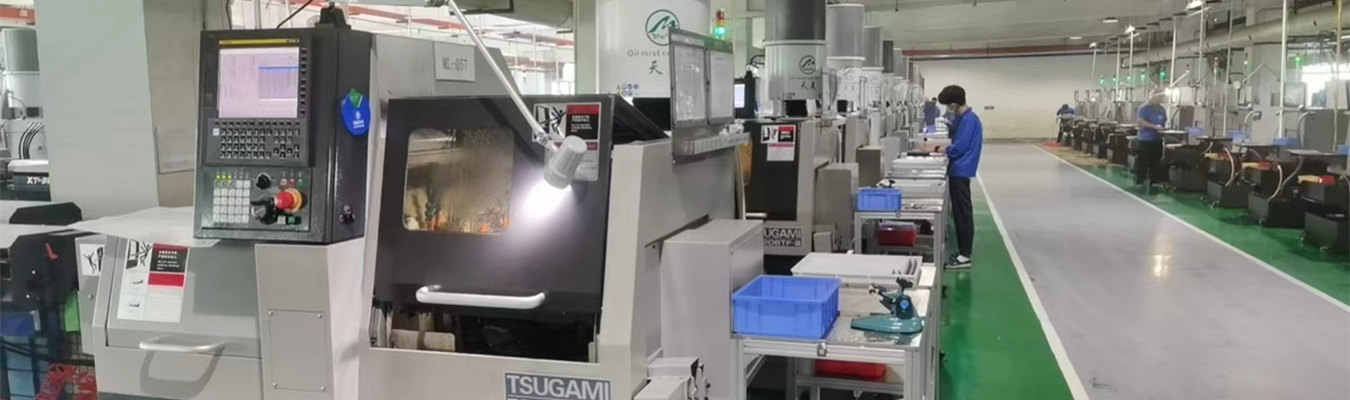
Precision manufacturing in the United States is enjoying phenomenal growth as the manufacturing industry continues to consolidate and expand.
Chandler Industries recently announced that it has acquired Aztalan Engineering, thereby increasing its presence in precision manufacturing and enhancing its capabilities for aerospace and defense.
At the same time, these same machining companies continue to invest in CNC manufacturing using Swiss automation to meet the growing demand for complex, small, tight-tolerance components. It has also been reported that all areas of CNC machining (for example, end milling) continue to grow rapidly due to increased automation programs in both the aerospace and automotive industries.
This expansion is particularly significant to manufacturers providing:
- Medical device components
- Fasteners and connectors in aerospace applications
- Precision shafts and pins
- Fittings and contacts in the electronics industry
- Machined components for defense applications
The continued reshoring of manufacturing to North America has prompted OEMs to select only those suppliers who can provide a stable and high-volume production environment with a high degree of advanced process control and integrated automation.
Swiss machining has become one of the most important manufacturing technologies for producing small-diameter, high-precision components at scale.
Unlike traditional CNC turning, Swiss-type machining uses guide-bushing support to stabilize material close to the cutting zone. This significantly reduces deflection and vibration during machining, allowing manufacturers to maintain exceptional dimensional accuracy on long, slender parts.
Modern Swiss machines also combine multiple operations simultaneously, including:
Turning
Milling
Cross drilling
Threading
Slotting
Deburring
This multi-tasking capability dramatically reduces secondary operations and shortens production cycles.
Advanced multi-axis Swiss platforms are now capable of micron-level tolerances while maintaining lights-out automated production.
For industries requiring complex geometries and high repeatability, processes like our Swiss machining services provide an efficient solution for both prototype and large-scale production environments.
Automation is rapidly becoming the defining factor in modern Swiss machining operations.
Manufacturers are integrating:
Robotic material handling
Automatic bar feeders
In-process inspection systems
Tool life monitoring
Digital process tracking
AI-assisted machining optimization
These systems help reduce downtime, improve cycle consistency, and minimize operator-dependent variability.
The shift toward smart manufacturing is particularly important in high-volume production, where even minor process instability can create large-scale quality issues over thousands or millions of parts.
Recent industry analysis shows that automation-driven CNC systems are increasingly tied to Industry 4.0 initiatives and digital manufacturing ecosystems.
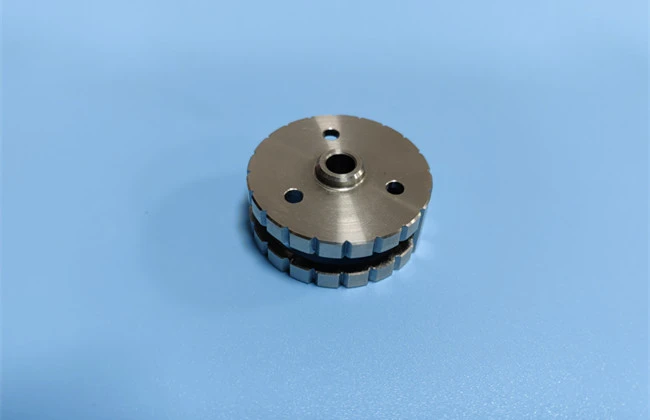
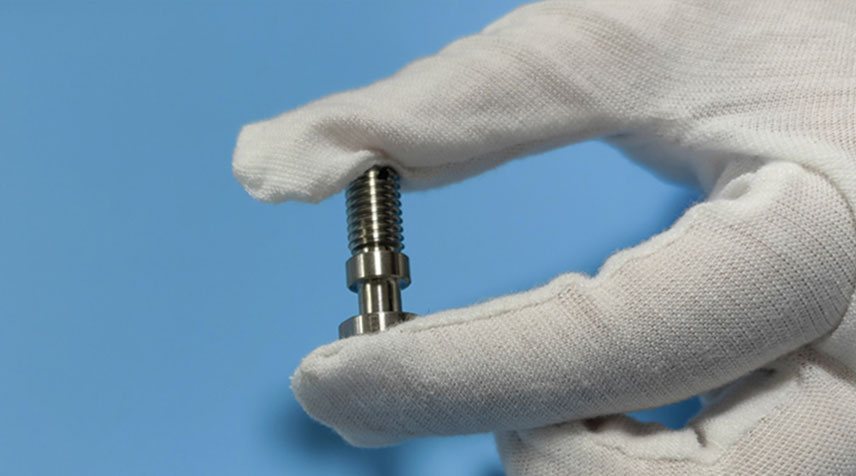
At Falcon CNC Swiss, high-efficiency production workflows are especially important for complex Swiss machined parts requiring stable tolerances across long production runs, including connectors, bushings, shafts, threaded inserts, and miniature precision components.
The expansion of Swiss machining capacity is directly connected to broader manufacturing trends across critical industries.
Aircraft systems and defense equipment increasingly rely on compact, lightweight precision components that require repeatable machining accuracy and strict traceability standards.
Swiss machining is widely used for:
Precision fittings
Fasteners
Sensor housings
Hydraulic components
Aerospace connectors
The continued expansion of aerospace manufacturing in the U.S. is expected to further increase demand for automated Swiss machining capabilities.
Medical manufacturing continues driving growth in micro-machining and small-diameter component production.
Applications include:
Bone screws
Dental implants
Surgical instrument parts
Catheter fittings
Implantable device components
These parts require exceptional surface finish quality and dimensional consistency, making Swiss machining a preferred production method.
Electronics manufacturers are also increasing demand for miniature precision components used in:
Connectors
RF systems
Sensor assemblies
Semiconductor equipment
As electronic devices continue shrinking in size, Swiss machining is becoming increasingly important for achieving precision at micro-scale dimensions.
From an engineering perspective, scaling Swiss machining production is not simply about adding more machines.
The real challenge lies in maintaining process stability over long production cycles while preserving micron-level consistency.
Key technical challenges include:
In high-volume machining, gradual tool wear can shift dimensions beyond tolerance limits if not properly monitored.
Advanced Swiss machining environments use predictive tool replacement schedules and real-time compensation systems to maintain consistency.
Continuous machining generates heat that can affect spindle growth, material expansion, and dimensional repeatability.
Maintaining thermal control is critical when machining tight-tolerance components in stainless steel, titanium, or exotic alloys.
Small precision parts often produce difficult chip conditions, especially during deep-hole drilling or micro-feature machining. Poor chip evacuation can damage surfaces or interrupt unattended production cycles.
Even small variations in raw material straightness or hardness can impact micro-precision machining performance.
This is why process engineering, machine calibration, and inspection systems are just as important as machine count in modern Swiss machining operations.
For OEMs sourcing complex components, suppliers with advanced process control and scalable automation infrastructure are typically better positioned to support long-term production stability.
For procurement teams sourcing Swiss machined parts, recent industry developments highlight several important evaluation criteria.
1. Evaluate Automation Capability
Can the supplier support lights-out or semi-automated production?
Automation directly affects throughput consistency, lead times, and scalability.
2. Verify Tight-Tolerance Experience
Not all CNC suppliers specialize in Swiss machining or micron-level production.
Look for experience producing:
Small-diameter parts
Long slender components
Multi-feature precision geometries
3. Assess Scalability
A supplier capable of prototyping may not always support stable high-volume production.
Ask about:
Machine capacity
Process monitoring systems
Multi-machine standardization
Inspection capability
4. Review Material Expertise
Swiss machining often involves difficult materials such as:
Titanium
Stainless steel
Brass
Copper alloys
Medical-grade materials
Experienced machining partners can optimize tooling, feeds, and thermal management for these applications.
Companies seeking scalable precision manufacturing solutions can explore custom Swiss machining capabilities for complex high-volume component production across aerospace, medical, electronics, and industrial applications.
• Chandler Industries Acquires Aztalan Engineering
https://www.newswire.com/news/chandler-industries-acquires-aztalan-engineering
• CNC Machine Tools Market to 2035 Driven by Industry 4.0
https://www.indexbox.io/blog/cnc-machine-tools-market-to-2035-driven-by-industry-4-0-and-smart-factory-integration-demands/
• Precision Machining Market Forecast 2026–2035
https://www.businessresearchinsights.com/market-reports/precision-machining-market-118285
• Swiss Machining Capacity Expansion in U.S. Manufacturing
https://www.falconcncswiss.com/swiss-machining-high-volume-usa-growth-2026.html