English
  日本語
日本語  한국어
한국어  français
  Deutsch
  Español
  русский
  العربية


Mar
Learn More
18

If you’ve ever touched a machined part—a smartphone case, a drone lever, a car bracket—there’s a good chance it was made from aluminum. It’s light, it’s strong, it machines beautifully, and it doesn’t kill your budget. That’s why aluminum CNC milling parts are everywhere, from aerospace applications to electronics.
But here’s the catch: machining aluminum the right way is something of an art. Use the wrong feedrate, and your parts end up looking terrible. Pick the wrong alloy, and they might just fail. This guide has been written for you, the product designer, the engineer, and the buyer who wants clear, actionable knowledge. We’ll discuss alloys, speeds, design rules, and how to find reliable aluminum CNC milling parts suppliers—all in plain English.
Simply put, aluminum CNC milling parts are components cut from a chunk of aluminum using a CNC milling machine. The process removes material to create precise shapes, holes, slots, and features. Compared to 3D printing or casting, milled parts are solid, strong, and within tight tolerances.
Not all aluminum is the same. Here are the workhorses you’ll see most often in cnc milling aluminum parts:
| Alloy | Best For | Key Properties | Common Applications |
| 6061-T6 | General-purpose parts | Great machinability, good strength, corrosion resistant, welds well | Brackets, enclosures, automotive parts, consumer goods |
| 7075-T6 | High-stress applications | Very high strength (similar to steel), harder to machine than 6061 | Aerospace frames, bicycle components, high-end rifle parts |
| 5052 | Sheet metal & formed parts | Excellent corrosion resistance, good formability | Electronics enclosures, marine parts, fuel tanks |
| 2024 | Aerospace structures | High strength, good fatigue resistance, poor corrosion resistance (needs coating) | Aircraft fittings, gears, hydraulic parts |
| 6082 | European/structural use | Similar to 6061, common in Europe | Structural beams, transport parts |
| MIC-6 | Precision plates | Dimensionally stable, stress-relieved, great for machining | Base plates, jigs, fixtures, vacuum chucks |
For most projects, 6061-T6 is the go-to. It’s forgiving, easy to machine, and works for 80% of applications. If you need extra strength, upgrade to 7075. Your aluminum CNC milling parts factory can guide you based on your design. Learn more about our aluminum CNC machining service.
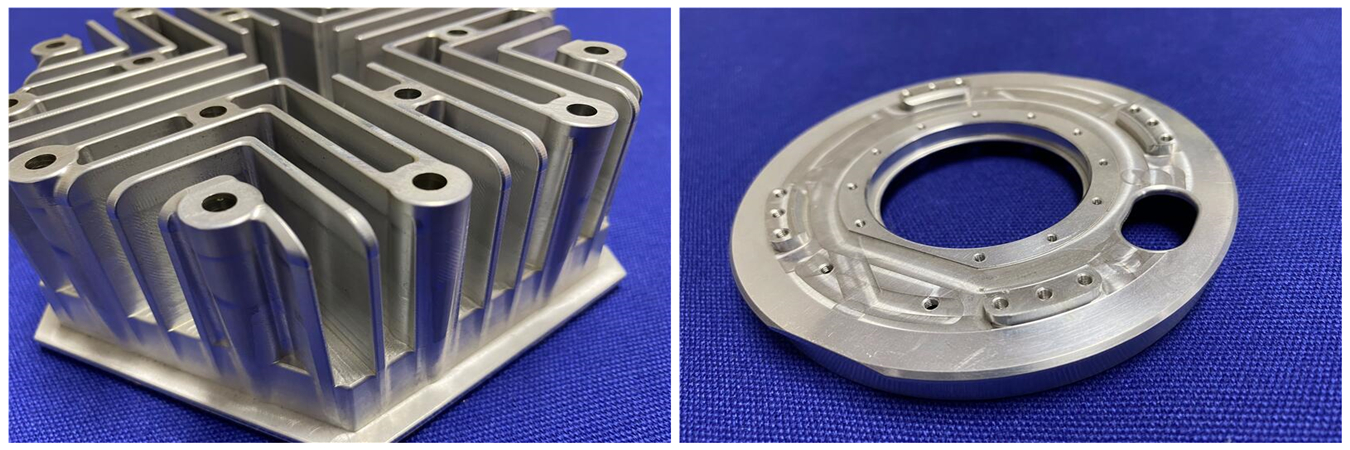
So why do engineers love specifying CNC milling part aluminum designs? Here’s why:
Lightweight: About one third the weight of steel. Ideal for aerospace, automotive, and anything zipping around.
Good Strength: 6061 has a tensile strength of about 45,000 psi—plenty strong for most structural uses.
Machinability: Aluminum cuts fast and clean. Tools last longer, cycle times are quicker, and costs stay down.
Thermal Conductivity: It dissipates heat well. Great for heat sinks and electronic enclosures.
Corrosion Resistance: Forms a natural oxide layer. No rust. Can be anodized for extra protection and color.
Appearance: Takes a gorgeous finish. Bead blast and anodize it, and it looks premium.
As leading CNC milling aluminum parts manufacturers, we do tons of work with this stuff daily. It’s reliable, predictable, and cost effective.
Yes, absolutely. In fact, aluminum is one of the easiest and most common of materials to CNC mill. It’s soft enough to cut quickly but strong enough to hold tight tolerances. You can get into complicated aluminum CNC milling parts with thin walls, deep pockets, and tiny holes. Just be sure to work with a shop that understands the right speeds and feeds—more on that below.
For an ideal balance of machinability, strength, and cost, 6061-T6 comes out on top. It machines smoothly, produces desirable chips, and doesn’t gunk up tools. For parts requiring maximum strength, 7075-T6 is the choice—it’s about 70% stronger than 6061, but a little harder on tooling. For high volume production where speed counts, some shops use 2011, which machines even faster, though it’s not as strong. Check with your aluminium CNC milling parts suppliers about what meets your needs.
Aluminum likes speed. For carbide tools, a good staring point is 800–1,200 surface feet per minute (SFM). In practice, that translates to:
1/4 inch tool: around 12,000–15,000 RPM
1/2 inch tool: around 6,000–8,000 RPM
You also need decent feed rates to keep the tool cutting, not rubbing. Too slow, and you’ll get built-up edge (the aluminum sticking to the tool). Too fast and you risk chatter or tool breakage. A good CNC aluminum milling parts machine shop will dial this in relative to the machine, tool, and alloy.
Crazy as it sounds, broadly speaking, yes, it works in a pinch. WD40 is a lighter lubricant that can keep aluminum from sticking to the tool (built-up edge) during light cuts, and hobbyists and small shops use it. But for professional CNC milling aluminum part production we’re using proper water soluble coolants or mist lubricants. They cool the cut, flush the chip out of the way, and keep everything consistent. WD40 is smoky, not suitable for high speeds, and not eco-friendly for a production run. Stick to actual machining coolant for the serious work.
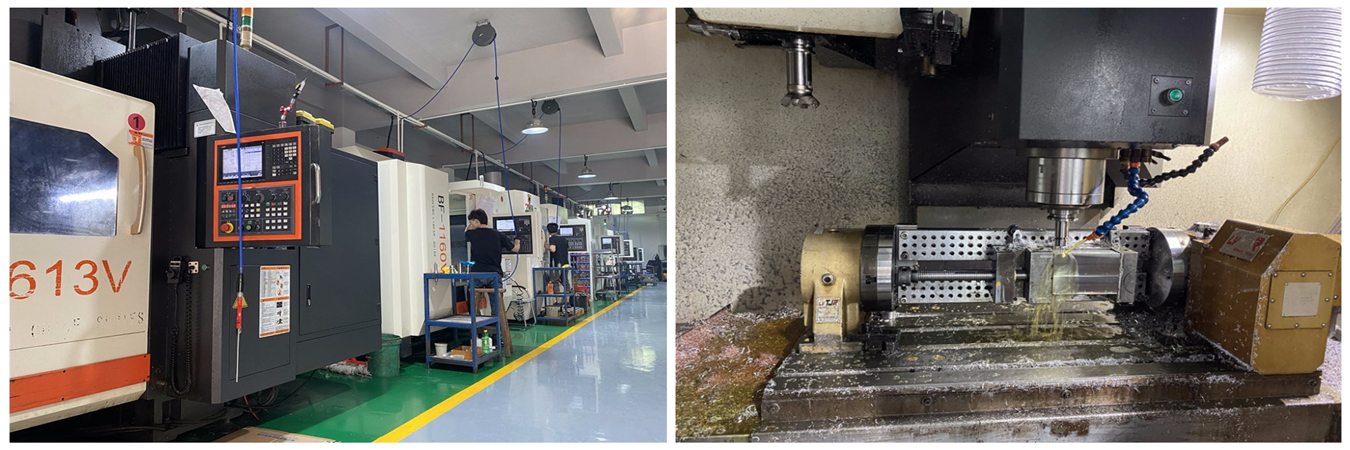
So, how does a block of aluminum become a precision part? Here’s a peek inside a real aluminum CNC milling parts factory.
| Machine Type | How It Works | Best For | Example Part |
| 3-Axis Mill | Tool moves up/down, left/right, front/back. Part stays still. | Simple prismatic parts, flat surfaces, pockets, holes | Basic brackets, plates, housings with features on one side |
| 4-Axis Mill | Adds rotation (usually around the long axis). | Parts needing features on multiple sides without re-clamping | Rotary shafts, parts with holes around a cylinder |
| 5-Axis Mill | Tool or part tilts in two rotational axes. | Complex organic shapes, undercuts, deep cavities with short tools | Turbine blades, medical implants, complex aerospace parts |
For most CNC milling aluminum parts, a 3-axis mill does the job. For complex aluminum CNC milling parts with features on five or six sides, 5-axis saves time and increases accuracy by machining in one setup. At Falcon CNC Swiss, we use both, depending on the job.
Cutting aluminum? It’s all about managing heat and chips.
Tool Material: Carbide is a staple. It’s hard, can take the heat, and lasts longer.
Tool Coatings: Uncoated is okay for run-of-the-mill jobs. Nice things to have on tools for aluminum: ZrN (Zirconium Nitride) coating that reduces friction and helps mitigate chip welds.
Flutes (Spiral Grooves): For aluminum, 2 or 3 flutes are the norm. As the number of flutes goes down, the space for chip evacuation goes up. Aluminum makes a big chip and needs to get outta that flute!
Coolant: Flood coolant with decent concentration is where you want to be. Pushcoolant on the cut to cool and wash the chip away. If in deep holes, highpressure throughspindle coolant gives the best results.
Learn more about our custom CNC milled parts capabilities.→
The raw machined surface from CNC milling aluminum part production is functional but has visible tool marks. For a better look, we add finishes:
| Finish | Process | Look & Feel | Common Use |
| As-Machined | Straight off the mill | Slight tool marks, functional | Internal parts, hidden components |
| Bead Blasted | Fine glass beads blasted at surface | Smooth, matte, even gray | Consumer goods, enclosures, anything needing a uniform look |
| Brushed | Abrasive pad lines in one direction | Linear grain, satin look | Panels, trim, decorative parts |
| Anodized (Type II) | Electrochemical process, adds color | Hard, colored surface (black, red, blue, etc.) | Almost any visible part—wear-resistant, looks great |
| Anodized (Type III) | Hardcoat anodize | Thicker, darker, extremely wear-resistant | Military, aerospace, high-wear applications |
Good design makes parts easier to machine, cheaper to buy, and less likely to fail. Here are some rules of thumb for aluminum CNC milling parts.
Minimum: Small features in overall rigid setups should have a minimum wall thickness of approx. 0.5mm (0.020”).
Recommended: 1.0mm–3.0mm (0.040” –0.120”) is typical for most parts. Thicker walls are stiffer and tend to vibrate less.
Very Thin (0.5mm): It’s doable, but tricky. Parts tend to “spring” once you take the tool away. Don’t do this unless you absolutely have to.
Drilling into holes departing from averages
Standard drilled holes: Less than 3x the tool diameter in depth is straightforward, with peck drilling we can drill up to around 5x diameter.
Holes longer than 5x diameter: Some specialty drill, like a gun drill, is typically needed, and chip evacuation becomes a big deal.
Tapped holes: Reasonable material must remain beyond the hole diameter in threaded areas. A good rule thumb is that there should be no less than 1.5x thread diameter in wall thickness from the hole.
This is a big one. Milling cutters are round. Internal vertical corners will be matched with a radius equal to that of the cutter.
Try to use larger than 0.5mm radii and avoid specifying a sharp 90° inside corner as this defines a tiny size tool be sent in there to mill that corner, which takes a long time and risks breaking it. Corner radii in the neighborhood of 1.5m (1/16 inch) or larger is best and allows us to employ larger and more aggressive cutters thus you save money.
Where can you find CNC milling aluminum parts? Pretty much everywhere.
Weight is everything in aerospace. 7075 aluminum is common for structural brackets, ribs, and fittings. Think drone arms, satellite frames, and parts inside your cabin. Light, strong, and reliable.
Your laptop, your router, your fancy audio gear. If it has a vision, it’s probably living in a machined aluminum home. They’re heat sinks, pulling heat from your chips, and they look pretty sleek in their bead blasted and anodized cases.
From engine brackets to suspension components, aluminum saves weight in cars. EV battery trays and motor mounts and even customized intake manifolds are common aluminum CNC milling parts. Lighter is more range or better performance then mate.
Surgical robots, imaging equipment, and the housings holding it all together. Aluminum is pretty easy to sterilize, non-magnetic (MRI safe), and lightweight for those handheld devices.
Robot arms, end of arm tooling, and the frames that hold the whole thing together. Aluminum is often used since its stiffness to weight ratio is ideal for fast moving parts that need to strike. 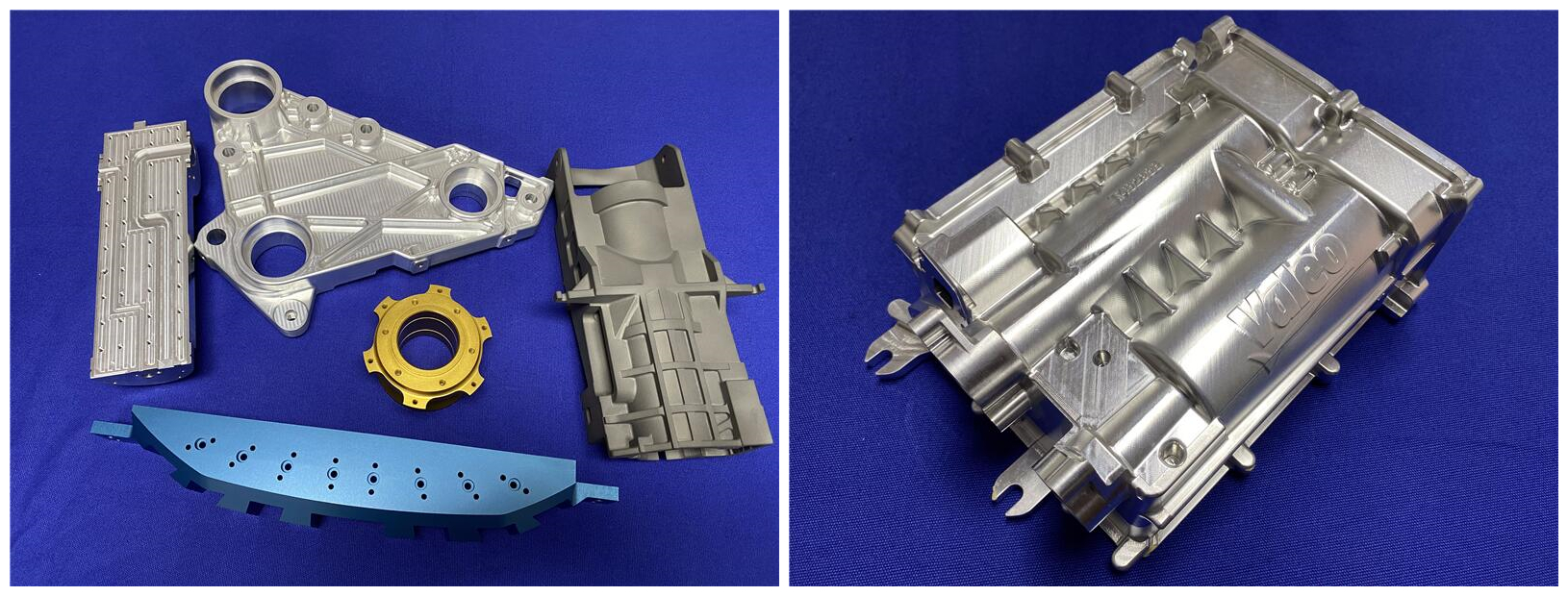
Alright, you have a design. Now you need a partner. Who do you trust to make your dreams come true from that block of aluminum?
Certifications mean more than pieces of paper. It means the shop runs a tight ship.
ISO 9001: The baseline for quality management. Processes documented and followed.
ISO 13485: For medical devices. If your part goes into healthcare this is critical.
AS9100: For aerospace. Very strict requirements.
ITAR Registration: If you are making defense parts to the US, your supplier should be ITAR-compliant.
Good to ask: how do they know the part is good?
CMM (Coordinate Measuring Machine): A machine that probes the entire part to check against the CAD model. Ask em if they provide inspection reports too.
First Article Inspection (FAI): Especially for aerospace, they’ll do a full check of the first part to ever come off that machine line.
In-Process Inspection: Depending on the part, they may have the operator check them during the run to catch any issues early.
Where do you fit on the scale? Can they scale with you?
Prototyping: Quick turnaround, flexible on changes.
Low-to-Medium Volume: 10-10,000 parts. Most machine shops handle this.
High Volume: 10,000+ parts. Look for shops with automated cells, pallet systems with multiple machines. Ask about their aluminum CNC milling parts factory capacity, how many machines, how many shifts, and what their maximum monthly output is.
You want to partner with a factory, not just some other dude with a mill. Lucky for you, as an aluminum CNC milling parts factory, we try to combine brains with brawn to make all your dreams come true.
Deep Aluminum Experience: We machine 6061, 7075, 5052 and more daily. We know how they cut, how they finish, and where we can hold tight tolerances.
Real DFM (Design for Manufacturing): Our engineering team will take a crack at your design and suggest changes that can make it easier to machine, cheaper to buy—but still functional.
Flexible Volumes: Prototype of 5 pieces? Production run of 50,000? We treat you both the same.
In-House Finishing: Bead blasting, anodizing (clear and colored), and assembly. One vendor, less headache.
Parts that Match the Print: ISO 9001 certified. Full CMM inspection reports. You get parts that match the print.
We’ve helped hundreds of clients take their CNC aluminum milling parts from an idea on a screen to a part in their hands—on time and on budget. Discover our precision CNC machining aluminum capabilities.
Aluminum CNC milling parts are the backbone of modern manufacturing. They’re light, strong, precise, and cheap. Whether you’re building a prototype or scaling to mass production, understanding the basics—alloys, design rules, and process—helps you get better parts faster.
The secret is working with the right aluminum CNC milling parts suppliers. Look for experience, solid quality systems, and a willingness to design with you.
Ready to get started on your project? We’re ready to help at Falcon CNC Swiss. Just send us your CAD file, and we’ll get you a free DFM analysis and quote within 24 hours. Let’s make something great together!