English
  日本語
日本語  한국어
한국어  français
  Deutsch
  Español
  русский
  العربية

Mar
Learn More
18

What’s the deal with your electronics getting better homes? An enclosure is like a suit of armor for your electronics; it protects incorrect and vulnerable sensitive components from dust, impact, and interference, and it communicates to users how they should perceive your product—sleek, rugged, or corporate professional. So how do you build that armor? If you want something strong, precise, and premium looking, CNC machined aluminum enclosures are hard to beat. While plastic injection molding (which requires expensive molds to create the final parts) and sheet metal fabrication (which can be boxy in form), CNC machining gives you solid, accurate parts directly from your CAD file.
This guide is aimed at product designers, mechanical engineers, and founders who want a better understanding of how CNC machining can be used in the design and prototyping of electronic device enclosures. We will try to keep the painful engineering talk short, and focus on what you care about: bringing a great product to market.
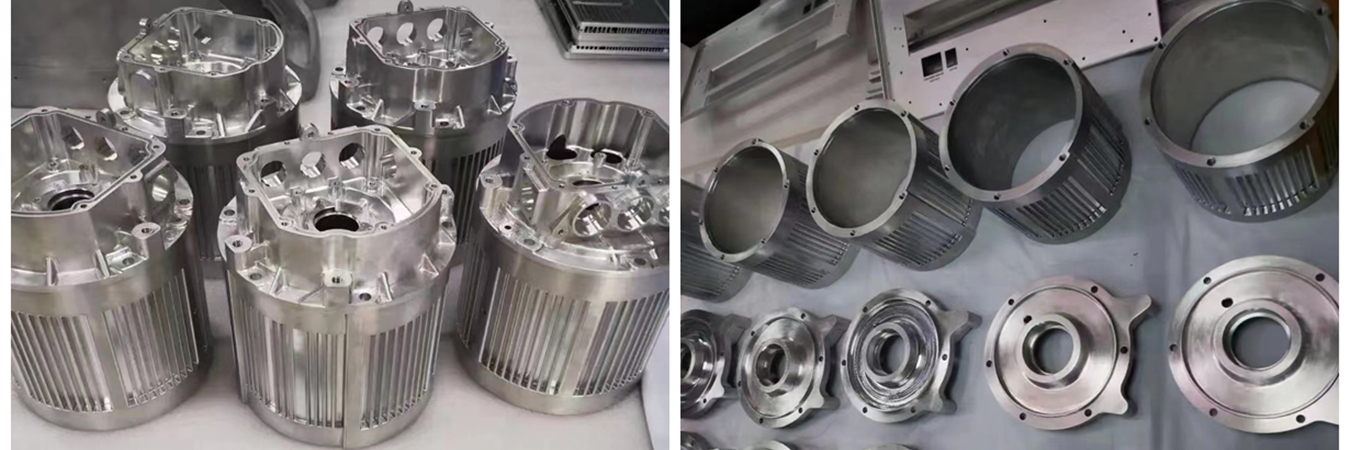
Custom enclosures are protective boxes created to your exact specifications. Instead of buying a standard plastic box off a shelf, you design the size, shape, holes and other features. This is especially important when your circuit board has a unique layout, or you need precise mounting points for connectors and finishes.
Enclosures are basically defined by what they are made of, and how they are made. Common types are:
CNC Machined Enclosures: Milled from solid blocks of either metal or plastic; strong and precise, and good for easy prototypes or high-end products.
Sheet Metal Enclosures: “Bent” and cut from sheets of metal; cost-effective if you want a simple giant box, but not as precise or strong as CNC alternatives.
Injection Molded Enclosures: Molded into shape in a plastic mold; economic for very high volume (10,000+ units) product runs, but require very high tool costs.
Extruded Enclosures: Aluminum shapes pushed through a die, and then cut to length; good for very long and consistent profiles (such as LED housings).
Ah, the million dollar question! The cost of a custom enclosure box depends on a huge number of factors, such as:
Complexity: More holes, threads, and tight radiuses means more time.
Material: Aluminum is relatively affordable and simple to machine. Stainless steel or (gasp) titanium costs more.
Quantity: Machining is good for 1–1000 units, but if you want 10,000 or more you may consider molds—but CNC gives flexibility without tooling costs.
Finishing: Painting, anodizing, or silk-screening add cost but also value.
A simple machined enclosure for a prototype and small scale run, in machined aluminum, might be $50 to $150 a piece, but in a run of 500, might be $15 to $30 a piece. Always get a Design for Manufacturing (DFM) review—good machine enclosure manufacturers can suggest changes that reduce price but do not sacrifice performance.
When designing electronics—like a medical monitor, an industrial sensor, a hip consumer gadget—the enclosure isn’t just a box. It’s a functioning component of the system inside. Here’s why CNC machining for electronic enclosures is often the best way to go.
Electronics require accurate holes for connectors, displays and buttons. With a CNC machining enclosure your USB, LED, and power switch will line up correctly every.single.time. No hand-drilling or filing. Think tolerances as tight as ±0.05mm, and everything clicks together as designed.
A machined aluminum enclosure is tough. It can survive drops, vibrations, rough handling, and won’t crack during use. As it’s cut from a solid block, there are no weak seams like in bent sheet metal. This is crucial for portable devices or equipment used in factories.
Powerful chips get hot. Aluminum is a great heat conductor. By designing your custom aluminum box enclosure you can integrate heat sinks directly into the sides. The enclosure itself pulls heat away from delicate chips, and often eliminates the need for a separate fan or heat-sink!
Ever had your phone make static in your speakers? That’s electromagnetic interference (EMI). A solid metal CNC machined enclosure acts as a Faraday cage. It stops electromagnetic noise from getting in or out. This is important for precision medical devices and communications gear.
Let’s be honest—consumers judge a product by its cover. A custom aluminium enclosure manufacturer can give you a solid sharp feel that plastic can’t match. With finishes like bead blasting and anodising (in any colour you like) and lasering engraving we ensure that your product looks professional and trustworthy.
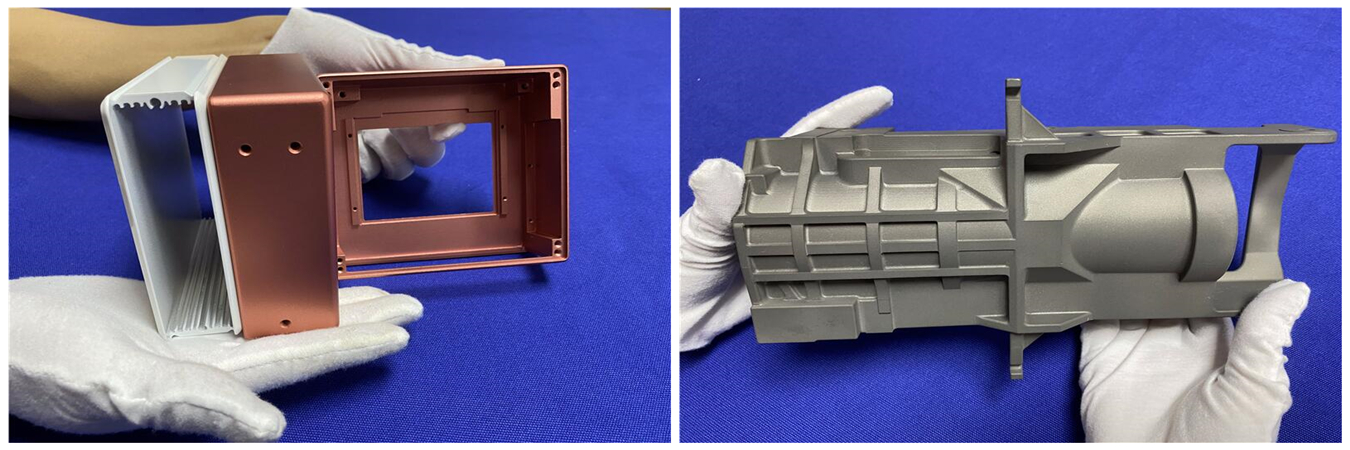
Okay, so you’re convinced CNC machining is the way to go. Here’s what to think about when designing your custom enclosure box.
| Material | Best For | Pros | Cons |
| Aluminum 6061 | Most projects: consumer electronics, industrial controls, prototypes | Excellent machinability, lightweight, strong, great for anodizing | Can dent under extreme impact |
| Aluminum 5052 | Bent sheet metal enclosures | Good corrosion resistance, bends well | Less rigid than 6061 for machining |
| Stainless Steel | Harsh environments: food processing, marine, medical equipment | Very strong, great corrosion resistance | Heavy, harder to machine (costly) |
| Brass | Decorative knobs, RF shielding | Beautiful finish, machines easily, good conductor | Heavy, expensive |
| Plastics (ABS, Delrin, Polycarbonate) | Lightweight, electrical insulation, see-through covers | Low cost, light, non-conductive | Not as strong, can scratch, poor heat transfer |
For 90% of CNC machining for electronic device enclosures, 6061 aluminum is the go-to. It’s strong, easy to work with, and finishes beautifully. Explore our precision CNC machined parts.
Wall Thickness: You’ll want a minimum of 1.5mm to 3mm or so for rigidity—thin walls lead to unpleasant vibrating part slapping around during machining, or worse, feeling flimsy in users hands.
Bosses and Standoffs: Need to bolt something onto a circuit board? Design in a small raised areas or pads in your model, (we call these bosses) with holes that can be tapped. Much cleaner than gluing standoffs in later.
Fillets (Rounded Corners): Cutting tools are round. Internal corners will literally be a radius equal to the size of the tool. Round the corners of your designs at least 1mm or so else risk requiring a costly specialty cutter.
Vent Holes: If your device is running warm, provide slotted or hole venting. Easy to machine in.
So how does a solid block of metal become a sleek custom aluminum enclosure? Read on for the simple version of how we do it at Falcon CNC Swiss.
Design Review (DFM): You send us your 3D model (a STEP file, for instance). Our engineers look for potential issues, places where corners are too tight and walls are too thin, things like that, and recommend changes. This alone can save you a ton of time and money for no additional cost to you.
Material Sourcing: We take a quick trip out to grab the proper sized block of material (say 6061 aluminum) with full mill certification if you need it.
CNC Machining: The block goes into the CNC mill. Our high tech 3, 4 and 5 axis mills carve out the pockets inside the box, drill all the holes, and shape the outside. If your box is complex enough we may even have to flip flop the part in the machine to get access to both sides.
Secondary Operations: Need threads? Easy, we’ll tap holes for you. Want a super smooth finish? We do that too.
Finishing: Finally—this is where it gets exciting. We might bead blast it for a fine matte finish so it all looks even, and then anodize it. Anodization is an electrochemical process that adds a hard, colored layer to the aluminum to protect it from corrosion (think black, silver, red, blue, whatever you like). We can also silk-screen logos or labels right onto its surface.
Inspection: Every critical dimension gets checked; often with a CMM (Coordinate Measuring Machine) to ensure it agrees with your drawing.
Pack and Ship: Your parts are carefully packed and shipped out to you.
Check out our custom enclosure manufacturing capabilities.
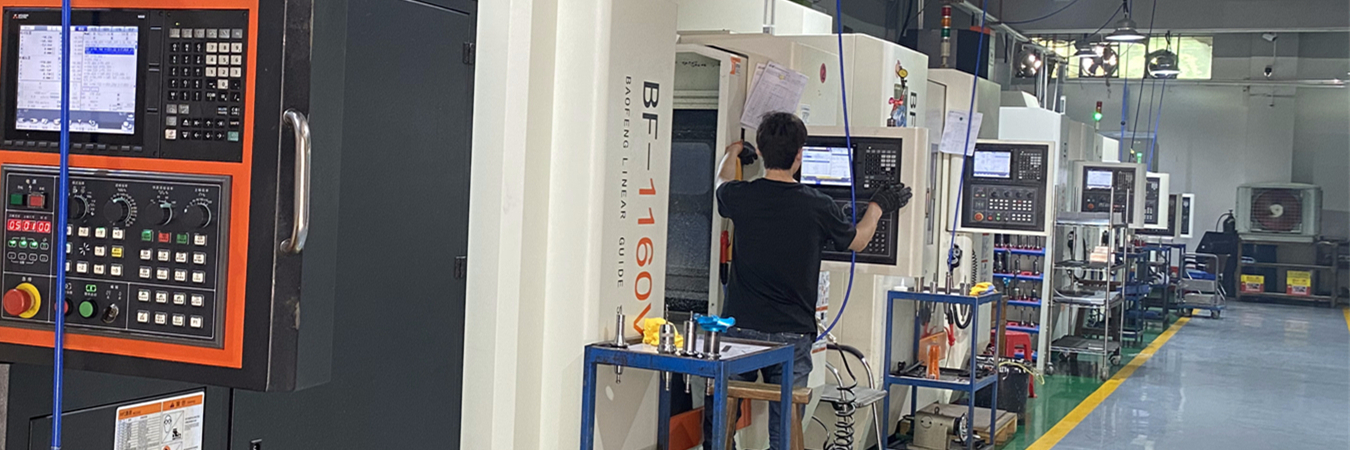
There are a lot of machine enclosure manufacturers. Here’s the reason engineers and buyers come back to us.
Engineers Who Speak Your Language: DFM (Design for Manufacturing) review included. We don’t just take orders. We help you design a better, cheaper to build part.
One Stop Shop: We machine, anodize and assemble — all in-house. No shipping your parts to three different vendors and crossing your fingers that they don’t screw each other up.
Scalable: Need 2 prototypes this week? You got it. 20,000 production units next month? We can do that also. Our automated cells give you high volume without sacrificing precision.
Quality You Can Trust: ISO 9001 registered. We measure everything. You get parts that work, every time.
Fast Quotes: Send us your CAD file and you’ll typically hear back from us within 24 hours with pricing and feedback.
We’ve “been there and done that” customizing enclosure boxes for everything from IoT sensors to medical handhelds, industrial controllers to audio gear.
Ready to build your custom enclosure?
Designing a new product is fun! Don’t let the enclosure be an afterthought. A well-crafted CNC machined enclosure will protect your electronics, cool your components, and give your product a “worth-it” feel.
Whether you’re looking for one prototype or a thousand production units, Falcon CNC Swiss can help. Contact us today!