English
  日本語
日本語  한국어
한국어  français
  Deutsch
  Español
  русский
  العربية


Jan
Learn More
22

Aluminum is one of the most popular materials being requested for CNC turning jobs today due to its excellent properties, such as a good strength-to-weight ratio and ability to produce very tight tolerances. Whether you are having parts machined for an aircraft frame structure, an electric vehicle battery box or the actuator which moves a surgical robot, aluminum will provide a cost-effective, high-quality solution each time.
This is a general guide that can be used by engineers or purchasing agents who want to learn about the basic characteristics of CNC aluminum turning in order to better inform their decision making. Topics covered in this guide will be all of the most commonly used aluminum grades, what tolerances you should reasonably expect to receive when machining various colors of aluminum and how anodization may impact your finished product appearance. Additionally, this guide will help you to understand how best to select a CNC Aluminum Turning Partner. If you would like more details regarding specific processes for CNC aluminum turning, please see our CNC Turning Machining Services Page.
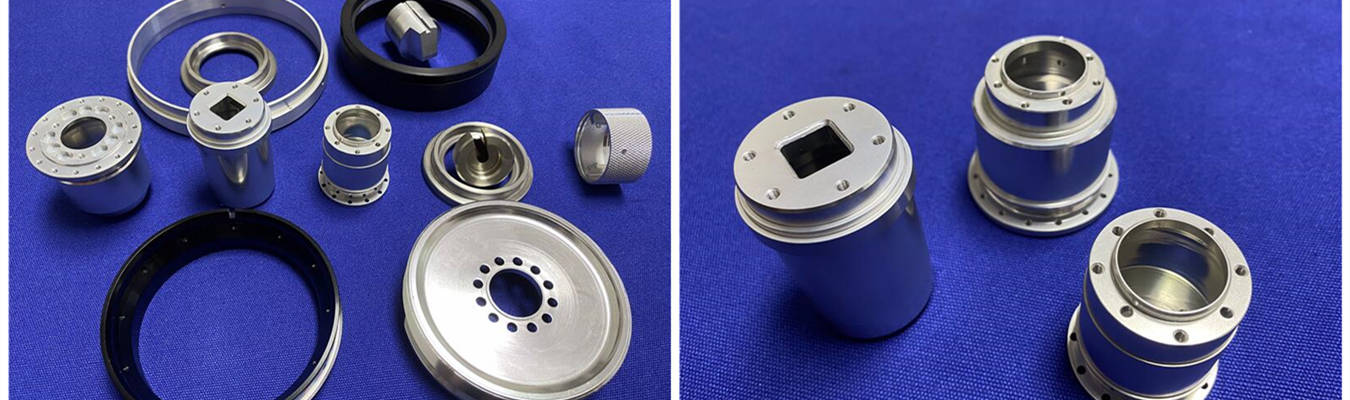
Choosing the correct alloy is the first and most important decision in any machining project. The two most commonly specified grades for precision turning are 6061 and 7075 aluminum, but they serve very different purposes.
| Property | 6061 Aluminum | 7075 Aluminum |
| Yield Strength | ~276 MPa (40,000 psi) | ~503 MPa (73,000 psi) |
| Machinability Rating | ~90 (Excellent) | ~70 (Good) |
| Relative Cost | Low to moderate | Higher |
| Corrosion Resistance | Very good | Moderate |
| Best Applications | General-purpose parts, housings, structural components | High-stress aerospace and defense components |
6061 aluminum is the standard for most production aluminum CNC turning projects due to its ease of machinability and ability to hold good surface finishes and respond well to anodizing. It is a well-balanced aluminum alloy suitable for aerospace, automotive brackets, electronic enclosures and housings for medical devices because it creates manageable chips and minimally wears out tools; making it a great choice for low and high volume aluminum turnings.
7075 aluminum should be used when the component requires maximum strength due to its approximately double the strength of 6061 aluminum alloy. Because of this high strength characteristic, 7075 is the preferred or standard material used in aeronautical structural components, high-performance racing pieces and military defense equipment. However, with the benefits of strength there are trade-offs with 7075; it is considerably more abrasive and requires tools/workholding to be rigidi and tooling to be resistant to wear during machining. In regards to CNC turning of 7075 aluminum that is being manufactured for aeronautical applications 7075 aluminum is commonly specified for landing gear components, wing ribs and fuselage frames.
Many manufacturers use both grades based on the needs of the particular piece(s) being manufactured, such as specifying 6061 for all general structural components where cost and machinability are of high priority and reserving 7075 only for those components that are subjected to the highest load and need to have the best strength-to-weight ratio.
Modern CNC turning centers consistently achieve micron-level accuracy on aluminum components. At Falcon CNC Swiss, we routinely hold tolerances of ±0.005mm on critical diameters and bearing surfaces. Our Swiss-type lathes achieve tolerances as tight as ±0.001mm on aluminum parts as small as Ø1.5mm, ensuring compliance with the most stringent FAA and IATF 16949 standards. Learn more about our precision CNC machining services.
| Application Type | Tolerance Requirement | Typical Features Controlled |
| Medical aluminum CNC turning | ±0.005–0.01mm | Implant diameters, mating surfaces, thread forms |
| Aerospace aluminum CNC turning | ±0.005–0.02mm | Bearing fits, bolt circles, sealing surfaces |
| Automotive CNC aluminum parts | ±0.01–0.03mm | Shaft diameters, housing bores, sensor mounting |
| Electronics CNC turned aluminum | ±0.01–0.05mm | Heat sink interfaces, connector fits, enclosures |
The ability of a CNC turning shop to maintain a tolerance upon manufactured aluminum turning products is influenced by various factors; they include the rigidity of the machine structure, the quality of spindles for accurate positioning, tool selection and monitoring for tool wear over long production runs for maintaining dimensions, consistency in material, especially with regard to the hardness of bar stock, the way in which the material cuts, and also thermal control because the coefficient of thermal expansion for aluminum is approximately 23µm/(m·°C) which means that a 10°C change in temperature results in a 0.023mm increase in length on a 100mm long part.
When you request quotations for custom manufactured aluminum components, you should always provide your suppliers with a complete drawing with all critical dimensions clearly defined so that they can determine the inspection method that will be used (in most cases, they will use CMM for precision features and calibrated gauges for non-precision) and therefore control costs by identifying the non-precision dimensions that may only require standard tolerances.
Machining is only half the story. For many applications, the final aluminum part requires anodizing to enhance corrosion resistance, improve wear characteristics, or achieve a specific aesthetic. Anodizing is an electrochemical process that converts the outer surface of aluminum into a durable, corrosion-resistant oxide layer.
| Anodizing Type | Typical Thickness | Best Applications | Cost Impact |
| Type II (Sulfuric) | 5–18µm | General protection, color dyeing, consumer electronics | Low to moderate |
| Type III (Hardcoat) | 25–50µm | High-wear surfaces, military and industrial components | Moderate |
| Clear Anodizing | 5–12µm | Preserves natural aluminum appearance with protection | Low |
Uniform surface preparation of turned aluminum components is necessary to obtain a high-quality anode finish prior to being placed in the anodizing solution. Our standard aluminum surface finish is Ra 1.6um, but we are capable of producing an Ra 0.4um finish with extra processing for parts that require a smoother finish. This is particularly important for electronic snap-on aluminum components because both their aesthetics and ability to perform will be affected by their surface finish.
It is also worth noting that the anodising process will alter the final dimensions of the component. The anodized layer builds out and also penetrates into the part and will affect the dimensions of the completed component by approximately half of the thickness of the coating. Components that contain critical regions with tight tolerances will require compensating the machining process for the anodise thickness. Suppliers experienced in providing turned aluminum components for anodising will take in to consideration the expected thickness of the coating when they produce their tool paths for anodised aluminium turned components.
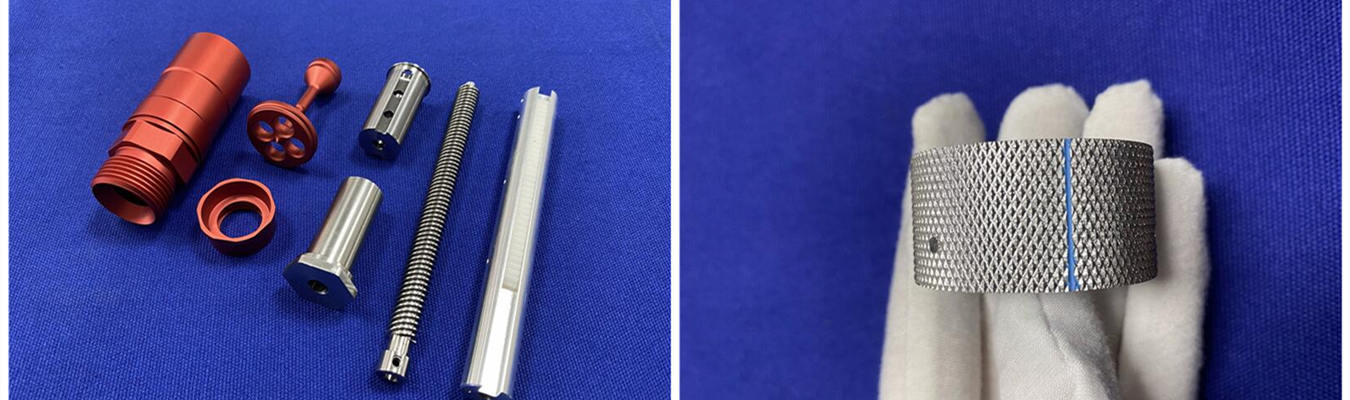
One of the key benefits of CNC aluminum turning is its flexibility across production volumes. The same program that runs a single prototype can also run 100,000 production parts.
When developing new products, speed matters. Rapid prototype aluminum CNC services allow engineers to validate form, fit, and function before committing to production tooling. Prototyping typical lead times range from 3 to 10 business days depending on complexity, with zero minimum order quantity for development purposes. We recommend targeted surface finishes to simulate final anodized appearance and full CMM inspection with first article reports.
Swiss-style lathes and multi-purpose turning machines with auto-feeders are cost-effective options for the high-volume production of machined aluminum parts of established products. There are thousands of machined components produced every day. Techniques such as combining several components into a single bar of stock in one batch will help to reduce the amount of aluminum scrap and setting up dedicated assembly lines for pre-priced components will reduce costs as well.
The same automated cells that produce machined automotive parts (50,000 or more) can also be used to produce low-volume aluminum machined turning. The versatility of CNC machining will allow for the smooth progression of projects across all stages of production.
Aluminum‘s combination of lightweight strength, corrosion resistance, and excellent machinability makes it the material of choice across numerous high-performance industries.
Aerospace CNC Turning of Aluminum
CNC turning/cutting of aerospace-grade aluminum requires the highest level of accuracy and documentation. Some examples of typical components are hydraulic manifolds that are machined out of 7075-T651 aluminum with a flatness specified to within 0.005 mm (5 microns) and pressure tested to 5000 psi, satellite brackets with topology-optimized designs to reduce their weight, fuel system nozzles that must have Ra 0.4 µm internal surfaces (very fine finish), and sensor housings that must meet EMI shielded requirements.
Automotive Aluminum CNC Parts
CNC machined aluminum parts are becoming increasingly popular in the automotive industry as a means to create lightweight parts that enhance performance. For example, EV battery housings have an IP67 rating (waterproof) and require very specific thermal management properties; while, the motor housings are manufactured from water-quenched AlSi10Mg aluminum to ensure a very stable thermal coefficient of expansion over an extremely wide range of temperatures. The products produced for the automotive industry using CNC turned aluminum include suspension components, transmission valves, and connector housings.
Medical Aluminum CNC Turning
Precision and biocompatibility are critical when it comes to medical-grade aluminum CNC turning parts. Examples of medical applications include handles for surgical instruments, components of prosthetic joints manufactured from 6061 T6 anodized aluminum, dental abutments and surgical guides, and actuator gears for robotic surgery tools where the backlash must not exceed the DIN 6 specifications.
Electronics and Robotics
Components manufactured from aluminum CNC machining are crucial to modern robot and electrical automation. Examples include heat sinks for semiconductor cooling using 0.3 mm solid spacing; micro-heat sinks for electronic devices; EMI shielding fixtures for 5G equipment; and robot actuator arms.
At Falcon CNC Swiss, we manufacture precision aluminum components using advanced CNC turning centers and Swiss-type lathes. Our approach combines engineering discipline with scalable manufacturing processes.
| Capability | Specification |
| Equipment | CNC turning centers, Swiss-type lathes with live tooling (Citizen, Star, Tsugami), 5-axis machining centers |
| Tolerances | Down to ±0.005mm standard; ±0.001mm for specialized applications |
| Materials | 6061, 6061-T6, 7075, 2024, 5052, Mic-6 cast aluminum |
| Surface Finishes | Anodizing (Type II clear/black, Type III hardcoat), bead blasting, polishing |
| In-House Inspection | CMM verification, optical comparators, surface roughness testing |
| Quality Systems | ISO 9001:2015, ISO 13485, IATF 16949 |
| Volume Flexibility | Single prototypes to high-volume production (100,000+ units/month) |
Our engineering team provides DFM support, reviewing your design before quoting and suggesting changes that improve manufacturability without compromising function. We also offer comprehensive documentation, including material certifications and full inspection reports with CMM data.
Selecting the right partner for CNC aluminum turning requires evaluating several key factors beyond the quoted price.
| Selection Criteria | What to Look For |
| Equipment depth | CNC turning centers with live tooling; Swiss-type lathes for small diameters; proper spindle speeds for aluminum |
| Tolerance track record | Documented ability to hold ±0.005mm or tighter on aluminum |
| Material experience | Regular work with 6061, 7075, 2024, and cast aluminum alloys |
| Anodizing capability | In-house finishing for anodized aluminum CNC parts |
| Inspection equipment | CMM, optical comparators, surface finish testers for full traceability |
| DFM support | Proactive design review before quoting |
| Quality certifications | ISO 9001 minimum; ISO 13485 for medical; IATF 16949 for automotive |
A reliable partner will perform an initial design review, identify potential manufacturing issues before cutting begins, and provide clear documentation of material certifications and inspection results. Explore more information about our CNC turning services.
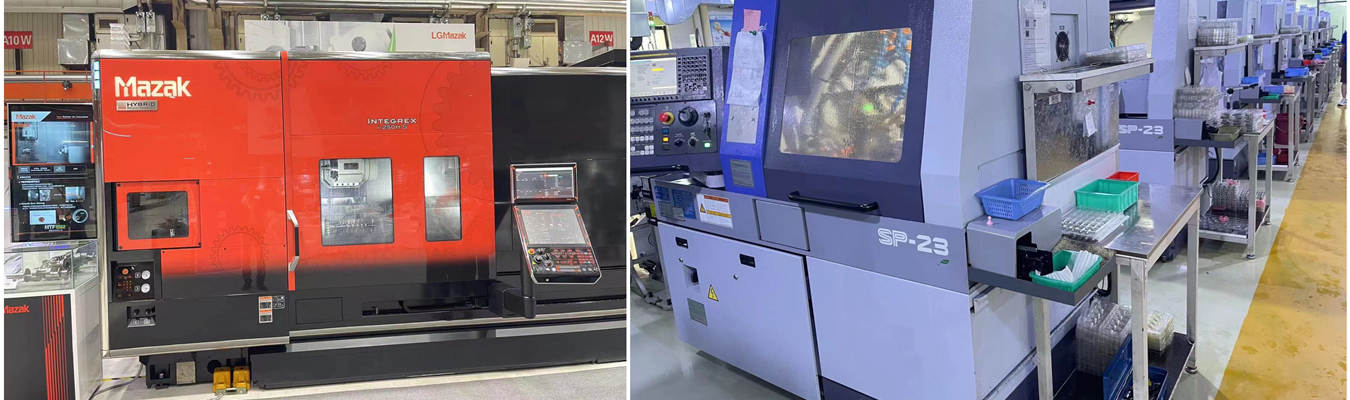
The cutting of aluminum through CNC methods is a very effective method for the manufacturing of components with an optimized strength-to-weight ratio for aerospace, automotive, medical, electronics and robotics applications. Selecting the correct materials, establishing proper tolerances and working with an experienced manufacturer are all crucial factors for success, whether for one prototype aluminum aerospace CNC turning part or producing many automotive CNC aluminum parts.
Falcon CNC Swiss has decades worth of experience with machining aluminum as well as the best CNC turning technology available today and has formal Quality Systems in place to guarantee that each aluminum component is produced to your specifications, from Design for Manufacturability support all the way through to final inspection.
Upload your CAD file for a free DFM analysis and competitive quote
Contact our engineering team to discuss your specific aluminum turning requirement
A: 6061 is the general-purpose workhorse, offering excellent machinability, good corrosion resistance, and moderate strength at a lower cost. It is suitable for most applications. 7075 offers approximately double the yield strength of 6061 but is more abrasive, requires rigid tooling, and is more expensive. Choose 7075 for highly stressed aerospace and defense components.
A: On modern CNC turning centers, standard production tolerances are ±0.01mm to ±0.025mm. For specialized tight tolerance applications with Swiss-type lathes, tolerances down to ±0.005mm are achievable. Critical features such as bearing fits and sealing surfaces typically require the tightest control.
A: Yes. Anodizing builds outward and penetrates inward, typically changing dimensions by about half the coating thickness. For Type II anodizing (5–18μm), this can be 0.0025–0.009mm per surface. For critical fits, experienced suppliers compensate by machining undersize before anodizing to achieve the final specified dimension after finishing.
A: Prototype lead times typically range from 3 to 10 business days depending on part complexity, material availability, and finishing requirements. Expedited options are often available for critical development timelines.
A: Yes. Reputable suppliers provide CMM inspection reports, material certifications, and first article inspection documentation. Full traceability from raw material batch to finished part is available for regulated industries such as aerospace and medical.
A: Yes. CNC turning is highly scalable. The same program and setup can produce a single prototype, a low-volume run of 100 parts, or a high-volume run of 100,000+ parts. Setup costs amortize across larger quantities, making per-unit cost significantly lower at higher volumes.