English
  日本語
日本語  한국어
한국어  français
  Deutsch
  Español
  русский
  العربية


Apr
Learn More
08

Each aerospace bracket, medical instrument, robotic joint and automotive component is unique. The assembly will function if the aluminum part is made accurately or within ±0.005 inch; however if the part drifts out of specification by this amount, failure may occur.
Aluminum is one of the most forgiving materials when using CNC machines because it has a high cutting speed, excellent abilities to dissipate heat and great strength-to-weight ratios. However, it is still necessary that you have the right combination of CNC machines, strategies and quality assurance systems in place to manufacture high accuracy CNC aluminum parts, especially those that require tight tolerances of ±0.01mm.
This guide will help you understand all aspects of Manufacturing CNC Aluminum Parts from your CNC Machine Processing, The Difference Between 3 Axis vs. 5 Axis and How to Choose the Best Service For Your CNC Aluminum Machining Needs!
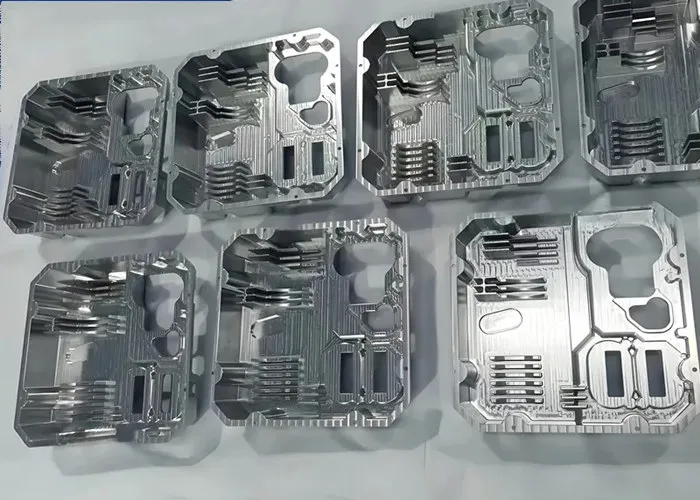
Aluminum is the most widely CNC-machined non-ferrous metal. Approximately 80% of precision machined parts in electronics, aerospace, and robotics rely on aluminum alloys. That popularity is not accidental.
Aluminum offers:
A density about one-third that of steel
Excellent thermal and electrical conductivity
Natural corrosion resistance, which anodizing further strengthens
Superior machinability, allowing high spindle speeds with less tool wear
The attributes associated with any aluminum CNC machining service will result in faster cycle times, lower costs, and consistent quality throughout a production run. When producing machined aluminum components, you can machine them to tight tolerances without needing to run slow feed rates or frequently change to different machining tools. The nature of the material causes it to chip clean, thereby creating smooth surfaces on CNC machined aluminum pieces while producing minimal burrs.
The two most commonly used grades of aluminum alloy used within precision manufacturing are 6061 and 7075, with each grade being appropriate for ultimately different uses.
6061 aluminum alloy is known as the all-around, general-purpose aluminum alloy. It is the aluminum grade that provides an optimal combination of cost, machinability, strength, and the ability to be finished in a variety of ways. The range of cutting operating parameters on 6061 aluminum is wide, which means you can operate your tools within a wide variance while still balancing tool life with surface finish.
Common uses for 6061 aluminum alloy are structural components, automotive engine brackets, CNC prototypes, automation equipment parts, robotic housings, and thin-walled machined features.
Aluminum alloy 7075 is one of the strongest aluminum alloys currently available. It exhibits an excellent strength-to-weight ratio and high fatigue resistance. However, thin-walled parts fabricated from 7075 can become distorted due to residual stress; therefore, care must be taken to properly fixture, clamp, and plan your CNC milling toolpaths.
Common uses for 7075 aluminum alloy include aircraft structural components, high-performance robotics Components, racing vehicle components, UAV/drone frames, and high-load precision structural components.
For the majority of aluminum applications requiring precision CNC milling, 6061 aluminum would be the preferred aluminum alloy to start with. However, if the components will undergo extreme mechanical stress, and strength is more important than cost, then it is appropriate to select 7075 aluminum.
Achieving highly accurate CNC aluminum components requires a multi-step process involving precise control of each stage, rather than just an expensive CNC milling machine system.
In order to control the effects of thermal expansion on accuracy, we must pay particular attention to temperature control and stress relief while working with dimensionalally sensitive materials.
For example; when utilizing 6061-T6 aluminum in a robotics project utilizing micro-motor actuator housings, the original required tolerances of ±0.01 mm on both bore diameter and datum face locations were compromised by uncontrolled thermal expansion. The manufacturer used an internal stress-relief annealing process of three (3) hours in duration at 165° C followed by an air cool down for approximately eight (8) hours to minimize flatness deviation from 0.060 mm to 0.015 mm prior to commencing any CNC machining activity.
In order to achieve the tolerances required, we utilized a multi-stage machining approach; the standard method is to perform the following machining operations:
Roughing - Remove excess material from the critical reference surfaces.
Semi-finish - Remove approximately 0.050 mm of material from the precision reference surfaces and approximately 0.030 mm of material from the bore diameters.
Finish - Add Final finishes under controlled conditions.
The precision actuator housings discussed above had their final finish completed under controlled temperature conditions of 21° C. MILTAC provider utilized varying degrees of cutting conditions to achieve the consistency required over all 240 actuator housings.
When tolerancing the bore diameter locations to achieve coaxiality (±0.008 mm or better), reaming and micro-boring heads should be used. A common practice is to first rough-core bore with an end-mill, semi-finish using an H7 reamer, and complete final finishing using a micro-boring head dead stop capable of accommodating adjustments down to single microns.
It is critical to use the proper tool selection and cutting parameters when successfully CNC milling precision machined components from Aluminum. Tooling factors that will produce cleanly machined components versus poor surface finish due to built up edges include:
Tool selection (2-flute / 3-flute carbide end-mills with sharp cutting edges to minimize burr generation)
Tool Coatings (DLC / TiB₂ )
Polished / Smooth flute geometry for proper chip evacuation
When utilizing 6061 Aluminum, it is recommended to use cutting speeds of 12,000 - 20,000 RPM, while using 7075 Aluminum, it is recommended to use moderate-to-high cutting speeds of 15,000 - 24,000 RPM, while incorporating high-pressure coolant (HPC) through the spindle as your primary cooling method. This will minimize heat generation, provide continual chip evacuation of chips, and produce greater surface finish quality on precision machined components.
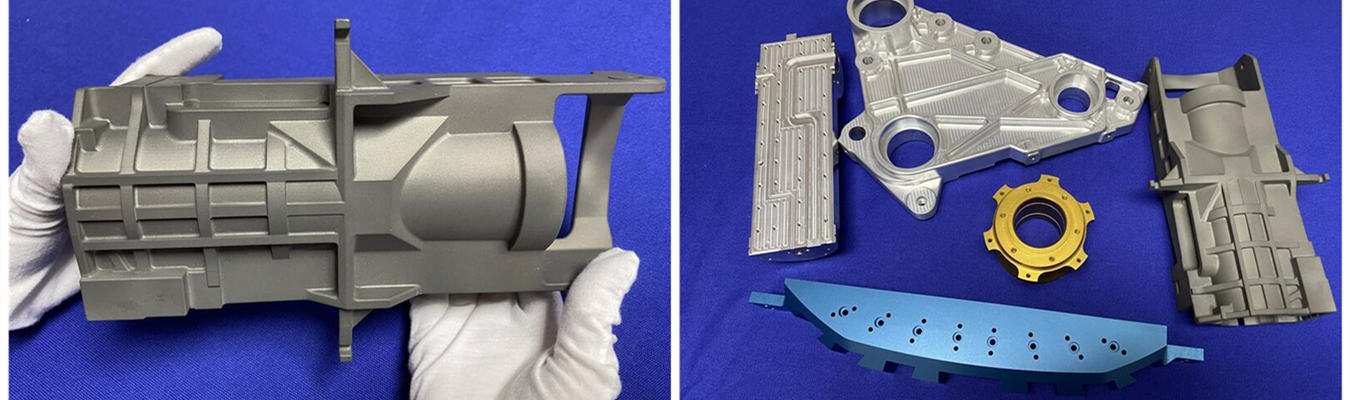
The difference between 3-axis CNC aluminum milling and 5-axis CNC milled aluminum is not just about the number of axes. It is about design freedom, tolerance control, and efficiency.
In 3-axis CNC aluminum milling, the cutting tool moves in three linear directions (X, Y, and Z). The workpiece remains fixed. For simple parts with flat surfaces and features only on the top face, this is perfectly adequate. Programming is straightforward, maintenance is lower, and the equipment is less expensive.
However, for complex geometries—deep cavities, undercuts, organic contours, parts requiring machining on multiple sides—3-axis machines require repositioning the workpiece. Each repositioning introduces the risk of tolerance stacking errors.
By contrast, 5-axis cnc milled aluminum introduces two additional rotational movements (A and B axes). The tool can approach the material at almost any angle.
Benefits include:
Single-setup production eliminates tolerance stacking errors
Access to undercuts and deep cavities without special fixtures
Improved surface finishes on contoured surfaces
Reduction in cycle time by eliminating multiple setups
Ability to machine complex 5-axis cnc milled aluminum components that would be impossible on 3-axis equipment
For aerospace cnc aluminum parts such as structural brackets and turbine housings, 5-axis capability is essential. For industrial cnc milled aluminum components where design complexity is moderate, 3-axis may still be the most economical choice. The right equipment depends on the part geometry and volume.
Aluminum CNC milled parts are used in practically every manufacturing-engineered sector today. The combination of lightweight, high-strength, and precision makes aluminum the go-to material for applications requiring both performance and low weight.
Aerospace CNC aluminum parts. Precision, reliability, and minimal weight are critical when designing flight-critical components in aerospace applications. Therefore, aluminum is used for the structural frame, control surfaces, interior features, and engine housings in aerospace. In order to meet the stringent tolerances and regulatory compliance required for the aerospace industry, aluminum CNC milling provides the precision required.
Automotive CNC milled aluminum parts. Todays automobiles must be manufactured from lightweight components in order to provide better fuel economy while improving performance. This requires that parts such as engine blocks, cylinder heads, suspension components, and drivetrain components be manufactured from aluminum using CNC milling processes to achieve the tolerances and precision required for precision mating surfaces, bearing bores, and complex fluid channels.
Medical CNC aluminum parts. Major advances in medical technology have created new types of surgical instruments, diagnostic housing, and implant systems. In order to meet the high precision tolerances required for these instruments and systems, aluminum must be precision machined and sterilised repeatedly without losing its properties. The excellent machinability of aluminum makes the material perfect for producing precision parts with the tight tolerances needed in high-stakes environments.
Electronics CNC aluminum milling. Aluminum heat sinks, enclosures, and connectors are used to provide optimal thermal dissipation for sensitive electronic devices. Using precision CNC milling processes to manufacture aluminum parts, the materials can be manufactured to have the correct flatness and surface finish required to provide superior thermal interface contact.
Robotics CNC aluminum parts. Robotic arm, end effector, frame, and joint housing designs rely heavily on the strength-to-weight ratio of aluminum to produce low-weight robotic hands, end effectors, frames, and joints. The tight tolerances exhibited in CNC-milled aluminum parts are essential for producing accurate, repeatable, and smooth articulation for robotic devices.
Surface finish is often treated as an afterthought. For components that fit precisely against mating parts—bearing housings, sealing surfaces, sliding interfaces—surface quality is not cosmetic. It is functional.
Smooth finish cnc milled aluminum achieves lower friction, better sealing characteristics, and reduced wear over the component’s service life. The finish is determined by cutting parameters, tool selection, and secondary operations.
For high-precision bearing surfaces and bore diameters, a surface finish of Ra 0.4μm is standard.
This is achievable with:
Sharp 2-flute or 3-flute carbide end mills
Light finishing passes (typically 0.05–0.1mm depth of cut)
High spindle speeds with moderate feed rates
Proper coolant flow to evacuate chips and control heat
Aluminum 6061 naturally achieves better surface finishes than 7075 due to its slightly lower hardness and more stable chip formation during finishing passes. However, correct toolpath strategies—including climb milling rather than conventional milling—produce excellent results on both alloys.
Many precision cnc milling aluminum parts receive secondary surface treatments after machining. Anodizing is the most common. Clear anodizing preserves the natural metal appearance while adding wear resistance and corrosion protection. Hard anodizing creates a thicker, harder ceramic-like surface ideal for sliding wear applications. Bead blasting produces a uniform matte finish that hides minor surface irregularities.
For electronics aluminum cnc milling applications such as consumer device housings, these finishing treatments deliver both functional protection and the premium appearance that customers expect.
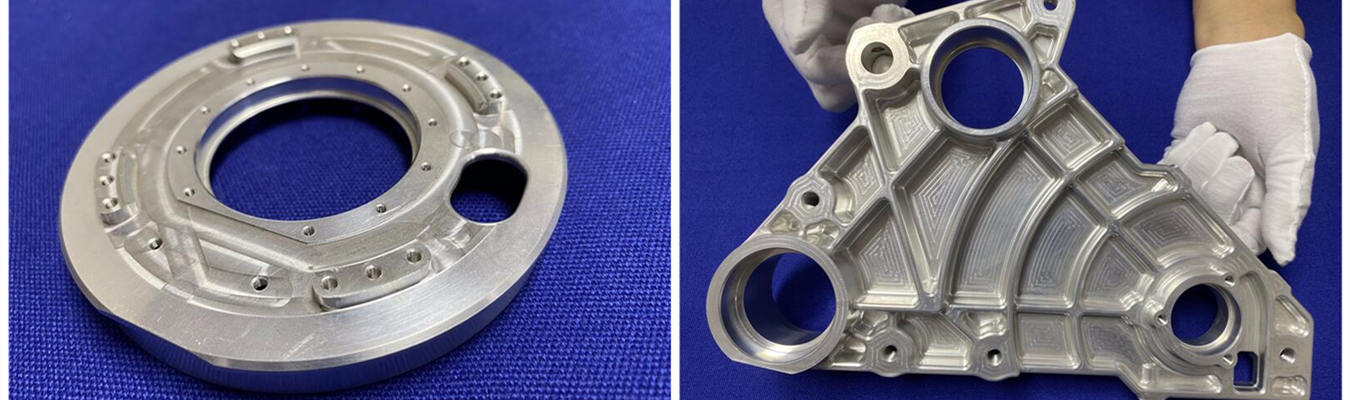
At Falcon CNC Swiss, high-accuracy cnc aluminum parts are not an occasional achievement. They are the daily standard. Our cnc aluminum milling service combines advanced multi-axis equipment, engineered process control, and rigorous inspection to deliver components that consistently meet your specifications.
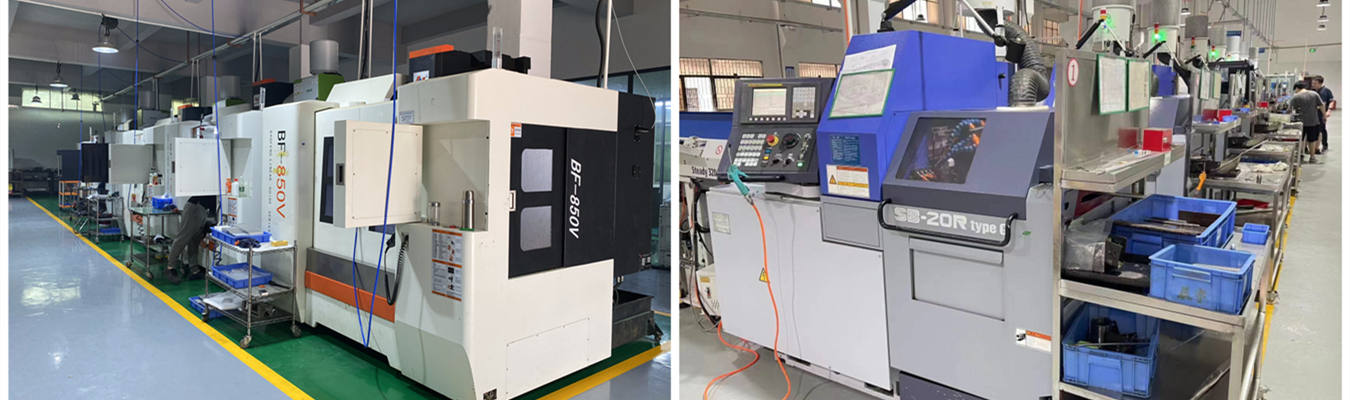
We operate 5-axis CNC machining centers, Swiss-type CNC lathes (Citizen, Star, Tsugami), and multi-axis turning centers. For complex 5-axis cnc milled aluminum components, our equipment delivers tight positional accuracy and excellent surface finishes in a single setup. Explore our precision CNC machining capabilities now.
Aluminum 6061 (T6 and other tempers) for general precision, structural, and prototype parts
Aluminum 7075 for aerospace components, high-load robotics parts, and high-stress applications
Other alloys and engineering materials as required
All secondary finishing is performed under one roof—no outsourcing delays or quality handoffs. We provide anodizing (clear, black, and custom colors), bead blasting for uniform matte surfaces, passivation for corrosion protection, polishing, and silk-screening for labeling.
We maintain ISO 9001:2015 certification. Every batch undergoes CMM (Coordinate Measuring Machine) inspection, with first article inspection reports available upon request. For critical dimensions—especially on aerospace cnc aluminum parts and medical cnc aluminum components—full traceability and inspection documentation are standard.
Our engineering team provides free DFM (Design for Manufacturing) analysis before quoting. We review your design, suggest cost-saving modifications without compromising function, and validate that your part can be manufactured to its specified tolerances.
Whether you need prototype cnc aluminum parts for a new product design or high-volume production of made to order cnc aluminum components, our systems scale with your volume requirements.
A combination of factors, not just one, creates high precision CNC aluminium components. The choice of materials will provide the foundation for precision parts. The most commonly used materials for CNC aluminium parts are 6061 (which offers a good combination of price and machining capability) and 7075 (which is extremely strong).
A multi-step machining process, the proper use of tooling and cutting parameters, a temperature-controlled finishing process, and quality inspections using CMMs will provide you with precise aluminium components. When you need aluminium CNC milling components manufactured to exacting standards and delivered on time and within budget, ensure that your partner has all the technical, production, and quality assurance capabilities to accomplish this for you.
Upload your CAD file for a free DFM analysis and quote — our engineers will review your design and provide manufacturability feedback within 24 hours.
Explore our CNC milling service to see our full capabilities.
Contact our engineering team to discuss your specific project requirements.