English
  日本語
日本語  한국어
한국어  français
  Deutsch
  Español
  русский
  العربية

Mar
Learn More
09

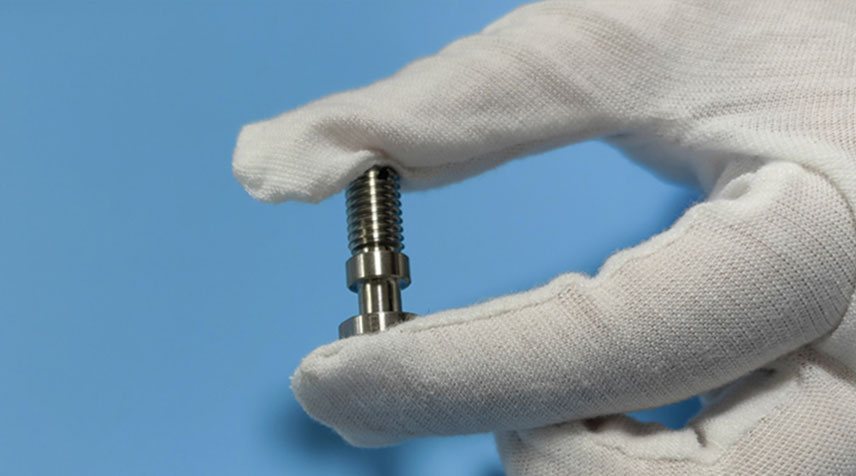
When you’re talking about a part that either fits perfectly or is useless, the difference can be as small as ±0.01mm. That’s ten microns, about one-fifth as thick as a sheet of paper. Or one-eighth the thickness of a human hair.
So why does this matter? Because when you’re manufacturing components for a medical device, aerospace system, or high-performance automotive engine, tolerances this tight are a must. It’s the difference between a device operating flawlessly for years and one that doesn’t.
But how do you hold ±0.01mm, part after part, consistently? That’s the question buyers and engineers will want answered.
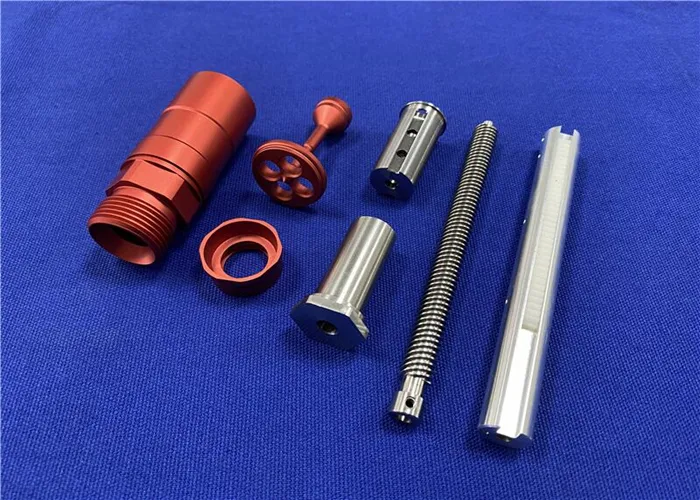
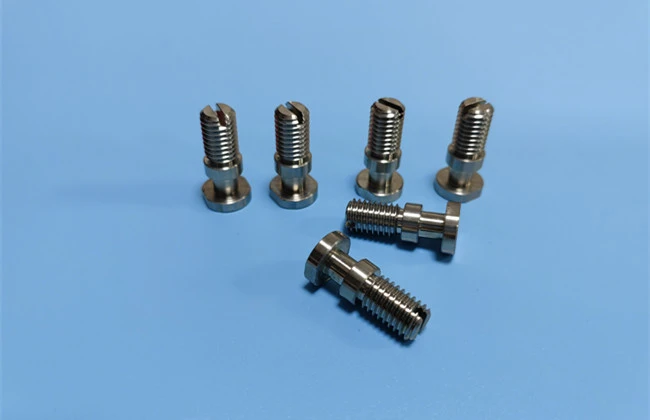
In this guide, we will explain the equipment, processes, and quality control systems you need to attain this level of precision parts CNC machining. Whether you’re considering a China CNC machining part supplier or looking to properly assess your current partner, you will learn what’s imperative to get parts to your specifications.
Before we get into tolerances, let’s cover off what CNC actually is.
CNC stands for computer numerical control. It’s a technique for automating machine tools using programmed instructions. Instead of a machinist turning handwheels to move the cutting tool, a computer automatically and precisely controls every movement.
Why does this matter when we are talking about ±0.01mm tolerances? Because CNC removes human variability. Once a program is proven and running smoothly, the machine repeats the same movements for every part. No fatigue, no distractions, no close enough.
In modern CNC machines, closed-loop feedback is also used. Servo motors report their actual position back to the controller, often hundreds of times per second. If the tool is even the tiniest bit off position the controller makes micro-adjustments to bring it back to where it should be. This is how precision CNC machining parts suppliers generate consistent results across thousands of parts.
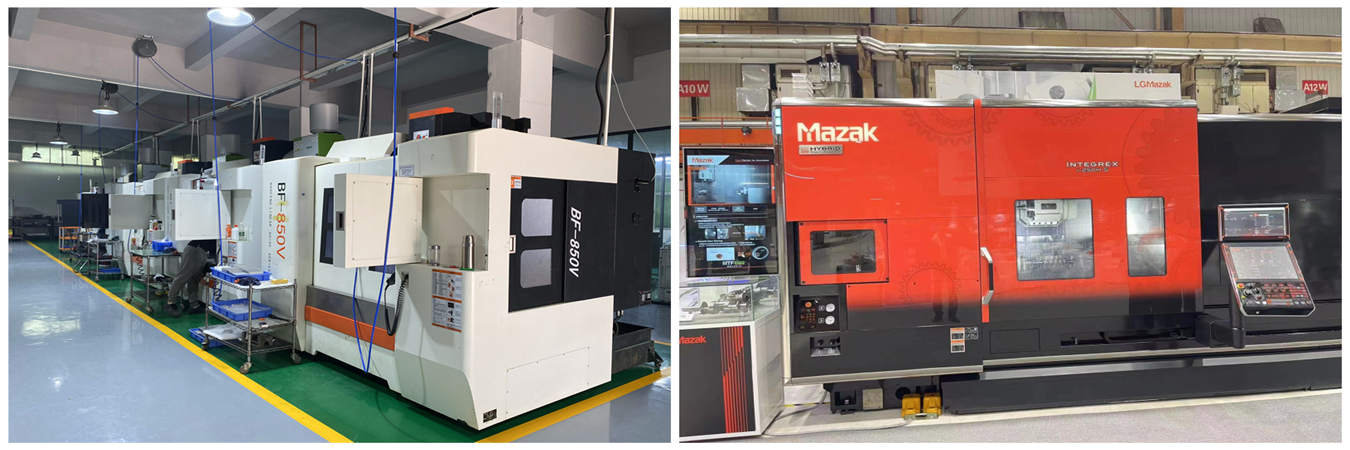
Achieving tight tolerances starts with understanding the machine itself. A precision CNC machine is built differently from a standard one. Here are the 7 major parts that matter for accuracy:
| Component | Role in Precision |
| Machine Frame | Heavy cast iron or polymer concrete absorbs vibration—critical for surface finish and accuracy |
| Spindle | High-quality spindle with minimal runout (±0.002mm or better) ensures hole positions and concentricity |
| Linear Guides | Preloaded roller or box ways maintain positional accuracy even under heavy cutting loads |
| Ball Screws | Precision-ground ball screws eliminate backlash—rolled screws won’t cut it for ±0.01mm |
| Servo Motors | High-resolution encoders (millions of pulses per revolution) enable microscopic moves |
| CNC Controller | Advanced controls with look-ahead function maintain accuracy at high feed rates |
| Coolant System | High-pressure through-spindle coolant manages heat and flushes chips—thermal stability is everything |
When you’re evaluating a China CNC machining parts manufacturer, it’s worth asking about these components. The machines they use directly impact the tolerances they can hold.
Parts that require ±0.01mm tolerances aren’t arbitrary—they tend to be situated in industries where precision is crucial for functionality or safety.
| Industry | Components That Require +- 0.01mm Tolerance |
| Medical | Bone screws, spinal implants, surgical instruments, dental abutments, orthopedic plates |
| Aerospace | Valve bodies, fuel system components, sensor housings, structural brackets, hydraulic fittings |
| Automotive | Fuel injector nozzles, transmission valve bodies, sensor mounts, turbocharger components |
| Electronics | Connector housings, heat sink interfaces, precision enclosures, semiconductor tooling |
| Industrial | Hydraulic valve spools, bearing housings, robotics components, pneumatic fittings |
If your project falls into this territory, you’re likely already working with—or searching for—a China CNC machined parts supplier that understands these expectations. Explore our CNC machined parts.
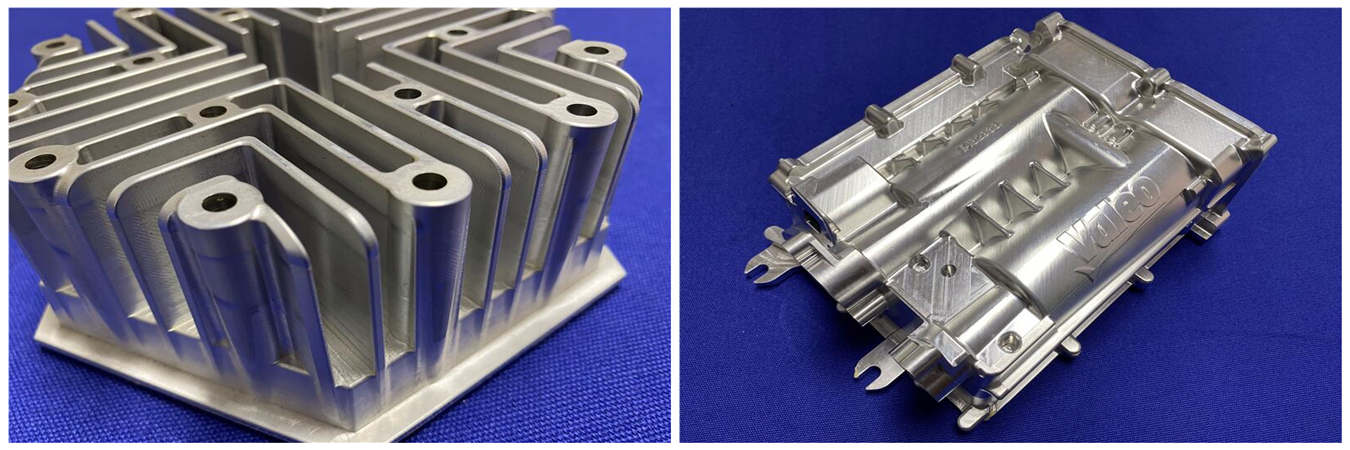
Different components necessitate different configurations of machines. Here, we outline the seven basic machine tool types and their contribution to precision:
| Machine Tool Type | Primary Use | Precision Capability |
| 1. CNC Milling Machine | Flat surfaces, slots, pockets, complex 3D shapes | ±0.005mm achievable with 5-axis machines |
| 2. CNC Lathe (Turning) | Cylindrical parts: shafts, pins, bushings | ±0.002mm typical for diameter control |
| 3. Swiss-Type Lathe | Small, long, complex parts with high length-to-diameter ratio | ±0.002mm with guide bushing support |
| 4. Grinding Machine | Ultra-precision surface finish and tolerance | ±0.001mm or better |
| 5. EDM (Electrical Discharge) | Hard materials, complex cavities, sharp internal corners | ±0.005mm |
| 6. Machining Center | Multi-axis milling with automatic tool changing | ±0.005mm typical |
| 7. Multi-Tasking Machine | Turn-mill combined operations in one setup | ±0.003mm (reduces stacking errors) |
For the majority of precision parts that require a tolerance of ±0.01mm, CNC milling, CNC turning, and Swisstype machining are the predominant processes, while for batches of high-volume CNC machining parts China production, Swiss-type machine tools tend to be the way to go for the combination of speed and accuracy.
Let’s dive into how it all works. Hitting ±0.01mm isn’t magic: it’s getting three linked things right.
It all starts with the machine itself:
Rigidity: Cast iron frames and box ways help reduce deflection. A machine that flexes when cutting forces are applied will never hold close tolerances.
Spindle Quality: Runout needs to be under 0.002mm. Tool holder standards like HSK or BT tend to yield better concentricity than older CAT systems.
Thermal Stability: “Getting hot” is really part of the deal. On quality machines spindle cooling, ambient temperature monitoring, and thermal compensation software running during work help to guard against that.
Regular Calibration: Laser interferometer calibration of positional accuracy between axes. A good CNC precision machining parts factory will do this regularly and keep records of the results.
It’s not enough to just have a world class machine: You also need the right processes in place:
Tool Selection: Micro-grain carbide tools with heat- and wear-resistant coatings like TiAlN or AlTiN stay sharper.
Tool Wear Management: Manufacturing tools will wear, but the best shops use tool wear monitoring so they can change out tools before they drift out of tolerance—rather than waiting for one to break before changing it out.
Cutting Parameters: Speed vs. feed vs. heat. If feeds are too low, for instance, the tool rubs and work hardens the material (which also makes for tougher chip removal). If too fast, the tool gets hot and wears at a rapid rate.
Workholding: Parts should be held to a repeatability of 0.005mm. Most precision vises, collets or custom fixtures fabbed up just for that particular part run facilitate this, often using soft jaws cut in place all at once.
In-Process Probing: Touch probes to measure critical part features while in cycle enable automatic offset changes to both correct for drift due to wear and also allow production to continue without needing to come to a halt.
Precision machining isn’t done just anywhere. You can’t chuck an aluminum block in the garage and firewall a v-twin into a seventy-eight vette and expect it to run true. Here’s what really matters:
Temperature: Move a 100mm aluminum part 10°C and the part expands 0.023mm; that’s enough to push it out of ± 0.01mm tolerance. Shops which work to these tolerances hold the temperature to 20°C ± 1°C during the production run.
Vibration: Machines mounted on isolated foundation or vibration-damping pads keep themselves from being shaken to pieces (traffic, adjacent machines).
Cleanliness: Chips and other contamination get in the way of shopholding. Clean shops with chip management systems produce parts with higher consistency.
When looking for China CNC machining parts manufacturers, these are some of the environmental factors which separate serious from casual shops. Learn more about our precision CNC machining capabilities →
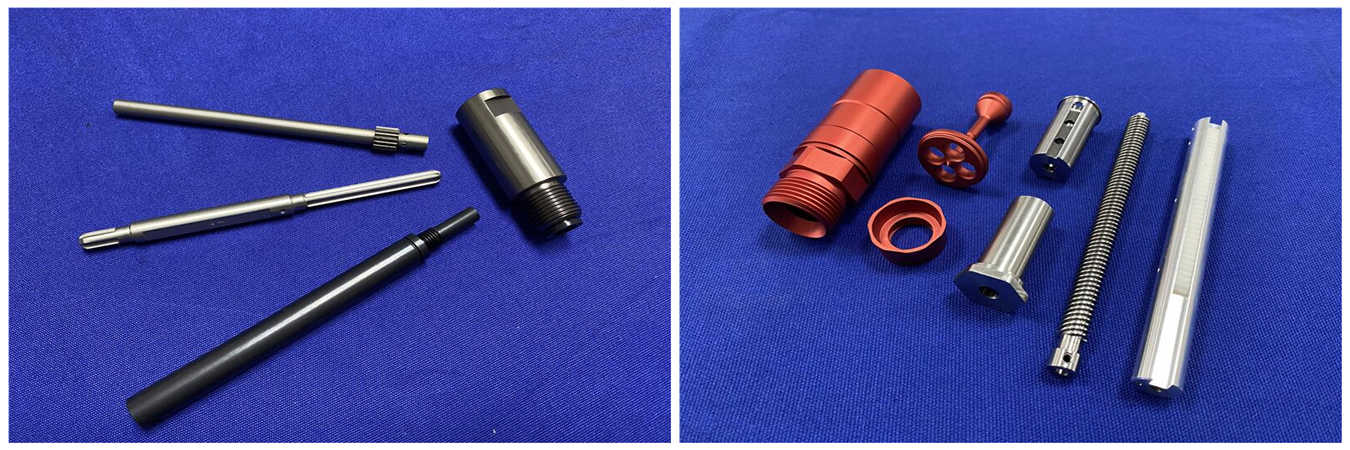
As the saying goes, the proof is in the pudding! Here’s how authorized precision CNC machining parts supplier organizations demonstrate tolerances.
First Article Inspection (FAI)
Complete dimensional inspection of the first part off the machine against the print and before production runs
In-Process Inspection
Operator checks of key dimensions at specified intervals (for example, every 10, 50 or every 100 parts, depending on process stability), using SPC. Charts are used to track trends—if any dimension starts drifting, corrective action before any parts are non-conforming.
Final Inspection Equipment
| Equipment | What It Measures | Typical Accuracy |
| CMM (Coordinate Measuring Machine) | 3D geometry, hole positions, complex surfaces | ±0.0015mm |
| Optical Comparator | Contours, thread forms, radii | ±0.005mm |
| Surface Roughness Tester | Surface finish (Ra, Rz) | 0.001μm resolution |
| Micrometers & Bore Gauges | Diameters, hole sizes | ±0.001mm |
Documentation and Traceability
Material certifications (mill test reports)
Inspection reports with actual measured values
CMM data files available upon request
Full traceability from raw material to finished part
If a supplier can’t provide these, they probably aren’t truly holding ±0.01mm.
There’s a reason why so many companies source precision parts through companies in China, but only if they can find the right partner.
Equipment parity – The best Chinese manufacturers use the same Japanese, Swiss and German machines as Western companies. Citizen. Star. DMG MORI. Mazak. They’re all available.
Certified quality systems – Look for ISO 9001, and ISO 13485 if you need to qualify for medical work. It’s not an optional extra for serious suppliers.
Cost efficiency – Lower labor and overhead don’t have to mean lower quality. With the right china precision CNC machining parts supplier, you get the same equipment and processes at a more competitive price.
Scalability – From prototypes to high-volume under one roof. No changing suppliers as your volume increases.
It’s finding the right CNC precision machining parts factory that cares about quality as a system and not a checklist that’s key. Explore more information of our CNC precision machining service →
At Falcon CNC Swiss, we’ve built our reputation on delivering precision—consistently.
| Capability | Detail |
| Equipment | Citizen, Star, and Tsugami Swiss-type lathes; 3/4/5-axis CNC mills; multi-axis turning centers |
| Typical Tolerance | ±0.005mm for critical features; ±0.01mm as standard for precision work |
| Quality System | ISO 9001:2015 certified; full CMM inspection for every batch |
| In-House Finishing | Anodizing, passivation, bead blasting, silk-screening—all under one roof |
| DFM Support | Free engineering review before quoting; we optimize for manufacturability and cost |
| Industries Served | Medical, aerospace, automotive, electronics, industrial |
We’re not just a CNC high precision machining parts factory—we’re a partner that works with you from design to delivery. And because we combine advanced equipment with disciplined processes, we deliver parts that meet your specifications, every time.
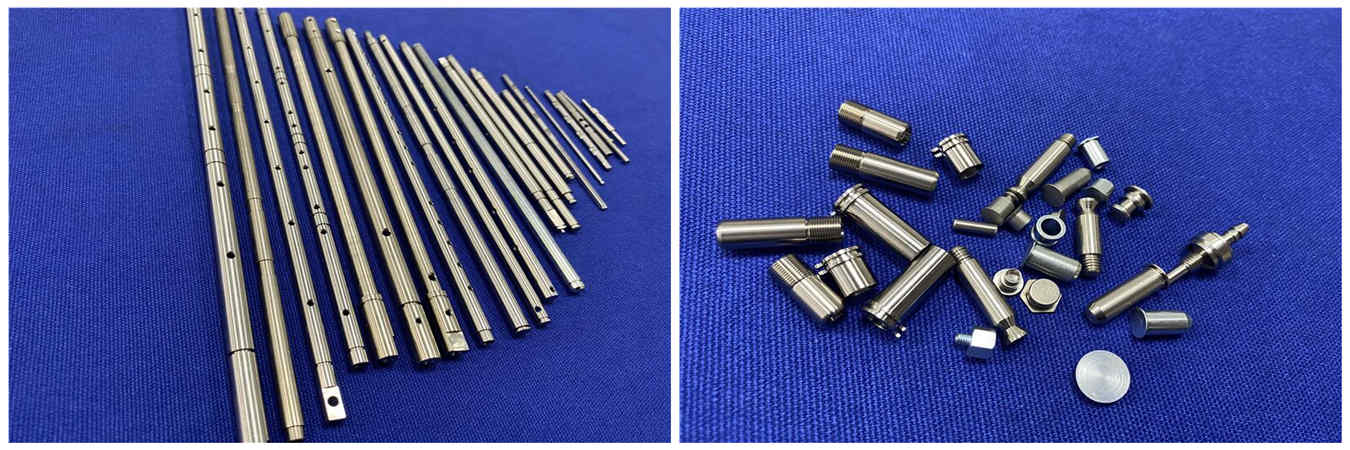
Funny story: getting to ±0.01mm isn’t just about luck, it’s about systems. The systems behind our equipment, how we control our processes, how we inspect our tolerances, and a team that knows how much is riding on it.
So whether medical implant, aerospace component, or high-performance automotive part, you need the documented proof—and the partner you can trust—for holding your tolerances, not guessing at them.
We’ve put the years in building the systems that let us hit ±0.01mm, repeatably. Now we’d like to put them to work for you.
Upload your CAD file for a free DFM analysis and 24-hour quote—we’ll review your tolerance requirements and provide manufacturability feedback.
Contact our engineering team to discuss your specific requirements.
Explore our precision CNC machining capabilities and see why global OEMs trust us for their most demanding components.
Using CMM (Coordinate Measuring Machines), calibrated digital micrometers and bore gauges traceable to national and international standards. All inspection equipment is calibrated on a regular basis and certified.
Most metals can: aluminum (6061, 7075), stainless steels (303, 304, 316), titanium (Grade 2, Grade 5), etc. Some engineering plastics (PEEK, Delrin) can too, with very careful thermal management of the process.
Thermal expansion is real! A 10C temperature change will expand 100mm of aluminum by 0.023mm or so. Our shop uses a thermal control equipment that maintains 20C ± 1C throughout the production environment, and we allow our machines to ‘warm-up’ before performing critical part generation operations.
Yes! Inspection reports for critical dimensions accompany every order. Full CMM reports, material certifications, and first article inspection (FAI) reports are available upon request.
Precision CNC shops invest in higher-end equipment (precision-ground ball-screws, and high-resolution encoders), maintain tighter product environmental control, more rigorous inspection processes, and document it all. It is another office altogether.