English
  日本語
日本語  한국어
한국어  français
  Deutsch
  Español
  русский
  العربية

May
Learn More
12

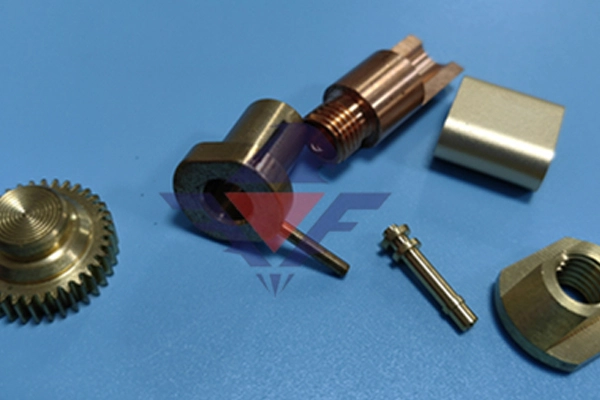
CNC machined brass parts have many functions. Also, brass is one of the easiest metals to machine. CNC machining is perfectly suited for making brass parts. Brass is easy to machine. It doesn’t rust, is corrosion-resistant, has a good surface appearance, and isn’t expensive, making it a practical, standard metal. Common parts made of brass are electrical connectors, terminals for wiring, fluid valves and connectors, etc.
CNC machining brass parts has many advantages, from automating and improving the manufacturing process compared to hand-forming metal parts to reducing the risk of operator error.
If you’re ordering brass machined parts or have quotes from metal shops on custom brass CNC machining - this guide discusses everything you need to know - the materials, processes, and engineering.
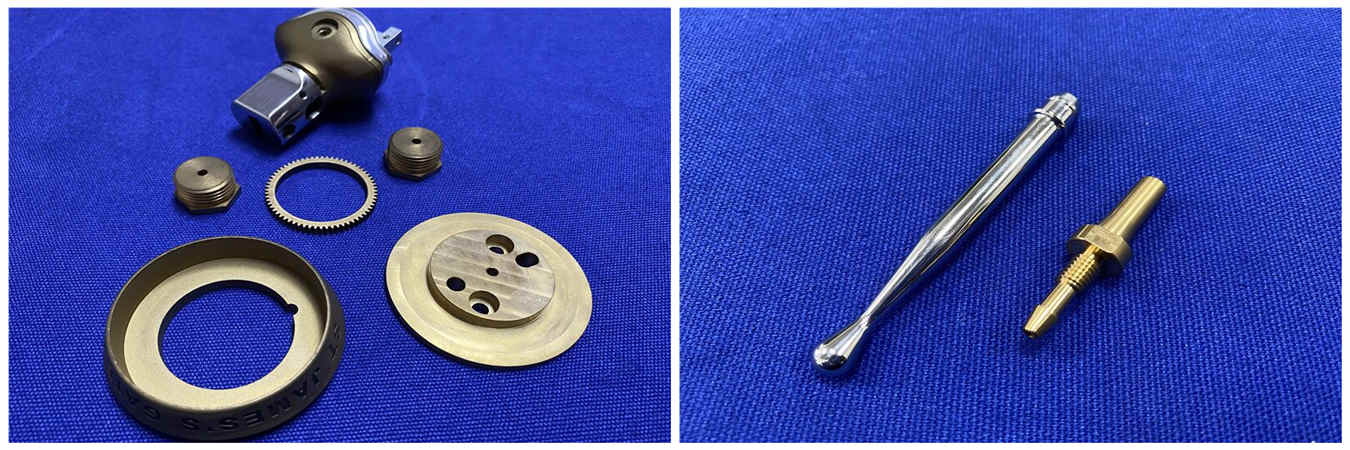
Brass is attractive to the engineer in a number of respects. Brass derives its idealness for CNC machining from a combination of mechanical and chemical properties that put it in the drill-ready category.
Advantages of Brass
Excellent machinability — Brass provides small, manageable chips, producing negligible tool wear for faster cutting speeds
Dimensional stability — Retains tolerances during machining
Corrosion resistance — Resists moisture and chemicals
Good electrical conductivity — Suitable for use in electronic connectors and terminals
Attractive surface finish — Less need for finishing
Low friction coefficient — Good performance in moving assemblies of mechanical parts
CNC machining of brass components is far more cost-effective than turning ferrous metals for the reasons above. For high quality components standing up to tight tolerances, many turn to brass and copper precision machining services for leveraged expertise from skilled providers with dedicated CNC equipment.
Different brass alloys are selected depending on strength, conductivity, and corrosion resistance requirements.
| Grade | Characteristics | Typical Applications |
| C360 (Free-Cutting Brass) | Excellent machinability, smooth finish | Precision fittings, connectors |
| C260 (Cartridge Brass) | Higher ductility, good cold working | Electrical components |
| C464 (Naval Brass) | Strong corrosion resistance | Marine hardware |
| Lead-Free Brass | Environmentally compliant | Drinking water systems |
Engineering Tip:
If your project prioritizes production efficiency and surface finish, C360 brass is often the best choice for brass CNC machining parts.
Brass is widely regarded as an excellent material for machining due to its combination of strength, ductility, and corrosion resistance. Its relatively low hardness compared to steel allows it to be cut, drilled, and shaped with precision tools, making it a favorite in industries requiring intricate components.
For brass machining the processes are the same as for other metals: cutting, shaping, boring, broaching, etc. The operations are performed mostly by specialized power machines. Most of the cutting operations, such as boring and drilling, are done by special power machines, and are usually called machining. For other types of machining besides boring and drilling see the individual sections or visit our Custom machining directory.
It is very easy to machine brass. It is not “hard,” as steel is considered hard; nor is it phosphoric or spring-brilliant. Its tool breeches easily removed. Motor in very modern “reddish” machine has a reverse sticker-sting. Produces a sweet chip.
It depends. B. of C. or pure brass isn’t really all that expensive. Minimum Brass so to say. Quite reasonable. Definitely B. of C. instead of Aluminium so as to avoid being a cheapskate. Rigid Copper really much cheaper. When you sell them for sticking copper coins then certainly can’t complain of £uro Sticky B’sock. Do that for relatives coming over for your twentys run in red chink system! Want Beryllium copper what wickedly expensive!
Modern CNC shops take advantage of different machining methods, depending on the configuration and production volumes of the parts they produce.
Best suited for round components, like:
Bushings
Shafts
Nozzles
Valve stems
Turned parts are guaranteed to be concentric, and to have the best possible surface finish.
Best for geometrically complex parts requiring:
Slots
Pockets
Flat surfaces
Multi-face access
Milled parts are necessary for manufacturing custom housing and structural pieces.
For brass, drilling is possible at very high speeds, which permits excellent removal of material without fill-in, and with little burr formation. Threads may either be machined, or tapped with very little need for secondary finishing.
For parts that are best machined in one operation, and that have very complex geometries, 5-axis machining can confer several advantages:
Fewer setups
Higher accuracy
Faster rates of production
Very complex curved surface
These benefits may be essential to custom brass CNC machining for aerospace or medical applications, and most of the manufacturers that offer such services: manufacture complex brass parts solutions and high volume Swiss machining brass part production.
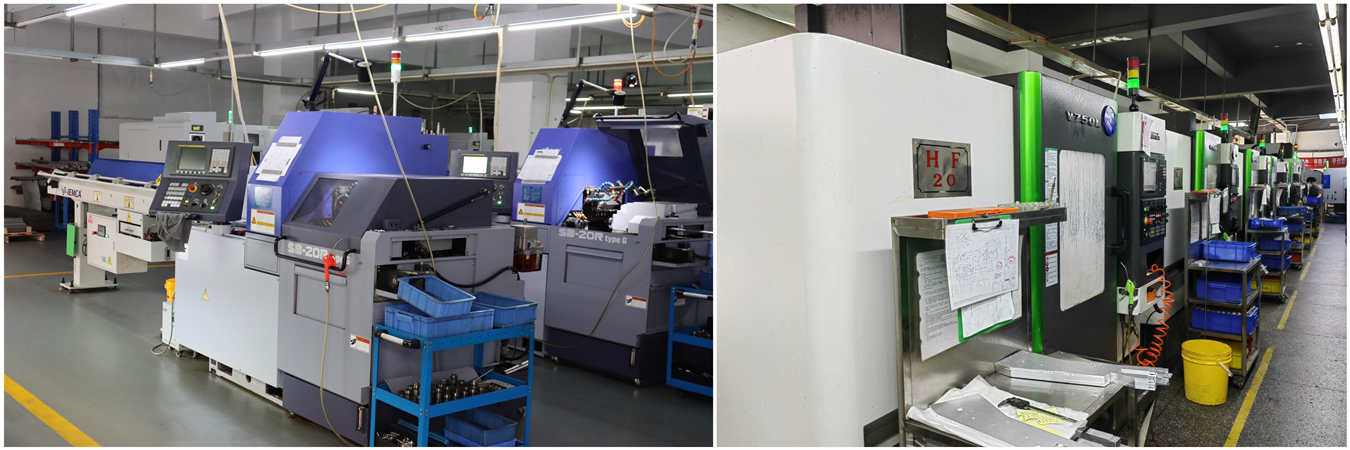
Brass components are present in almost all major industries.
Fluid control systems
Pipe fittings
Valve bodies
Pump components
Terminals
Connector pins
Switch components
Automotive
Sensor housings
Fuel system fittings
Heat exchanger parts
Precision instrument components
Diagnostic equipment fittings
Decorative hardware
Musical instrument components
Watch parts
A company that sells brass and steel machine parts usually services OEM customers that demand strict dimensional accuracy and repeatability.
Proper design will result in parts that are easier to machine, and therefore less expensive to produce.
Reduce unnecessary complexity
Avoid internal sharp corners
Avoid deep narrow pockets
Use only standard thread sizes.
If a wall is too thin it may distort during machining. Maintain a reasonable wall thickness, and use a uniform wall where possible.
The closer the tolerance, the more expensive the part. Be mindful of whether the part needs to be close tolerance or not.
Brass naturally produces smooth finishes, but additional treatments may be required:
| Finish Type | Purpose |
| Polishing | Decorative enhancement |
| Nickel Plating | Improved corrosion resistance |
| Gold Plating | Electrical conductivity |
| Sandblasting | Matte texture |
When cutting this material in CNC brass machines, proper tooling and machining parameters are necessary for efficient cutting.
Recommendations:
CNC machine brass cutting usually is done with carbide tools, with sharp cutting edges necessary to avoid material smearing. High rake angles also are usually desirable to achieve the smoothest possible cutting action.
Coolants
Brass often needs little or no coolant for CNC brass machining, either wet or dry, with dry machining leading to better chip removal and lower costs.
Chips
Short chips, with lower potential to cause entanglements with the CNC bed, result from cutting brass.
Reputable suppliers use stringent systems designed to ensure accuracy, both in actual parts and machined components.
First Article Inspection (FAI)
Statistical Process Control (SPC)
Coordinate Measuring Machines (CMM)
Testing for surface roughness
Certification traceability for material used
Precision suppliers of brass CNC machining services typically use ISO systems for all products with adhered specifications.
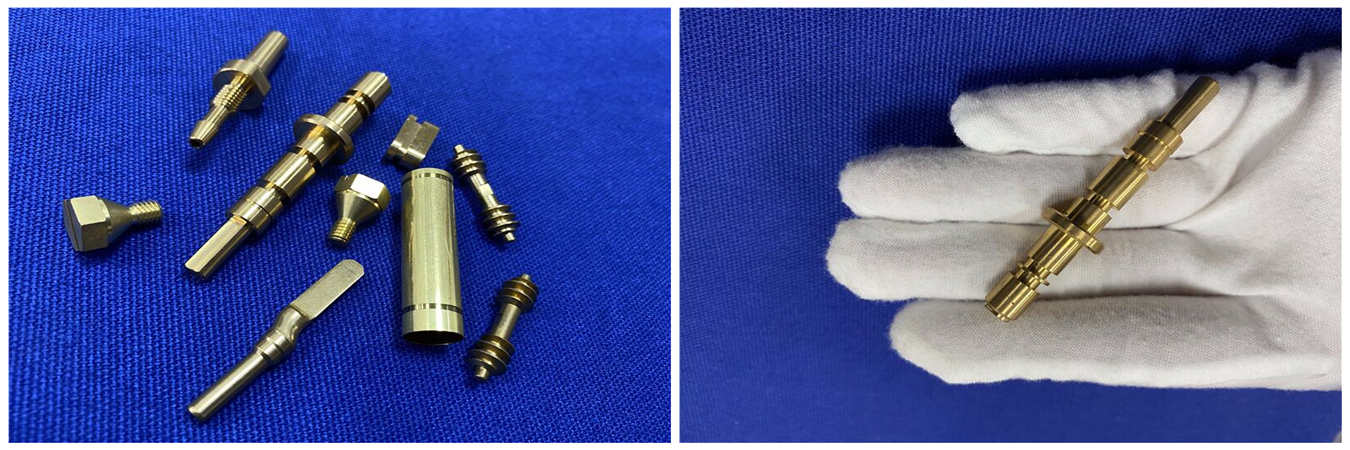
| Property | Brass | Aluminum | Steel |
| Machinability | Excellent | Very Good | Moderate |
| Corrosion Resistance | High | Moderate | Low (unless coated) |
| Electrical Conductivity | Good | Good | Poor |
| Strength | Moderate | Moderate | High |
| Cost Efficiency | High for precision parts | High | Moderate |
Brass offers the best balance between machinability, corrosion resistance, and production efficiency.
Prototype Development:
Quick design iterations
Testing component functionality
Evaluating raw material properties
Short Run Production:
Producing components prior to high-volume production
Gauging market viability
Full Production:
Large automated cycles
Regular output monitoring
Production efficiencies from scale
Working with an experienced manufacturer ensures seamless transition across all stages of the manufacture of machined brass components.
When evaluating suppliers, engineers should consider:
CNC machine types and quantity
Maximum tolerance capability
Multi-axis machining availability
Design feedback
Material selection guidance
Cost optimization suggestions
Lead times
Batch flexibility
Supply chain stability
Certifications
Inspection equipment
Traceability systems
Reliable suppliers specializing in brass machining parts provide both engineering expertise and manufacturing consistency.
Choosing a manufacturer to work with is a critical decision just like your material and machining processes. When tolerance and repeatability is needed, working with a specially experienced provider can greatly lower your risk.
At Falcon, we marry our capable CNC technology with engineering know how. We manufacture quality machined brass components for customers worldwide. Hopefully this lets us know how you feel about things.
✔ Manufacturing expertise in CNC produced brass components
Our engineering team has the experience of thousands of tooling paths and cutting operations to optimise minimum tooling, process parameter definition to get tight tolerances and finishes.
✔ Up to date multi axis CNC equipment
We have modern Swiss machines for give us CNC part production equipment with the capability of very stable repeatable manufacture of complex geometries.
✔ Raw material knowledge and control
Whether working with free cutting brass or modern alloyed copper materials, our team can source exactly the ratio of strength, resistance, and conductivity meets the requirement.
✔ Quality management from start to finish
From MIL spec to commercial parts we follow quality suited to application procedures for material tracing, inspect all processes through manufacture and deliver dimensionally inspected quantity.
✔ Capacity flexibility
Increasing volume, proportionate voltage levels or making rapid prototype quantities to low volume quantities we provide stable manufacturing times.
Companies seeking reliable bespoke brass and copper CNC machining partners, work with Falcon because of our focus on manufacturing precise low margin parts with the engineering ability. Quick lead proposal for quantity, custom information.
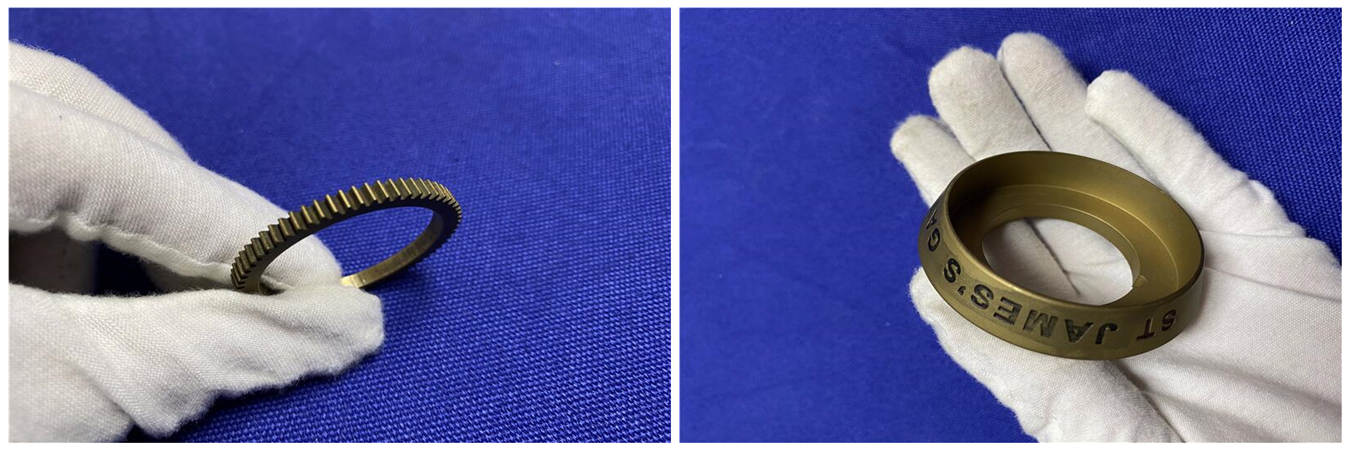
If your bringing a complex design to market, our engineers can ensure you get a reliable provider at the other end, with:
custom CNC brass parts
parts of brass machined to high precision
complex CNC machined brass components
round and squarish prototyping and production quantities of low.
Get in touch and tell how you want a quote done. Let our specialists help realise your design into good parts with high precision.
CNC machining has transformed the manufacture of brass components, allowing them to be both more precise, but also more repeatable and scalable. Whether you need prototype fittings or volume machined precision connectors, brass is one of the cheapest machining materials to work with, and all businesses can save money by working with an expert manufacturer that will deliver consistent accuracy in the timeframes they need.
If your company demands the highest finshes, tolerances and geometic requirements, then contract custom brass CNC machining is the way to go.
Brass is “easier” to machine in most cases, having lower strength, as a result, chip formation is smaller and a faster cutting speed is possible for the same tool wear.
Yes, Brass parts can handle moderate-pressure systems. They can be used for different types of valves, use in fluid control.
Not always, can use different types of plating or polishing as a requirement.
Good, it’s used a lot for connectors / terminals.