English
  日本語
日本語  한국어
한국어  français
  Deutsch
  Español
  русский
  العربية


Jun
09
Engineering Guide: Precision CNC Turning – Machining Brass vs Aluminum for Optimized Swiss Machining
Learn More

Not all machining is created equal. In your applications, what separates a part that “works” from one that “works perfectly” is often just one word: precision.
If you’ve ever received a machined part that didn’t fit correctly, had issue with surface quality, or caused failure after stress tests, then it likely was manufactured with the improper process. In this guide, we will briefly review what precision CNC machining really means, how it is compared with conventional (manual) machining on contrary, and what to look for when you need CNC machining parts service that you can trust.
We will keep the engineering talk easy to understand - Because whether you are a designer, buyer, or business owner, you just want parts that work! On time, and at a fair price. We will start from the basics.
learn more about our precision CNC machining capabilities →
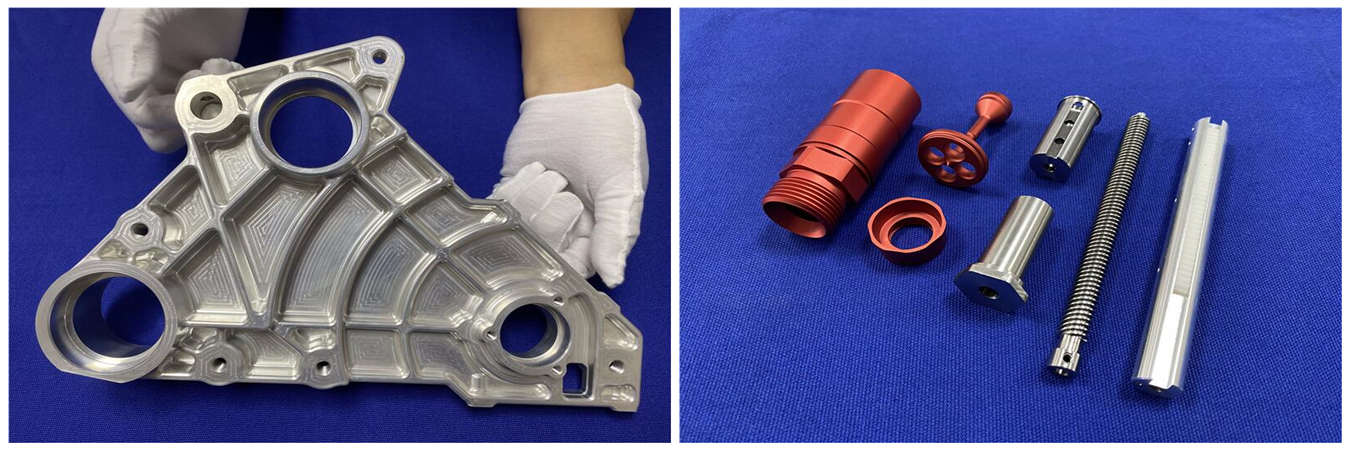
To be precise, CNC machined parts are parts that have been produced using a CNC machine; being a Computer Numerical Control machine, it “knows” how to remove material from the solid block of material, much like carving a statue by chiseling away everything that isn’t the eventual part.
Rather than being manually machined—that is, a skilled machinist moving the tool by hand to create the part—CNC is an automated process, and when the program is done and tested, the machine runs on its own, faithfully producinging part after part right on target.
So where do you find CNC machined parts? Pretty much everywhere:
Medical: Bone screws, surgical instruments, implantable devices
Aerospace: Bracket housings, engine parts, structural fittings
Automotive: Fuel system pieces, sensor housings, transmission components
Electronics: Heat sinks, enclosures, connectors
Industrial: Valve bodies, robotics components, tooling
When you work with a reliable CNC machining service parts provider, you’re not just getting a part, you’re getting consistency, documentation, and a partner who knows how to make your design manufacturable.
Knowing what goes into a CNC machine is part of understanding how it achieves the precision it does. These are the seven key components that work together to create a part that is perfectly accurate.
| Component | What It Does |
| 1. Machine Frame | The heavy cast iron or welded steel foundation that absorbs vibration and keeps everything rigid. |
| 2. Spindle | The rotating assembly that holds and spins the cutting tool. Determines speed and power. |
| 3. CNC Controller | The computer brain that reads G-code and sends movement commands. |
| 4. Servo Motors & Drives | The muscles that move each axis precisely based on controller instructions. |
| 5. Linear Guides & Ball Screws | The precision motion components that convert rotation into smooth, accurate movement. |
| 6. Tool Changer / Tool Turret | The mechanism that automatically swaps tools during operation—critical for complex parts. |
| 7. Coolant System | Delivers fluid to cool the cutting zone, lubricate, and flush away metal chips. |
Each of these pieces stands behind the CNC machine’s ability to hold tight tolerances. When you buy precision CNC machine parts, it’s nice to know the machine producing them has this kind of design and structure.
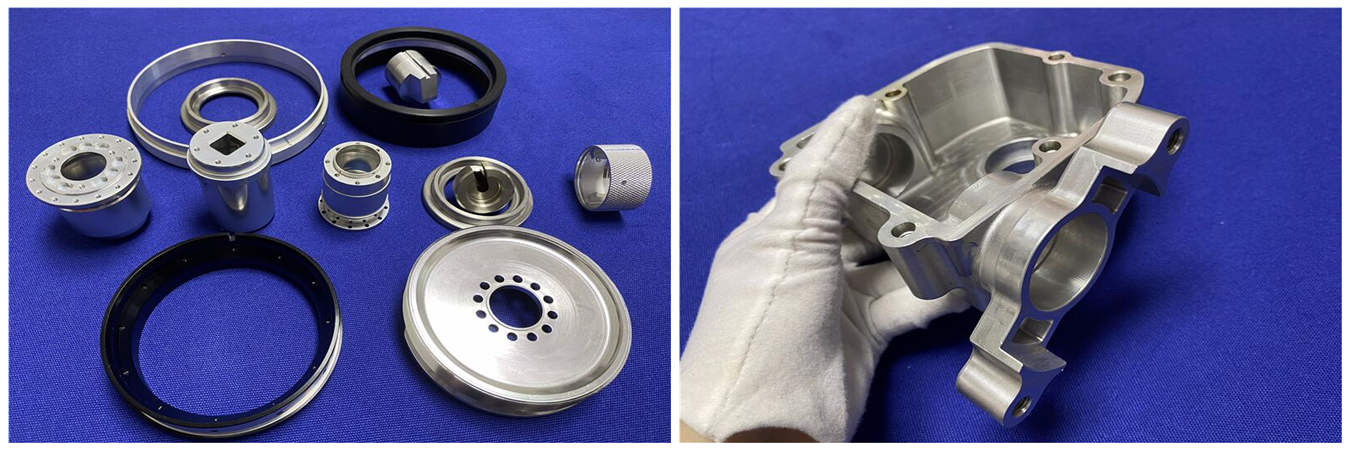
So what actually separates precision CNC machining from conventional manual machining? Let’s break it down.
| Factor | Conventional (Manual) Machining | Precision CNC Machining |
| Control | Handwheels and operator skill | Computer-controlled with programmed G-code |
| Accuracy | Depends on operator; typically ±0.005 to ±0.010mm | Consistent ±0.0005 to ±0.0001 inch or tighter |
| Repeatability | Varies between operators and shifts | Every part identical—program runs the same every time |
| Complexity | Limited to simpler geometries | Complex 3D contours, undercuts, multi-axis features |
| Labor | One operator per machine; skilled labor throughout | One operator manages multiple machines; focus on programming and setup |
| Volume | Best for one-offs or small batches | Efficient from prototypes to high-volume production |
| Lead Time | Quick for simple parts; slower for complex | Fast after programming; automated runs reduce cycle times |
When do you choose conventional? If you need a simple bracket, a repair part, or a one-off piece and you have a skilled manual machinist available, it can be cost-effective.
When to choose precision CNC? When you need:
Tight tolerances (parts that must fit together precisely)
Complex geometries (curves, pockets, threads, undercuts)
Multiple identical parts (consistency matters)
Materials that are difficult to machine (stainless, titanium, Inconel)
Traceability and quality documentation
If your project falls into any of these categories, lets work with the experienced CNC machining parts service manufacturers.
Learn more about Falcon CNC Swiss precision CNC machining technologies →
When we say “precision,” what do we actually mean? Let’s put numbers to it.
| Application | Typical Tolerance | What It Means |
| General industrial parts | ±0.005 to ±0.010mm | Standard fit—works for brackets and basic housings |
| Precision mechanical parts | ±0.001 to ±0.002mm | Good for bearing fits, gear housings, valve bodies |
| High-precision (medical, aerospace) | ±0.0005 to ±0.0001 inch | Critical components like implants, fuel system parts |
| Ultra-precision | ±0.00005 inch or better | Optical components, semiconductor tooling |
To give you a sense of scale:
A human hair is about 0.003 inches thick
A sheet of paper is about 0.004 inches
Our standard precision capability is ±0.0005 inches—that’s about 1/6 the thickness of a human hair
It’s not just the machine but the combination of:
Rigid machine construction (cast iron frames, quality ball screws)
High quality spindles that run true with as little runout as possible
CNC controllers with closed-loop feedback
Programs for the CMM that have been properly optimized for accuracy
Tooling and other workholding that keep the part stable
Inspection equipment (CMMs again) that verifies every critical dimension
When you partner with a shop that handles CNC precision machining parts manufacturers work, you’re paying for all those things—not just machine time.
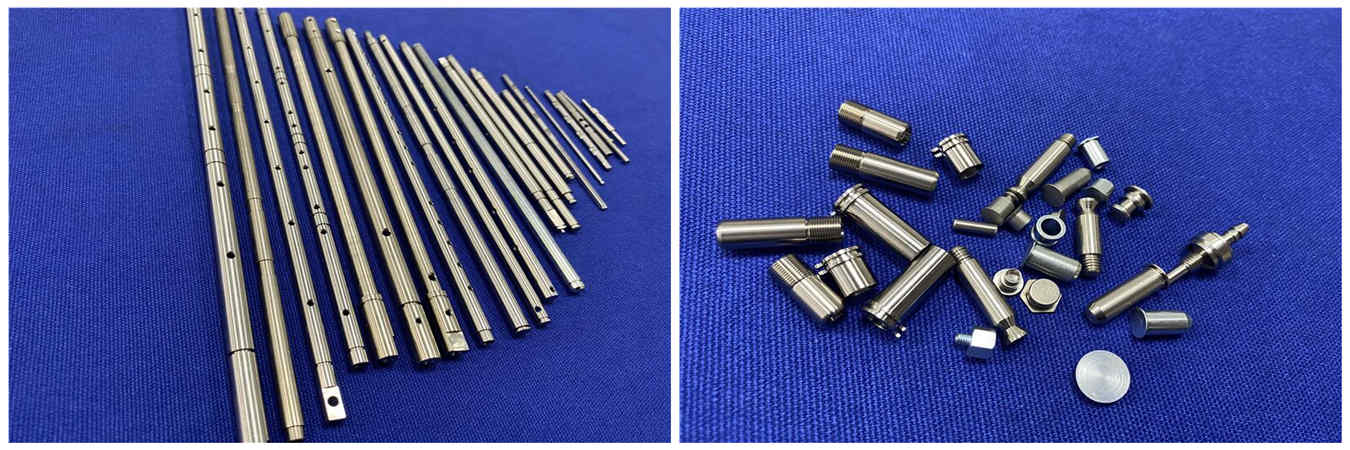
This is the question everyone asks. The honest answer: it depends. But let’s break down what drives cost so you know what to expect.
| Cost Factor | What Influences It |
| Material | Aluminum is affordable and fast to cut. Stainless steel, titanium, and exotic alloys take longer and cost more. |
| Complexity | More setups, tighter tolerances, and intricate features mean more machine time. |
| Quantity | Setup time spreads across parts—higher volume = lower per-part cost. |
| Lead Time | Rush orders typically cost more (but can be worth it to hit a deadline). |
| Finishing | Anodizing, passivation, plating, or silk-screening add cost but often improve durability or appearance. |
These are rough estimates to give you a sense—actual quotes depend on your specific part.
| Part Type | Quantity | Typical Per-Part Cost |
| Simple bracket (aluminum, no tight tolerances) | 1-10 pcs | $50–$150 (setup dominates) |
| Same bracket | 100-500 pcs | $10–$25 |
| Complex medical or aerospace part (tight tolerances, titanium) | 1-10 pcs | $200–$500+ |
| Same complex part | 100-500 pcs | $30–$80 |
| High-volume simple part | 1,000+ pcs | $3–$15 |
To receive the best quote possible, provide:
A 3D CAD file (ideally in STEP or IGES format)
A 2D drawing with tolerances and indications of materials and finishes
Your target quantities for the run
Any special requirements (i.e. certifications, packaging, delivery time)
Many China CNC machining service CNC turning parts suppliers (Falcon CNC Swiss included) offer free DFM feedback—they’ll look over your design and tell you how they think it could be made at lower cost before quoting.
Knowing the names behind the machines gives you a broader idea of what’s possible. The top three worldwide are:
DMG MORI – A German-Japanese behemoth known for high-end multi-axis machining centers and turning centers. Their machines are found throughout aerospace and medical manufacturing.
Haas Automation – The American brand that dominates the job shop market. Reliable, affordable vertical machining centers and lathes.
Mazak – The Japanese manufacturer known for sophisticated multi-tasking machines that combine turning and milling and other operations in one setup.
For small, complex, very-precise parts, Swiss type lathes are the best choice. Citizen, Star, and Tsugami are big names in Swiss-type lathes. They use a guide bushing to support the workpiece right at the place where it is being cut, eliminating any chance for deflection and allowing tolerances down to ±0.0001”.
At Falcon CNC Swiss, our shop floor includes these high-end machines simply because we do the kind of precise work that medical, aerospace, and electronics customers expect. When you need precision aerospace CNC machining parts manufacturers, you want a shop that puts this kind of investment into its goods.
Explore our Swiss machining capabilities.
Now that you understand what precision CNC machining is and what it costs, how do you pick a partner?
What to Look For
| Criteria | What to Ask |
| Capabilities | Do they have the right machines (milling, turning, Swiss, 5-axis) for your part? |
| Quality Systems | Are they ISO 9001 certified? ISO 13485 for medical? IATF for automotive? |
| Experience | Have they made parts for your industry or with your materials? |
| DFM Support | Will they review your design and suggest improvements before quoting? |
| In-House Finishing | Do they do finishing (anodizing, passivation) in-house, or outsource it? |
| Communication | Are they responsive? Do they answer technical questions clearly? |
We’re not just a machine shop—we’re a supplier of CNC machining parts service that partners with you from design to delivery.
Advanced equipment: Swiss 7-axis systems, multi-axis CNC turning and milling, all under one roof
Tight tolerances: We hold ±0.0001 inch for critical features
Certified quality: ISO 9001:2015 certified with full traceability
In house finishing: Anodizing, bead blasting, passivation, silk-screening—no outsourcing delays
DFM engineering: Our team reviews your design early to optimize for manufacturability and cost
Scalable: From 1 prototype to 50,000+ production parts
Industries served: Medical, aerospace, automotive, electronics, industrial
We’ve earned our spurs as CNC precision machined parts manufacturers by doing one thing well: Making quality parts on time, with no surprises. Explore more information about Falcon CNC Swiss advance precision CNC machining services →
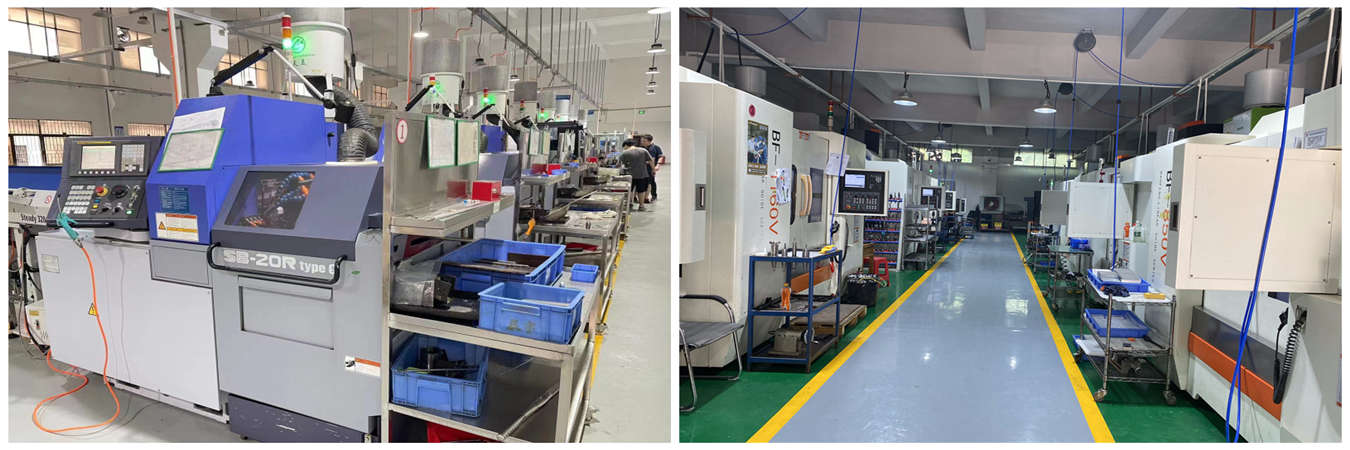
Precision CNC machining isn’t just about tighter tolerances. It’s about parts that fit the first time, assemblies that perform reliably, and supply trains you can count on.
No matter if you need one single prototype or an extended run of parts, picking the right service partner makes all the difference. At Falcon CNC Swiss we combine cutting-edge equipment, engineering know-how and a commitment to quality that’s literally built into every part we ship.
Upload your CAD file for a free DFM analysis and 24-hour quote
Contact our engineering team to talk through your requirements
Request a quote and let us show you what precision manufacturing means
Click here to get started on your precision CNC machining parts →
Turning works with a rotating workpiece and stationary tool; milling is the other way round. Turning is ideal for cylindrical parts, such as pins and bushings, whereas milling is used for parts with flat areas, slots, pockets, and more complex 3D geometry. Many precision parts use a combination of the two, and so do we.
Absolutely. Without tooling fees, is perfect for prototypes and one-off parts. We do this regularly for start-ups and R and D squads.
A lot! 6061, 7075, 5052 aluminium; 303, 304, 316 stainless; grade 2, grade 5 (Ti-6Al-4V), grade 23 titanium; and Brasses and coppers. We also cut PEEK type of engineering plastics, plus: Delrin, Nylon, Ultem.
Prototypes: 3 – 10 working days based on complexity. Production orders: we’ll agree timelines with you based on the specific quantity and requirements.
We do—all in-house: Anodising of various hues, bead-blasting, passivation (for stainless), polishing, silk-screening for logos/labels.