English
  日本語
日本語  한국어
한국어  français
  Deutsch
  Español
  русский
  العربية
Jun
Learn More
04

In the eternal quest for manufacturing perfection, where tolerances are measured in microns and failure of a product is not an option, there are many technologies that one would consider special. Among them, Swiss screw machining is probably the highest pinnacle of precision engineering. If you are a player in anything involving medical devices, aerospace, or electronics, and are confronted daily with the problems of producing small, intricate parts with the greatest of precision, you must familiarize yourself with this process.
This treatise provides a complete understanding of Swiss type machining. We will see what it is, how it is fundamentally different from conventional CNC machining, and more importantly, why the services of a Swiss screw machine shop may be the most strategic decision you make for your next project.
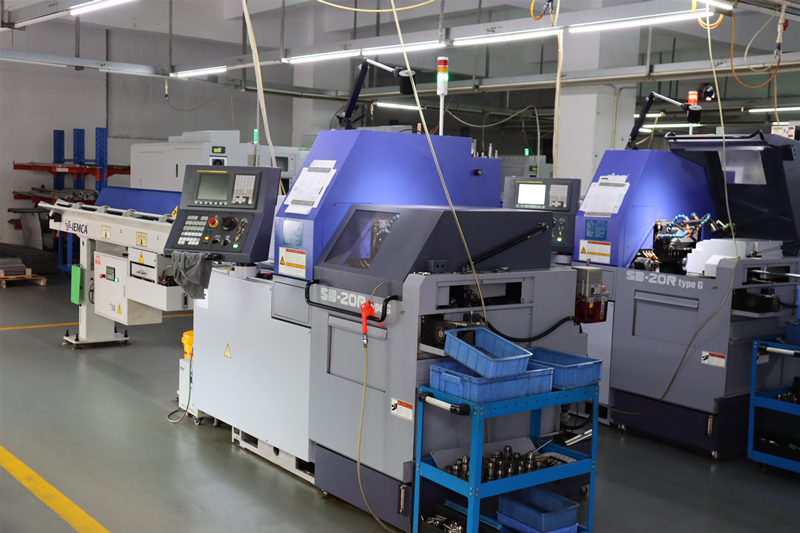
To understand what Swiss machining is, we must use a history lesson. Developed in the 19th century originally for production of precise parts within the confines of the Swiss watch industry, the name is derived from the necessity of producing very cuniform, slender, intricate parts with extreme precision. The old time watch lathes had great problems with these type components because of tool pressure and material deflection.
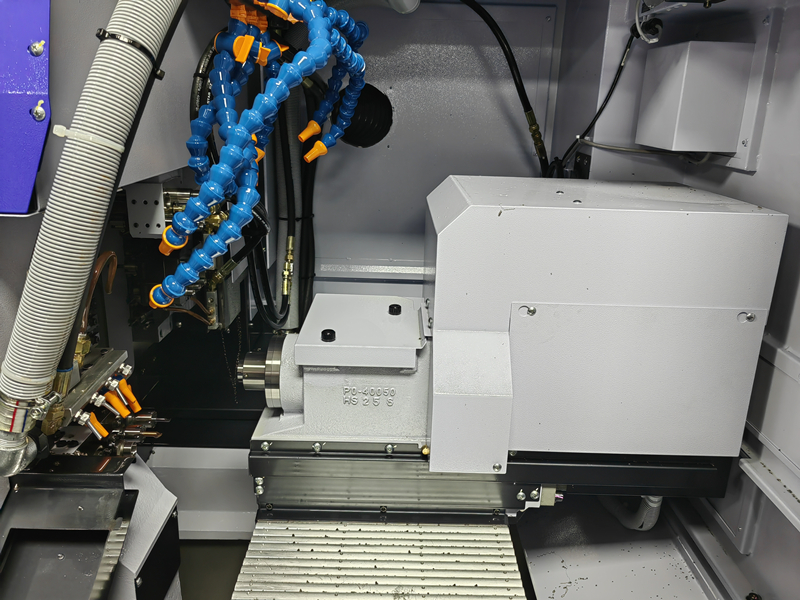
The answer very simply is the Swiss type lathe, or, Swiss automatic lathe. The principle which sets this apart from the old traditional lathes is the guide bushing. In a regular lathe, the piece is fixed and the tools move on it. Whereas in a swiss machine, the bar stock material (up to 32mm in diameter generally) is fixed firmly by a guide bushing, and the whole headstock moves back and forth in the Z plane. The cutting tools are mostly non-rotating or move radially, and work very close to the guide bushing.
This “sliding headstock” designed machine gives unequaled support to the workpiece right at the cutting edge. The result is that even ni long slender pieces, there is no whip, or vibrations induced, or material deflections that would destroy precision with an ordinary lathe. The principle here used is the driving force of Swiss machining precision.
The term, Swiss Screw Machining is the present rethinking of this original concept. While the basic principle has not changed, the machines of the present day are wonders of technology. They are not simply lathes, but multiple use CNC powered engines.
Thus we must ask the question, What is Swiss screw machining today in the 21st century? Simply explained, it is a high precision, CNC turning operation, performed by means of a swiss type CNC lathe, which incorporates often times live tooling and secondary operations. The components of the present day Swiss screw machine services world consist of:
The Guide Bushing: This is still the heart of the concept. It supports the bar stock firmly, directly back of the cutting tools, virtually eliminating vibration and push off of the material, which is necessary to maintain the tight tolerances possible.
CNC Control Technology: Modern machines are fully controlled through computers, allowing for the programming of very complex geometric figures and repeatable accuracy to ±.0002 or better.
Live Tooling: This is the part that really made the difference. In consisting of simple turning tools, live tooling is rotary tools (such as end mills and drills) driven by independent motors. This enables milling, cross-drilling, slotting, etc., in the same machine and in one set-up. This capability is generally referred to as Turning-Milling, or CNC Swiss turning.
Multiple Axes: The more advanced Swiss machines often operate on 5, 7 or more axes, allowing the tools to approach the workpiece from virtually any angle with no refinishing or refixturing required.
Automatic Bar Feeders: These allow for continuous, unattended operations, thus making Swiss machining far more efficient in high volume programmed demanding production runs in screw machining of precision parts.
The "screw" included in the terminology is a historical and nomenclatrix reference to its original usage in the making of screws and other fasteners. It has grown, however, into a field in which an incredibly broad range of complex part geometries and shaft-like components are made.
But why therefore a Swiss machine instead of a conventional CNC lathe or mill? The decision often lies in the nature of the part geometry, tolerances required, and volume.
| Feature | Swiss Screw Machining | Conventional CNC Machining |
| Part Support | Guide bushing supports material at the cut point. | Workpiece is held by a chuck or collet, often far from the cutting tool. |
| Ideal Part Shape | Long, slender, complex parts with tight tolerances. | Shorter, stubbier parts, or simpler geometries. |
| Material Deflection | Virtually eliminated due to bushing support. | Can be a significant issue, especially with long, thin parts. |
| Setup & Operations | Multiple operations (turning, milling, drilling) in one setup. | Often requires multiple setups on different machines. |
| Efficiency For High Volume | Extremely high due to continuous bar feed and single-setup processing. | Can be efficient, but may require multiple machines and operators. |
| Tolerances | Exceptional ability to hold extremely tight tolerances. | Capable of tight tolerances, but may struggle with complex, slender parts. |
This "comparison" shows that it does not mean therefore necessarily that Swiss machining is "better" than the conventional, rather it is in the nature of solution to specific requirements. But in parts wherein the Machining of precision small parts is absolutely necessary, Swiss machining often is the undisputed winner.
The technical details have been outlined, but what do they mean from the standpoint of your business, and products? The useful results to be obtained, which normally cause companies to seek expert Swiss screw machining services are as follows:
1. Unmatched Precision and Tolerances: By utilizing the guiding bushing system, tolerances are contained, which are frankly not possible to attain satisfactorily by other means given similar part geometries. This is crucial to industries such as medical device machining and aerospace component machining where a micron may be the difference between life and death or the success of a mission. We specialize in high tolerance Swiss Machining because of its endless applications.
2. Preferential Surface Finishes: Since the workpiece is rigidly supported, vibration is held to a minimum. This enables higher R.P.M.'s and more aggressive cuts to be made, and results in surface finishes of extraordinary smoothness from the machine itself too, often resulting in the secondary finish being considerably reduced, or eliminated.
3. Unrivaled Efficiency for Complex Parts
The ability to turn, mill, drill, and tap since one clamping is a wonderful boon. The "done in one" philosophy allows:
Cycle Times: No time is lost transporting parts between machines.
Labor Costs: One machine does the work of a number of machines.
Setup Errors: Every time a part is refixtured there is the possibility of error. A single setup means perfect feature to feature accuracy.
This makes Swiss machining the solution for complex miniature parts manufacturing.
4. Great for Long, Slender Parts
This is the typical strength of the process. If you must machine a part whose length to diameter ratio is high, a typical lathe will ride on the chatter and suffer from deflection. A Swiss machine does not have any such problems making it ideal for precise shaft production and medical implant machining.
5. Less Material Waste
The closeness of the tools to the guide bushing means that less material is wasted in "over hang". When coupled with the extreme accuracy of the process this leads to more efficient use of the material and lower costs per part, especially when working with expensive materials, e.g. titanium or medical grade plastics.
6. Cost Effectiveness for High Volume Production
While the initial setup and programming work with a Swiss screw machine is more intense, the per part cost is fantastically low when working in high volumes. The speed, the proficiency of unattended operation, and minimization of secondary operations all confront the economic superiority of high volume precision screw machining runs.
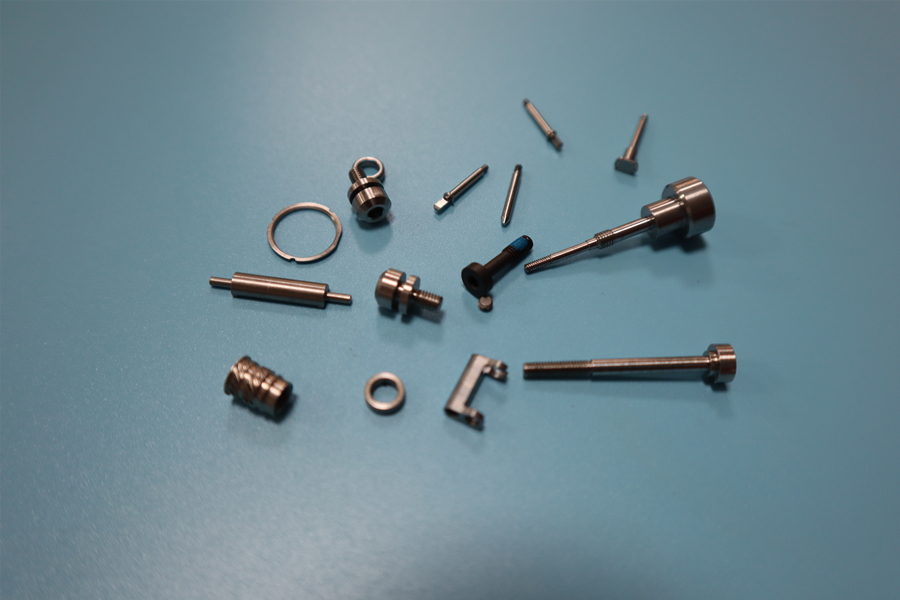
The unique abilities of Swiss type machining make it necessary across the fields of high technology.
Medical and Surgical: This is a primary market. Applications include surgical instrument components, arthroscopic device parts, dental implants, bone screws and intricate component parts for drug delivery systems. The use of biocompatible materials and perfect execution is de riguer.
Aerospace and Defense: This dependence upon Swiss machining is for critical components, requiring avionics connectors, sensor housing, fasteners and fuel system components, where reliability and low weight is paramount.
Electronics and Telecommunications: The demand for miniaturization makes Swiss machining ideal for the making of connector pins, shielding parts, heat sinks and other tiny, complicated parts for consumer electronics and communication hardware.
Automotive: Especially in high performance and racing applications, Swiss machines produce durable, accurate parts for fuel injector components, transmission shafts and sensor probes.
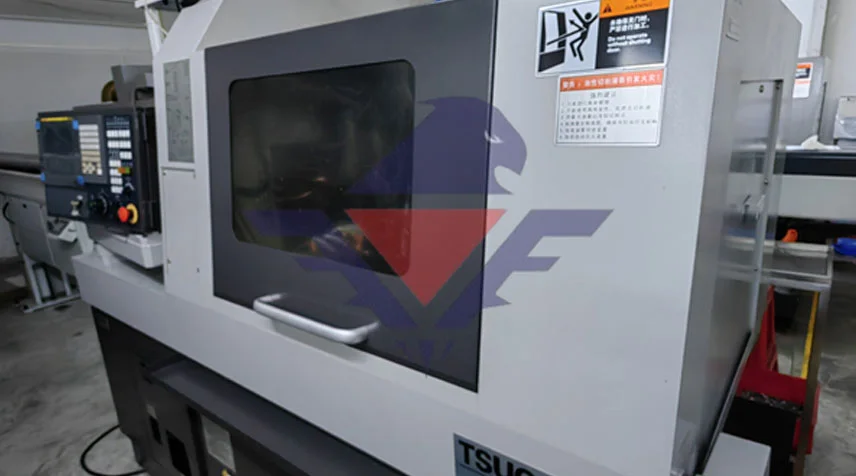
At Falcon CNC Swiss we are more than just a machine shop. We are your dedicated partner in precision. Our state of the art facility is equipped with the latest Swiss type CNC lathes incorporating live tooling and multi or axis abilities to accommodate your most difficult projects.
We possess the knowledge necessary to satisfy the requirements of a great variety of materials ranging from stainless steels and titaniums to exotic alloys and engineering plastics. We are thoroughly conversant in the requisite demands of precision CNC turning and we are not just after parts for you, we are after solutions to foster your own growth forward into new avenues of innovation.
Let us help you in determining if Swiss screw machining is the best answer for your next component. Our engineers are available to evaluate your designs and to provide you with a thorough and competitive quote.
Contact Us Today for a free project consultation or if you would like a competitive quote for our Swiss machining services. Let's build the future, precisely.