English
  日本語
日本語  한국어
한국어  français
  Deutsch
  Español
  русский
  العربية


Jun
Learn More
09

If you’re buying parts you’ve probably hit a big fork in the road: standard CNC or precision CNC Swiss?
Though they’re both in the subtractive manufacturing family, the end result for small, intricate components can be very different.
Pick the wrong one and you’ll get parts that don’t pass tolerance, excess cycle times, and an overblown budget.
Here we’ll explain the technical differences through an engineer’s lens, how Swiss machining works, when to use Swiss over conventional CNC, and why it’s become the go-to for industries like medical devices, aerospace, and electronics. By the end you’ll know which path to take for your next project.
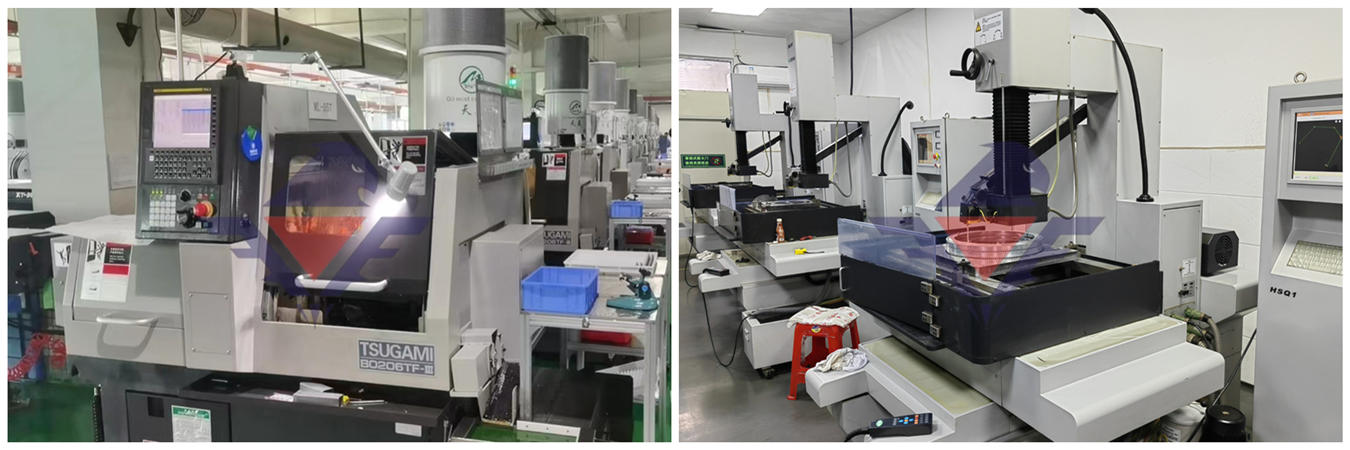
Precision CNC Swiss machining is a specialized manufacturing process designed to produce small, complex, and high-precision components with exceptional efficiency. Originating in the Swiss watchmaking industry, this method was developed to create tiny, intricate gears and screws with tolerances that standard lathes couldn’t achieve.
Today, precision Swiss lathe machining is used globally to manufacture everything from bone screws to aerospace connectors. The core principle remains the same: support the material as close as possible to the cutting point to eliminate deflection.
A Swiss lathe is easy to recognize: look for the guide bushing. Where a typical CNC lathe would hold the material in a chuck and allow that material to extend unsupported as necessary, the Swiss machine feeds the bar stock through a guide bushing to support it just millimeters away from the cutting tool engagement.
Material Movement: The bar stock moves around the Z-axis through the guide bushing as it rotates.
Tool Movement: The cutting tools remain in the same position on the Z-axis, performing cuts on the supported material as necessary.
Simultaneous Operations: Because Swiss machines are often equipped with multiple spindles and tool posts, companies can cut with several tools simultaneously.
For turning long, slender parts, it’s difficult to overstate the importance of this setup. If you’re searching for a precision swiss machining supplier who utilizes these principles, deep knowledge of process combined with modern equipment will serve you best. Our comprehensive CNC Swiss machining services are designed to maximize the benefits of this technology.
To see why Swiss machining is unsurpassed for certain types of parts, we must compare it directly with conventional CNC turning and milling centers.
Here we see the engineering trade-offs:
| Feature | Precision CNC Swiss Machining | Standard CNC Machining (Lathe/Mill) |
| Material Support | Guide bushing supports stock within 5-10mm of the cut, virtually eliminating deflection. | Chuck or vise supports one end; long unsupported sections are prone to vibration and push-off. |
| Ideal Part Geometry | Long, slender, complex parts (shafts, pins, medical instruments). High length-to-diameter ratios (L/D 10:1). | Short, stout, or block-shaped parts. Parts requiring large-diameter features or heavy material removal. |
| Tolerances and Precision | Capable of ultra-tight tolerances (±0.0002” / 0.005mm) and superior surface finishes (Ra < 0.4µm). | High precision achievable, but tolerance control degrades as part length and complexity increase. |
| Cycle Time and Efficiency | Extremely high. Multiple tools (main spindle, sub-spindle, live tooling) work simultaneously. Complex parts are completed in one setup. | Typically requires multiple setups or secondary operations (milling after turning), leading to longer overall lead times and potential alignment errors. |
| Batch Size Suitability | Excels in mid-to-high volume production due to faster cycle times, though modern Swiss machines are increasingly flexible for prototypes. | Highly efficient for low-volume prototypes and large, simple parts. Ideal for high-volume when part geometry is not slender. |
To learn more about our capabilities, check out our CNC Swiss Machining Services page.
This is a common question. In fact, in comparison to the basic lacquitized CNC machinist, the only sweet (actually in French) question is: “What’s different about the Swiss man (it probably goes without saying that Swiss are all male which may be what makes them so unemotional of course)? Swiss Machinists as it turns out can be smart buggers but then we knew that.
They install and operate the sub-minimally-frictionified guide bushing (as well as the rest of the merry-go-round). They synchronize main and sub-spindles; control the feed of long bar stock; and program the movement of tools on simultaneous paths.
Because most Swiss machines are unattended for hours and require considerably more setup time than a conventional CNC, the Swiss machinists knows a whole other layer of precision micro Swiss machining dynamics, along with how to control automated handling of parts and predict the wear of cutting tools.
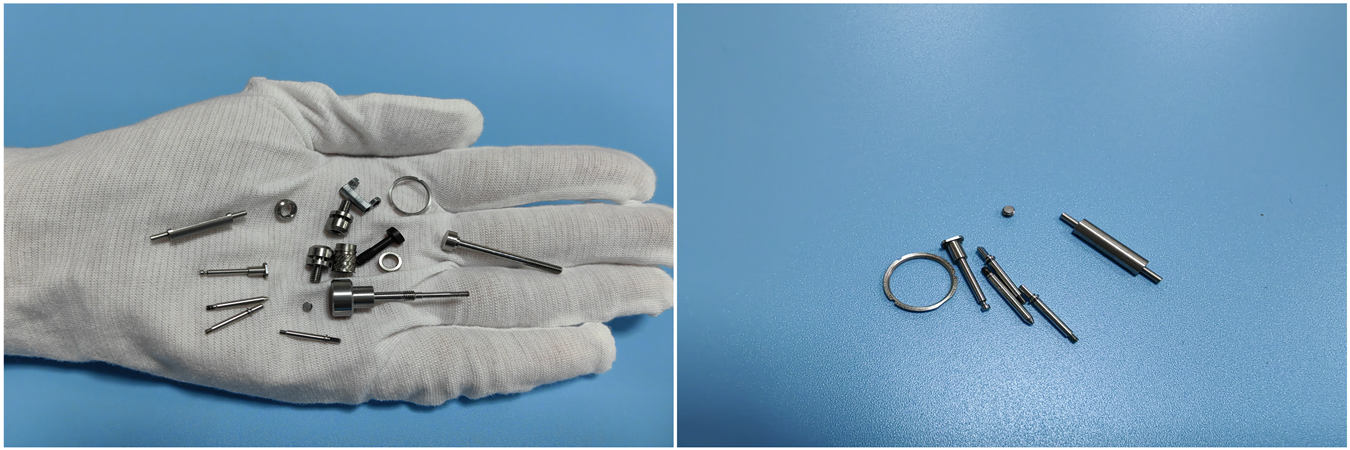
How many times have you heard engineers ask “why can’t we just use a standard CNC for this part?” And the answer is yes for many parts, but when it comes to complex Swiss machined parts, the best answer is often “swiss.”
Your design has cross-holes, threads, and slots on a shaft smaller than pencil lead. Conventional lathe tooling can only compensate for so much part deflection when trying to cut them that small. Swiss machining supports the material so close to the tool that precision micro Swiss machining becomes not only possible, but highly repeatable.
Less vibration means better surface finishes. That’s important for items such as hydraulic valves, implants, etc. where surface roughness can affect not just operation of the valve, but also the biocompatibility and wear effect the parts will see on the patient. We routinely hold tolerances that would be a heroic feat on a standard CNC lathe, using our custom precision Swiss machining. Every time.
Perfect, now you’ve got your shape, but now you need to handle the part so you can transfer it to a milling machine to cut your secondary feature. A swiss machine with live tooling and a sub-spindle can turn, mill, drill, and even back-work on one machine cycle. Less handling, less human error, more time available at the bottom of the pocket.
If your project revolves around precision small parts machining, to consolidate and do everything in one setup is a big timesaver (and cache-saver as well.). For an oem swiss machining services provider, that’s standard.
Therefore having that guide bushing will allow you to machine longer length of cut and utilize your material more efficiently, as opposed to just sticking out longer. That’s important when working with tricky alloy materials like titanium, stainless steel 316LVM, and Inconel.
The specialized capabilities of Swiss machining are required in a number of sensitive industries. By using a certified Swiss machining supplier, you guarantee that your parts are produced to all necessary regulatory and performance specifications.
Medical Industry: Surgical instruments, bone screws, dental implants, spinal rods. Materials are generally biocompatible and of absolute traceability.
Aerospace: Connector pins, sensor housings, hydraulic components and fasteners with lightweight, high-strength materials.
Automotive: Fuel injector components, transmission shafts, ABS sensor components needing high wear resistance and consistent production.
Electronics: Micro connectors, shielding components and battery terminals for consumer electronics and telecommunications.
Defense and Industrial: Firearm components and fluid power fittings, specialized fasteners.
For these sensitive areas, cooperation with an Iso certified swiss machining company is essential. Certifications such as the ISO 9001, and aerospace and AS9100, or medical and ISO 13485, show commitment to the necessary quality systems and process control.
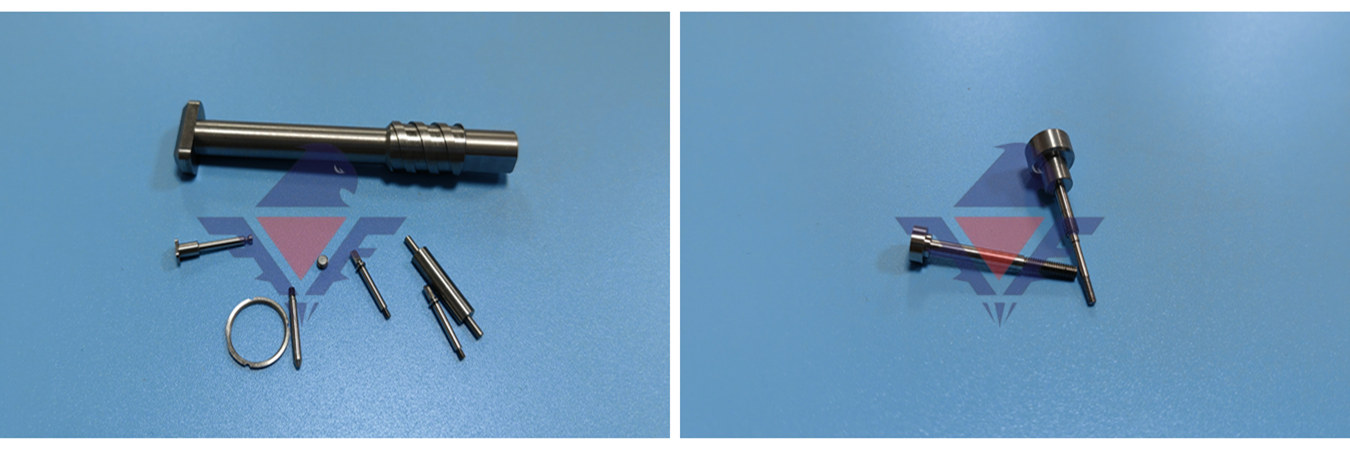
A common roadblock we encounter is cost. Yes, Swiss machines usually have a higher hourly rate than standard CNCs, but that doesn’t tell the whole story. Assessing cost based simply on machine hour rate is incomplete. What you want to know is the total cost per part.
Pricing for custom Swiss machining supplier services is influenced by:
Part Complexity: More operations and tighter tolerances demand longer cycle times—but may also allow you to cut out secondary operations.
Material: Harder exotic materials will require lower speeds, special, possibly fragile tooling and care in chip control.
Volume: Swiss machining is most advantageous for production runs (typically 500+ part quantities), but modern machines are making short runs more desirable.
Setup Time: Initial machine set up still involves more programming and tooling prep than standard CNC, but the amortized cost over the larger batch lowers the cost per unit.
Swiss machining is most cost-effective for production runs (typically 500+ parts), though modern machines have made short runs more viable. For a precise engineering details, get more information on our precision CNC Swiss machining service page →、
Another frequently-asked question. “How much does a Swiss CNC programmer make?” which speaks to the challenge of putting together the two-part Swiss operation. In the US these skilled Swiss CNC programmers typically make between $65k and $95k+, with top pros raking-in six figures.
Just a quick note if you’re wondering about the name. This technique began in Switzerland in the late 1800s to manufacture precision components for watches. Early Swiss-type screw machines (also known as “Swiss automatics”) were designed to guide the material through a rotating bushing. The name has stuck since, and today, even though the machines are CNC-controlled and built all over the world, “Swiss machining” still means high-precision, high-volume work of small complex parts.
Choosing a precision Swiss machining supplier involves multiple factors.
Here are a few to consider:
Equipment Capabilities: Do they have modern multi-axis Swiss lathes? What is the range of materials (and diameters and lengths) their equipment can accommodate?
Quality Certifications: Are they an iso certified swiss machining company? Different workpieces require specific certifications, so if your parts are for medical or aerospace uses, be sure to ask for related certifications.
Experience with Difficult Materials: Have they successfully machined titanium, stainless steel, or medical-grade polymers?
Engineering Support: How involved are they? It is best if they can work with you for design for manufacturability (DFM) feedback. Getting your issues handled in the engineering phase can save significant expense later on.
Scalability: Can they operate effectively for both prototype and full-scale production runs?
Falcon CNC Swiss can combine advanced precision Swiss lathe machining capabilities with a quality commitment that meets even the most demanding specifications. If you are seeking a Swiss precision machining quote for either a complex prototype or high-volume production run, please reach out to our team for any engineering assistance you require.
Ready to optimize your precision parts?
Reach out to us if your current machining partner is having trouble with tolerances, timing, or complexity; the Swiss advantage may be for you! Have an engineer look over your prints, and discuss your project or request a quote from us.
The main difference is in how the material is supported while it is being cut. With standard CNC turning, the bar stock is secured by a chuck at the back end, and it can extend unsupported several feet in front of the chuck, which causes deflection or vibration—especially when the part to be machined is long and slender. In precision CNC Swiss machining, the material is fed through a guide bushing that supports the material only millimeters from the end of the cutting tool. That support prevents deflection during machining, thus achieving much desired tighter tolerances, better surface finishes, and the ability to machine parts with high length to diameter ratios (L/D 10:1) in one setup instead of two or more.
Parts that are small, complex, and, probably of most importance, a high degree of precision is needed to machine them are well suited for CNC Swiss machining. Common parts include:
Medical bone screws and cutting instruments for use in surgery
Fasteners used in aerospace applications
Micro shafts and pins as well as valve components
Connectors for electronic usage as well as battery terminal ends
Fuel injection parts for automotive use
If your part is slender, has cross-holes, or threads as well as the need to use for secondary operations, Swiss machine is the machine for the job.
How you define cost determines the answer to that question, but while Swiss machines have a higher operating rate per hour, overall cost for parts tends to be lower using the Swiss machine method of precision machining complex components, because:
Multiple operations (turning, milling, drilling) can be performed in one setup instead of with secondary operations in subsequent setups and leads to better control of precise tolerances.
Parts that must be rehanded and further processed won’t go through as many steps.
Guide bushing setup wastes less material than typical lathes.
Scrap rate doesn’t run as high due to the process being more stable.
If you’re producing parts in high lot runs, or complex shapes and configurations, Swiss machining typically has a lower total cost than running the same part across several standard CNC machines.
Questions to ask yourself are:
Does my part have the ratio of more than 4:1 of length to diameter?
Are there features is several sides that will require a second setup?
Is the tolerance tighter than ±0.001” on a slender line?
Is the material expensive (titanium, stainless, or PEEK for instance), where scrap cost counts?
Does the part require a fine surface finish for looks as well as wear?
If you answered “yes” to any of those questions, check with Precision Swiss machining suppliers to evaluate if the process is right for your part.
Most reputable precision CNC Swiss machining suppliers are willing to do a design for machinability (DFM) review to help you with the determination.
For regulated industries, certifications mean a lot. For the Swiss precision machining supplier, look for ISO 9001 for quality management systems. For medical product manufacturers, ISO 13485 as well. Aerospace makers and parts suppliers will need the AS9100. If you do any defense work, ITAR certification will be necessary. An ISO certified Swiss machining company indicates they are serious about consistent quality, traceability, and continuous improvement, and you ought to look for a certified company for your supplier if you can. Make sure the supplier’s certifications match yours if you have certificate requirements.