English
  日本語
日本語  한국어
한국어  français
  Deutsch
  Español
  русский
  العربية

Mar
Learn More
22

Until recently, producing a number of complex parts involved deconstructing the product into smaller parts. Machine it to one side, move the part to another place, machine it to another side, and pray that everything lined up properly when you were done machining. Each time you set up the part in a different location you introduced new errors, and the more complex the part, the greater opportunity for an error to occur.
The world of CNC machining today is much different. CNC machining for complex parts has made great strides with multi-axis technology, advanced software, and works of man for precision engineering; allowing for parts to previously require six to seven set-ups to now be machined in one operation. Tolerances that were once thought to be impossible ten years ago are now merely commonplace.
In this guide I will help you understand what makes a part “complex,” how CNC machined complex parts are made, and what you should consider when selecting a supplier for manufacturing high tolerance parts. Understanding these concepts will assist you with your design process for a medical device implant, support bracket for aerospace or industrial component manufacture; as well as reduce the potential for costly manufacturing mistakes.
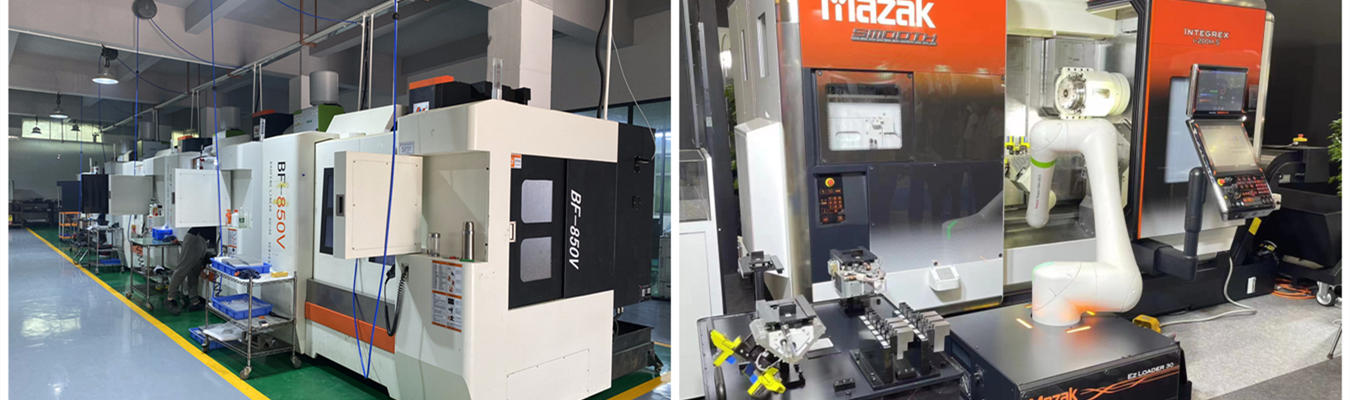
Before we talk about solutions, let’s understand the problem. A part is considered complex for CNC complex machining parts if it has one or more of these characteristics.
| Complexity Factor | Why It Matters |
| Compound curves and freeform surfaces | Requires simultaneous multi-axis movement; 3-axis machines cannot maintain proper tool contact |
| Deep cavities | Standard tools cannot reach; requires long-reach tooling or specialized strategies |
| Undercuts | Cutting tool must access features hidden behind other surfaces |
| Thin walls (below 0.8mm for metals) | Prone to deflection and vibration during cutting |
| Deep holes (depth-to-width ratio 3:1) | Tool deflection, heat buildup, and chip removal become serious issues |
| Tight tolerances across multiple features | Cumulative errors from multiple setups can push parts out of spec |
| Difficult materials (titanium, Inconel, hardened steel) | Increase tool wear, require slower speeds, and demand specialized strategies |
If your design checks several of these boxes, you are looking at advanced CNC machining components. But here is the good news: with the right equipment and approach, these challenges become manageable.
When engineers talk about CNC machining for complex parts, 5-axis technology is almost always part of the conversation. Here is why.
A 5-axis CNC machine can move the cutting tool or workpiece along five different axes simultaneously—three linear axes (X, Y, Z) plus two rotational axes. This provides five degrees of freedom, allowing the tool to approach the workpiece from virtually any direction. The result is that 5 axis CNC machining parts can be completed in a single setup, without the cumulative positioning errors that come from multiple clamping operations.
| Benefit | What It Means for You |
| Fewer setups | One clamping replaces 4–6 setups; less handling means fewer errors |
| Tighter tolerances | Positioning accuracy stable within 0.005mm; eliminates cumulative errors |
| Better surface finish | Tool maintains optimal cutting angle throughout; reduces or eliminates secondary finishing |
| Shorter cycle times | Up to 84% reduction in machining time for complex parts |
| Extended tool life | Optimal cutting angles reduce tool wear; up to 140% longer tool life |
| Greater design freedom | Features that were impossible on 3-axis machines become straightforward |
The ability to avoid cumulative tolerance errors when machining 5-axis is by far its most significant benefit. Each time you remove a component from an existing 3-axis machine to reposition it to another location, there is always a possibility that the new setup does not align with the old component properly. This creates a compounding error over each of the times you have repositioned the component. With 5-axis machinery you machine the complete part in one operation, therefore you do not have the ability to compound errors through a stack of repositioned parts.
For example, consider the turbine blade of a jet engine which is the classic case for this application. A typical 3-axis machine would require at least four setups in order to achieve this geometry. Therefore with a pass rate of 85%, using 5-axis technology the same part can be machined in one setup with a pass rate of 99% and no secondary polishing operations required due to the high quality of the surface finish produced on the jet turbine blade by 5-axis machining. Learn more about our 5-axis machining technologies.
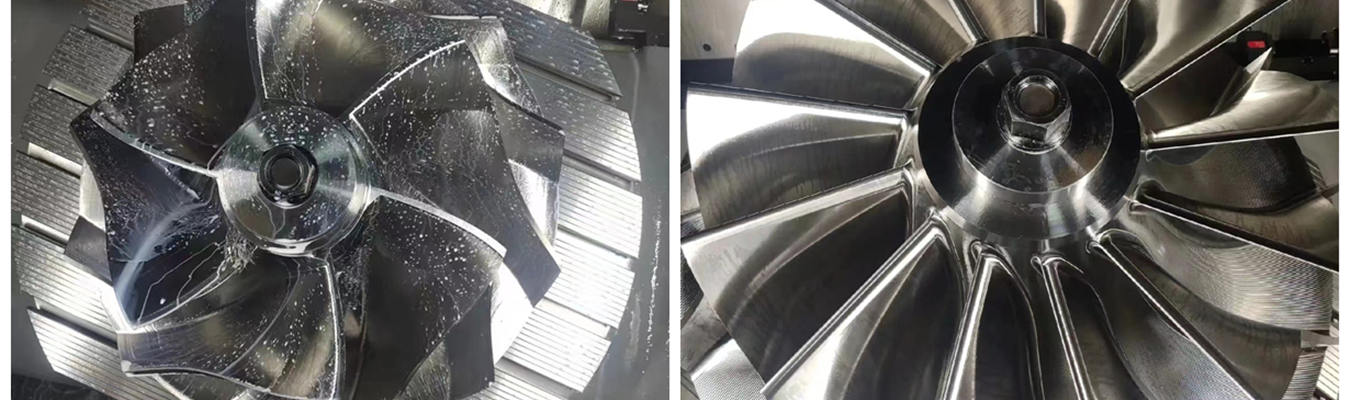
Not every part needs 5-axis machining. Understanding the differences helps you choose the right approach.
| Machine Type | Axes | Best For | Limitations |
| 3-Axis | X, Y, Z | Flat surfaces, simple pockets, basic 3D contours | Cannot access undercuts; multiple setups for multi-face parts |
| 4-Axis | X, Y, Z + A (rotary) | Cylindrical parts, spiral grooves, indexed multi-face machining | Limited for continuous curved surfaces; still requires repositioning for some features |
| 5-Axis (3+2) | Indexed 5-axis | Multi-face parts with angled features but flat faces | Cannot machine continuously curved surfaces in one pass |
| 5-Axis (full simultaneous) | Continuous 5-axis | Compound curves, freeform surfaces, turbine blades, medical implants | Highest programming complexity; highest capability |
For true complex metal machining parts, full simultaneous 5-axis is often the only practical solution. For parts with angled features but flat faces, 3+2 positioning (indexed 5-axis) may be sufficient.
When people talk about tight tolerance CNC machining parts, numbers matter. Let’s be clear about what is realistic.
Typical Precision Ranges:
| Application Type | Achievable Tolerance | Examples |
| Standard precision | ±0.01mm (±0.0004 inch) | General industrial components, brackets, housings |
| High precision | ±0.005mm (±0.0002 inches inch) | Aerospace structural parts, medical instruments |
| Ultra-high precision | ±0.002mm to ±0.001mm | Turbine blades, bearing housings, critical aerospace components |
| Micron-level (specialized) | ±0.001mm (±0.00004 inches inch) | Optical components, semiconductor tooling, specialized medical implants |
When defining tolerances, do not specify more closely than required. Tight tolerancing greatly affects cost, but there will be no benefit added to the performance. As a rule of thumb, you should try to use realistic tolerances. For example, using a ±0.005 inch tolerance on non-critical dimensions can result in up to a 25% - 40% reduction in total manufacturing costs - 48. Therefore, it is best to limit the use of tight tolerancing to parts that require it, such as: joints between parts, fittings of bearings and critical alignment features.
Precision parts produced for the aerospace sector and the medical industry have standard tolerances of ±0.005mm / (±0.0002 inches). Medical device production such as; implants and surgical instruments need to be manufactured to this tolerance standard to ensure the devices fit as required and are biologically compatible.
At Falcon CNC Swiss, we specialize in precision complex machining. Our facility is equipped with advanced 5-axis machining centers and Swiss-type CNC lathes, designed specifically for the most demanding applications.
| Capability | Details |
| Equipment | Advanced 5-axis machining centers; Citizen, Star, and Tsugami Swiss-type lathes |
| Typical tolerances | ±0.005mm to ±0.01mm for critical features |
| Industries served | Medical, aerospace, automotive, electronics, industrial |
| Quality system | ISO 9001:2015 certified; full CMM inspection |
| In-house finishing | Anodizing, passivation, bead blasting, silk-screening |
| DFM support | Free engineering review before quoting; optimizing for manufacturability and cost |
Medical devices require precise machining for their production. In other words, Orthopedic implants, Surgical Instruments, and Dental parts must be made from biocompatible materials to tight tolerances. Our Swiss-type CNC Lathes are ideal for producing medical CNC machined parts due to their small, complex, and high-quality surface finishes.
Aerospace components have to cope with some of the most extreme conditions found on Earth. Turbine blades, Structural Brackets, and Fuel System parts must be able to maintain their geometrical properties during heating, vibration, and stress. Our Five Axis Machining Centers can successfully complete very complex geometries in one set up, thus eliminating the need to stack tolerances which could lead to decreased performance.
Even the best machine cannot fix a poorly designed part. Design for Manufacturability (DFM) is the practice of designing parts in a way that makes them easier and more cost-effective to machine. The choices you make in CAD can increase lead times by 25% to 1,480% and costs by 15% to 800%. Here is how to avoid the most common mistakes.
| Design Issue | Why It Hurts | Better Approach |
| Sharp internal corners | End mills are round; they cannot create sharp 90° corners | Specify radius equal to standard end mill size (0.5mm, 1mm, or 3mm) |
| Overly tight tolerances | ±0.002 inch everywhere increases cost dramatically | Apply tight tolerances only to critical features; relax elsewhere |
| Unreachable features | Deep pockets or undercuts without tool access require EDM or special fixtures | Design with tool access in mind; consult with manufacturer early |
| Varying radii and complex blends | Requires custom toolpaths and specialized programming | Use constant-radius fillets where possible |
| Thin walls without support | Vibration and deflection ruin surface finish and accuracy | Add ribs or support structures, or increase wall thickness |
A poorly designed component cannot be fixed by even the best equipment; therefore, it is very important to design components to meet DFM standards (Design for Manufacturability). It is common for CAD design choices to increase lead times by 25 to 1480% and manufacturing costs by 15 to 800%51. This paper will assist you in avoiding the most common causes of poor manufacturing practices.
One good illustration of the need for DFM: a hole having a depth-to-diameter ratio that exceeds 3 to 1 will result in problems with tool deflection, heating up during use and/or chip removal. To avoid these issues, you must either reduce the depth of the hole, increase the diameter or consider using specialty drilling techniques from the inception of the project.
Due to all of the reasons above, DFM is essential in CNC machining of precision tooling for complex parts. Using poor design practices creates higher costs of machining, longer lead times and potential quality issues. Partners providing DFM should review your product design prior to providing quotes, identify potential issues and recommend alternative solutions that do not compromise part function for reasons of cost reduction.
At Falcon CNC Swiss, each quote includes DFM analysis done by our engineers. As a result of reviewing your CAD model, evaluating complexity and providing reasonable and actionable recommendations for improvements, our customers frequently realize 15 - 30% savings in machining costs. Learn more about Falcon CNC Swiss 5 axis machining services.
Even with the best equipment, complex CNC machined components present real challenges. Here is how experienced manufacturers address them.
| Challenge | Solution |
| Tool collision risk | Advanced CAM simulation; collision detection software; proven toolpaths |
| Heat buildup in difficult materials | High-pressure coolant systems; optimized cutting parameters; thermal compensation |
| Vibration on thin walls | Reduced cutting forces; specialized workholding; strategic support structures |
| Tool wear in hard materials | Micro-grain carbide tools; specialized coatings (TiAlN, AlTiN); tool life monitoring |
| Chip removal in deep cavities | Through-spindle coolant; chip-breaking tool geometries; pecking cycles |
| Thermal expansion affecting tolerances | Temperature-controlled shop environment; machine warm-up cycles; thermal compensation software |
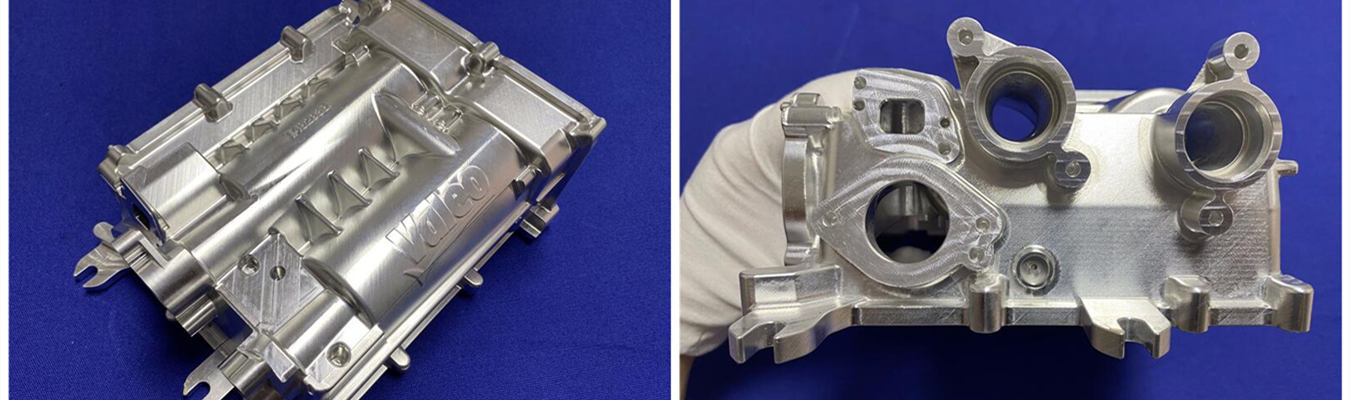
The evolution of CNC machining for complex parts has come a long way since its early days; an example being that CNC machining of complex parts was previously impossible, but now it can be accomplished on a regular basis when combined with advanced technology, process controls, and engineering know-how.
At Falcon CNC Swiss, we have the experience and knowledge to manufacture complex CNC machined components at the highest level of precision utilizing our sophisticated 5-axis machining equipment combined along with Swiss type precision. From medical implants to aerospace brackets, we can manufacture your parts as specified, and achieve quality standards every time, just once on the first attempt.
Upload your CAD file for a free DFM analysis and quote
Explore our 5-axis machining capabilities for complex geometries
Contact our engineering team to discuss your precision requirements
A: With 3-axis machining, you only have one approach to machining the part and will require additional set-ups for additional faces of the part—each additional setup introduces a higher probability for error. Conversely, 5-axis machining allows you to access all 5 indexes of the part in one setup, allowing for much greater accuracy than frequent setup adjustments.
A: Aerospace, medical, automotive, energy, and manufacturing all use complex CNC machined parts which require machining of complex CNC machined parts.
A: The usual tolerances for standard complex CNC machined parts, ±0.01 mm. However, for critical features of complex CNC machined parts the tolerances are ±0.005 mm, and with specialized equipment and processes, tolerances can be achieved at ±0.001 mm.
A: Aluminum (6061, 7075), stainless steel (303, 304, 316), titanium (Grade 2, Grade 5), brass, copper, engineering plastics (PEEK, Delrin , Ultem), and superalloys (Inconel, Hastelloy) can all successfully be machined on complex CNC machines.
A: Always apply DFM (Design For Manufacturing) principles, avoid sharp internal corners, request tolerances only when required, consolidate various features into one feature, and work with a manufacturer that performs a DFM review prior to providing quotes—this one step can reduce your cost by 15 to 40%.
A: The lead time for prototyping of complex CNC machined parts is typically 5 to 10 business days depending on the complexity of complex CNC machined parts. Production lead times vary due to quantity of complex CNC machined parts, required material specification, and required finish. Rush is available as an option; rush is an additional expense.
A: Yes. We perform anodizing, passivation, bead blasting, polishing, and screen printing in-house, eliminating the need for you to seek third-party services and allowing you to consolidate your supply chain and maintain better control over quality.