English
  日本語
日本語  한국어
한국어  français
  Deutsch
  Español
  русский
  العربية


Mar
Learn More
18

Medical devices are crucial to saving lives but behind these devices are innumerable tiny, precise parts known as medical machined components. These components are manufactured with precision through modern machining techniques.
This blog post describes what medical machining is, why it is important, and how CNC machinery is used to manufacture parts conforming to the strict specifications of the medical industry.
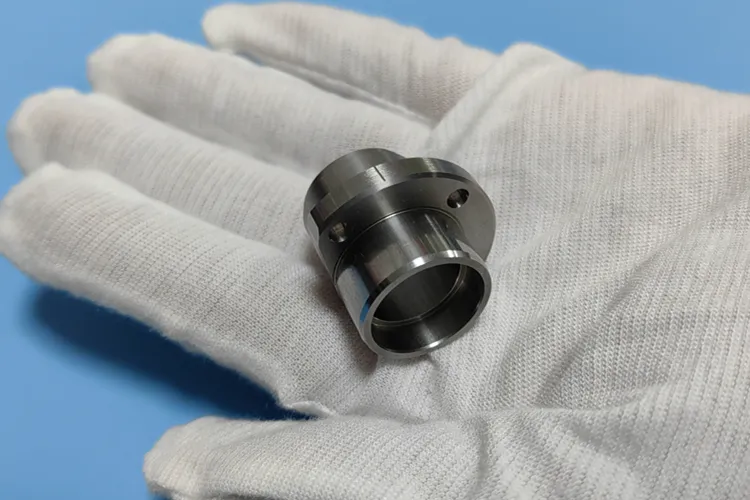
Medical machined components are parts used in surgical tools, implants, diagnostic machines, and other medical equipment. They can be as small as a pin or as complex as a joint replacement.
These parts must be very accurate. Even a tiny error can cause problems. That is why manufacturers use CNC machining to produce them.
Examples include:
Surgical forceps and scissors
Bone screws and plates
Housings for MRI and CT scanners
Dental drill components
Implantable device enclosures
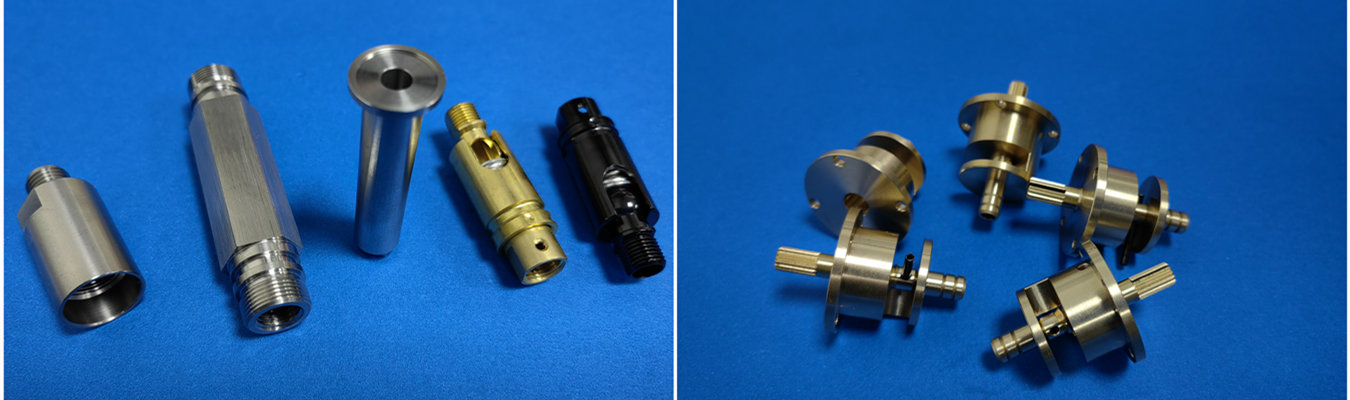
The medical industry machining sector has very high standards. Parts must be clean, strong, and biocompatible. They also need to work perfectly every time.
Precision medical industries rely on machining because it offers:
Accuracy – Tolerances can be as tight as ±0.005 mm.
Repeatability – Every part is exactly the same.
Clean surfaces – No burrs or sharp edges that could harm tissue.
Material flexibility – Stainless steel, titanium, PEEK, and other approved materials.
Without these capabilities, many modern medical procedures would not be possible.
CNC stands for Computer Numerical Control. It means machines are controlled by computers. This allows for very precise movements.
CNC machining for medical parts is used to create complex shapes from solid blocks of material. It is ideal for low to medium production volumes, and also for prototyping.
Common processes include:
CNC milling – for flat surfaces and complex 3D shapes.
CNC turning – for round parts like pins and screws.
Swiss machining – for very small and long parts with high precision.
Many medical machining companies combine these processes to make complete parts in one setup. This saves time and reduces errors.
Machining for the medical industry is different from other industries. Here are the main requirements:
Medical parts often need tolerances of ±0.01 mm or better. This ensures they fit and function correctly inside the body or in surgical instruments.
Materials like titanium, stainless steel 316L, and PEEK are commonly used. They do not react with body tissues. The machining process must not change their properties.
Parts must be free of oils, coolants, and metal chips. They need to be sterilized before use. That is why many shops use special cleaning processes after machining.
Every part must be traceable. Manufacturers keep detailed records of materials, processes, and inspections. This is required by regulations like ISO 13485.
CNC medical equipment covers a wide range of devices. Here are some of the most common parts made with CNC:
Orthopedic implants – hip and knee replacements, bone plates.
Surgical instruments – forceps, needle holders, scalpel handles.
Dental components – abutments, drill guides, crowns.
Diagnostic device housings – casings for blood analyzers and scanners.
Robotic surgical parts – components for da Vinci‑style systems.
Micro‑components – tiny gears and pins for insulin pumps.
Many of these parts are made using CNC surgical techniques that ensure sharp edges and smooth surfaces.
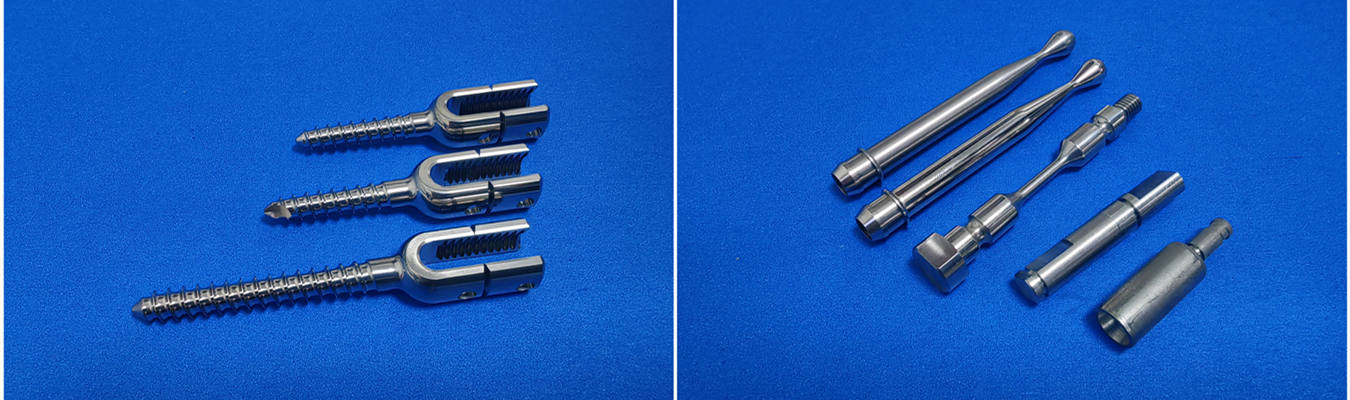
Durability, reliability, and sharpness characterize the required precision surgical instruments. The production process of CNC surgical machining was created specifically to solve problems related to these properties.
To take an example, surgical drills must perform well without breaking bones. CNC milling and grinding have made it possible to obtain flute geometry in the end. Smooth jaws of a laparoscopic grasper are also important to ensure safe procedures.
Because surgical instruments are used in surgery, every detail in a medical instrument matters for a final result. For this reason, medical machining companies employ top-notch machines to enable successful production.
Medical tool manufacturing is not just about making the final product. It also involves making the tools that produce those parts.
This includes:
Fixtures – to hold parts during machining.
Cutting tools – specially designed for medical materials.
Molds and dies – for plastic parts.
Medical tooling requires the same precision as the parts themselves. A poor fixture can ruin a batch of implants. That is why leading manufacturers design and produce their own tooling.
When you need CNC machining medical parts, you must choose a partner carefully.
Look for these qualities:
Certifications – ISO 13485 is the main standard for medical devices.
Experience – how long have they worked in the medical field?
Cleanroom capabilities – some parts require a clean environment.
Material knowledge – do they understand biocompatible metals and plastics?
Quality control – do they have advanced inspection equipment?
A good partner will also help you with design for manufacturability (DFM). They can suggest changes that make your part easier and cheaper to produce without sacrificing quality.
Swiss machining is a type of CNC turning. It is ideal for small, long, and complex parts. The material is supported close to the cutting tool, which prevents bending.
This makes it perfect for:
Bone screws
Dental implants
Guidewires
Micro‑surgical instruments
Swiss machines can also perform milling and drilling on the same part in one cycle. This increases accuracy and speeds up production. Many medical machining companies rely on Swiss machining for high‑volume orders.
Quality is not just checked at the end. It is built into every step.
Typical quality measures include:
In‑process inspection using touch probes
Automated optical inspection
CMM (coordinate measuring machine) checks
Surface roughness testing
Every batch is documented. If a problem occurs, it can be traced back to the exact machine, tool, and operator.
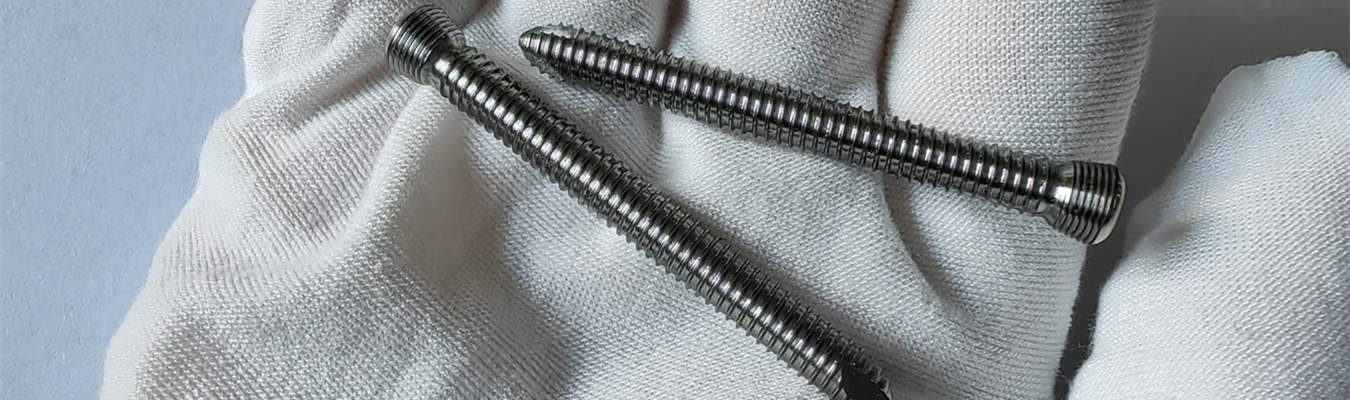
Falcon CNC Swiss specializes in precision machining for the medical industry. We combine advanced CNC technology with deep material knowledge.
Our services include:
Precision CNC Machining Service – for complex medical parts.
Swiss Machining Services – ideal for small, high‑precision components.
Medical Precision Machining – dedicated to the healthcare sector.
Precision Machining for Surgical & Diagnostic Devices – custom solutions for your needs.
We are ISO 13485 certified. We use the latest Citizen Swiss‑type lathes and multi‑axis milling centers. Our quality system ensures every part meets your exact specifications.
Whether you need a prototype or a high‑volume production run, we have the experience to deliver.
Medical machined components are the embedded warriors of the latest medical science. They make it possible for people to undergo surgical and diagnostic procedures that otherwise would have been impossible.
With the rise of modern technologies, the need for CNC machining services, respectively, is on the rise as well due to the requirement for even smaller and more accurate medical machined parts.
Choosing a reliable medical machining company is extremely important. You should ensure that the company has the right level of experience and certifications and is characterized by a commitment to quality medical products. Falcon CNC Swiss is proud to work in the medical industry. The company understands how much importance every part it manufactures has.
Reach out to Falcon CNC Swiss today to speak about your project.