English
  日本語
日本語  한국어
한국어  français
  Deutsch
  Español
  русский
  العربية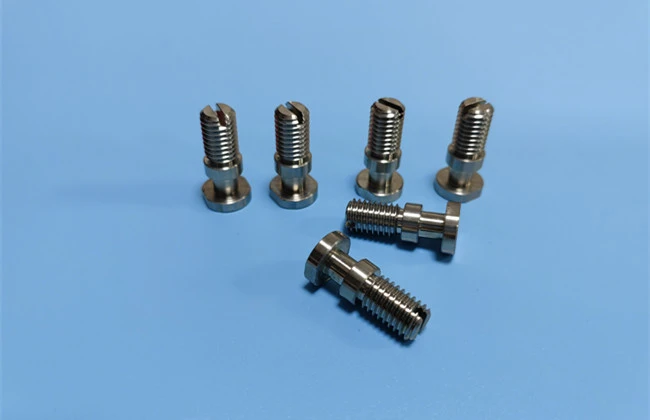


May
Learn More
20

Almost all machines on the planet require bolts/nuts to function; therefore so do manufacturers/non. Most commodities are thought of as commodities bought from any supplier for the lowest price possible but don’t necessarily have to be commodity items at all because in many cases this strategy works out fine.
However, for those highly reliable systems (spacecraft, medical devices, racing engines), using standard-grade fasteners can result in failed assemblies due to: stripped threads (misalignment); improper assembly (forced how an assembly works); catastrophic breakdown (inability of an individual component within a larger system), etc., due to issues like: poorly made or weak spindle(s)/head(s) that do not fit correctly when used on specific components, etc.
At Falcon CNC Swiss, we specialize in precision fastener manufacturing for demanding industries where quality cannot be compromised. This guide covers the key manufacturing methods for bolt nut manufacturing, explains when CNC and Swiss machining are the right choice, details material selection for different applications, and provides a checklist for selecting the right bolt and nut manufacturers for your project.
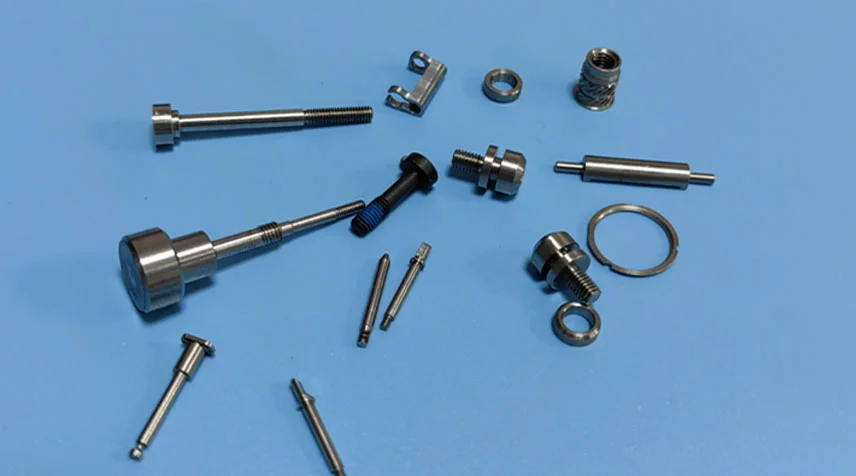
Precision fastener manufacturing refers to the production of bolts, nuts, screws, and related components with tight tolerances, high-quality surface finishes, and consistent mechanical properties. These fasteners are designed to meet specific performance requirements that go well beyond standard off-the-shelf components.
While many nuts and bolts manufacturing companies rely primarily on cold heading and thread rolling for mass production, precision applications often require CNC bolt manufacturer expertise. For complex geometries such as internally threaded locking nuts, threaded studs with shank features, and custom bolts with special drive styles, CNC turning and CNC milling deliver the accuracy and design flexibility that other processes cannot match.
Swiss machined bolts and nuts represent the highest tier of precision fastener manufacturing. Swiss-type lathes use a guide bushing that supports the bar stock extremely close to the cutting point, eliminating deflection and enabling the production of long, slender components with exceptional concentricity between critical features.
Bolts and nuts can be produced using several distinct manufacturing processes. Each method has its own strengths, limitations, and cost considerations.
Cold forming or cold heading is one of the most efficient means of mass producing standard bolts and nuts through the use of high-speed headers to shape metal at ambient temperature. The cost for cold heading tooling is typically between $2,000 and $6,000 which can only be economical when producing very high volumes; this process is best for simple geometries where there are accepted standard dimensions and moderate tolerances.
Hot forging is used for large diameter or high strength fasteners and heats the workpiece prior to forging. Primarily used for heavy industrial and construction applications, hot forging does take considerable time for set-up and will only work for relatively basic shapes.
CNC Turning is the primary manufacturing method for small/medium runs of custom bolts and nuts that must be manufactured with a higher level of precision. The process will create finished components using stationary cutting tools on rotating components to meet precise specifications for dimensions and thread forms. The advantage of CNC turning is very high accuracy, low tooling cost, and the ability to make design changes without having to purchase new tooling.
CNC Milling adds additional capability for producing higher complexity bolt heads, specialty drive styles, and precise nut features. The use of multi-axis machining centers could create complex geometries that would not be able to be produced by turning or forming.
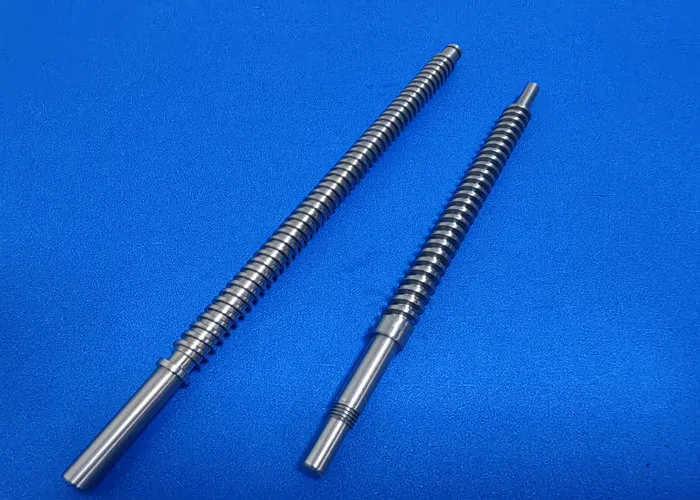
Many precision fasteners experience thread rolling after turning or cold forming. This process displaces material to produce threads instead of cutting threads, which produces a stronger and more fatigue resistant thread profile. Additionally the surfaces that experience thread rolling will have smoother finishes than cut threads.
Swiss-type CNC lathes are unsurpassed in producing precision components that must meet the most exacting tolerances, particularly when manufacturing small diameter components such as screws for medical implants and miniature fasteners designed for aerospace applications. The guide bushing directly supports the workpiece at the cutting point, virtually eliminating any deflection and allowing tolerances as tight as ±0.0002 inches to be achieved on diameter features. By using Swiss-type machines, turning, milling, drilling, and threading operations can all take place in a single setup preventing tolerance stacking and eliminating any need for secondary operations.
Process Comparison Table
| Manufacturing Method | Best For | Tolerance Capability | Tooling Cost | Per-Unit Cost (high volume) |
| Cold heading | Standard bolts/nuts, very high volume | ±0.05–0.1mm | High | Very low |
| Hot forging | Large-diameter fasteners | ±0.1–0.2mm | Very high | Low |
| CNC turning | Custom fasteners, low-medium volume | ±0.005–0.01mm | Low | Moderate |
| CNC milling | Complex heads and drive features | ±0.005–0.01mm | Low | Moderate–High |
| Swiss-type machining | Small, complex, high-precision fasteners | ±0.002–0.005mm | Low | Moderate |
The choice of material directly determines the strength, corrosion resistance, weight, and cost of your fasteners. Different applications demand different material properties.
304 and 316/316L SS: 304/316/316L stainless-steel fasteners provide excellent corrosion resistance and versatility for marine, chemical processing, medical, and food-service applications due to their acceptable strength properties. Passivating 304/316/316L nuts and bolts to maximize their natural ability to resist corrosion enhances their performance.
Carbon Steel: Carbon steel fasteners are considered the strongest and least expensive of all fastener types; they are utilized in a variety of industries including general industrial, automotive, and construction. Carbon steel fasteners are available in several grades and can be heat treated for greater strength (Grade 2, 5 and 23 Titanium).
Titanium Grade 5, 2, and 23: The superior strength-to-weight ratio, exceptional corrosion resistance, and biocompatibility properties make titanium fasteners (bolts and nuts) ideal for high-performance aerospace, automotive, and medical applications. Titanium weighs about 60% less than steel. The most frequently used titanium fastener for high-strength applications is Grade 5 (Ti-6Al-4V).
Aluminium: The lightweight nature and corrosion resistance of aluminium fasteners make them a good choice for any application where a reduction in weight is needed. Drones (as structural fasteners), electronic enclosures, and light-duty machinery assemblies are just some examples of where aluminium fasteners can be found.
Brass: Brass fasteners (bolts and nuts) provide good corrosion resistance, excellent machinability, and an attractive finish; typical applications for brass fasteners include plumbing fittings, electrical connections, and low-load mechanical assemblies.
Exotic Alloys: For fasteners used in extreme environments, exotic alloys such as Inconel, Hastelloy, MP35N, etc., can be used for subsea connections, bolts for chemical reactors, and fasteners in nuclear facilities.
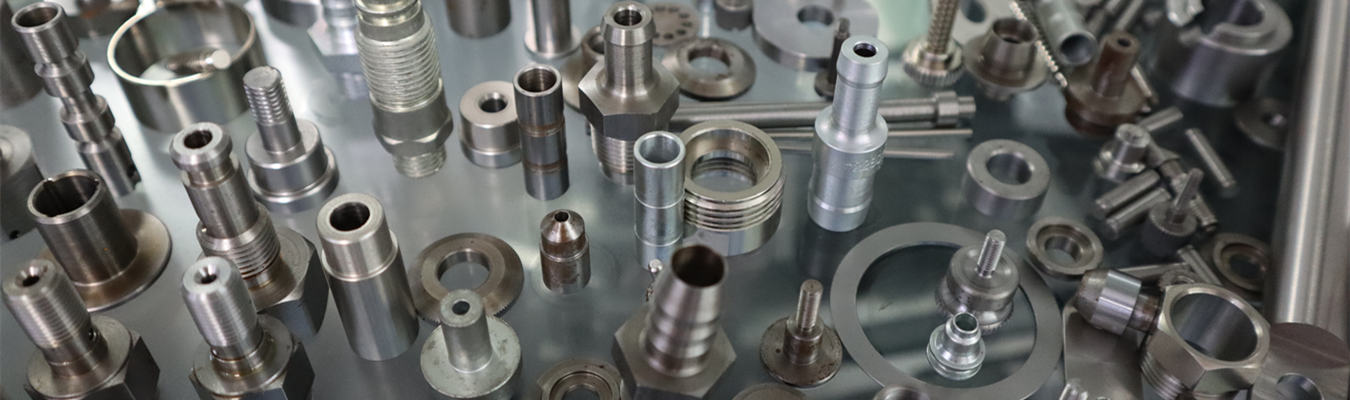
The Swiss-type screw machine has become the industry standard for producing precision small diameter CNC bolts and nuts. This is accomplished by feeding the bar stock directly through a precision guide bushing, located immediately next to the cutting position on a Swiss lathe. When the material is being machined and removed from the workpiece, the workpiece is supported at the exact point of removal, thereby eliminating any deflection that could occur when machining long thin parts on a conventional lathe.
When using a multi-axis swiss machine, turning, milling, drilling and threading can all be performed on the same part in one machining cycle. This single cycle of machining allows for perfect alignment of the outer diameter, inner features and thread pitch of the part, and this is a benefit that cannot be realized when using multiple processes on the same part over an extended period of time across multiple machines.
Typical Tolerances for Swiss-Machined Fasteners:
Diameter tolerances: ±0.0002 inches (±0.005mm)
Concentricity (OD-to-ID): 0.0005 inches TIR or better
Thread quality: ISO 5g6g or 6H per ISO 965 standard
Materials commonly processed on Swiss machines for fasteners:
Titanium (Grade 5, Grade 23)
316L stainless steel
PEEK and other engineering plastics
Cobalt chrome alloys
For high-volume production of small precision fasteners, Swiss machining often achieves lower per-unit costs than CNC turning due to faster cycle times and higher spindle utilization. However, the best economic choice depends on part geometry, material, and required annual quantity.
When your project uses a lot of precision fasteners such as bolts or nuts, the best way to find lower prices on those items is to purchase them from wholesale nut and bolt suppliers. Buying Bulk fastener manufacturing causes the cost per unit to drop dramatically because the setup time for manufacturing each fastener gets distributed over such a large quantity.
For a nut bolt manufacturing company running high-volume production, the economic calculation is straightforward. A typical setup requires approximately 1–2 hours to align tools and verify the first article. For a run of 250,000 parts, that setup cost impact is negligible. For a run of only 100 parts, setup cost can exceed the material cost per part.
Raw materials make up the largest cost to produce industrial fasteners production accounting for approximately 40–60% of total costs. The labor cost associated with making fasteners accounts for approximately 10–30% depending on the type of automation used and the cost of labor in the area.
When sourcing wholesale nut and bolt suppliers, consider the following:
Request quotes for multiple quantity tiers to understand volume discount scaling
For high-volume runs, compare cold heading plus secondary turning costs versus full turning
Consolidate multiple fastener part numbers into a single order to reduce overhead allocation
Consider annual blanket orders to lock in material pricing and guarantee production slots
Many nuts and bolts manufacturing companies specialize in different volume tiers. Smaller batch producers focus on custom, low-to-medium volume runs with fast lead times. High-volume specialists maintain automated production lines optimized for maximum throughput but may have higher minimum order quantities and longer standard lead times.
Selecting the right bolt and nut manufacturers is a strategic decision that affects cost, quality, and supply chain reliability. Here is a checklist for evaluating potential bolt nut manufacturing partners.
Key Supplier Evaluation Criteria:
| Criterion | What to Ask |
| Manufacturing capability | Do they have CNC turning, Swiss machining, or other relevant equipment? |
| Tolerance capability | What standard tolerances do they hold for diameters, threads, and concentricity? |
| Material experience | Have they worked with your required materials (stainless steel, titanium, etc.)? |
| Quality systems | Do they hold ISO 9001 certification? ISO 13485 for medical? AS9100 for aerospace? |
| Inspection equipment | Do they have CMM, optical comparators, and thread gauging? |
| Volume flexibility | Can they handle both prototypes and high-volume production? |
| In-house finishing | Do they offer plating, passivation, anodizing, or other surface treatments? |
| DFM support | Will they review your design and suggest cost-saving changes before quoting? |
| Market focus | Do they serve your industry (medical, aerospace, automotive, etc.)? |
A reputable precision fastener manufacturer will offer free DFM analysis, provide material certifications and full inspection reports, maintain rigorous process control, and support both prototyping and production volumes.
Red Flags to Avoid:
Unwillingness to provide material certifications or inspection documentation
Unclear communication about tolerances and quality systems
Lack of experience with your required materials
No in-house inspection equipment (outsources all quality control)
At Falcon CNC Swiss, we manufacture precision CNC bolts and nuts on advanced Swiss-type CNC lathes and multi-axis turning centers. Our facility is equipped with Citizen, Star, and Tsugami machinery capable of holding tolerances as tight as ±0.0002 inches (±0.005mm) for critical applications.
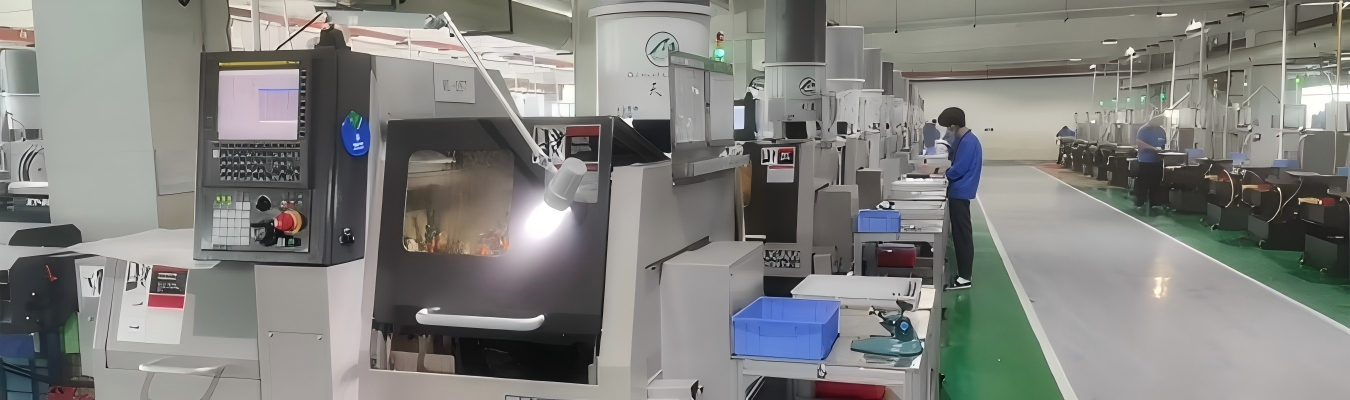
Swiss-type CNC machining for small-diameter, complex fasteners requiring exceptional accuracy
Multi-axis turning with live tooling to turn, mill, drill, and thread in a single setup
Broad material capability including titanium (Grade 5, Grade 23), stainless steel (304, 316, 316L), aluminum, and engineering plastics (PEEK)
In-house finishing including passivation, bead blasting, anodizing, and polishing
ISO-certified quality management (ISO 9001:2015, ISO 13485) with full CMM inspection
Engineering DFM support to optimize your design for manufacturability
Volume flexibility from single prototypes to high-volume production
We serve clients in medical device manufacturing, aerospace assemblies, automotive systems, and industrial equipment. From medical-grade titanium bolts to corrosion-resistant stainless steel nuts, our Swiss-machined fasteners meet the tightest tolerances with full traceability.
All mechanical systems rely on precision fasteners to provide the foundation of dependability and strength. From titanium bolts used in aerospace assemblies to stainless steel nuts used in medical devices or custom high-strength fasteners used in industrial machinery, working with an appropriate bolt and nut manufacturer is critical to success.
Falcon CNC Swiss combines the benefits of Swiss-style CNC machining, extensive knowledge of materials, and rigorous quality assurance to manufacture precision CNC fasteners precisely to your specifications.
Upload your CAD file for a free DFM analysis and quote.
Learn more about our nuts and bolts manufacturing.
Contact our engineering team to discuss your specific bolt and nut requirements.
A: Common bolt types include hex bolts, socket cap bolts, carriage bolts, shoulder bolts, eye bolts, and stud bolts. Common nut types include hex nuts, flange nuts, lock nuts, coupling nuts, wing nuts, and T-nuts. Each type requires specific machining considerations and tolerances.
A: Cold heading is a high-speed forming process best suited for very high-volume production of standard fasteners with simple geometries. CNC machining offers superior precision, design flexibility, and the ability to produce custom and non-standard fasteners without expensive tooling. Swiss machining adds exceptional accuracy for small, complex components.
A: For maximum strength, alloy steel with appropriate heat treatment is cost-effective. For strength with weight reduction and corrosion resistance, titanium grade 5 is the standard choice. For excellent corrosion resistance with good strength, 316 stainless steel is commonly specified in marine and medical applications.
A: Threads are produced by three primary methods. Thread rolling displaces material to form threads without cutting, producing stronger, fatigue-resistant profiles. Single-point thread cutting on a CNC lathe offers maximum flexibility for custom threads. Thread tapping is used for high-volume internal nut threads.
A: For Swiss-type CNC machining of small-diameter bolts, diameter tolerances as tight as ±0.0002 inches (±0.005mm) are achievable. Concentricity between the outer diameter and thread pitch cylinder is typically held to 0.0005 inches TIR or better. Thread quality meets ISO 5g6g or 6H standards.
A: Yes. We support everything from single-unit prototypes to high-volume production runs. For prototypes, lead times are typically 5–10 business days depending on complexity. We also provide free DFM analysis before quoting to ensure your design is optimized for manufacturability and cost.