English
  日本語
日本語  한국어
한국어  français
  Deutsch
  Español
  русский
  العربية

Nov
Learn More
15

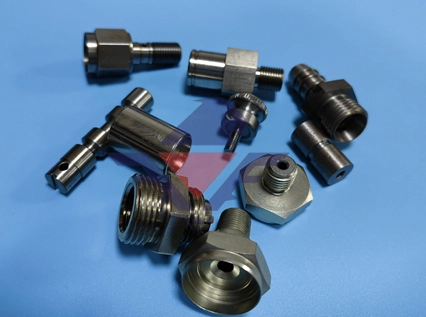
Designing reliable connector systems goes beyond simply matching the number of pins and form factors. There is much more to understand about the interaction of material science, micron geometry and the precision of manufacturing that comprise every robust mating interface. Therefore, it is critical for engineers who are either specifying precision connectors or designing precision mating systems to understand how connector tolerances will impact the electrical function, mechanical durability and overall cost of their assembly.
Falcon CNC Swiss manufactures CNC Swiss turning connectors for applications where failure cannot be tolerated (medical implants, automotive sensing systems, high-speed telecommunications and consumer electronics). This guide will answer common engineering questions and provide insights into how to create high-quality custom-built precision connectors which can endure many thousands of mating cycles.
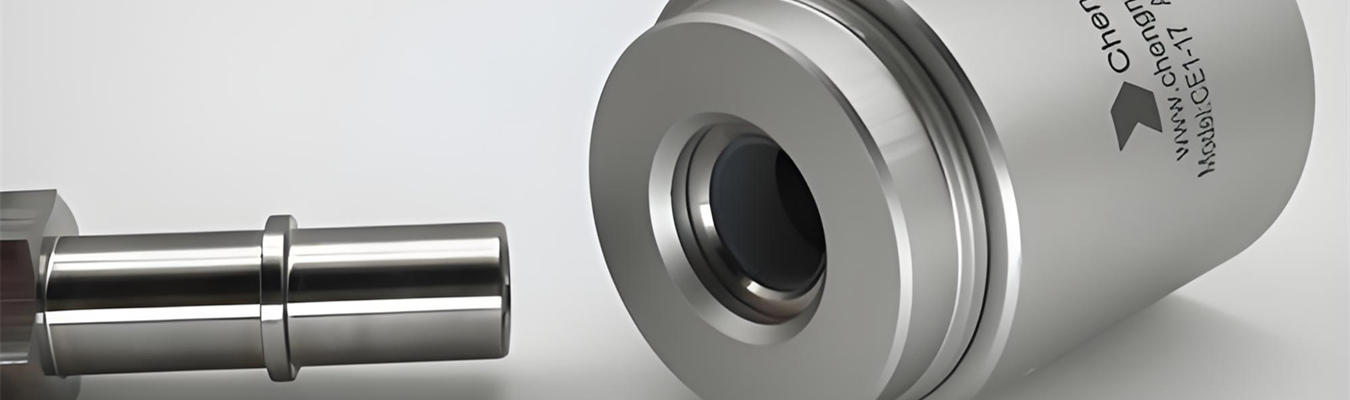
The answer to the question - How many types of connectors are available? depends on the classification system used. Normally, classifications of electrical interconnects are made based on the type of termination used. The three most common classifications of terminations for a connector are (1) board to board, (2) cable/wire to cable/wire and (3) cable/wire to board.
When connecting PCBs with each other (board to board), connectors connect PCBs together directly without the use of any cables. These connectors are typically used for smaller system designs and can be configured in many different ways to provide the desired layout (i.e., parallel stacking, vertical stacking and mezzanine). Board-to-board connectors can be found in high-density telecommunications devices, smart phones and wearables.
When using connectors to connect multiple conductors or wires together (i.e., cable/wire to cable/wire), many different methods can be used to make those connections. For instance, when connecting discrete wires together, one of the most common connection methods is to use crimping, whereas, when connecting multiple conductors on a single cable, you would typically use IDC. IDC uses a sharp beam to cut through the insulation of the cable to provide a gas-tight metal-to-metal connection.
Board-mounted connectors (cable/wire to board) have one end connecting a receptacle to the PCB and the other end either to a cable termination or wire termination. Many of these types of connectors also utilize IDC after high volume assembly.
Connectors can also be classified according to other factors such as mate style (e.g., threaded/bayonet, friction fit/push/pull, latch lock), contact plating type (e.g., gold/tin, silver/palladium cobalt) and marketplace application (e.g., automotive, medical, industrial, radio frequency/microwave). A thorough understanding of connector classifications provides engineering teams insight to enable them to specify appropriate precision connecting systems for their applications.
The most overlooked variable in connector reliability is dimensional variation. A contact pin that deviates 0.01 mm from nominal may still assemble but could increase contact resistance by 20–30%, generate unwanted heat, and eventually cause intermittent signal loss under vibration.
Precision machining tolerances define the permissible upper and lower limits of variation for every critical feature. Industry sources cite ±0.005 ininches (0.127 mm) as the standard benchmark for general precision machining, while high-precision work reaches ±0.0005 ininches (12.7 microns) for critical features. At Falcon, our Swiss-type machining routinely achieves tolerances down to ±0.0002 inches, enabling high-tolerance connector parts that maintain consistent electrical and mechanical performance across production runs.
Key tolerance categories for precision connector components:
| Tolerance Type | Critical for | Typical Range |
| Diametral (pin/socket) | Insertion/withdrawal force, contact resistance | ±0.005 mm – ±0.02 mm |
| Concentricity | Signal integrity, VSWR (RF connectors) | ≤0.01 mm TIR |
| Thread pitch & form | Mating security, sealing | ISO 6H/6G, ±0.002 mm on pitch |
| Flatness (mating face) | Environmental sealing, EMI shielding | ≤0.005 mm |
| Feature location (slot/groove) | Polarization, keying alignment | ±0.01 mm |
Engineering insight: Specifying the tightest possible tolerance on every dimension dramatically increases cost without necessarily improving function. Each step tighter approximately doubles machining time and inspection overhead. Work with your supplier to identify the critical-to-function dimensions that truly require micron-level control.
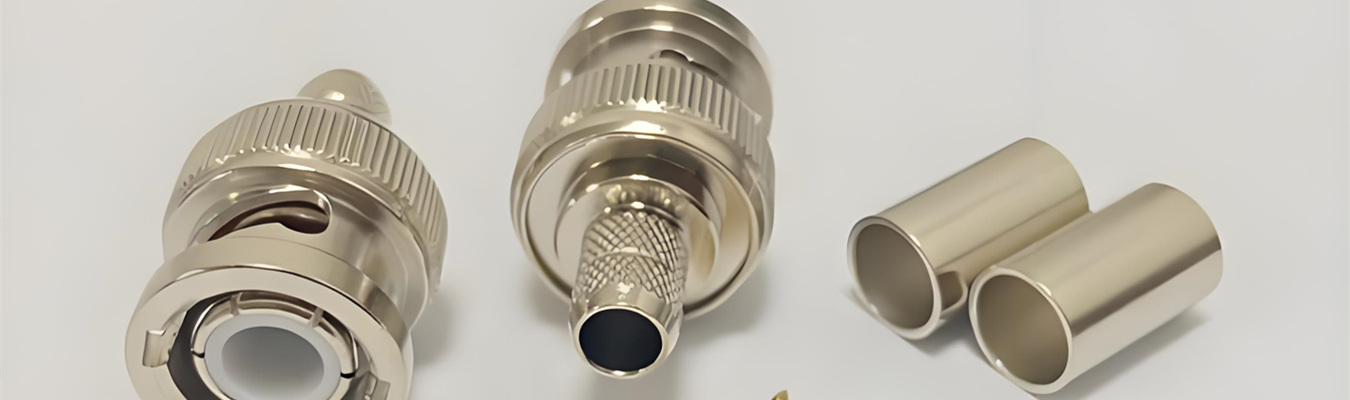
Material selection drives connector performance more than any other design decision. The right alloy balances electrical conductivity, mechanical strength, corrosion resistance, machinability, and cost. Below are the materials we most commonly machine for precision turned electrical connectors.
Stainless steel (303, 304, 316L) is commonly used in medical-grade, industrial sensor interfacing and automotive applications as it has excellent corrosion resistance and mechanical strength. Although not easy to machine due to work hardening and chip control, utilization of Swiss-type turning using optimized toolpaths allows for stainless steel turned connector designs that feature a mirror-like surface finish and burr-free threaded areas.
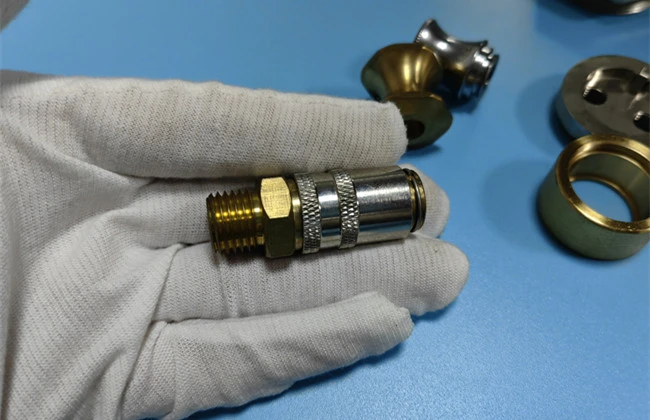
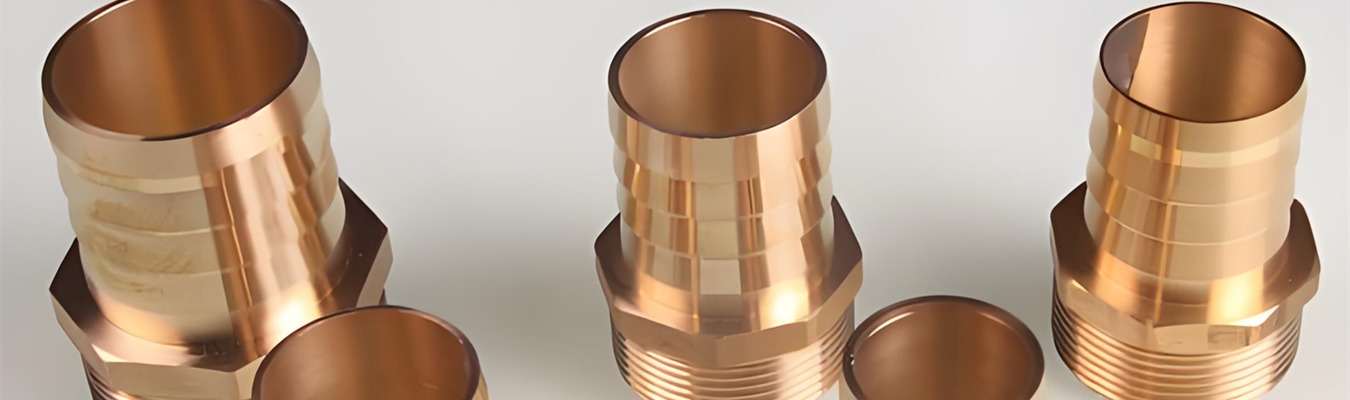
Brass (C36000, C38500) continues to be the predominant alloy used to make commercial and industrial connectors due to its free-machining capabilities, outstanding electrical conductivity and reasonable corrosion resistance; making it ideal for precision connector parts used in electronic, plumbing and pneumatic applications. Additionally, brass is also very receptive to electroplating which allows for excellent adhesion to gold, nickel, silver or tin plated finishes.
Beryllium copper (C17200 or CuBe2) is a superior copper alloy because it maintains the highest tensile strength of all copper alloys while also providing excellent electrical conductivity. The beryllium copper components are also able to withstand considerable spring loads while retaining their original shape. Therefore, such components are an ideal choice for socket contacts, RF connector fingers and high-cycle mating interfaces. The RF contacts manufactured from beryllium copper by Falcon Company, for example, demonstrate outstanding high-frequency performance as they have already been shown to have a 0.008 dB insertion loss in 40 GHz 5G antenna applications.
Plated conducting surfaces are chosen primarily for their functionalities and not for their appearance. Gold is known for its oxidation resistance to provide a reliable electrical connection; low-resistance contact, and excellent resistance to wear from fretting corrosion. The thickness of gold plating on connector contacts ranges from 0.1 to 5.0 µm (4 – 200 microinches), typically applied selectively at the interface of the two mated parts in order to minimize the cost of the plating. The average thickness of gold plating found on Class I applications is normally between 0.000050 in – 0.000070 in (1.27 – 1.78 µm).
Precision, cost-sensitive applications requiring spring-like characteristics combined with resistance to fatigue, phosphor bronze (C51000 and C52100) will be a suitable alternative to beryllium copper. Phosphor bronze is used extensively in the stamping of contacts however Swiss turned parts will provide better dimensional consistency for precision socket contacts and terminal pins.
Swiss turned aluminum connectors (6061, 7075, 2024) are used when lightweight housing, backshell and adapter assemblies will reduce total system weight while maintaining structural integrity. Aluminum's excellent thermal conductance also makes it exceptionally well-suited for use in high wattage connectors where high-temperature dissipation must occur.
Specialty copper alloys are recommended when conventional brass / copper compositions will yield an unsuitable level of electrical conductivity or thermal stability. High conductivity alloy component types include: oxygen-free high-conductivity copper (OFHC Cu) which permits nearly zero loss of signal; copper-chromium-zirconium (C18150) engineered for high-temperature application palladium or cobalt surface coatings (80%Pd/20%Co) produces surfaces resistant to wear in separable interfaces.
Explore more information about our precision connector manufacturing.
Material selection quick reference:
| Material | Best For | Conductivity | Machinability | Typical Applications |
| Stainless Steel (303/316L) | Harsh environments, medical | Low | Fair | Medical connectors, industrial sensors, marine |
| Brass (C360) | General purpose, cost-sensitive | Good | Excellent | Electronics pins, pneumatic fittings, terminals |
| Beryllium Copper (C172) | High-spring force, RF | Very Good | Good | Socket contacts, RF connectors, high-cycle |
| Phosphor Bronze (C510) | Cost-effective spring contacts | Good | Good | Terminal pins, socket clips, battery contacts |
| OFHC Copper | Ultra-low signal loss | Excellent | Good | High-frequency RF, precision audio |
| Aluminum (6061) | Lightweight housings | Good | Excellent | Connector shells, backshells, adapters |
Engineers often ask why Swiss-type turning is preferred for connector manufacturing over traditional CNC lathes. The answer lies in the guide bushing. Traditional lathes hold the workpiece in a chuck, leaving unsupported length that can deflect under cutting forces—particularly problematic for small-diameter, high-length-to-diameter parts like long contact pins and slender connector bodies.
Swiss-type lathes support the workpiece immediately adjacent to the cutting tools via a guide bushing. This arrangement minimizes deflection, enabling machining of small diameter connector parts down to 0.3 mm diameter while holding tolerances at the micron level. For micro connector components, Swiss turning is essentially the only manufacturing process capable of producing complex, multi-feature parts at scale with consistent accuracy.
Advantages of Swiss turning for connectors:
Superior concentricity between pin tips and shoulder diameters (critical for mating alignment)
Live tooling for milling flats, slots, cross-holes, and hex features in a single setup
Precision threading for connectors with full-form inserts achieving ISO 6H or better
Surface finishes down to Ra 0.4 µm (16 microinches) as-turned, eliminating secondary polishing
High-volume precision turning with bar feeders enabling lights-out production
Complex geometry connector machining including back tapers, undercuts, and retention grooves
Different industries impose unique requirements on precision connector components. Here’s how we address them.
The materials used to manufacture precision connectors for medical applications must be biocompatible, sterilization compatible, and produced under documented process controls. Falcon serves as a manufacturer of precision connectors for Original Equipment Manufacturers (OEMs) in the medical device industry, specifically in the areas of diagnostic imaging, patient monitoring and telemetry, endoscopy systems, and implantable devices. Our ISO-certified processes provide complete traceability from raw material certifications through to final inspection of finished products. Additionally, we will assemble products in a clean-room environment for applications that require sterilization.
The automotive electrical connection points beneath the hood of vehicles are exposed to high temperatures, vibration, moisture and chemicals. Our range of automotive electrical connections are manufactured from corrosion resistant material, offer a secure mating feature and are designed for high cycle durability. The dimensional stability associated with parts produced by the Swiss turning process ensures that the parts produced are consistently interchangeable or fit properly within a multi-million part run of automotive harnesses.
Industrial sensor connectors designed for factory automation and Industrial IoT need to be able to withstand the extreme use of flexing, washdown, and EMI. Our range of circular connectors include M8, M12 and custom connector assemblies which feature precision threaded bodies and reliable sealing surfaces, ensuring that their IP rating is maintained in the harshest of environments.
High-speed data transmission requires telecommunications precision components with controlled impedance, minimal signal reflection, and low VSWR. Our RF connector bodies, coaxial interfaces, and fiber optic alignment sleeves are machined to geometries that preserve signal integrity at frequencies beyond 40 GHz.
Robotics connector assemblies demand low-profile, high-density configurations that survive millions of flex cycles. Falcon produces miniature circular connectors, high-pin-count rectangular interfaces, and custom right-angle configurations that conserve space while maintaining reliable power and data transmission through articulated joints.
The move to thinner and lighter devices is increasing the need for consumer electronics micro connectors where pitch and profile dimensions are getting smaller. As a result, we are producing Swiss-turned product components, including USB-C connector housings, SIM trays, battery contacts, and audio jack barrels with near micron consistency through our high volume precision turning process that includes millions of parts per year. Explore our Precision Electronic Machining Services.
Reliable connectors begin with reliable processes. Falcon operates under an ISO certified connector machining quality management system, with documented controls for every manufacturing step. Our ISO 9001:2015 certification provides customers with confidence in our consistency, traceability, and continuous improvement commitment.
Quality verification methods for precision connectors:
CNC probing for in-process dimensional verification
Vision measurement systems for contact geometry and surface finish
CMM inspection for critical tolerances and GD T features
Plug/ring gauge verification for threaded features
Contact resistance testing on representative samples
Plating thickness measurement via X-ray fluorescence (XRF)
Engineers sourcing precision connector suppliers often need market context. As of the most recent industry data, TE Connectivity remains the world’s largest connector manufacturer with 12.88 billion in annual connectorsales,closely followed by Amphenol at1 1.51 billion. Molex ranks third with $4.87 billion.
Industry projections suggest Amphenol may overtake TE Connectivity in the near future, driven by its aggressive acquisition strategy and strong presence in military/aerospace markets. Both TE Connectivity and Amphenol achieve top-10 rankings across all 12 connector product categories, demonstrating their breadth and market penetration.
For specialized applications requiring high-tolerance connector parts and custom precision connectors, however, nimble manufacturers like Falcon CNC Swiss offer engineering responsiveness, lower minimum quantities, and faster iteration cycles that large-scale suppliers cannot match.
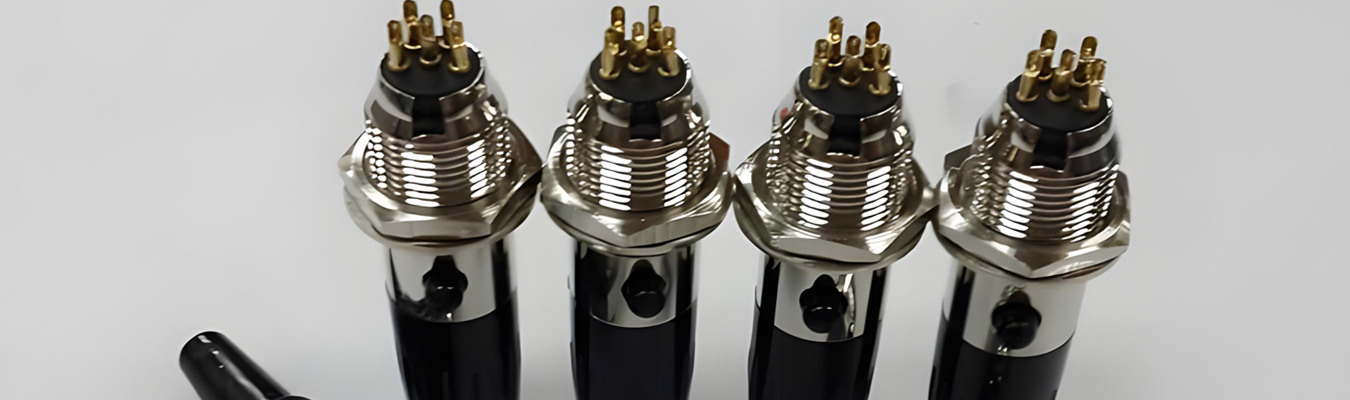
Not every connector project starts with a million-piece order. Falcon supports low volume connector runs for prototyping, pilot production, and legacy system replacement parts—with the same process controls and quality standards applied to full-scale manufacturing.
Our approach:
Rapid prototyping: 2–3 week lead times for CNC Swiss-machined samples
Pilot runs: 100–5,000 pieces for market validation and design refinement
Full production: Scaled to millions of parts with statistical process control
Contract manufacturing: Long-term agreements for supply chain predictability
For specialized requirements, we also offer precision connector assembly services including contact insertion, housing assembly, overmolding, and final testing—providing a single-source solution from raw bar stock to finished, ready-to-install components.
The most successful connector projects begin with early collaboration between design engineering and manufacturing.
Falcon team provides:
DFM analysis to optimize features for Swiss turning productivity
Material recommendations based on electrical, mechanical, and environmental requirements
Tolerance stack-up consultation to avoid over-specifying non-critical dimensions
Plating specification guidance for contact finish optimization
Cost reduction suggestions without compromising reliability
Designing reliable precision mating systems requires more than a drawing and a purchase order. It demands a manufacturing partner who understands the complex relationship between material properties, machining tolerances, and long-term field performance. Whether you‘re developing medical grade precision connectors, automotive electrical connectors, or consumer electronics micro-connectors, the fundamentals remain the same: control the variables, respect the tolerances, and verify every critical dimension.
Falcon CNC Swiss brings decades of experience in Swiss machining contract manufacturing to every connector project. Our Swiss-type turning capabilities, material expertise, and ISO-certified quality systems ensure that your precision connector components perform as designed—consistently, reliably, and cost-effectively.
Start your precision connector project today. Contact Falcon CNC Swiss for engineering consultation, prototyping, or production quotes.
Submit your RFQ for Swiss machined connectors with drawings, 3D models, or sample parts. Our engineering team typically responds with feasibility feedback and preliminary pricing within 24–48 business hours. Contact us to submit your RFQ.