English
  日本語
日本語  한국어
한국어  français
  Deutsch
  Español
  русский
  العربية

Jun
Learn More
06

Every measurement system has its mechanical backbone in the form of sensor fittings which connect the sensitive electronic parts to the process media and maintain the integrity of the thread, the pressure rating, and the corrosion resistance. If you require stainless steel sensor fittings for your high pressure oil and gas applications, brass sensor mounting hardware that is suitable for food grade environments or PTFE lined sensor connectors to be used with aggressive chemicals, it is how they are manufactured that determines how reliable they are. Falcon CNC Swiss uses both Swiss machining and screw machining experience when designing and manufacturing sensor fittings to have both micron level thread accuracy, repeatable sealing surfaces and compact size that will integrate into your assembly.
As a process, instrumentation, or mechanical engineer, you know that a sensor fitting goes beyond just being an adapter. It is the unique interface ensuring protection for the sensing element, sealing it from the process, and maintaining the integrity of the signal. A machined fitting that is poorly constructed invites problems such as galling, leaks, sensor misalignment, and extremely costly downtime. In contrast, a properly machined fitting with the correct thread class, surface roughness, and material selection offers extended sensor life and increased maintenance intervals.
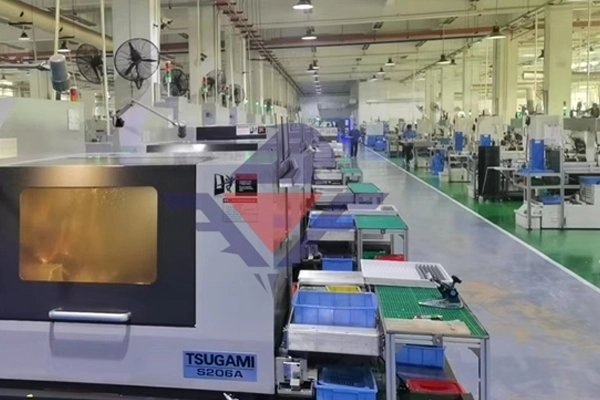
Swiss screw machines (Swiss CNC) are a superior method to make precision-sensor hardware to specific OEM specifications. Swiss CNC provides direct support of the workpiece at the time the cutting tool is used with the help of a guide bushing; therefore, reducing deflection of the generated part and allowing for very long length-to-diameter ratios as well as complicated internal/external threading profiles. At Falcon CNC, we specialize in creating custom sensor fitting fabrication solutions, whether you need only 1 prototype or run a lot of 500,000+ individual sensor parts with consistently accurate geometries.
Learn more details about our Swiss machining service for connectors and fittings manufacturing.
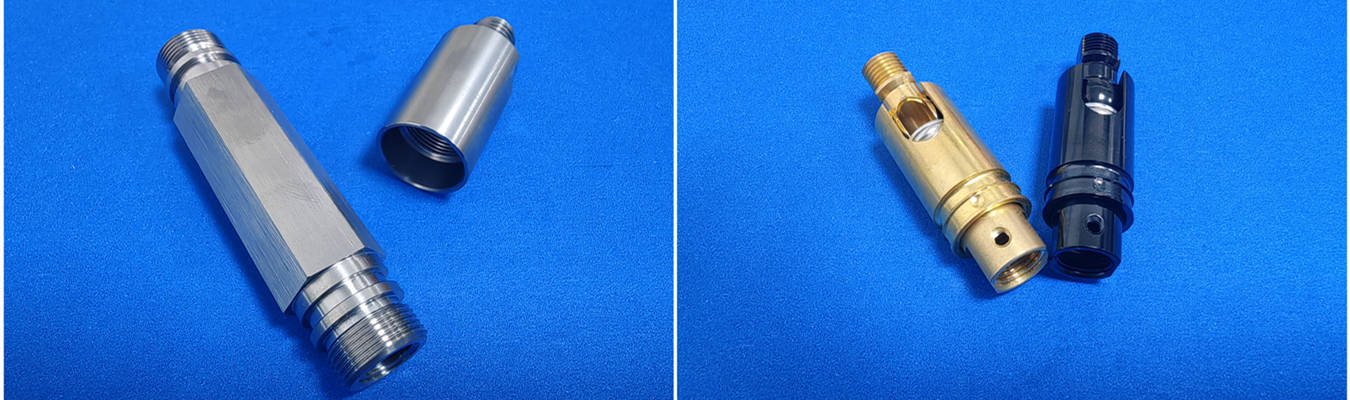
Before diving into fitting specifications, it is helpful to understand where fittings belong within a complete sensor assembly.
A typical industrial sensor consists of several distinct components, each with specific mechanical and electrical requirements:
| Sensor Component | Function | Typical Materials (Fittings Relevant) |
|---|---|---|
| Sensing element (e.g., thermocouple junction, piezoresistive die, RTD) | Detects the physical parameter (temperature, pressure, proximity) | Not applicable – usually ceramic, silicon, or specialized alloys |
| Sensor housing / body | Encloses and protects the sensing element and electronics | Stainless steel, brass, anodized aluminum, titanium |
| Fitting / process connection | Mounts the sensor to the process vessel or pipeline; provides sealing against media | Stainless steel, brass, PTFE lined, titanium |
| Sensor connector (electrical) | Transmits signal from sensor to control system (e.g., M12, circular) | Nickel-plated brass, stainless steel |
| Mounting bracket / adapter | Positions the sensor in the correct orientation; isolates from vibration | Aluminum, stainless steel |
| Thread insert / port adapter | Adapts between different thread standards (e.g., NPT to BSPP) | Brass, stainless steel |
As a sensor fittings manufacturer, Falcon CNC Swiss produces the stainless steel sensor fittings, brass sensor mounting hardware, and adapter components that connect sensing elements to real-world processes. Our fittings are machined to exacting thread standards, with sealing surfaces prepared for O-rings, gaskets, or tapered thread sealants.
The term “sensor connector” can refer to two distinct interface types, and engineers must be precise when specifying either:
These connectors relay the output from the sensor, whether it is an electrical output voltage, electrical current, or digital signal, to a controller or data acquisition system. Typical industry standards for sensors connectors are M12 circular connectors (12mm locking thread; A-coded for sensors, B-coded for field bus & D-coded for Ethernet), M8 connectors (for compact sensors, A-coded), and Deutsch, AMP, or other pin configurations. Electrical sensor connectors must have a corrosion-resistant shell (nickel plated brass or stainless steel), gold-plated contacts to minimize contact resistance, and need to be environmentally sealed (IP67/IP69K).
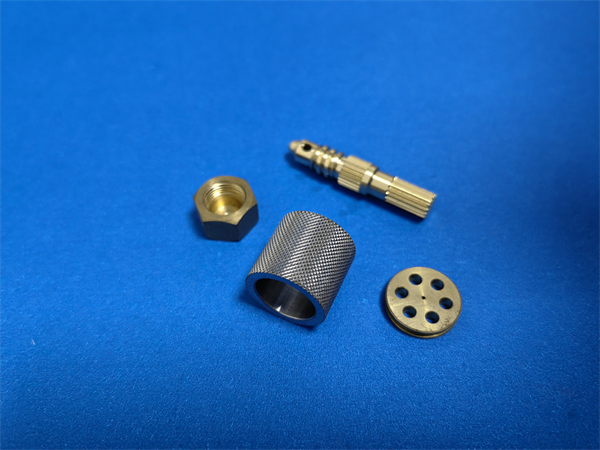
Falcon CNC Swiss is a automotive sensor connectors manufacturer and an industrial component supplier, machining the threaded shells, coupling nuts, and pin housings that make up these connectors to very tight concentricity tolerances for dependable mating.
The main aim of this guide is to describe the mechanical fitting which attaches the sensor to the actual process (i.e., pipe, tank, or vessel). The mechanical fittings have to contain process pressure, resist the corrosive effects of the media, and in many cases allow for removal of the sensor without downtime. (i.e. compression fittings).
Whether you need NPT Sensor Fittings (North America standard) or BSPP Sensor Adapters (British/European standard), Metric Thread Sensor Fittings, or High Pressure Sensor Connectors for Hydraulic Systems, the quality of the threads, surface finish and concentricity are all very important for the dependable sealing.
Thread compatibility is the most common engineering challenge in sensor fitting specification. Below is a comparison of the three major thread families we manufacture at Falcon CNC Swiss:
NPT sensors fittings utilize a tapered thread form having a 60° angle, with a taper of 1:16. The NPT male fitting will deform the NPT female thread by being tightened down to form a seal between them. However, due to the fact that an unsealed crest-to-root connection exists (thereby leaving a spiral leak path), a sealant (such PTFE tape or pipe dope) will be required in order to achieve leak-free operation. While this sealing process is usually effective in general use in industrial situations, great care must be taken in applying torque to avoid cracking the port from too much torque when tightening.
The thread form for BSPP sensor adapters is parallel (straight), with a 55° angle to the axis of the adapter. Unlike NPT, which has self-sealing threads, BSPP threads must have a secondary method of sealing, such as a bonded washer, O-ring or gasket that compresses into a flat face or counterbore. Because of this, BSPP adapters are ideal for applications that use repeated assembly/disassembly where thread wear will be an issue.
Threaded metric sensor fittings are typically found in US-based hydraulic, automotive and EU-based industry applications; they generally come in male/female versions known as M12×1.5 M14×1.5 M16×1.5 M12×1.5, M14x1.5 M16x1.5, M20×1.5. A seal is usually made by using a copper washer; O-Ring; or bonded seal to a machined surface – this gives metric threads good torque control and is extensively used for high-pressure hydraulic sensors or automotive pressure transmitters.
| Thread Standard | Thread Angle | Taper | Sealing Method | Common Applications |
|---|---|---|---|---|
| NPT | 60° | Tapered (1:16) | Thread deformation + sealant | North American industrial, pneumatic, low-to-mid pressure |
| BSPP (G) | 55° | Parallel | Washer, O-ring, or gasket on sealing face | European instrumentation, food-grade, hydraulic |
| BSPT (R) | 55° | Tapered | Thread deformation + sealant (similar to NPT) | European pipe fittings, steam, high temp |
| Metric (ISO 261) | 60° | Parallel (most) or fine pitch | Bonded seal, copper washer, O-ring face seal | Automotive sensors, hydraulic, high pressure |
| UNF / UNC | 60° | Parallel | Washer or O-ring face seal | Aerospace, defense, legacy equipment |
At Falcon CNC Swiss, we manufacture NPT sensor fittings (Classes 2A/2B per ASME B1.20.1), BSPP sensor adapters (ISO 228), and metric thread sensor fittings (6H/6g tolerances), all on our Citizen Swiss CNC lathes.
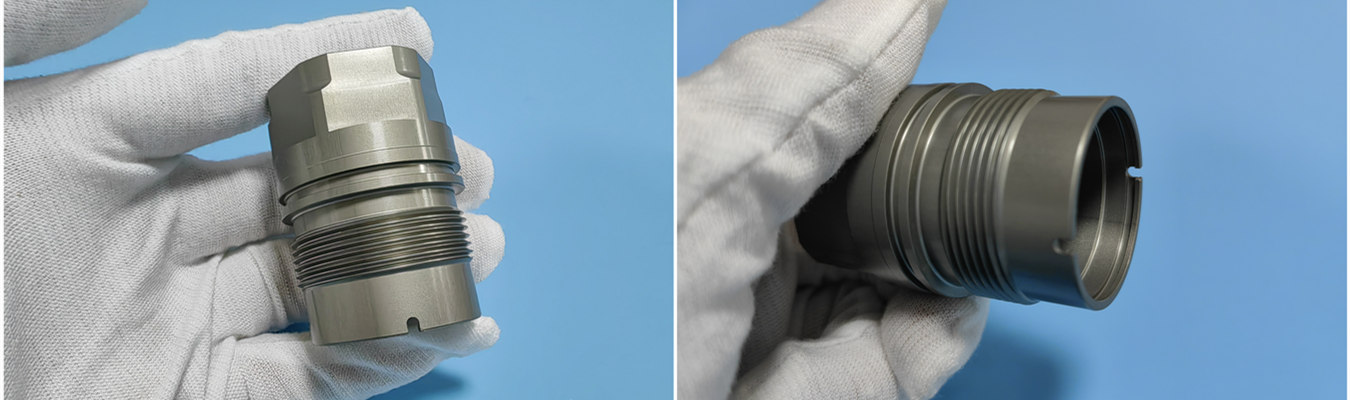
Material choice is arguably the most critical decision in sensor fitting design. The fitting must withstand process media (corrosive or not), temperature extremes, mechanical vibration, and pressure spikes. Below is how Falcon CNC Swiss approaches material selection for each application:
Sensor fittings made from stainless steel (like grades 303, 304, 316, 316L, and 17-4 PH) are the best all-around option for use in the most demanding environments. With its passivation layer of chromium oxide, stainless steel has a high level of corrosion resistance. It also has high levels of strength over a broad temperature range (-40° C to +400° C), pressure ratings greater than 6,000 PSI, and is acceptable for use in food-grade, chemical, and marine applications as well as a variety of other applications. 316 stainless is the best choice for use in a high-chloride (saltwater or de-icing salt) environment or an aggressive chemical environment. 17-4 PH precipitation-hardened stainless steel is used in hydraulic systems with sensor ports where high strength and or high pressure are required.
Falcon CNC Swiss produces both NPT and metric threaded sensor fittings on their multi-axis Swiss lathes with Class 2 or 6H thread fit and with sealing surfaces achieving Ra ≤0.8 μm.
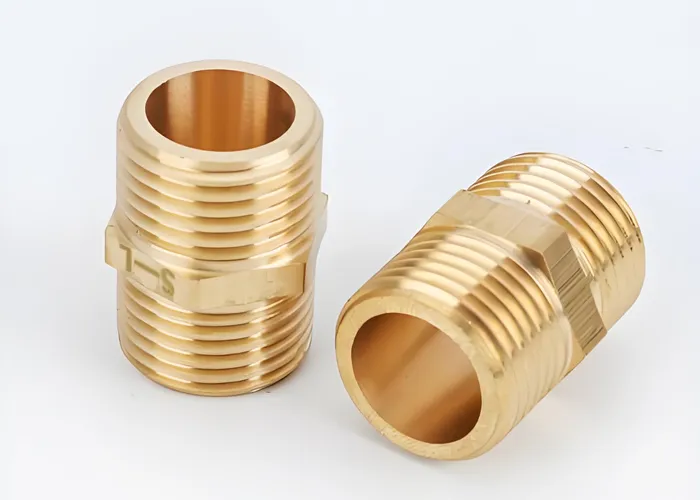
Brass sensor mounting hardware (typically C36000) has excellent machinability, corrosion resistance in fresh water and mild chemicals, and high thermal conductivity for rapid temperature response. Brass is commonly used for applications in plumbing, HVAC, pneumatic systems, and non-aggressive industrial environments; however, it should not be used where there will be exposure to salt water, strong acids, or temperatures greater than 200ºC, as dezincification will occur.
We specialize in manufacturing both low-volume rapid-turn prototype and high-volume production run brass sensor mounting components, but we also use brass as our primary material for threaded inserts/adapters, when stainless steel is unnecessary.
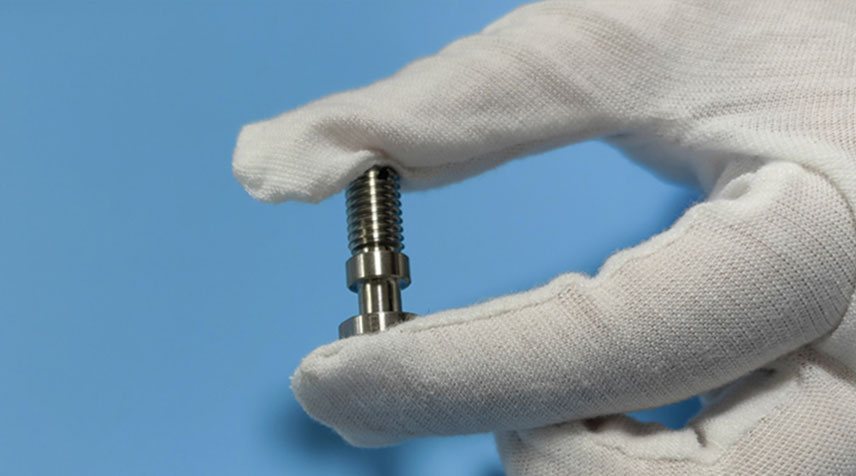
For medical device sensor fittings, aerospace instrumentation, and marine applications, titanium sensor housings (Grade 5 Ti-6Al-4V or Grade 2 commercially pure) provide the best strength-to-weight ratio and exceptional corrosion resistance in saltwater and chloride-rich environments. Also, titanium is a biocompatible material and is, therefore, the preferred material for all surgical or implantable sensors. Falcon CNC Swiss has extensive experience in machining titanium on a Swiss lathe; using specialized tooling and coolants to ensure the parts are not work-hardened during machining and to produce tightly tolerance threads.
PTFE lined sensor connectors can be used for extremely aggressive process liquids or gasses (strong acids, bases, solvents) by combining a PTFE liner that contacts the process with either a machined stainless steel or brass outer shell. The PTFE liner provides virtually complete chemical resistance, while the outer metal shell provides the means to support the mechanical strength of the connections and maintain the integrity of the threads. To ensure a secure bond between the PTFE lining and the metal housing, we create precise retention features and undercuts on the interface area between the two materials.
Anodized aluminum fittings (6061-T6 & 7075-T6) provide a great option for applications in aerospace, automation, and explosion-proof environments, where weight savings and non-sparking are paramount. The anodized coating on these materials provides both protection against wear and insulates them from electrical current. Falcon CNC Swiss provides both clear and hard anodized finishes per MIL-A-8625.
As a full-service OEM sensor fitting production partner, we stock all of the above materials and can provide material certifications (EN 10204 3.1) upon request. Explore our machined components capabilities →
Different industries impose unique regulatory, material, and performance requirements. Falcon CNC Swiss has deep experience across five key sectors:
Oil and gas sensors fittings must endure extreme pressure (15,000 psi), exposure to hydrogen sulfide (sour service), and explosion hazard. Our fittings are made of 316L stainless steel, Inconel 625, and 17-4 PH with either NPT or BSPT threads, and rated to API 6A pressure requirements. 100% of all critical dimensional locations will be tested and certified compliant to NACE MR0175 for sour service.
As an automotive sensor connector manufacturer, Falcon CNC Swiss manufactures automotive connectors or brass and also deliver stainless steel automotive connectors. The automotive uses for the products include connectors for engine management systems, transmission control systems, brake pressure monitors and battery thermal management systems. All the products are equipped with metric threads (M12 x 1.5, M14 x 1.5, M16 x 1.5 and M20 x 1.5) that include bonded seal grooves as well as vibration resistant locking features and there is a batch to batch consistency, because of the manufacturer's compliance with the IATF 16949 standards. See our automotive precision machining →
Materials which resist bacterial proliferation and can support high-pressure washdowns on a regular basis (high frequency) as well as satisfy FDA and 3-A Sanitation standards must be used for food-grade sensor connectors. All of our food-grade sensor connectors are constructed of 316L stainless steel with electropolished surfaces (Ra ≤0.8 μm) and utilize either BSPP (British Standard Pipe Parallel) or Clamp (Tri-Clamp) style of connections to avoid thread crevices where bacteria may form.
Medical device sensor fittings must withstand autoclaving, maintain seal properties and thread integrity after being autoclaved, gamma-ray and/or EtO sterilized. We manufacture all sensor fittings using either 316L stainless steel or Grade 5 titanium and are passivated to ASTM A967. In addition, they are all packaged in a cleanroom to ISO Class 8 standards. All materials used in the manufacturing of the sensor fittings are traceable from raw material to final part.
Beyond basic threaded fittings, Falcon CNC Swiss manufactures specialized sensor interface hardware:
Sensor compression fittings allow the installation of the sensing device into the process stream and to be securely held in the process vessel without having to weld or thread. The fitting includes three components: the body, one or more ferrules, and a nut. As the nut is tightened, the ferrule will compress around the sensor stem creating a sealed pressure-tight connection. Our compression fittings are produced from either stainless steel or brass materials, with all ferrules produced to exact hardness and geometries to provide consistent sealing.
Sensor flange adapters allow mounting sensors onto ASME or DIN flanged process connections by converting the threaded port into a flanged connection. Adapter Manufacturing: The flanged adapters are machined from bar stock (solid material) or forgings (blanks) and include an O-ring groove, bolt circle dimensions, and other features that will match the standard dimensions of the flange to which they are intended to attach (flange classes of 150#, 300#, and 600#).
Sensor thread inserts can be used to fix damaged inside threads in sensor ports so you don't have to replace the expensive piece of equipment. In addition, sensor port adapters allow conversion from one thread type to another (examples: NPT to BSPP or BSPT to Metric). The sensor port adapters are precision machined from either Stainless Steel or Brass and each set of internal/external threads are measured as a Class Fit for proper fit.
Sensor union fittings allow for the rapid removal of a sensor for calibration and/or replacement without disconnecting the sensor from the process pipe. The union consists of three pieces, two threaded ends and one center nut which securely fastens the two ends together and compresses the O-ring or gasket seal. The sealing faces of sensor union connections are machined to precision match each other so as to provide leak-proof service.
The sensor mounting brackets are used to mount the sensors to the correct orientation on many different types of machinery, such as on tank walls and pipe stands. Sensor mounting brackets are typically machined out of aluminum or stainless steel, and have a range of slots for adjustment and threaded holes for the sensors to be held in place.
The majority of the components are manufactured from either Swiss type or CNC type operations; secondary processes (milling, drilling, tapping, and deburring) are done, wherever possible, in one set-up.
A thermocouple fitting is a specialized sensor fitting that provides a method of mounting a thermocouple probe into a process while providing electrical isolation (to avoid ground loops) and a faster thermal response time. A thermocouple generates a voltage based on the difference in temperature between two dissimilar metals that are joined at the sensing junction.
The fitting material must be compatible with the media being measured to avoid measurement errors. The thermocouple wires must, however, be electrically isolated from the fitting. Common methods of achieving electrical isolation are with ceramic insulators, magnesium oxide (MgO) insulation inside a metallic sheath or with plastic thread adapters. Thermocouple fittings from Falcon CNC Swiss are manufactured with precision machined internal bores that accept standard thermocouple probes, include compression fittings to hold the probe in place and provide external threads (NPT, BSPP or metric) for mounting to the process. For cryogenic applications or high-temperature applications, our fittings are machined from Inconel or 316H stainless steel.
Standard features provided on thermocouple fittings can include non-standard thread forms for use with non-standard OEM sensor ports; thermowell adapter threads (for example, ¾″ NPT to ½″ NPT); integrated hex flats for wrenching and laser engraving of thread size, material grade, and heat traceability codes.
Modern sensor manufacturers require integrated compact assemblies that seal to the process and house the sensing element, electronics and connector in a common machined fitting. The vertical integration approach is one area where Falcon CNC Swiss excels.
We produce single-piece sensor housings that contain the process thread (NPT, BSPP, or metric) on the media end, an internal bore size for the sensing element (i.e., pressure sensing diaphragm or thermocouple junction), an installation torque feature (i.e., hex or knurled surface), a shoulder to O-ring seal the electronics housing, and either a threaded or snap-fit connection for the electrical connector (i.e., M12, Deutsch or custom). By consolidating all of these functions into one single Swiss machined component, our customers have reduced their assembly labor costs, eliminated their leak paths and improved the reliability of their overall sensors.
Additionally, for high volume applications, we can also provide screw machine products that are ready to be used in automated assembly lines pre-orienting parts into trays or in tape-and-reel packaging.
Explore our precision electronic machining →
Whether you need 100 pieces for a prototype medical sensor or 500,000 pieces for an automotive OEM program, Falcon CNC Swiss delivers. Get a firm quote with lead times and engineering recommendations. Explore our Swiss machining connectors and fitings.
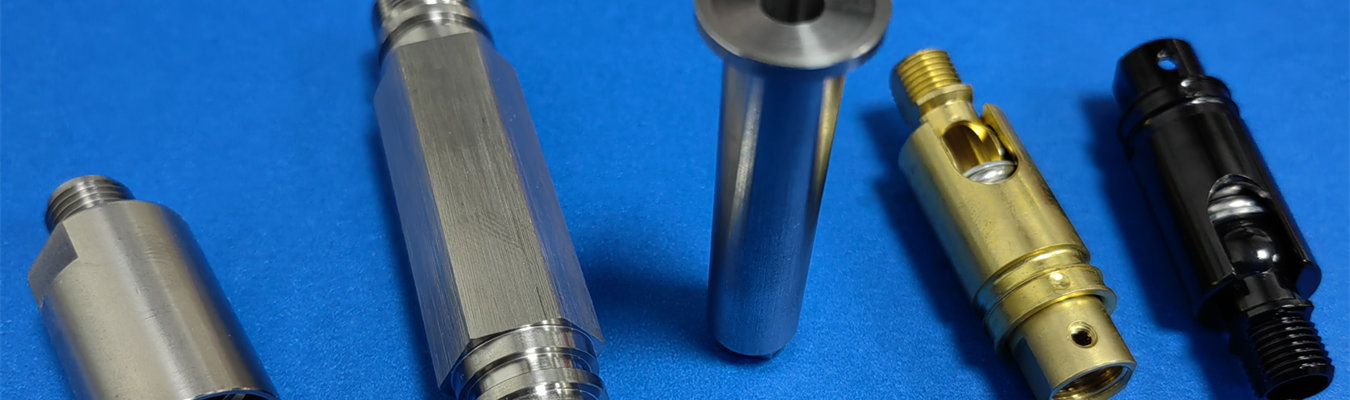
Every batch of sensor fittings from Falcon CNC Swiss undergoes rigorous inspection tailored to thread standards:
Thread inspection – Go/no-go gauges for all NPT, BSPP, BSPT, and metric threads
100% OD measurement – Laser micrometers (resolution 0.0001 mm) on critical sealing diameters
Surface finish measurement – Ra and Rz checked via contact profilometer (target ≤0.4 μm for O-ring sealing faces)
Dimensional inspection – CMM or optical comparator for length, concentricity, and hex/flat dimensions
Pressure testing (upon request) – Hydrostatic or pneumatic test to specified proof pressure
For high pressure sensor connectors and vacuum rated sensor fittings, we offer helium leak testing to 1×10⁻⁶ mbar·L/sec or better. Material certifications and full traceability documentation accompany every shipment for regulated industries (medical, aerospace, oil and gas).
A: A thermocouple fitting is a process connection for mounting a thermocouple probe into an inlet pipe, a tank, or to a machine. Typically they will have some type of compression fitting that will maintain the probe's position and have external threads (NPT, BSPP, or metric) for mounting to the process. The fitting provides mechanical retention and sometimes electrical isolation to eliminate measurement errors caused by ground loops due to electrical noise.
A: An industrial sensor is complete with the following components: (1) sensing element (thermocouple, RTD, pressure die, etc.), (2) sensor body or housing that protects the electronics, (3) fitting/process connection (threaded, flanged, or compression), (4) sensor connector (an electrical interface such as M12), (5) mounting bracket or adapter, (6) and thread insert or port adapter when applicable.
A: A "sensor connector" can either refer to the electrical connector (such as M12, M8, or Deutsch) that will transmit signals from the sensor to a control system or the mechanical connection point where the sensor will connect to the media it will be measuring (NPT, BSPP, or metric threads). The electrical connector will be manufactured from nickel-plated brass or stainless steel with gold-plated contacts and the mechanical component will be manufactured from stainless steel, brass, or titanium and cut so the threads will be precise and sealable.
A: 316L stainless steel is most frequently specified for both general chemical use and marine type environment conditions. For areas of extreme chloride exposure (such as seawater and de-icing salts) you should consider using either super duplex stainless steel or titanium grade 2. Additionally, PTFE lined connectors on the sensor will provide the highest level of chemical resistance for applications involving strong acids and/or bases.
A: Yes. Falcon CNC Swiss specializes in custom thread forms and proprietary OEM port thread geometries. Our high-precision Swiss Turning Centers can produce virtually any thread pitch and diameter allowed within the machine's capacity.
A: Yes, indeed. Low (10 pieces) to high volume runs can be produced. Prototype runs will be quoted and scheduled quickly. Since the high precision Swiss machining process employs standard inserts to produce the parts, there are no custom hard tooling costs and thus very small tooling costs.
While oil and gas sensors are often pressurized, medical device sensors must be biocompatible and ready for cleanroom packaging. The quality of these fittings influences measurement accuracy, process safety, and equipment uptime. The polymer and stainless steel products produced on the Swiss CNC Falcon are fully controllable variables with respect to different threads and classes, surface finishes, integrity of material being handled, and features that require assembly.
We welcome your partnership with an industrial sensor fitting supplier, one with an engineer's mentality. Send us your specification today – we will return a detailed proposal including material recommendations, thread tolerance analysis, and firm pricing with lead times.
Don’t let poorly machined fittings compromise your sensor reliability. Contact Falcon CNC Swiss for a no-obligation quote. We speak thread standards, material certifications, and compact assembly integration. Request your consultation →