English
  日本語
日本語  한국어
한국어  français
  Deutsch
  Español
  русский
  العربية
Apr
Learn More
07

Miniature shafts serve as the building blocks for high fidelity motion mechanisms; they are present in many different applications; A small motor shaft in a surgical robot or a tiny shaft in a drone motor can spin at 60,000 RPM. When you require stainless steel mini shafts for medical devices, tungsten carbide mini shafts for high wear environments, or mini shafts manufactured to tight tolerances to achieve optical alignment, the way they are manufactured has an effect on performance. Falcon CNC Swiss manufactures custom mini shafts with tight tolerances, mirror finishes, and provides total material flexibility through the combination of Swiss machining and screw machine product knowledge.
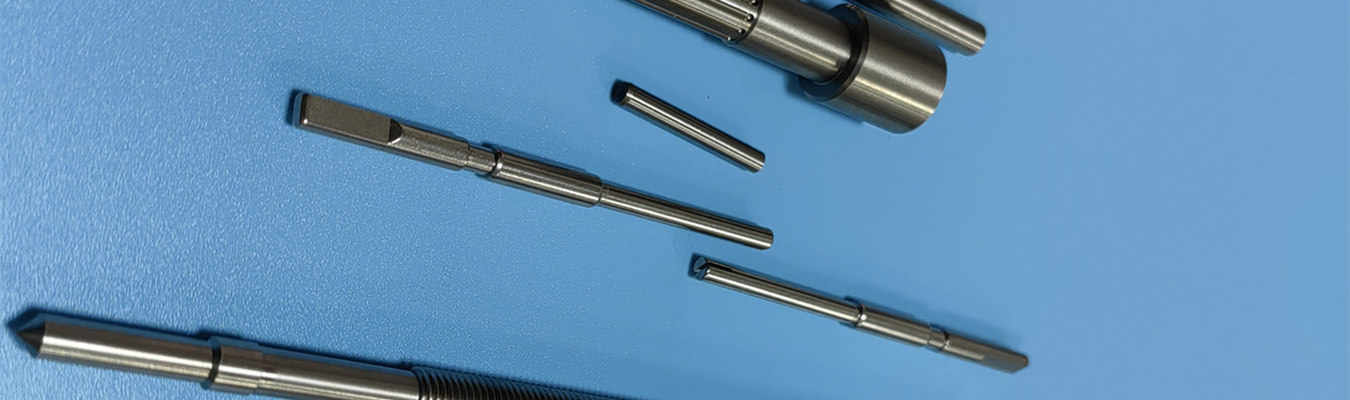
Miniature shafts are not simply tiny versions of larger shafts, rather they are precision parts that can transmit torque, support rotating parts, remain concentric under load, and withstand many thousands or millions of cycles while taking up minimal space. Therefore, if a miniature shaft is manufactured poorly, it can create vibration, cause premature failure of bearings, cause misalignment and create waste. Conversely, if a miniature shaft is manufactured using a precision grinding process to achieve optimal hardness, surface finish and geometric accuracy, it will generally increase equipment life by a factor of two and enhance the performance of systems.
Swiss-type automatic lathes (sometimes called Swiss screw machines or Swiss turning centers) are typically regarded as the 'gold standard' for producing the type of miniature shafts that typical manufacturers of miniature shafts require. Swiss machining is different than traditional CNC machining because the Swiss machining process supports the workpiece immediately adjacent to the cutting tool using a guide bushing. By doing this, the amount of deflection experienced by the workpiece during the machining process is minimized and therefore permits extreme length-to-diameter ratios, often greater than 20:1. At Falcon CNC Swiss, we provide custom miniature shafts in both low quantity prototype as well as high-volume micro shaft production.
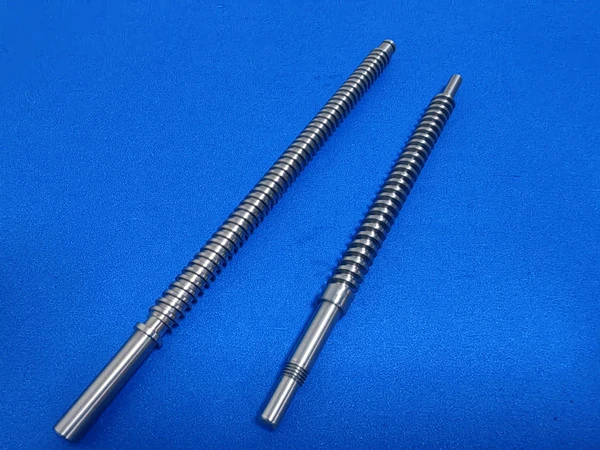
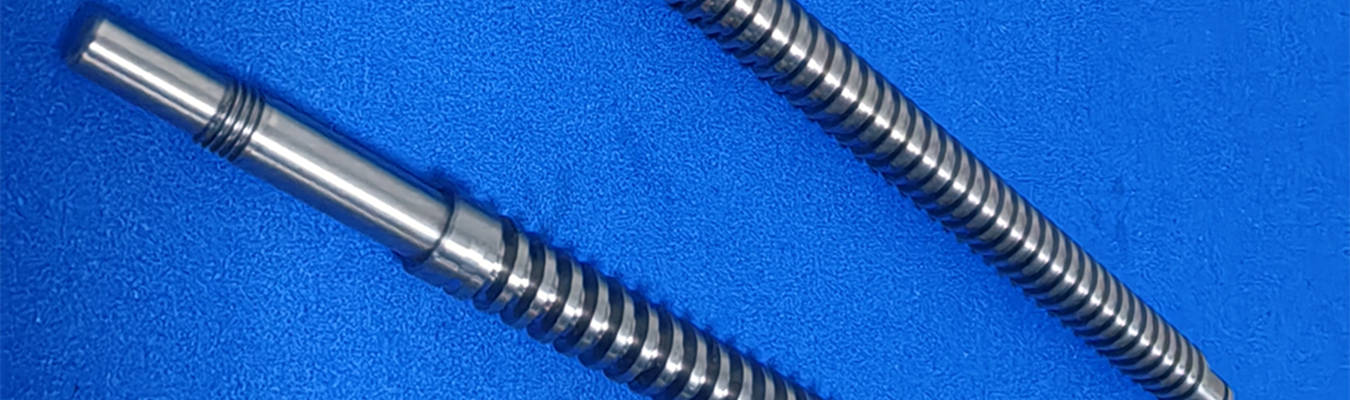
A miniature or micro-shaft is a thin cylinder with a diameter usually less than 5 mm and sometimes only as low as 0.1 mm. The length may exceed 20 times the diameter in most applications, while typical profiles include transmitting motion, supporting rotating components, and precisely placing components within a mechanical assembly.
Having the following attributes gives quality miniature shafts:
A small diameter; standard range of 1 mm to 5 mm with micro-shafts going down to 0.1
A large length-weight ratio; standard ratios of between five to twenty-five times for reliable guidance during production
High concentricity; roundness/running true within a few microns
Precision surface finish; surface finish between 0.4 and 0.8 micro-inches for low-friction operation
Specified hardness; either through or case hardened depending on wear characteristics.
From an engineering mechanics perspective, shafts are classified into two main types based on the loads they carry:
| Type | Load Carried | Typical Applications | Miniature Examples |
|---|---|---|---|
| Rotating shaft (transmission shaft) | Bending moment + Torque simultaneously | Most common shaft type; transmits power while supporting rotating elements | Motor shafts, gear shafts, drive shafts in robotics |
| Spindle / Axle (non-torque shaft) | Bending moment only (no torque) | Supports rotating parts without transmitting power; may rotate (railroad axle) or remain stationary (pulley support) | Idler shafts, guide rollers, support pins |
| Drive shaft (pure torque shaft) | Torque only (no bending moment) | Transmits torque between components without supporting loads | Flexible shafts, coupling shafts, long slender torque tubes |
Most miniature drive shafts are the rotary shaft type and must withstand both torsional loads and transverse flexural loads while in motion. Selecting the appropriate material, the proper heat treatment process for the selected material, and the correct geometric precision during manufacturing are extremely important in meeting this dual load requirement on miniature drive shafts.
In addition to being categorized by load criteria, miniature drive shafts can also be grouped according to their geometry (solid versus hollow, stepped versus straight, splined versus keyed) and by their ends shape or style (threaded, flat, drilled through with a pin or bolt, notches, serrations, or mounts).
Many times, the question, Are custom driver shafts worth it? comes up in product development. It all depends on the application. Given the standard lengths and diameters for standard off-the-shelf components, there can be situations that custom miniature shafts can be truly worth the investment where:
Space is constrained – Custom lengths, reduced diameters, or stepped geometries fit where standard shafts cannot
Performance demands are specific – Tight tolerances (±0.002 mm), specialized materials (titanium, Inconel, tungsten carbide), or unique surface finishes
Integration with mating parts – Shafts must interface with custom bearings, gears, encoders, or housings
Volume justifies tooling – For production runs, per-unit costs decrease dramatically, making custom shafts economical
Reliability is mission-critical – Medical devices, aerospace actuators, and surgical robotics cannot risk failure from generic components
Falcon CNC Swiss, as a miniature drive shaft manufacturer, provides custom mini shaft design services with NRE tooling charges being absent for CNC machined parts. Prototype runs as low as 25 pieces allow for thorough testing before committing to high-volume micro shaft production.
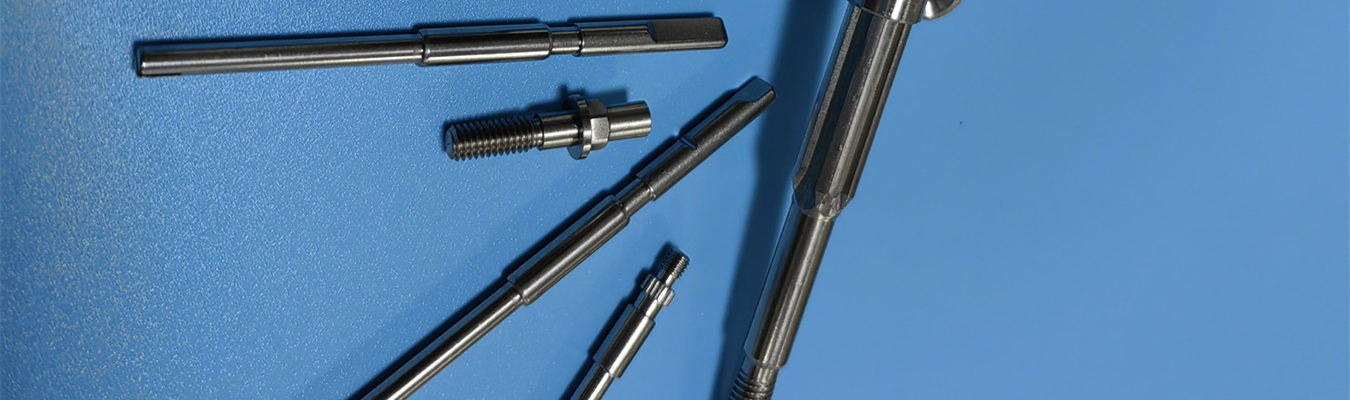
In a traditional CNC lathe, one end of the workpiece is secured in a chuck and the remaining workpiece length cannot be supported and will be subjected to cutting forces. If your part is a miniature shaft with a length/diameter ratio of more than 3:1 the unsupported length will deflect, creating a taper or chatter, and cause dimensional variation in the finished part. By contrast, Swiss-style turning has an additional guide bushing that provides immediate support for the workpiece at the point of cut, resulting in an unsupported length of approximately 1-2 times that of the bar diameter.
Here is a technical comparison:
| Parameter | Conventional CNC Turning | Swiss-Type CNC Turning |
|---|---|---|
| Min. diameter | Typically ≥3 mm | ≥0.3 mm (0.012″) standard; down to 0.1 mm with specialized setups |
| Max L/D ratio (without support) | ≤3:1 before deflection becomes unacceptable | ≥20:1 reliably; 25:1 achievable with optimized toolpaths |
| Typical diameter tolerance | ±0.013 mm to ±0.025 mm | ±0.005 mm standard; ±0.002 mm on critical features |
| Positional tolerance | ±0.05 mm typical | ≤±0.025 mm (0.001″)[reference:11] |
| Surface finish (as-machined) | Ra 0.8 μm to 1.6 μm | Ra 0.2 μm to 0.4 μm standard; Ra 0.1 μm with grinding |
| Concentricity / roundness | ≤0.005 mm on short parts, degrades with length | ≤0.001 mm roundness; ≤0.002 mm coaxiality |
At Falcon CNC Swiss, we operate Citizen, Star, and Tsugami Swiss CNC lathes with up to 10 axes of motion, live tooling, and sub-spindle capabilities. For micro shafts requiring extreme precision—down to ±0.0001″ (±0.0025 mm)—we combine Swiss turning with in-house centerless grinding and superfinishing.
Need a reliable precision mini shaft maker for a new medical device, robotics actuator, or electronic assembly? Share your 2D drawing or 3D CAD file. Our engineers will recommend optimal material, tolerance class, and surface finish within 24 hours. Get your free DFM review →
Material selection is one of the most critical engineering decisions for miniature shafts. The material must balance machinability, strength, hardness, corrosion resistance, and cost. Below is a comprehensive material guide based on our experience at Falcon CNC Swiss.
Stainless steel mini shafts are the most common choice across medical, robotics, and electronics industries due to their excellent combination of corrosion resistance, strength, and machinability.
303 Stainless Steel – Free-machining grade; ideal for high-volume Swiss machining screw machine products. Sulfur content improves chip breakage and reduces tool wear.
304 Stainless Steel – Better corrosion resistance than 303; slightly more difficult to machine. Used for food-grade and medical applications.
316 Stainless Steel – Superior chloride resistance (body fluids, saltwater). The gold standard for medical devices and marine sensors.
17-4 PH Stainless Steel – Precipitation-hardened to HRC 38-45; high strength and excellent fatigue resistance. Used in aerospace actuators and high-stress shafts.
440C Stainless Steel – Through-hardened to HRC 58-60; excellent wear resistance but more difficult to machine. Used for high-wear applications like bearing shafts.
For applications that are abrasive or call for an elastic modulus (stiffness) far greater than that of steel, tungsten carbide miniature shafts excel. The hardness of tungsten carbide is approximately 89 to 92 RHA (approximately equivalent to 70 to 72 HRC), while its modulus is close to 3 times the modulus of steel. However, carbide is a very brittle material and must be ground using specialized grinding, not turned. The company processes for manufacturing tungsten carbide shafts utilize centerless grinding and electrical discharge machining.
Commercially pure titanium micro shafts (Grade 2) or Grade 5 Ti-6Al-4V micro shafts provide an outstanding balance of strength and weight. Additionally, these materials exhibit excellent corrosion resistance and have complete biocompatibility according to ASTM F136. These materials are commonly used in the manufacture of orthopedic surgical instruments and components for implantable devices as well as aerospace actuators, where reducing the overall weight is crucial.
Hardened steel small shafts made from either 52100 bearing steel (for high-cycle applications such as bearings and cam followers) or 8620 case-hardened steel have a surface hardness of HRC 58-62 with a hard core that is tough and shock resistant. We collaborate with qualified heat treatment vendors to perform vacuum hardening, which reduces distortion on small features.
A mini shaft that combines the hardness of a steel bar with an equivalent hardness to a hard (HRC 65–70) chrome surface has a chrome layer to create a smooth surface for sliding against polymer or bronze bushings; this will reduce wear, prevent galling, and give excellent resistance to corrosion for example: 5–25 microns of hard chromium; commonly used in linear guide systems and pneumatic cylinders.
Beryllium Copper (C17200) – Non-magnetic, excellent spring properties, good conductivity. Used for sensor shafts and connector pins.
Inconel 625 / 718 – High-temperature nickel alloys for extreme environments (600°C+). Used in aerospace and gas turbine sensors.
Kovar / Invar – Low-expansion alloys for optical and electronic applications requiring dimensional stability across temperature ranges.
Falcon CNC Swiss maintains a broad material inventory and provides full material certifications (EN 10204 3.1) upon request. For a deeper discussion, explore our Swiss machined components capabilities →
Precision ground mini shafts requiring consistent submicron tolerances and fine surface finish can only be achieved with a combination of Swiss turning and in‐house centerless grinding. After heat treatment, grinding removes the last 0.01‐0.05 mm of material and will provide the following:
Diameter tolerance ≤ ±0.002 mm in critical fit zones.
Roundness ≤ 0.002 mm (2 microns).
Cylindricity ≤ 0.002 mm over a length of 50 mm.
Surface Finish Ra 0.1 μm to 0.2 μm (4‐8 microinches) - high quality, low friction surface finish.
Precision Ground Shafts Are Critical For:
Bearing Journals - Roundness and Surface Finish are keys to bearing life and noise.
Seal Surfaces - Roughness will cause leakage on rotary seals.
Optical Alignment - Geometric errors will degrade focus or sensor accuracy.
High Speed Shafts - Geometric errors will result in imbalance, causing vibration and premature failure.
For high precision mini shafts for the medical device and aerospace industries, we can also provide complete inspection reports, CMM Data, Roundness and Surface Finish profiles.
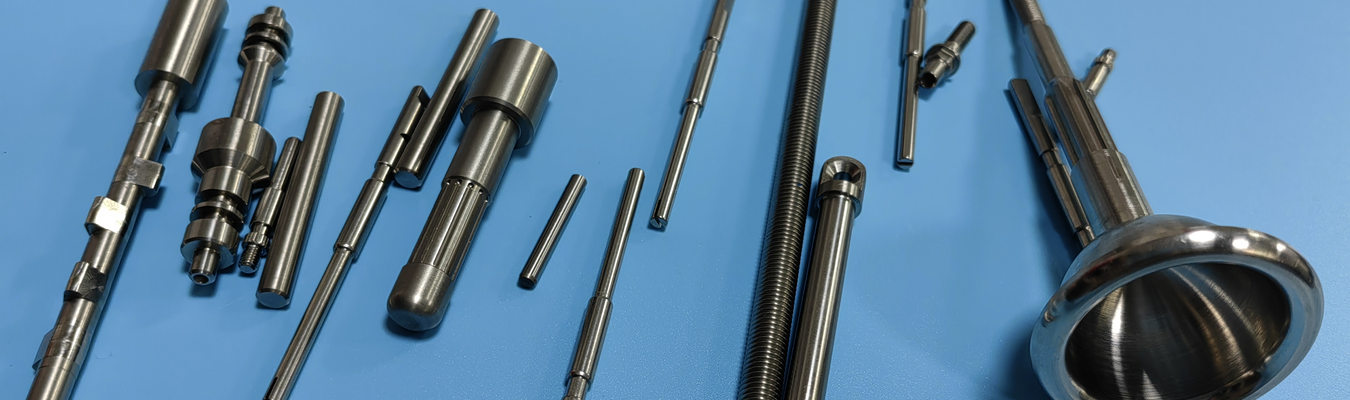
Miniature shafts are critical components across virtually every high-precision industry. Falcon CNC Swiss has deep experience supplying miniature shafts for medical devices, miniature shafts for robotics, and small motor shafts for electronics.
Medical Devices will require that all Miniature Shafts should comply with ISO 13485 Cleanroom Standards, along with Biocompatibility (as per ISO 10993) and Very Accurate Geometric Tolerances. Examples of Applications for Miniature Shafts Include:
Surgical instruments – Biopsy needle cores (0.8mm – 3 mm); Endoscopic driver shafts; Orthopedic reamer shafts.
Diagnostic Devices – Blood glucose meter detection shafts; Lab Automation Pins.
Robotic Surgery – Miniature drive shafts for Forceps and Scissors.
Implantable Devices – Bone screw driver shafts; Guide rods for spinal instrumentation.
Materials Used will include 316L Stainless Steel (Passivated) and Ti-6Al-4V. The Surface Finish will have an RA ≤ 0.8. Microns for prevention of tissue attachment and steam sterilization.
Miniature shafts designed particularly for use as rotors in small drones and robotics must also possess very low rotational moment of inertia, high static strength, and highly concentric [reference:25]. Often, application requires that these shafts be able to support a stable rotor with a running speed of greater than 60,000 rpm within very specific dynamic balancing limits.
The following are examples of possible applications:
Drone motor shafts: Between 1mm to 3mm in diameter with a running speed capability of 60,000+ rpm and very precise dynamic balance.
Servo actuator shafts: For robotic arms, exoskeletons, surgical robots.
Stepper motor shafts: For 3D printing, CNC machines, industrial automation.
Miniature gearbox shafts: For gear drives that have compact or very high torque.
Materials will typically include: 303 stainless steel (least expensive), 17-4 PH stainless steel (highest strength), or 2024 T3/T4aluminum (lightweight). Appropriate surface treatment may include hard anodize for aluminum, black oxide for stainless steel, or by means of electroless nickel plating.
Components mini shafts for electronic and sensor shafts are used in:
Miniature cooling fan shafts; applied with potentialimeter and encoder shafts for position feedback in industrial controls;
Optical sensor shafts (i.e. laser rangefinders, barcode scanners, LIDAR systems);
Printing and scanning shafts (i.e. automated office equipment);
In consumer electronics, micro-shafter (brass, C36000, good machinability/conductivity).
Falcon CNC Swiss also produces custom mini shaft design for OEM electronics manufacturers requiring unique lengths, diameters, and end features. See our electronic precision machining capabilities →
As a precision pin manufacturers with extensive experience across shaft-type components, we apply the same rigorous quality standards to miniature shafts as to guide pins and connector pins. Here are the critical specifications engineers must define:
Small shaft manufacturing requires specifying the correct ISO tolerance class for the intended fit[reference:29]. Common classes for miniature shafts:
h6 / h7 – Precision sliding fit for shafts running in bushings or ball bearings
g6 – Close running fit with minimal clearance; for high-accuracy alignment
k6 / m6 – Transition or interference fit for press-fit mounting into gears or pulleys
Custom – Proprietary tolerances for OEM-specific assemblies
Falcon CNC Swiss routinely holds ±0.005 mm diameter tolerance on turned shafts and ±0.002 mm or tighter on ground shafts.
Miniature shafts surface finish (measured as Ra – arithmetic average roughness) affects friction, wear, sealing, and fatigue life. Standard ranges:
Ra 0.4-0.8 μm – Standard turned finish; acceptable for non-critical, low-speed applications
Ra 0.2-0.4 μm – Precision turned or lightly ground; used for bearing surfaces and seals[reference:32]
Ra 0.1-0.2 μm – Ground and honed; for ultra-high-speed shafts (60,000+ RPM) and optical surfaces[reference:33]
Ra ≤0.05 μm – Superfinished; for extreme low-friction, long-life applications
Guide pin hardness scale principles apply equally to miniature shafts. Through-hardened shafts (HRC 45-62) resist wear but may be brittle. Case-hardened shafts (HRC 58-62 surface, softer core) resist impact while maintaining wear resistance[reference:34].
Low carbon steel (1018, 12L14) – Can be case-hardened; low cost for non-critical shafts
Medium carbon (1144 Stressproof, 4140/4150) – Heat-treatable to HRC 28-35 (pre-hard) or HRC 45-52 (full hardening)
Bearing steel (52100) – Through-hardened to HRC 58-62; maximum wear resistance
Tool steel (D2, A2, O1) – Air-hardening; excellent for precision ground shafts requiring dimensional stability after heat treat
In today’s world, one of the most common inquiries Design Engineers have is “Can you produce low-volume/low-cost small diameter shaft prototypes?” Yes! The cost to setup Swiss machining processes is relatively low compared to other manufacturing methods, such as stamping or cold heading, where high-end hard tooling is required. Falcon CNC Swiss can support the following volumes of miniaturized shafts:
- Prototype runs, with quantities of 25-500, can be provided for Design Verification and Beta Testing.
- Pilot Production, with quantities of 500-10,000, can be provided for Clinical Trials or to launch a product to market.
- High-Volume Production Orders from 10,000 to over 5,000,000 will be produced via our Automated Bar Feeding System.
For custom-length micro-shafts, we have the capability to manufacture micro-shafts of any length from 2mm to 300mm without the need for length-specific tooling; this degree of flexibility provides for excellent customization to accommodate for design modifications that occur during the design process.
Falcon CNC Swiss also provides additional value by combining its Miniature Shaft Tooling expertise with its engineering review process (Design for Manufacturability – DFM) to ensure that the following issues are addressed before quoting and manufacturing a miniature shaft:
- Unnecessarily tight tolerances that can be relaxed to produce savings
- Complex tooling due to design features being difficult to access
- Materials being selected that are not suitable for the specifications call-out
- Surface finish specifications that are improperly specified
If you have a miniature shaft project, please complete our Request for Quote (RFQ) process and receive a formal quote, including process and lead time engineering feedback, whether it’s for 50 miniature shafts to support a robotic prototype or to produce 500,000 miniature shafts to support an automotive sensor program. Check our Swiss machining small shafts manufacturing.
A: There are two primary types of shafts: rotating (or transmission) shafts which transmit both torque and bending loads, and spindle/axle shafts which transmit only bending loads; however, there is also a third type, drive (or power) shafts which transmit torque only as is done with small diameter shaft applications (for example, motor shafts, gear shafts, robot joints).
A: Yes, custom drive shafts can provide significant value to applications that are limited by space or need precision performance specifications (tight tolerances and special materials), as well as having the ability to integrate custom parts, produce medium to high volumes, where reliability is of high importance (medical and aerospace). Custom shafts allow for the reasonable elimination of the tradeoff when using off-the-shelf components by optimizing the total assembly.
A: A miniature/micro/small/precision shaft is defined as a long cylindrical component, generally under 5mm (or as small as 0.1-0.3mm) in diameter with a length-to-diameter ratio of generally 20:1, that can be utilized to create motion, support rotating components or accurately locate in small mechanical assemblies for medical device, robotics, drone, and electronic applications.
A: Custom Swiss Turned miniature shafts typically achieve a tolerance of ±0.005mm (diameter), while custom Precision Ground miniature shafts can achieve a tolerance of ±0.001mm (±0.00004in) (diameter). Critical functions can be held within ≤ 0.001mm of roundness and concentricity[ref. 35][ref. 36].
A: Common materials utilized for miniature shafts include, but not limited to, 303/304/316/17-4/440C Stainless Steel, Ti-6Al-4V Titanium, Tungsten Carbide, 52100 Bearing Steel, 8620 Case Hardened Steel, Beryllium Copper, C36000 Brass, and 6061/7075 Aluminum; selection of material used will provide all factors of consideration for corrosion resistance, hardness, strength-to-weight ratio, and conductivity.
A: Measurement systems used include: Laser Micrometers (diameter) resolution of 0.0001mm; Optical Comparators (length and profile); CMM (position tolerances); Roundness Testers (circularity); Contact Profilometers (Surface Finish [Ra]). Consistency is maintained through in-process SPC for high-volume production and batch-to-batch.
The performance of your miniature shafts directly affects the reliability, power efficiency, and service life of your devices—even if they are made from stainless steel mini shafts used for surgical instruments, or tungsten carbide mini shafts used in extreme wear applications. With our Swiss machining capabilities at Falcon CNC Swiss, you can control the following variables in your miniature shaft design: Material selection; Diameter tolerances; Surface finishes; Hardnesses; Concentricities; And secondary features.
As precision manufacturers of mini shafts as well as specialists in the manufacture of custom miniature shafts, we think like engineers and not just machinists. We take your design and provide value-added services by ensuring it is designed for manufacturability, provide recommendations for cost-effective tolerance strategies, provide suggestions on the best material/heat treatment combination and provide parts that meet your exact specifications.
Don’t let poorly made shafts limit your product’s performance. Contact Falcon CNC Swiss for a no-obligation quote. We speak GD&T, material science, and assembly integration. Request your consultation →