English
  日本語
日本語  한국어
한국어  français
  Deutsch
  Español
  русский
  العربية
Jul
Learn More
30

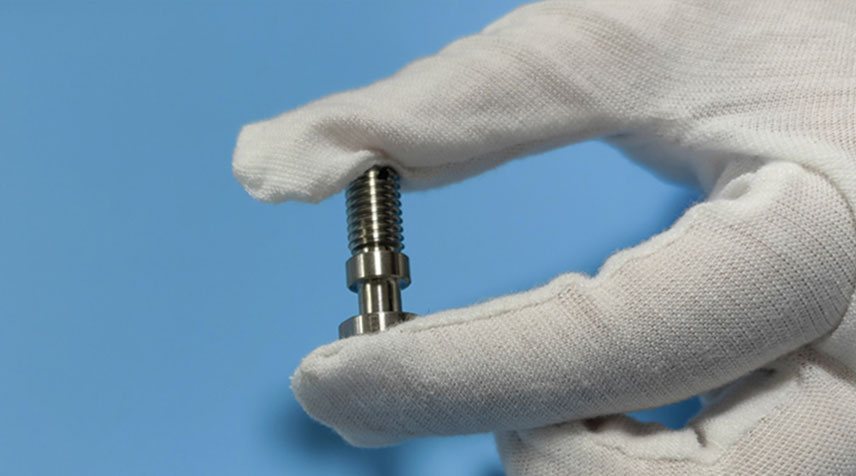
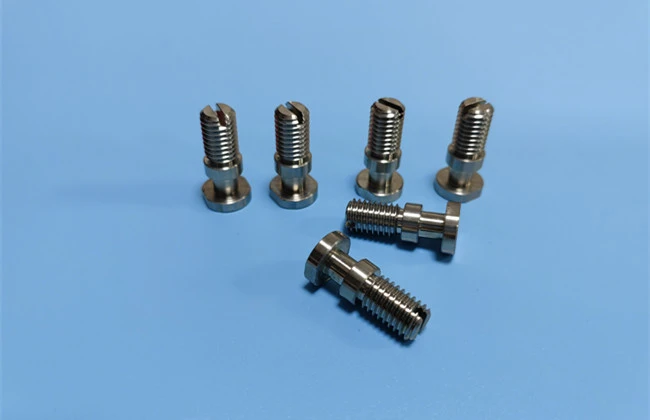
In industries where every gram matters, and reliability in extreme environments is critical, titanium fasteners (including titanium metric bolts, titanium hex head bolts, titanium stud bolts and titanium machine screws) are the preferred engineered solution. Titanium fasteners deliver a unique combination of lightweight construction, strength and corrosion resistance in applications as diverse as aerospace fuselages, Formula 1 suspension systems, medical implants and underwater marine equipment.
For engineers and designers, a foundational understanding of titanium bolt grades, titanium threading specifications and the capabilities of precision manufacturing processes such as Swiss machining is key to successfully developing product lines. This engineering design guide provides answers to many of the most important technical questions while also presenting detailed engineering information to facilitate informed selection of titaniummaterial for use in aerospace, automotive, medical, marine and industrial applications.
For a deeper dive into the precision manufacturing process behind titanium fasteners, explore our Swiss Machining Services.
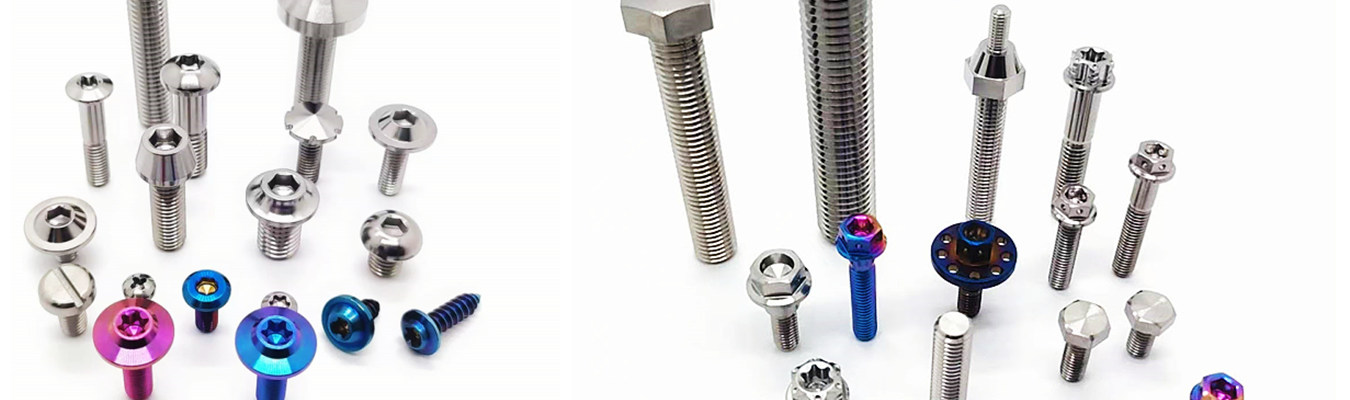
Grade 2 titanium is the most widely used commercially pure titanium grade, offering a balanced combination of strength, formability and corrosion resistance. For fastener applications, Grade 2 is selected when engineers prioritize corrosion resistance and ductility over maximum strength.
Mechanical Properties of Grade 2 Titanium Fasteners:
Tensile Strength: 344–450 MPa
Yield Strength: 275–380 MPa
Elongation: 20%
Hardness: RHB 70
Density: 4.43 g/cm³ (approximately 56% of steel)
Applications: Equipment for chemical processing, fittings for marine applications, medical implants requiring high ductility and industrial environments requiring corrosion resistance are all applications of titanium. Cost-wise, Grade 2 titanium bolts are the cheapest titanium fasteners available, Grade 5 being the next cheapest.
Ti-6Al-4V (Titanium grade 5) comprises about 50% of the world's total titanium consumption. The alpha-beta alloy has outstanding strength-to-weight ratios, fatigue resistance, and good formability making it an option available to engineers. In highly loaded application areas requiring titanium fasteners, Grade 5 should be the first specification considered.
Mechanical Properties of Grade 5 Titanium Fasteners:
Tensile Strength: 895–1,034 MPa
Yield Strength: 828–880 MPa
Elongation: 10%
Hardness: RC 36
Modulus of Elasticity: 113.8 GPa
Density: 4.43 g/cm³
Strength-to-Weight Comparison: Titanium Grade 5, when compared to steel of the same strength, is 45% lighter than steel and offers better corrosion resistance than it does. Grade 5 titanium provides a specific strength (strength to weight ratio) of 812 ksi per lb/in³, while high tensile steel (grade 12.9) delivers a specific strength of 634 ksi per lb/in³.
Applications: Aerospace structural components, automotive racing fasteners, titanium motorcycle bolts, titanium racing bolts for motorsport, medical implants, and any high-performance application requiring exceptional strength with minimal weight.
Grade 23 titanium (Ti-6Al-4V ELI) is an improved low-contaminant type of Grade 5 with higher ductility and fracture toughness for advanced medical applications. This grade should be chosen when biocompatibility and fatigue performance are of paramount importance.
Key Properties: Fracture toughness of 50 to 80 ksi √ in, superior fatigue resistance (65 to 75 ksi at 10⁷ cycles), and complete compliance with ASTM F136 for surgical implants. Grade 23 titanium is compliant with the ISO 5832-3 standards for orthopedic devices, with osseointegration rates greater than 95% in dental and spinal fixation.
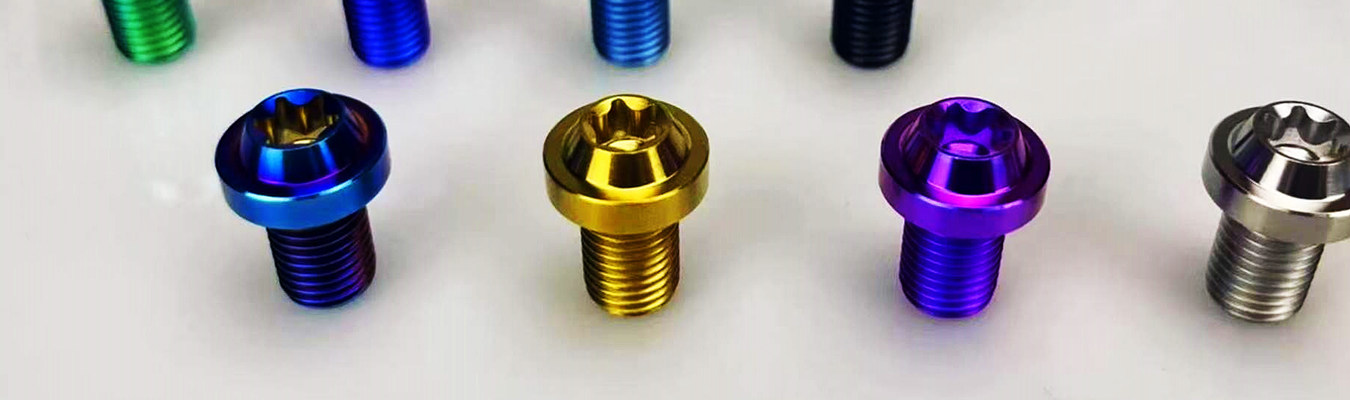
Titanium metric bolts conform to ISO metric thread standards (M profile) with diameters ranging from M1 to M100 per ISO 262 specifications. Common configurations include:
Titanium hex head bolts: The most widely specified configuration, providing six points of contact for standard tooling. Available in Grade 2, Grade 5, and Grade 23.
Titanium hex screws: Socket head cap screws (DIN 912 / ISO 4762) offering higher torque transmission capability and a lower-profile head.
Titanium machine screws: Precision threaded fasteners for equipment assembly, available with various head styles including flat, pan, and button heads.
For standard titanium bolts, dimensional specifications follow ISO 262, which provides a comprehensive list of selected sizes for bolts, screws, studs, and nuts from 1 mm to 100 mm diameter.
Titanium stud bolts come without heads, designed specifically for use with nuts on both ends in connection to flanges or similar applications. These bolts are produced in three different thread configurations:
- Full thread studs are continuously threaded along their entire length with titanium threads.
- Tap end studs are both ends are threaded with the middle portions plain.
- Double ended studs have two distinct classes of thread on each end when used in special applications.
Stud bolts made from titanium must possess very precise dimensions on their threads in order to provide the correct distribution of loads among multiple bolts and to create a good seal on high-pressure flange interfaces.
Titanium sheet metal screws are made with sharp, self-tapping threads that have the capability to cut through thin materials (without having to have a pre-tapped hole). They are often used for aerospace interior applications and lightweight composite assembly components.
Key design considerations for titanium sheet metal screws:
Thread geometry optimized for reduced installation torque
Case-hardened tips to prevent galling during driving
Available with various head styles (flat, pan, truss, hex washer)
Titanium hex screws, including socket head cap screws and button head screws, are manufactured to exacting dimensional standards:
| Configuration | Standard | Typical Applications |
| Socket Head Cap Screw | DIN 912 / ISO 4762 | High-torque applications, recessed installations |
| Button Head Socket Screw | DIN 7380 | Low-profile requirements, aesthetic assemblies |
| Flat Head Socket Screw | DIN 7991 | Countersunk installations, flush surface requirements |
| Hex Flange Bolt | DIN 6921 | Load distribution, vibration-resistant assemblies |
Many engineers specify titanium standard parts that conform to international dimensional standards for production efficiency. Some of the standard titanium bolts that are used in these applications are:
Hex cap screws manufactured according to ASME B18.2.1 and ISO 4014;
Hex nuts manufactured according to DIN 934 and ISO 4032;
Lock nuts manufactured according to DIN 985 with a nylon insert for vibration resistance;
Flange nuts manufactured according to DIN 6923 with an integrated washer for load distribution.
Upload your drawings and receive a competitive quote within 24 hours.
Request a Quote → Get expert guidance on machining processes, materials, and surface finishes.
Titanium threads for metric fasteners must conform to ISO 68-1 basic profile and ISO 965 thread tolerance classes. The most common thread classes for titanium fasteners are:
6g (external threads): Standard tolerance for titanium bolts and screws
6H (internal threads): Standard tolerance for titanium nuts and tapped holes
Critical thread design parameters for titanium:
Thread pitch diameter tolerance must account for titanium's lower modulus of elasticity
Root radius requirements for fatigue-critical applications
Thread runout and lead specifications for automated assembly
Galling is an issue to consider with titanium fasteners because of the way titanium forms very strong adhesive bonds when pressure is applied. The following techniques will help prevent galling of titanium threads:
Use rolled threads instead of cut threads because they produce a better quality surface finish and the thread flanks have been work hardened.
Apply an anti-seize compound (molybdenum disulphide or nickel) to the threads during assembly.
Use solid film lubricants that have been applied via an anodizing process and meet ISO 8080 specifications.
Reduce installation torque by 25-30% when compared with the torque levels required for equivalent steel fasteners.
| Titanium Grade | Tensile Strength (MPa) | Yield Strength (MPa) | Elongation (%) | Hardness |
| Grade 2 (CP) | 344–450 | 275–380 | 20 | RHB 70 |
| Grade 5 (Ti-6Al-4V) | 895–1,034 | 828–880 | 10 | RC 36 |
| Grade 23 (ELI) | 860–950 | 760–830 | 12–15 | RC 33-35 |
| Grade 7 | 345–450 | 275–380 | 20 | — |
Titanium fasteners can be used to hold a structure together in a wide variety of temperatures:
Grade 5 titanium can take service temperatures (temperature during use) between 600 °F (315 °C) and 800 °F (426 °C) for a short period of time before they start to lose their strength properties.
The low temperatures will not affect the ductility and/or fracture properties of titanium down to -250 °C (for cryogenic applications).
The thermal expansion coefficient for titanium is approximately 8.6-9.4 x 10^-6/°C (about half that of aluminum and very similar to steel).
For titanium alloy bolts in cyclic loading applications:
Grade 5 titanium fatigue endurance limit: 500–600 MPa at 10⁷ cycles
Fatigue limit as percentage of UTS: Approximately 50% under axial loading conditions
Fracture toughness: 50–80 ksi√in for Grade 5; higher for Grade 23 ELI grades
When utilizing titanium fasteners in conjunction with aluminum components, there are two major concerns for engineering staff to deal with: Galvanic Corrosion and Thread Stripping. The anodic potential difference between Grade 5 Titanium and aluminum alloys (approximately 0.60 Volts) can cause a galvanic cell due to the presence of an electrolyte. This will accelerate the corrosion rate of the aluminum component.
Four Key Steps to Connect Titanium Bolts to Aluminum:
Alter Surface Potential by Using PVD Coatings or Anodizing to Minimize The Galvanic Mismatch.
Isolate Electrical Conductivity By Breakment Using Dielectric Washers (Nylon, PTFE, Coated Aluminum).
Use Marine-Grade Anti-Seize Compounds (e.g. Tef-Gel, Copper Slip) for Both Isolation and Lubrication.
Implement A Wet Torque Protocol That Reduces Standard Dry Torques by 20-30% to Prevent Shearing of the Softer Aluminum Internal Threads.
According to research conducted by NASA, titanium-6al-4v alloy-engineered fasteners can be used to attach aluminum components without affecting the aluminum corrosion rate when used in a normal atmospheric environment. However, if the applications are located in marine environments or subjected to the application of road salt for de-icing, measures must be taken to provide galvanic isolation.
Selecting the appropriate titanium alloy for fastener applications requires balancing strength requirements, corrosion resistance needs, cost constraints, and manufacturing considerations.
| Application Requirement | Recommended Titanium Grade | Rationale |
| Maximum strength-to-weight ratio | Grade 5 (Ti-6Al-4V) | Highest tensile strength (895–1,034 MPa) at minimal weight |
| Superior corrosion resistance | Grade 2 or Grade 7 | Excellent resistance to seawater and chemical attack |
| Medical implant applications | Grade 23 (Ti-6Al-4V ELI) | Extra-low interstitial for enhanced fracture toughness |
| High-temperature service (up to 600°F) | Grade 5 | Retains strength at elevated temperatures |
| Cost-sensitive applications | Grade 2 | Most economical titanium fastener option |
| Marine and subsea environments | Grade 2 or Grade 7 | Excellent pitting and crevice corrosion resistance |
| Aerospace structural fasteners | Grade 5 | Combines strength, fatigue resistance, and weight savings |
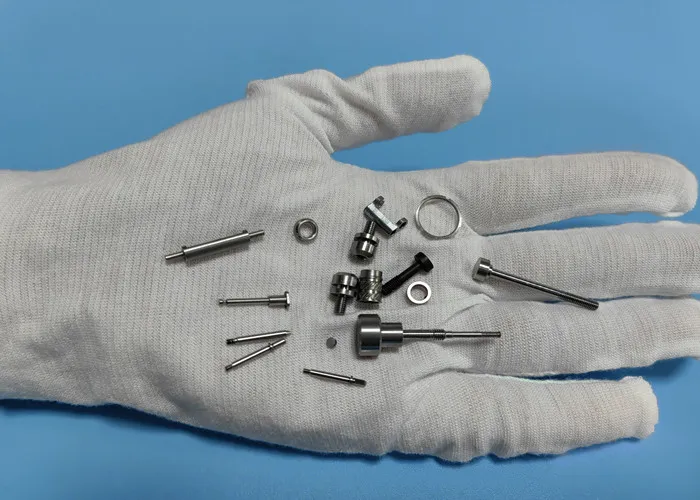
Swiss machining, originating in the 19th-century Swiss watchmaking industry, uses sliding headstock lathes and guide bushings to stabilize materials during cutting. This manufacturing method is particularly well-suited for titanium fastener production due to several key advantages:
Guide bushing support: The workpiece is supported mere millimeters from the cutting action, preventing deflection when machining long, slender fasteners
Superior heat management: High-pressure coolant directed precisely to the cutting interface aids in evacuating heat from titanium's low thermal conductivity
Single-setup complexity: Modern Swiss lathes combine live tooling and secondary spindles to machine complete titanium fasteners in one operation, eliminating handling-induced errors
Micron-level precision: Achieves tolerances as tight as ±0.005 mm, essential for titanium threads and critical fastener geometries
For detailed technical information, visit our Custom Titanium Machining capabilities page.
Titanium presents unique machining challenges that require specialized expertise:
Low thermal conductivity: Heat concentrates at the cutting edge rather than dissipating through the chip, accelerating tool wear
Work hardening: Improper feeds and speeds cause the material to harden during cutting, leading to poor surface finish and tool failure
Chemical reactivity: Titanium tends to gall and weld to cutting tools, requiring sharp edges and appropriate tool coatings
Stringy chips: Continuous chips can bird-nest around the workpiece, requiring specialized chip-breaking geometries and high-pressure coolant
For optimal results when manufacturing titanium fasteners via Swiss machining:
Cutting speed: 60–80 m/min for Grade 5 titanium
Tool coating: TiAlN (titanium aluminum nitride) or AlTiN for heat resistance
Coolant: High-pressure (1,000–1,500 psi) through-tool coolant delivery
Depth of cut: Sufficient to cut below the work-hardened layer from previous passes
Tool material: Micro-grain carbide with polished rake faces to reduce adhesion
Our bolt and nut manufacturing capabilities leverage these best practices to deliver consistent, high-quality titanium fasteners at production scale.
Anodizing is a core technology for surface modification of titanium fasteners, enhancing corrosion and wear resistance while enabling precise color control. The anodic coating, produced via the sulfuric acid process per ISO 8080, provides multiple benefits:
Corrosion resistance: The oxide film creates a strong metallurgical bond with the titanium substrate, achieving salt spray corrosion resistance 5–10 times greater than untreated titanium
Galling protection: Anodized coatings, when used with solid film lubricants, protect titanium fasteners against galling during assembly
Color customization: By controlling oxide film thickness (10–300 nanometers), the interference effect of light produces a full spectrum of colors from gold to blue to purple
Color options for anodized titanium fasteners: Silver, gold, blue, purple, green, pink, bronze, black, and rainbow.
Passivation removes free iron and surface contaminants from titanium fasteners, enhancing corrosion resistance without altering dimensional properties. This treatment is specified for medical, aerospace, and marine applications where maximum corrosion protection is required.
| Application | Recommended Finish | Ra Range |
| General industrial | Turned finish | 1.6–3.2 μm |
| Aerospace structural | Polished | 0.8–1.6 μm |
| Medical implants | Medical polish | 0.2–0.4 μm |
| Sealing surfaces | Fine turned/polished | ≤0.8 μm |
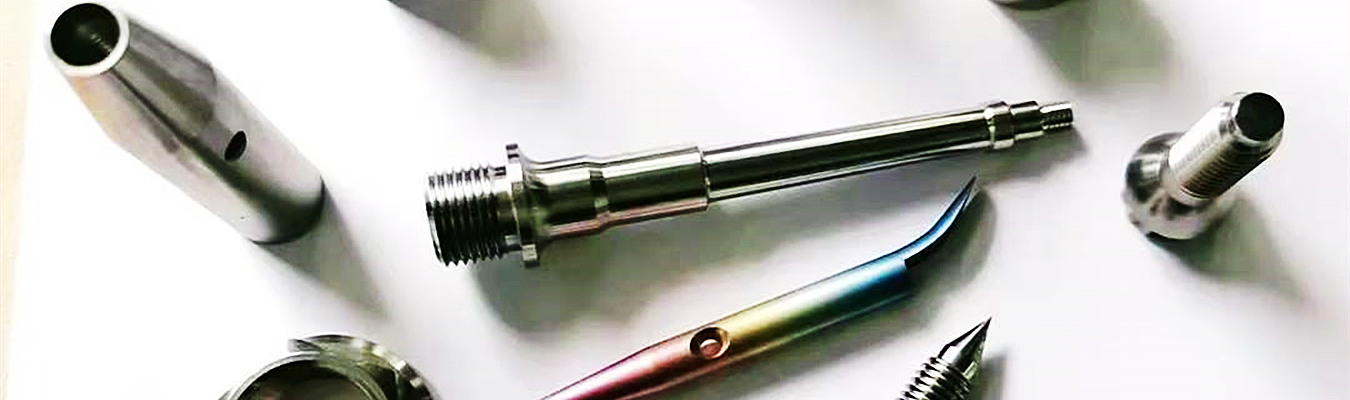
Precision titanium fasteners require rigorous quality assurance protocols:
100% critical dimension verification using automated vision systems
CMM inspection for thread pitch diameter, concentricity, and perpendicularity
Optical comparators for thread profile and form verification
Tensile testing per ASTM E8 for proof load verification
Hardness testing (Rockwell or Vickers) to confirm material grade
Torque-tension testing to validate assembly performance
Go/no-go thread gauges for 100% or statistical sampling
Thread profile analysis for pitch diameter, flank angle, and root radius
Surface roughness measurement on thread flanks
Formula 1 teams and motorsport engineers leverage titanium fasteners for suspension systems, achieving 35% mass reduction in unsprung weight while withstanding 5,000 N·m shock loads. Applications include titanium car bolts for chassis, titanium racing bolts for drivetrain components, and titanium motorcycle bolts for caliper mounts and engine cases.
Biocompatible titanium fasteners meet ISO 5832-3 standards for orthopedic devices, dental implants, and spinal fixation systems. Titanium's non-magnetic properties (magnetic permeability <1.00005 μ) make it ideal for MRI-compatible surgical instruments.
Titanium fasteners demonstrate zero measurable corrosion after 10-year immersion tests per ASTM G31, making them essential for subsea ROV systems, desalination plants, and offshore platforms. Titanium marine hardware includes deck fittings, hatch hinges, and seawater cooling system connectors.
Titanium metric bolts and titanium stud bolts are specified for liquid cooling connectors in high-density server racks, where corrosion resistance and reliable thread engagement are critical for leak-free operation.
The cost of titanium fasteners is influenced by several variables:
Material grade: Grade 2 is the most economical; Grade 5 commands a premium for higher strength; Grade 23 (medical-grade) has the highest cost due to ELI processing requirements
Production volume: Per-unit costs decrease significantly with higher quantities due to reduced setup amortization
Tolerance requirements: Tighter tolerances (±0.005 mm vs. ±0.05 mm) increase machining time and inspection requirements
Surface treatment: Basic passivation is low-cost; anodizing adds moderate cost; specialized coatings (PVD, DLC) increase cost
Thread specification: Rolled threads (higher fatigue strength) are generally more economical at high volumes than cut threads
Certification requirements: Medical (ISO 13485) and aerospace (AS9100) certification adds quality assurance costs
When comparing titanium surgical screws cost to conventional stainless steel alternatives, the initial material premium is offset by elimination of corrosion-related failures and reoperations, reduced patient morbidity from allergic reactions to nickel-containing stainless steel, superior osseointegration for bone fixation applications, and MRI compatibility without imaging artifacts.
This engineering guide includes all the basic considerations when specifying and producing titanium fastening devices. The key points in the guide are as follows:
Ti-Gr5 (Ti-6Al-4V) is the alloy that is most commonly specified for high performance fastening devices and provides a 45% reduction in weight compared to steel while maintaining the same strength as steel.
Thread rolling, application of anti-seize compound, and torque control are specifically required to prevent galling when creating titanium threads.
Although titanium bolts can be installed into aluminum, measures must be taken to prevent galvanic corrosion through the use of coatings and dielectric washers, as well as reduced torque.
The best method to manufacture precision titanium fasteners is by use of Swiss-type turning; this process provides ±0.005mm tolerancing, one setup efficiency, and is very time efficient.
The anodizing process will provide both functional corrosion resistance as well as aesthetic appearance and prevent galling.
When establishing the quality of a titanium fastener, quality control procedures should include dimensional inspection, thread inspection, and verification of the material grade.
To discuss your specific engineering needs, prototype need(s), or large-scale production of custom titanium fastening devices, please contact one of our technical representatives.
Ready to specify titanium fasteners for your next engineering project? Submit your CAD model (STEP, IGES, Parasolid) and 2D drawing with tolerances. We will respond within 24 hours with a DFM analysis, prototype pricing and lead time, volume pricing for 1,000,000+ pcs/month, and a sample first-article inspection report.