English
  日本語
日本語  한국어
한국어  français
  Deutsch
  Español
  русский
  العربية

Oct
Learn More
13

Fasteners are commonly underappreciated in mechanical engineering today, but when a bolt strips, a screw vibrates loose or there is a catastrophic failure of a threaded joint, the resulting cost could be significant production delays and potentially fatal failure of the equipment.
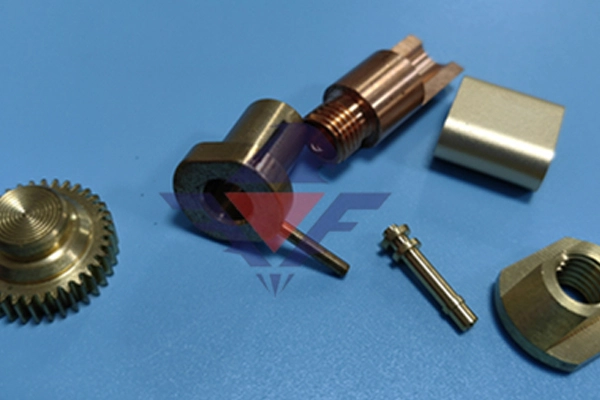
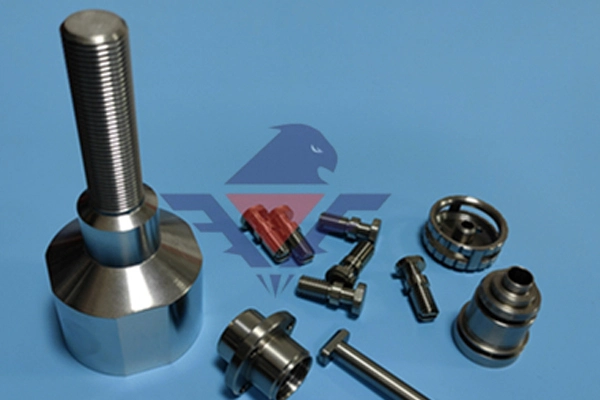
Custom fasteners are engineered components designed to meet specific dimensional, material, and performance requirements that standard off-the-shelf hardware cannot satisfy. Unlike commodity fasteners produced in generic dimensions with broad tolerances, custom solutions deliver:
Tight tolerances tailored to your assembly
Specialized material grades for extreme environments
Unique geometries and integrated features
Optimized thread forms for specific load conditions
Traceable quality documentation for regulated industries
We use the latest Swiss machining technology to create made-to-order fasteners that far exceed the performance levels of regular fasteners. Fasteners are critical components in the aerospace, medical, automotive, and industrial sectors. To help engineers and procurement experts make educated decisions on creating precision manufactured fasteners, this reference document provides details on material selection, manufacturing techniques, tolerancing strategies, and best practices through design for manufacturability (DFM) principles.
For a comprehensive overview of our core manufacturing capabilities, visit our Swiss machining services page.
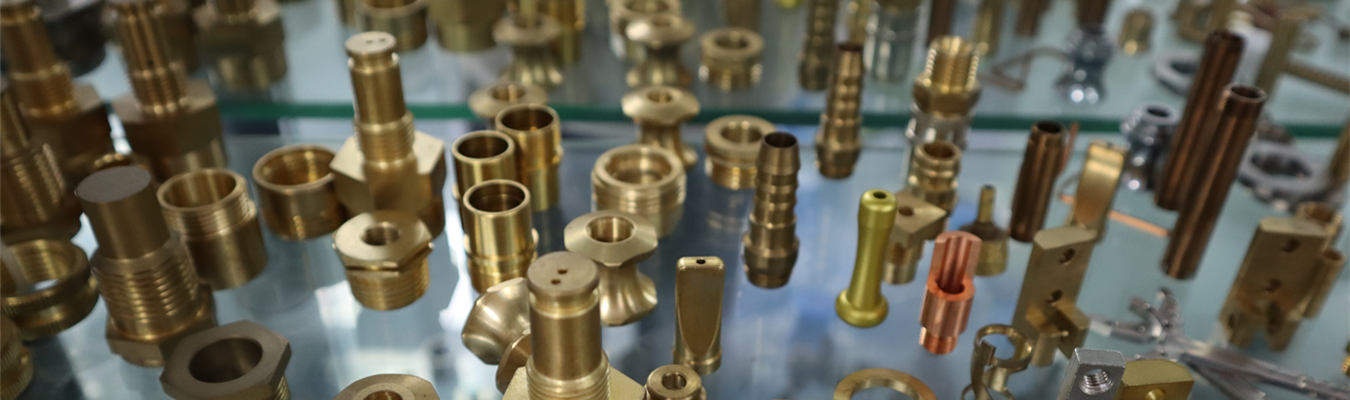
Many engineers assume that custom fasteners require high minimum order quantities or are difficult to procure with superior precision.
In reality, standard fasteners often introduce unacceptable risks:
| Failure Mode | Cause | Consequence |
| Premature loosening | Thread pitch mismatch | Assembly separation under vibration |
| Galvanic corrosion | Dissimilar material contact | Structural degradation in marine environments |
| Fatigue failure | Inconsistent hardness distribution | Crack propagation under cyclic loading |
| Cross-threading | Poor concentricity | Damaged mating threads, scrapped components |
| Stripped threads | Insufficient thread engagement | Joint failure at rated torque |
When your application demands non-standard sizes, exotic materials, or tighter tolerances than ISO 4759-1 product grades provide, custom fasteners become a necessity rather than a luxury.
Precision manufacturing through Swiss Machining can be accomplished using different types of machine tools; however, one of the most recognized distinctions is that Swiss machining differs from traditional CNC lathe machining processes. The defining element of this process is the guide bushing located directly next to the cutting tool. This configuration prevents the deflection of the cutting tool thereby allowing for the manufacturing of long, slender parts with superior concentricity between critical features.
| Parameter | Swiss Machining | Conventional CNC Lathe |
| Length-to-diameter ratio capability | Up to 20:1 | 3:1 maximum |
| Typical tolerance range | ±0.0002″ (±0.005 mm) | ±0.001″ (±0.025 mm) |
| Micro-feature repeatability | CpK > 1.67 for Ø0.2mm features | CpK < 1.0 beyond Ø1mm |
| Cycle time per part (complex geometries) | 72-hour prototype turnaround | 3+ weeks typical |
| Material utilization rate | 92% | 65–70% industry average |
Falcon CNC Swiss maintains tolerances as tight as ±0.003 mm (±0.0002″), making our Swiss machining services the preferred choice for mission-critical custom fasteners.
When a part is longer than 4 times its diameter, traditional lathes can have issue with concern to how much it flexes (deflection). However, with Swiss CNC technology, the fact that it has its entire machining capability means that there isn't any concern for deflection throughout the entire machining process. This attribute is critical when manufacturing custom fasteners that have high aspect ratios (for example, long threaded studs, precision dowel pins, and slender titanium bolts).
Explore our full range of Swiss machined components, including custom fasteners for demanding industrial applications.
First Section: High Thread Quality
The most important element of a fastener's performance is how good or bad the threads are formed and cut. If the threads are improperly formed or cut, they can result in assembly failure (cross-threading) or improper torque transfer. When utilizing live tooling with synchronized turning and milling processes, as presented in Swiss CNC lathes, it is possible to greatly reduce the amount of pitch variation on the threads created and to produce very high-quality surface finishes.
Second Section: Multi-Axis Machining from One Setup
The newest Swiss CNC lathes are equipped with live tooling, a milling spindle and back-working tooling. Consequently, it is possible to produce the entire custom fastener in one machine (turn the blank, mill the head geometry, drill the cross holes and cut the threads) without any secondary operations. This decreases lead time, reduces potential for error through handling of the part, and lowers your total manufacturing cost for each fastener produced.
Third Section: Wide Range of Materials
Swiss machining will allow the machining of fasteners from at least the following: free machining brass; titanium; aerospace quality inconel; and aircraft quality titanium. In addition, Swiss machining is ideally suited to the production of custom fasteners from small diameter titanium stock; where the thermal conductivity and work hardening characteristics of the material require specialized cutting parameters, together with high rigidity equipment.
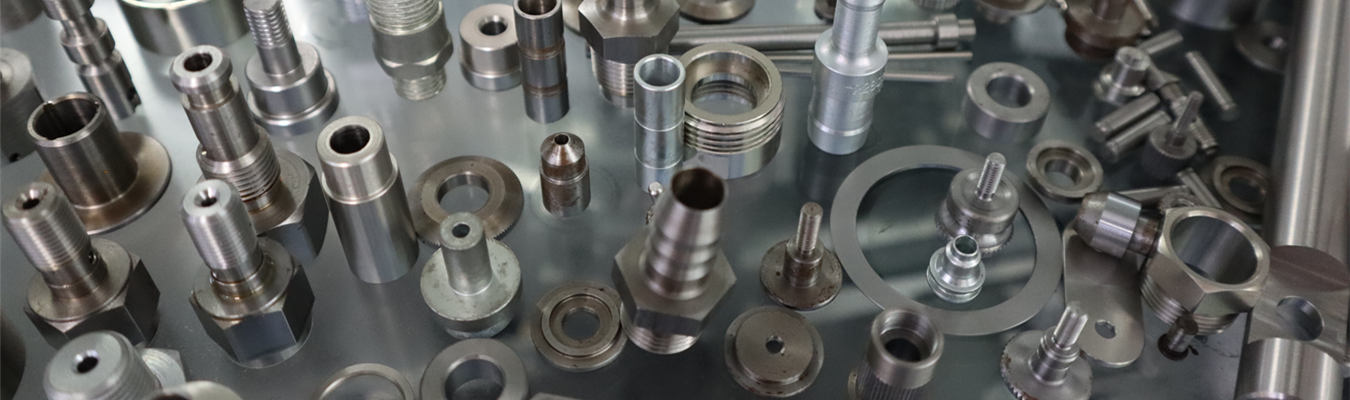
Upload your drawings or specifications today. Our engineering team will provide a competitive quote and manufacturing recommendations within 24 hours.
Request a Quote → Get expert guidance on machining processes, materials, and surface finishes.
Choosing the right material directly affects strength, corrosion resistance, weight, and cost. The table below provides a technical comparison of common custom fastener materials:
| Material | Tensile Strength | Corrosion Resistance | Machinability | Typical Applications |
| 303 Stainless Steel | Moderate | Good | Excellent | General-purpose custom screws, fittings |
| 304/316L Stainless Steel | High | Excellent (316L best) | Good | Marine hardware, medical devices, chemical processing |
| 17-4 PH Stainless Steel | Very high (heat-treatable) | Excellent | Fair | Aerospace fasteners, high-strength structural bolts |
| Grade 5 Titanium (Ti-6Al-4V) | 930 MPa | Excellent | Poor | Medical implants, aerospace, lightweight robotics |
| Grade 2 Titanium (CP) | Moderate | Excellent | Fair | Marine hardware, corrosion-resistant projects |
| 4140 / 4340 Alloy Steel | Very high (heat-treatable) | Poor (requires coating) | Good | Heavy machinery, automotive chassis, construction |
| Brass C360 | Low | Fair | Excellent | Electrical connectors, decorative hardware |
| Inconel 718 | Very high (1,600 MPa+) | Excellent | Very poor | Extreme high-temperature, chemical reactor bolts |
Stainless Steel Custom Fasteners
303 stainless has been commonly used throughout industries as the material used in custom fasteners due to its quality machinability. If corrosion resistance is a more important factor than machinability—like in marine, chemical, or sanitary environments—the preferred option is usually 316L stainless. 17-4 PH stainless can also be used for applications that require high tensile strength and corrosion resistance due to its precipitation-hardening capabilities.
Titanium Custom Fasteners
Custom titanium fasteners present an extremely favorable strength-to-weight ratio and are thus often employed in weight-sensitive and overly corrosive environments. Grade 5 titanium bolts typically weigh approximately 45% less than their steel counterparts while providing the same or greater strength. Therefore, titanium is the preferred type of fastener for aerospace assemblies, manufacturing medical devices, high-performance automotive products, and robotics, where every gram matters.
Carbon and Alloy Steel
When long-term corrosion resistance is not an important requirement and cost is an overriding concern, custom carbon steel bolts are very strong and reasonably priced. Examples of this include carbon steel grades such as 12L14, 1144, 4140, and SCM435, as they may be heat treated to reach grade 8.8, 10.9, or 12.9 tensile strengths; therefore, this type of fastener is frequently used in construction and heavy equipment applications and in automotive chassis applications.
Surface finish directly impacts corrosion resistance, galling prevention, and aesthetic appearance. Falcon CNC Swiss offers comprehensive finishing capabilities:
| Finish Type | Primary Benefit | Typical Applications |
| Passivation | Removes free iron, maximizes corrosion resistance | Stainless steel medical and food-grade fasteners |
| Anodizing | Increases surface hardness, adds color | Aluminum custom fasteners for electronics |
| Electropolishing | Achieves Ra 0.2mm finishes, reduces bacterial adhesion | Medical device fasteners, sanitary components |
| Plating (Zinc/Nickel/Chrome) | Provides sacrificial corrosion protection | Industrial hardware, automotive fasteners |
| Black Oxide | Low-light reflection, mild corrosion resistance | Military and tactical equipment |
| PTFE/Teflon Coating | Lowers friction, prevents galling | Stainless steel fasteners for high-cycle assemblies |
See how we integrate these finishing capabilities into our bolt and nuts manufacturing process.
Aerospace and Defense
Aerospace fasteners must be manufactured to AS9100 specifications and deliver absolute reliability in extreme vibration, temperature cycling, and fatigue loading. Custom titanium fasteners, Inconel bolts, and precision-threaded studs are critical to structural assemblies of aircraft, engine components, and mounting systems for avionics.
Medical Devices
ISO 13485 regulates the production of fasteners used in medical devices. Biocompatible materials, such as 316LVM stainless steel, grade 5 titanium, and PEEK are machined to produce surgical screws, spinal fixation hardware, and implantable fasteners with micron-level dimensional accuracy.
Automotive and Motorsports
Automotive fasteners – used for everything from engine internals to chassis components – require predictable thread engagement, resistance to vibration, and uniform retention torque. Custom bolts and nuts made to tight tolerances reduce assembly variability and ensure repeatable performance of joints.
Industrial Robotics and Automation
Robotic systems require lightweight, high-strength fasteners that include functional features, complex geometries, or both. Swiss machined custom fasteners enable compact design of joints and consistent performance in high-cycle applications.
Semiconductor and Electronics
Miniature custom screws and threaded products, typically under 1mm in diameter, require Swiss screw machining capabilities that exceed traditional manufacturing. Material selection such as brass and stainless steel provide electrical conductivity and corrosion resistance.
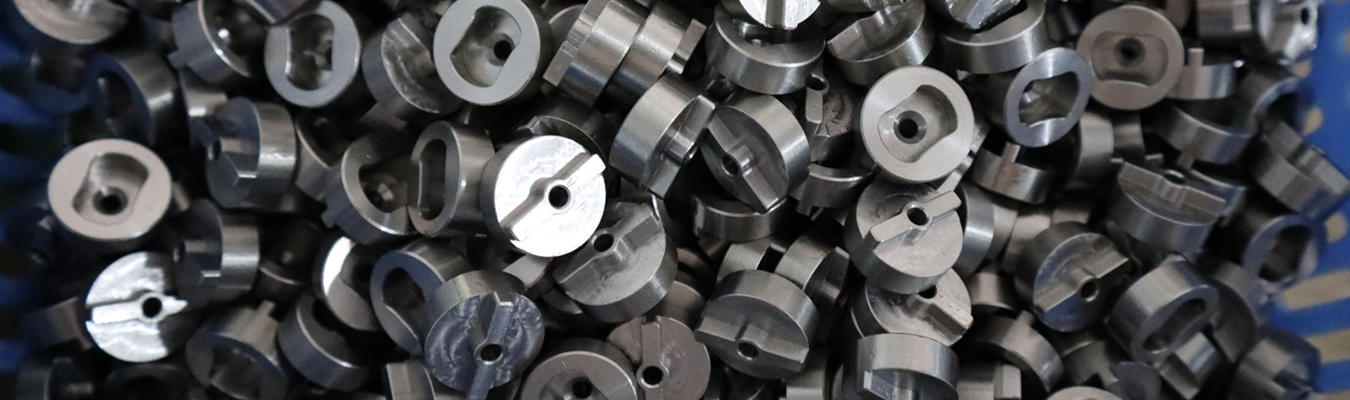
Optimizing your custom fastener design for manufacturing reduces costs, shortens lead times, and ensures repeatable quality. At Falcon CNC Swiss, each project begins with a collaborative DFM review to validate manufacturability before production.
Specify tolerances only where required. Over-tolerancing increases cost without functional benefit. Concentrate tight tolerances on critical features—thread pitch diameter, head-to-shank concentricity, and bearing surfaces.
Consider standard thread forms when possible. Modified threads drive tooling costs. UN, UNJ, and ISO metric threads are readily producible with standard tooling.
Design for guide bushing access. Ensure sufficient material extension for the guide bushing to support the workpiece throughout the machining operation.
Eliminate unnecessary secondary operations. Consolidate features—such as hex heads, undercuts, and drilled cross-holes—into the primary Swiss machining setup.
Select machinable materials. Titanium and Inconel offer superior properties but require specialized cutting strategies and longer cycle times. When performance permits, free-machining stainless steels or brass reduce per-part costs.
Verify thread class requirements. Product Grade A fasteners (per ISO 4759-1) deliver the tightest tolerances but increase inspection requirements. Grade B or C may suffice for non-critical applications.
Customized fasteners aren't a luxury, they're typically needed for engineering objectives that cannot be accomplished with an off-the-shelf product due to size, material or performance issues. The best way to manufacture precision custom fasteners is using Swiss machining technology with guide bushing support, multi-axis machining capabilities, and tight tolerance control.
Falcon CNC Swiss uses decades of Swiss screw machine experience and stringent ISO-certified quality processes to provide custom fasteners that exceed engineering requirements. From stainless steel custom bolts to titanium aerospace fasteners, our engineering group works closely with you from design for manufacturability through production.
Submit your drawings for a free DFM analysis and quote. Contact our engineering team to discuss your specific requirements.
Explore our Swiss machined components and bolt and nuts capabilities. For a full understanding of our manufacturing process, visit our Swiss machining services page.