English
  日本語
日本語  한국어
한국어  français
  Deutsch
  Español
  русский
  العربية


Apr
Learn More
08

Industrial fluid handling, pneumatic control, plumbing systems, and fuel distribution all rely on brass fittings as their mainstay. The combination of they exhibit unique qualities such as machinability, corrosion resistance, and strength, has made them an engineer's first choice for designing systems to reliably eliminate leakage at a wide range of pressures and temperatures. This guide to engineering provides complete technical information about brass elbow fittings, tee fittings, coupling nuts, pipe nipples, reducers, caps, plugs, and unions. Threading standards (NPT, BSP, Flare, Compression, and Solder Connections) as well as material specification (e.g., lead-free brass, forged brass, chrome plated brass, brake quality brass, and corrosion resistant brass) are also included.
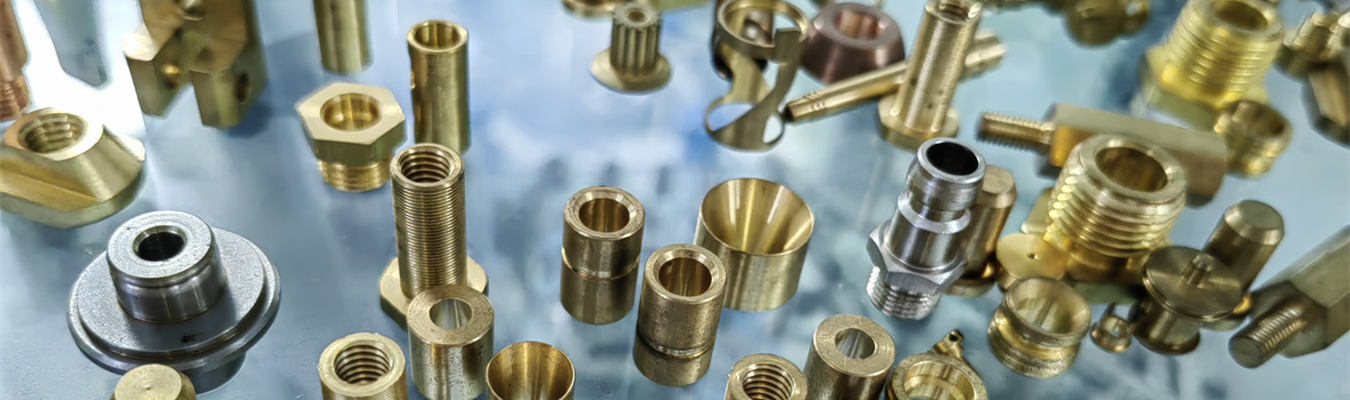
In order to alter how fluids travel through a pipe, brass elbow fittings can be used. Generally these fittings are designed to have angles of either 45 degrees or 90 degrees depending on the desired direction. They come in different styles such as female NPT, male NPT, and flared. They are commonly found in applications such as air lines, as well as water pipes and fuel lines where space is limited and there needs to be a sharp change in the way that the fluid flows. Elbows can be made from either forged brass pipe fittings or plastic by machining them from a bar or rod stock; the forged type provides higher strength to endure higher pressures on the system.
Brass tee connectors are connectors with three ports, one inlet and two outlet (or vice versa), used for either splitting or combining flow (like a T). Tee connectors may be specified in equal or reducing patterns; heavy-duty brass tee connectors typically have forged tee bodies machined for precise thread alignment. Common uses of brass tee connectors include brass fittings for hydraulic systems that require many actuators to be supplied from a common supply line, and brass gas line connectors for distribution systems.
Internal-threaded brass coupling nuts (also known as union nuts) are used with either flared or compression fittings for joining two lengths of tubing together. Brass pipe nipples are short, threaded segments of pipe designed to extend an existing connection by either being a close nipple (the thread runs the full length of the pipe) or a shoulder nipple (which has a threaded center and an unthreaded center). Both brass plumbing supplies and industrial brass pipe parts require both types of nipples to function properly; therefore, it's important to know which type of nipple you need when ordering your materials. Be sure to specify if you require either NPT or BSP threads to ensure proper fit and function of all components involved in your plumbing system.
Brass reducing fittings join two pipes with varying diameters, and come in two styles: concentric (coaxial) and eccentric (off-set). The concentric style is used in fluid systems to maintain a normal flow rate, and the eccentric style is used to fit into horizontal lines to eliminate air pockets. As a result, brass reducing fittings are typically used with brass water fittings for plumbing as well as hydraulic fittings for controlling water velocity through hydraulic systems.
Brass caps (female threads) and brass plugs (male threads) can be used to seal up the end of pipe or fitting. Caps can be used for either permanent or temporary closure for maintenance purposes. Plugs are typically used to seal off unused ports on tee connectors and elbow connectors made of brass. Both are offered as lead free brass fittings to be used only with drinking water or as chrome-plated brass fittings to provide a good appearance from corrosion resistance.
A brass union is a 3-part (2 threaded ends plus 1 center nut) pipe connection that makes disconnection possible without having to rotate the entire line. Unions are needed in systems where frequent servicing occurs, such as with brass gas line connector fittings associated with appliance hookup and brass pipe fittings associated with air lines connected to compressor discharge. Forged-structured, brass pipe fitting unions provide additional strength due to their ability to absorb vibration during operation.
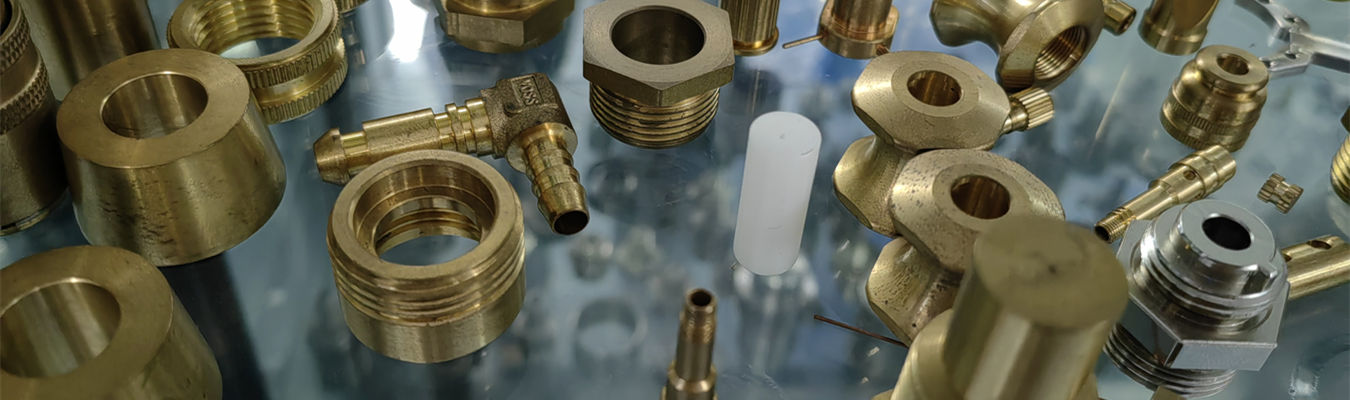
Upload your drawings or specifications today. Our engineering team will provide a competitive quote and manufacturing recommendations within 24 hours.
Request a Quote → Get expert guidance on machining processes, materials, and surface finishes.
In North America, NPT (National Pipe Taper) brass fittings are by far the most popular type of threads used. The tapering of NPT (3/4 " per foot) makes a mechanical interlock or interference fit that seals through deformation of the threads. To help ensure a good seal, male threaded fittings should always have PTFE tape or dope on them. NPT female brass pipe fittings are used in water, air, and low-pressure gas systems while NPT male brass pipe fittings are used to connect pipe nipples, reducers and adapters.
Flared brass fittings are made up of three components: the tube end that is flared, the nut, and the seat. A metal-to-metal sealing occurs at the flare (typically either 45° or 37° for AN/JIC) providing a leak-proof connection even when subjected to high levels of vibration. For this reason, flared brass fuel line fittings in an engine, as well as flared brass hydraulic system fittings where leaks cannot happen, are the perfect choice. Additionally, flared connections allow easy disassembly and reassembly without damaging either the fitting or the tube.
Compression fittings are commonly referred to as brass fittings and utilize a ferrule (also referred to as the olive) that compresses onto the tubing when the nut is tightened. They are used with either copper, aluminum or plastic tubing in low to medium pressure applications. They are most typically used with brass water pipe fittings for household plumbing applications and brass fittings for air lines in shop systems. Compression fittings do not require flaring or soldering, which makes them an excellent choice for field repairs of any type.
Pipe fittings that are threaded then allow connections to be made between various types of threads (for example, NPT to BSP) or between male and female fittings. For international applications where there may be different piping standards, such fittings would be an essential element when connecting piping internationally. If using a fitting that is not a true thread match, care should be taken; i.e.: the thread angles differ (60-degree angle on NPT, as opposed to 55-degree angle on BSP), and sealant would need to be applied to prevent leakage.
Brass solder fittings are designed for capillary soldering or brazing and are used extensively as the standard plumbing supply for both residential and commercial applications in the distribution of water. Solder fittings have a smooth bore and provide very little resistance to flow (pressure drop). When working with potable water systems use lead free brass fittings that comply with NSF/ANSI 61.
According to the Safe Drinking Water Act of the United States, fittings made from lead-free brass will have a lead content of less than 0.25% (by weight). C46500 (leaded tin bronze) or C27450 (low-lead brass) alloys typically exhibit this lead content. Therefore, always use lead-free materials as your first choice when specifying brass water pipe fittings for drinking water lines, irrigation systems or food processing. The machinability properties of these alloys remain good and adhere to health codes and regulations.
Brass pipe fittings are manufactured from brass bar stock using the hot forging process to create a more compact (grain aligned) microstructure. The mechanical properties of the forged fittings are superior to those of equivalent cast or machined-from-bar fittings. They are commonly specified for heavy duty connections in the hydraulic field (up through 3,000 psi) and for industrial gas distribution applications with brass gas line fittings. In addition, forged fittings have superior resistance to stress corrosion cracking than their cast or machined-from-bar counterparts.
To apply a thin layer of chromium onto brass parts, an electroplating process is used. Electroplating creates a chrome-plated brass part (0.05—0.5μm). The thin chromium coating provides superior resistance to corrosion in the presence of moisture, chemicals and abrasion and gives the piece a highly polished appearance. Typical applications for electroplated brass fittings include: plumbing fittings where the brass part will be visible ( plumbing in commercial buildings), decorative brass pipe fittings, and when the look of the fitting is important ( instrumentation). If the fitting is over-torqued, the chrome plating will chip, therefore, it is important that the fittings are handled properly when being installed.
These types of connectors also have a few extra advantages to them than the standard design. For instance, connectors' walls can be thicker (typically schedule 80 or better) and have added strength over the threads and at the points where stress will build up on them. They can be used to make fittings to connect hydraulic systems under higher impulse pressures and fittings to connect airlines in mining and construction equipment and fittings for connecting fuel lines to diesel engines. The heavy-duty design allows for better safety margins in corrosive installations or those prone to vibration.
Brass material commonly used for plumbing applications will corrode when exposed to conditions such as water (being aggressive). To prevent the corrosion of brass plumbing projects due to dezincification of the material, it is suggested that dezincification resistant (DZR) alloys, such as C35300 or C27450 be selected for use instead of C36000 because they contain elements such as arsenic, antimony and phosphorus which inhibit the leaching of zinc from the brass alloys. Therefore, the use of corrosion resistant brass pipe fittings is required in plumbing systems that will contain hot water, plumbing systems which will utilize a recirculating loop and seawater cooling lines.
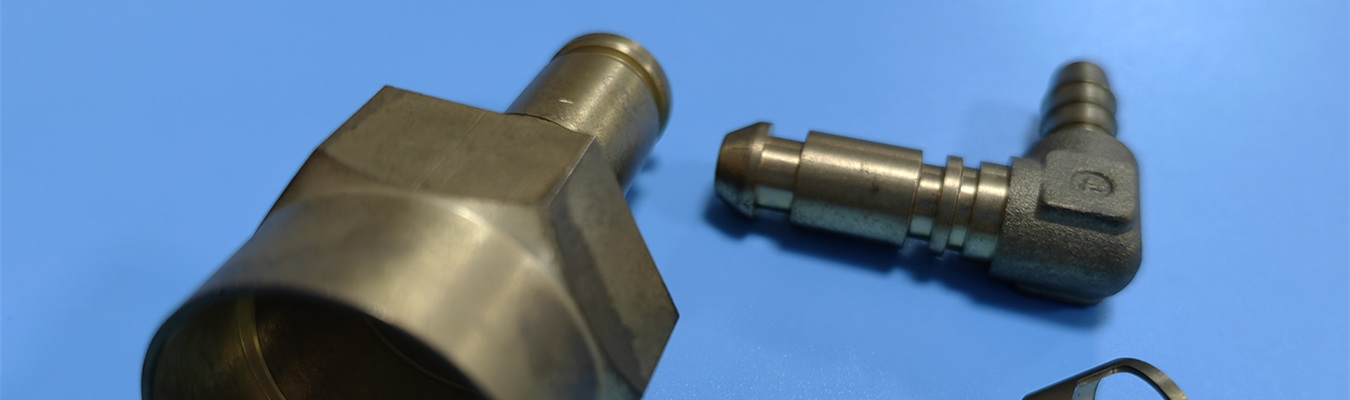
Compressed air systems require pressure surge protection, oil carryover protection, and vibration resistance from their fittings. NPT brass fittings with PTFE sealant are the most common for compressed air line uses. Flared and compression type brass fittings are also widely used with instrumentation air LINE applications. Soldered fittings or chrome plated brass fittings should never be used in wet air systems because the internal corrosion of any of these types will cause particulate contamination. For heavy duty shop air systems, specify heavy duty brass connectors or forged brass pipe fittings rated for at least 250 PSIG.
Brass fittings for plumbing are widely used in home plumbing, heating (hydronic), and cooling systems. For drinking water, use lead-free brass fittings only with soldered or compression connections. For hot water recirculation systems (up to 200°F), use only brass fittings made from a corrosion-resistant alloy of DZR brass to prevent dezincification. When connecting brass pipe to copper tubing, use only flared or compression brass fittings to avoid creating galvanic corrosion due to dissimilar metals.
Brass is used to make most gas line fittings, which must be leak-tight and resistant to stress corrosion caused by sulfur compounds found in natural gas. Brass gas line connectors are made from either forged or machined DZR brass, all of which have NPT threads sealed with anaerobic pipe sealant. Flared brass fittings should be used for flexible appliance connectors, as they provide a reliable metal-to-metal seal. Never use soldered brass fittings on gas lines because solder joints can fail due to vibration.
Brass fittings are typically used for low/medium pressure hydraulic applications (up to 1,500 psi). However, because brass is weaker than steel, it cannot be used in high-pressure hydraulic applications (greater than 1,500 psi). Therefore, when using brass fittings in higher-pressure hydraulic applications, they should be forged brass pipe fittings, with an extra-heavy wall, and flared (37-degree JIC) or compression style fittings. When working with hydraulic pressures above 3,000 psi, switch to steel or stainless steel. In addition, brass is still a common material of construction for return line and low pressure (i.e., lubrication system) circuits in hydraulic systems.
Fuel line fittings must resist corrosion from modern fuels containing ethanol, biodiesel, and other additives. Brass fuel line fittings are widely used in carburetion, fuel pumps, and fuel filters for small engines, boats, and industrial equipment. Alloy C36000 brass is compatible with gasoline, diesel, and up to E15 ethanol. For higher ethanol blends (E85), consider nickel-plated or corrosion resistant brass parts to prevent stress corrosion cracking. Flared brass fittings are preferred for fuel lines due to their vibration resistance and reusability.
To select the correct brass fitting for your system, follow this engineering checklist:
Identify the media: water (potable or non-potable), air, gas, hydraulic oil, fuel, or chemicals. This determines need for lead free, DZR, or chrome plating.
Define pressure and temperature: For pressures above 1,000 psi, use forged brass pipe fittings or heavy duty brass connectors. For temperatures above 200°F, use DZR alloys to avoid dezincification.
Choose thread type: NPT for North America, BSP for international, flared for vibration, compression for soft tubing, solder for permanent copper joints.
Select fitting shape: elbow (directional change), tee (branch), coupling/nipple (extension), reducer (size change), cap/plug (seal), union (disassembly).
Consider future maintenance: Unions and flared fittings allow easy disassembly; solder and NPT (with sealant) are more permanent.
Verify regulatory compliance: For drinking water, specify lead free brass fittings. For gas lines, use fittings certified to ANSI Z21.15 or equivalent.
This guide has covered the essential engineering knowledge for selecting and applying brass fittings in fluid, pneumatic, and fuel systems. Key takeaways include:
Brass elbow fittings, tee connectors, coupling nuts, pipe nipples, reducers, caps, plugs, and unions each serve distinct flow control functions.
Threading standards (NPT, flared, compression, solder, threaded adapters) determine leak resistance and assembly method.
Material grades – lead free, forged, chrome plated, heavy duty, and corrosion resistant – must match the application's pressure, temperature, and media.
Applications range from brass fittings for air lines, water pipe fittings, gas line connectors, hydraulic systems, and fuel line fittings.
For engineering support or custom brass fitting manufacturing, contact us with your specifications.
Need custom brass fittings for your specific application? Submit your CAD model, thread specification, and material grade. We provide DFM analysis, prototypes, and production quantities from 100 to 500,000 pcs.
Email us today: quote@falconcncswiss.com