English
  日本語
日本語  한국어
한국어  français
  Deutsch
  Español
  русский
  العربية

Apr
Learn More
25

In hydraulic circuits, pneumatic systems, instrumentation, and fluid power; brass compression fittings and brass tubes are the two most utilized components that are often taken for granted. A small leak in a brass compression fitting can cause a complete interruption of the production line; can affect the operation of a medical gas system; and could create a safety issue in a chemical plant. On the other hand, properly engineered and manufactured brass compression fittings can give many years of dependable service under pressure, vibration, and thermal cycling.
The purpose of this guide is to provide design engineers, maintenance professionals, and purchasing agents with a comprehensive understanding of brass tubes and fittings, as they apply to both manufacturing and material science. Common brass alloys, CAD design of compression fittings, how CNC Swiss machining delivers superior quality, and what to look for when evaluating brass fittings manufacturers and brass compression fittings suppliers.
Falcon CNC Swiss combines extensive experience in precision turning with state-of-the-art Swiss-style turning machines to manufacture high-performance brass tube fittings, brass compression rings, brass tube adapters, and custom-designed brass tubes. This article discusses why brass continues to be an excellent choice for fittings, and how precision CNC machining with tight tolerances provides a leak-free product.
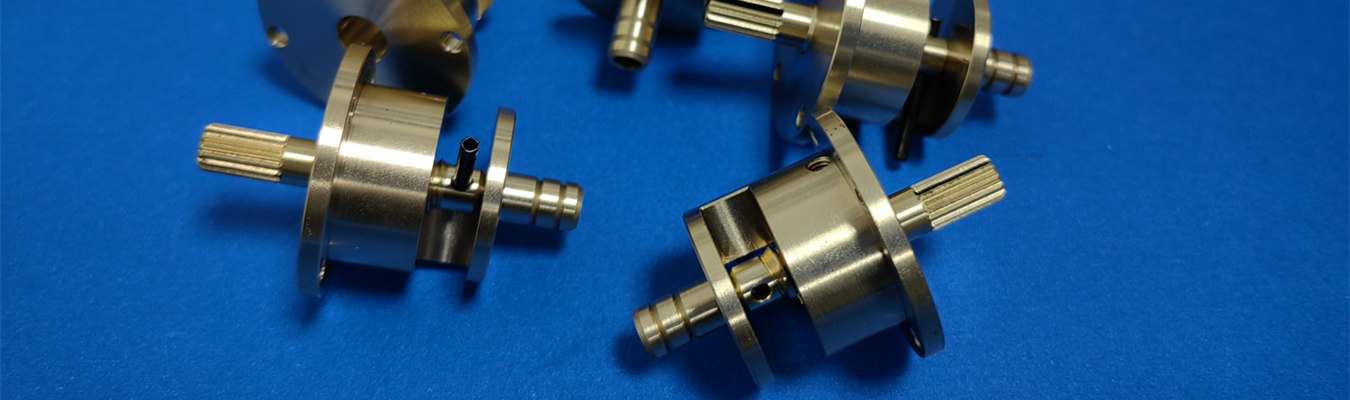
As a copper and zinc alloy, brass gives the best combination of strength, corrosion resistance, ease of machining, and cost. The brass alloy most widely used to produce tube fittings is C36000 free machining brass (C360, free cutting brass). Typical chemical composition of C36000 brass includes approximately: 61.5% copper; 35.5% zinc; and 3% lead. The lead in C36000 brass acts as a chip breaker and creates short, easily removed chips when machining at high speeds on CNC machines, which makes C36000 brass the ideal material for producing complex tube fittings with exacting tolerances in high volumes.
For those applications where maximum corrosion resistance is required (such as marine, potable water, or outdoor instrumentation applications), C46400 naval brass is often specified. C46400 naval brass has excellent resistance to seawater corrosion and stress corrosion cracking; however, C46400 cannot be machined as easily as C36000.
Corrosion resistance: Brass naturally resists oxidation and dezincification in most fresh water, air, and mild chemical environments.
Thermal conductivity: Excellent heat dissipation, important for high‑temperature pneumatic or hydraulic systems.
Mechanical strength: Adequate tensile strength (typically 300–450 MPa) for low to medium pressure applications (up to 1500 psi, depending on fitting size and wall thickness).
Machinability rating: C36000 has a machinability rating of 100% (the benchmark for free‑machining metals). This allows rapid production of brass tube fitting geometries with complex internal passages and fine threads.
Compatibility with elastomers: Brass does not degrade common nitrile, EPDM, or Viton seals, making it suitable for compression fittings with captive O‑rings or ferrules.
When selecting a brass tube manufacturer or brass compression fitting manufacturers, always request material certifications (mill test reports) confirming the alloy composition and mechanical properties. Traceability is essential for regulated industries such as medical gas, food processing, or oil & gas.
Brass tubing and fittings are available in a wide range of standard configurations, but many applications require custom‑engineered solutions. Below is an overview of the most common types:
An olive or ferrule creates a leak proof outer tube by compressing between the fitting and nut. Because no flaring, welding or soldering are needed, compression fittings are commonly used in air, hydraulic and instrumentation applications. The compression fitting consists of a nut, fitting body and 1 or 2 brass olives. Compression fittings come as straight, elbow, tee or bulkhead from many of the leading brass compression fitting manufacturers.
Fitting with flare is using the flared end of a tube to connect to a conical-seat fitting. Typical applications of this type of connection are found in chillers, fuel lines, and very high vibration areas. Brass is an ideal material for flared fittings because of its ductility and resistance to work hardening during the flaring operation.
When standard sizes or geometries are insufficient—such as non‑standard thread forms, reduced port diameters, or integrated mounting features—engineers turn to brass fittings manufacturers with in‑house CNC capabilities. Falcon CNC Swiss’s swiss machined components cover everything from miniature couplings to high‑flow adapters with tolerances as tight as ±0.005mm.
Producing reliable brass compression fittings requires more than just turning a brass rod. Several engineering challenges must be addressed:
Seat geometry precision: The conical sealing seat inside a compression fitting body must be concentric and free of tool marks. Even 0.01mm of runout can cause leaks.
Thread consistency: Fittings typically use UNF, NPT, BSPP, or BSPT threads. Thread profile, pitch, and gauge tolerance must conform to international standards.
Ferrule manufacturing: The ferrule (often made of C36000 brass) must have a carefully controlled hardness and sharp leading edge to bite into the tube surface without splitting the tube.
Hex dimensions: The nut’s hex size and wrench flats must be accurate to prevent rounding under torque.
Bulk manufacturing consistency: High‑volume runs require automated bar feeding, real‑time process control, and 100% inspection of critical dimensions.
The brass compression fittings manufacturers that have strong experience utilize Swiss‑type CNC lathes that have live tooling. These types of machines allow for completing turning, drilling, threading and hex milling from one set up. This eliminates the errors associated with the changing of setups and it allows for proper concentricity between the threads and the seal seating surface.
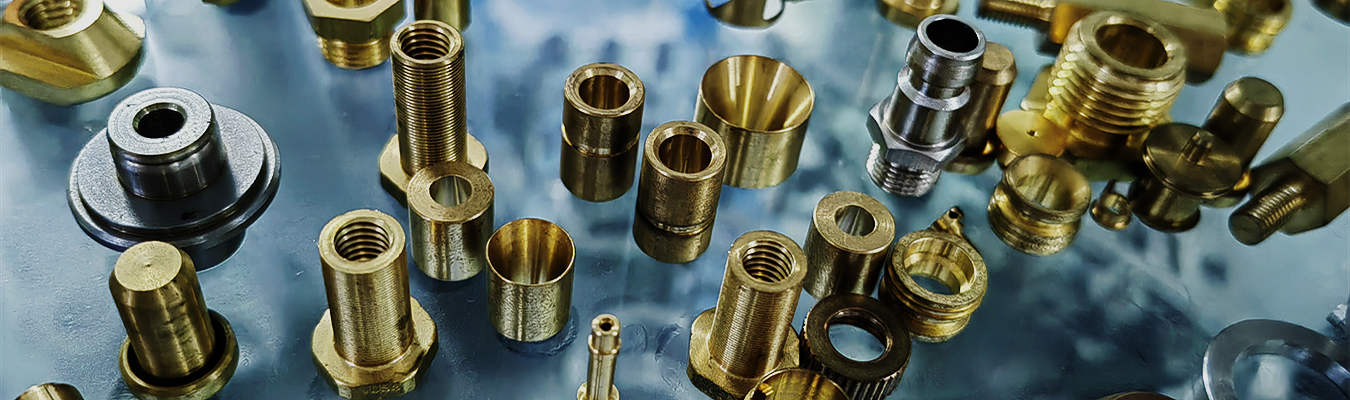
Conventional CNC lathes can produce simple brass bushings, but complex brass tube and fittings—especially those with internal hex, cross‑holes, or back‑side machining—benefit greatly from Swiss‑type automation. Falcon CNC Swiss’s brass and copper machining capabilities include Citizen, Star, and Tsugami Swiss lathes equipped with high‑pressure coolant and robotic part handling.
| Feature | Benefit for Brass Fittings |
| Guide bushing support | Eliminates deflection when machining long, slender fitting bodies (e.g., 1/8″ to 1″ tube sizes). |
| Live tooling (milling/drilling off‑axis) | Enables cross‑holes, hex flats, and slots without secondary operations. |
| Sub‑spindle pick‑off | Automatically transfers part for back‑face chamfering, tapping, or grooving. |
| High‑pressure coolant | Flushes brass chips from deep bores; prevents built‑up edge on forming tools. |
| Statistical process control (SPC) | Real‑time dimension monitoring maintains ±0.005mm tolerance on sealing diameters. |
For buyers looking for brass compression fittings supplier with high‑volume capacity, CNC Swiss machining - it produces parts with a repeatability that is nearly impossible to obtain when using hand-loaded turret lathes. Because the entire part is completed in one cycle on the Swiss machine, it can significantly reduce lead time.
Even the best brass tube manufacturer can produce defective parts if inspection is lacking. Reputable brass fittings manufacturers follow a multi‑stage quality plan:
First Article Inspection (FAI): Every dimension on the drawing is measured using a CMM (coordinate measuring machine) and optical comparator. Results are documented.
In‑process sampling: Critical features—such as compression seat angle and thread pitch diameter—are checked every 50–100 parts.
Leak testing: Sample fittings from each batch are assembled on actual tubing and pressurized to 1.5× rated working pressure with air or water.
Hardness verification: Ferrule hardness is tested to ensure it is not too soft (deforms) nor too hard (cracks tubing).
Material certification: Each shipment includes mill certificates confirming brass alloy and lead content (for RoHS/REACH compliance).
When you source from Falcon CNC Swiss’s connectors and fittings division, you receive full traceability and inspection reports—essential for medical device, aerospace, and industrial automation customers.
Off‑the‑shelf brass tube fitting components are readily available, but custom fittings often reduce assembly time, eliminate potential leak points, or fit into constrained spaces.
Below is a comparison of sourcing options:
| Option | Tooling / Setup Cost | Per‑Unit Cost (100 pcs) | Lead Time (prototype) | Best For |
| Standard catalog brass compression fittings | $0 | $3–15 | 1–2 days (stock) | Common sizes, low pressure, quick replacement |
| Modified standard (custom thread/port) | $150–300 (programming+setup) | $8–25 | 5–7 days | Minor changes to existing design |
| Fully custom brass tube fitting | $300–800 (DFM + tooling) | $15–60+ (depends on complexity) | 10–15 days | Proprietary geometries, space‑constrained systems, high‑vibration environments |
For brass tube and fittings in production volumes (1,000+ units per year), custom CNC machining becomes highly cost‑effective because setup costs amortize quickly. Moreover, working directly with a brass tube manufacturers eliminates distributor markups.
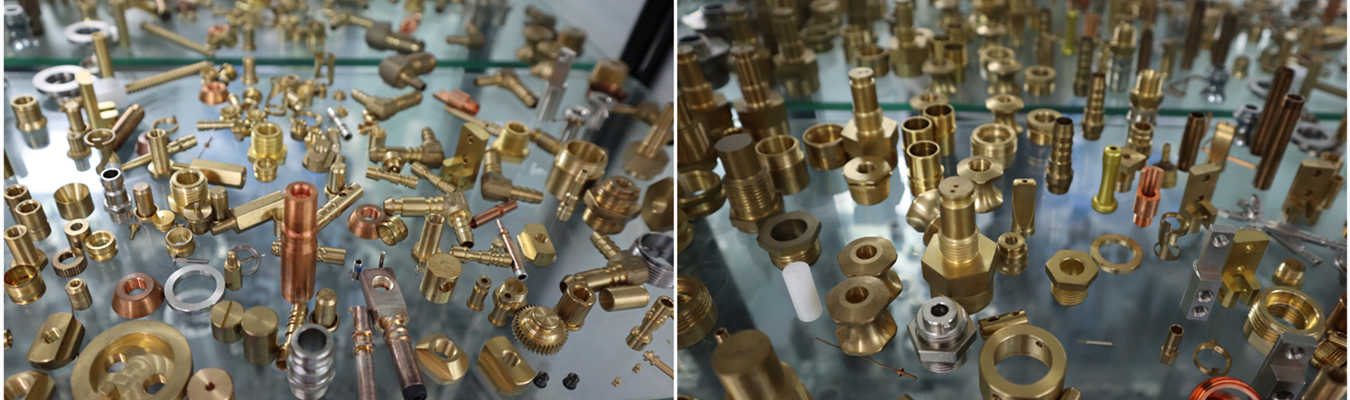
Whether you need a brass compression fittings supplier for pneumatic systems or a brass tube manufacturer for fuel delivery, use the following checklist during evaluation:
Machining capability: Do they have Swiss‑type CNC lathes for small, complex fittings? Can they hold ±0.005mm on sealing seats?
Material sourcing: Do they stock certified C36000, C46400, or lead‑free brass (e.g., Eco Brass)?
In‑house secondary operations: Can they perform passivation, bead blasting, or assembly of ferrules and nuts?
Inspection equipment: Do they own CMM, optical comparator, thread gauges, and air leak test stations?
Industry certifications: ISO 9001:2015 is baseline. For medical gas fittings, ISO 13485 may be required.
Volume flexibility: Will they accept small prototype orders (10–100 pcs) as well as high‑volume production (10,000+ pcs/month)?
Falcon CNC Swiss’s Swiss machining services meet all the above criteria. We are a direct brass fittings manufacturers with over 20 years of experience serving automotive, medical, and industrial clients worldwide.
Brass has a reputation for being a great machined material for tube and compression fittings due to its great machinability, corrosion resistance, and cost. However, achieving a leak-free, long-lasting connection is dependent on the quality of the brass and the precision of the machining. This precision is dependent on the use of Swiss-type CNC turning machines that provide guide bushing stability, live tooling, and automated inspection to provide the tight tolerances necessary for the critical sealing surfaces.
Whether you need standard brass compression fittings for an instrumentation panel, or fully custom brass tube fittings for a new medical device, working with an experienced manufacturer will provide you with consistent and reliable fittings. At Falcon CNC Swiss, we provide comprehensive service, starting from material certification, through to finished assemblies, while providing free DFM review through our engineering department to provide feedback on your fitting design to optimize for manufacturability and cost.
Upload your CAD file or sketch for a rapid quote and discover why global OEMs trust Falcon CNC Swiss for precision brass tubing and fittings.
A: Compression fittings use a ferrule that is compressed onto the tube OD to form a seal. They are easier to assemble and disassemble. Flare fittings require the tube end to be flared outward; they withstand higher vibration but need precise flaring tools. Both are available from brass tube and fittings suppliers.
A: Yes, but the ferrule should be brass or stainless steel, and the nut/body must be compatible. Brass is softer than stainless, so torque values must be controlled to avoid stripping threads. Many brass compression fittings manufacturers offer mixed‑material options.
A: Brass retains good mechanical properties up to approximately 200°C (400°F). For continuous service above that, consider bronze or stainless steel fittings. Always check the alloy data sheet.
A: Avoid direct contact between brass and aluminum in wet environments. Use a dielectric union or apply anti‑seize compounds. For most industrial air systems, brass compression fittings are safe with copper, nylon, or steel tubing.
A: C27450 and C27451 (lead‑free brass) contain<0.25% lead and comply with NSF/ANSI 372. Many brass tube manufacturers now stock lead‑free alloys for potable water fittings.