English
  日本語
日本語  한국어
한국어  français
  Deutsch
  Español
  русский
  العربية

Mar
Learn More
22

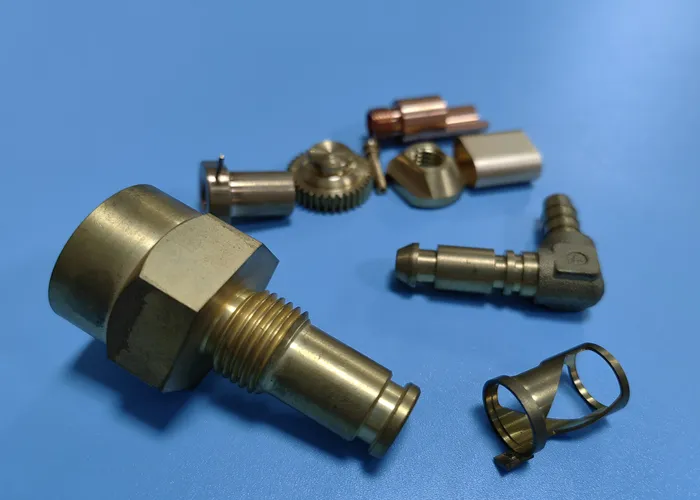
Brass has been a trusted material for fluid connections for decades, and for good reason. Whether you need a brass connector for a hydraulic system, a brass water pipe connector for a residential plumbing project, or a corrosion resistant brass joint for marine instrumentation, brass offers a unique combination of machinability, durability, and corrosion resistance that few other metals can match.
The number of different types of connectors that are available today range from brass compression fittings to brass push fit couplings to brass soder fittings and represent the versatility of brass. This guide will help to provide an understanding of the different types of brass tubing connectors available, the associated engineering properties of each type, the different manufacturing methods used to make high quality components through precision CNC machining processes and tips on evaluating potential brass fitting manufacturers.
At Falcon CNC Swiss, we combine advanced Swiss-type CNC turning, in-house finishing, and rigorous quality systems to produce precision brass connectors, brass tube fittings, and custom brass pipe joints for global OEMs.
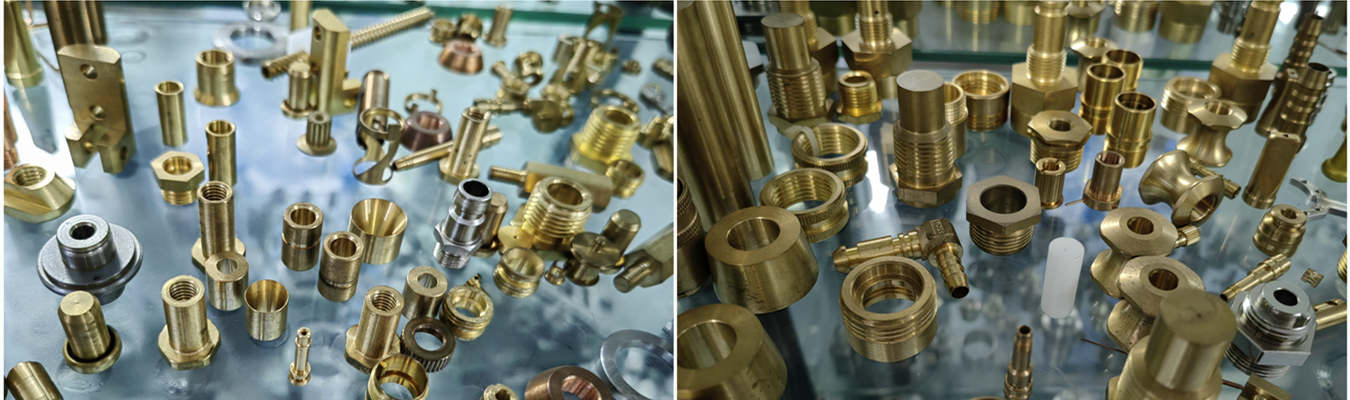
Not all brasses are created equal. For brass connector fittings that demand precision machining and reliable performance, C36000 free-cutting brass (also known as free machining brass) is the industry standard.
C36000 has copper content of around 61.5%, zinc at 35.5%, and lead at only 3%. The lead component facilitates chip breaking during machining and permits the production of more complex brass tube connector geometries at higher speeds than other types of brass with similar properties. The lead content in C36000 also enables you to produce surfaces that exhibit very good appearances. C36000 is very good for brass connector applications where threading, knurling, and other intricate internal features are required.
Graded 100% for machinability (the reference point for comparing all other types of copper alloys).
Excellent corrosion resistance to both potable and industrial environments and to atmospheric exposure.
Good joinability; easily joined by soldering or brazing; well-suited for brass solder fittings or sweats.
Strength; tensile strength in a range of 338 to 469 MPa depending on temper.
C46400 (naval brass) is often the next choice for applications that require greater corrosion resistance in a marine environment. CW617N is another alloy often used when lead-free is a requirement for drinking water that will be less than 0.25% lead content and will allow for similar machinability characteristics.
Chrome plated brass fittings have excellent resistance to corrosion and a nice appearance. The electroplating process used to apply the chrome creates a thin layer of chromium over the brass surface, which provides protection for the brass below it from the environment by preventing it from rusting or corroding due to exposure to the elements. Chrome plating is especially used for brass fittings that will be used as connectors to water pipes because they may be subject to very high humidity, moisture and/or continuous contact with water.
The world of brass connectors plumbing is diverse. Understanding the different connection methods helps engineers select the right fitting for each application.
brass compression fittings have an olive or ferrule that forms a leak-tight joint by compressing against the face of the fitting body when the nut is tightened down on it. They are very popular in instrumentation, hydraulic systems, pneumatic equipment and plumbing because they can be easily installed and serviced. They do not require flares, soldering, or welding for installation.
Brass fittings employ a flared end of tubing that pairs to a cone-shaped seat which are widely used for reconnecting systems into refrigeration, fuel lines, and systems with substantial vibrations due to brass being a ductile metal also makes it an ideal material for connections that require flaring.
One of the advantages of push-fit (push-to-connect) brass connectors is that the tubing can be inserted into the connector without using any tools. The connector clamps onto the tubing with a gripping ring and seals the tubing using an O-ring. Push-fit brass has many uses in applications such as compressed air systems and low-pressure water plumbing for its speed and ease of installation.
Copper and brass solder fittings and copper sweat fittings are both designed to form permanent and leak-proof connections (joints) by producing a melted solder joint in order to connect the two pipes at an angle. These types of fittings are the most common used in plumbing in both residential and commercial construction and are used mainly for connecting copper tubes.
| Thread Standard | Common Applications | Typical Sizes |
| NPT brass connectors (National Pipe Taper) | North American plumbing, pneumatic, and hydraulic systems | 1/8″ to 2″ |
| BSP brass pipe joints (British Standard Pipe) | European, Asian, and Commonwealth markets | 1/8″ to 2″ |
| Metric brass fittings | International industrial and automotive applications | M5 to M20 |
The types of threaded pipe joints that typically have standard shapes include: 90 degree elbows, 45 degree elbows, tees, straight connectors, adapters, reducers, caps and bushings. Brass reducer bushings (also called hex bushes) are commonly used where there is a need for precise transition between two sizes and come in NPT or BSP type.
Brass water pipe fittings are used to connect piping systems of residential, commercial and industrial plumbing systems. Current code requires that all brass used in potable water systems be lead-free brass and certified to either the NSF/ANSI 61 or 372 standard. The most common sizes for brass pipe fittings, or connectors, are 1/2 inch and 3/4 inch diameter.
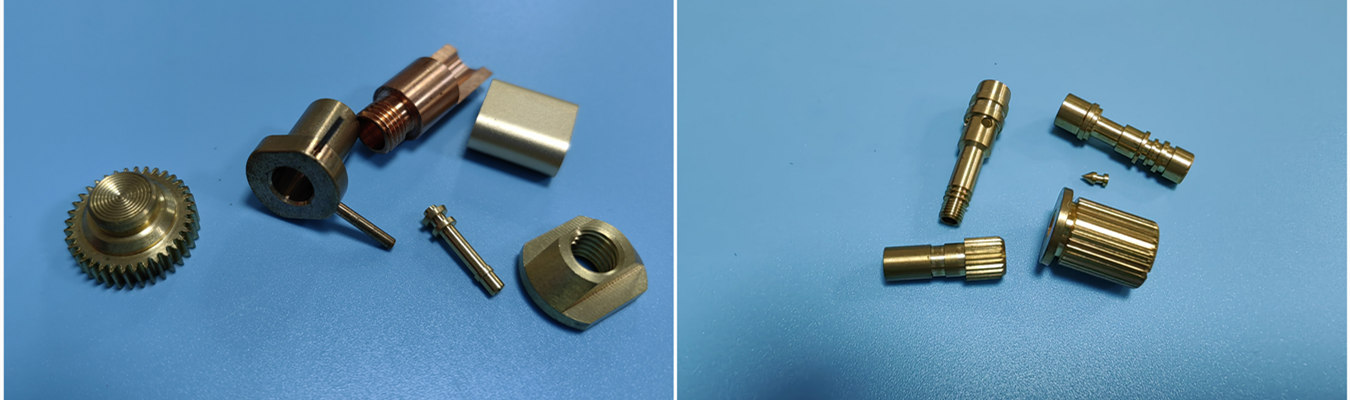
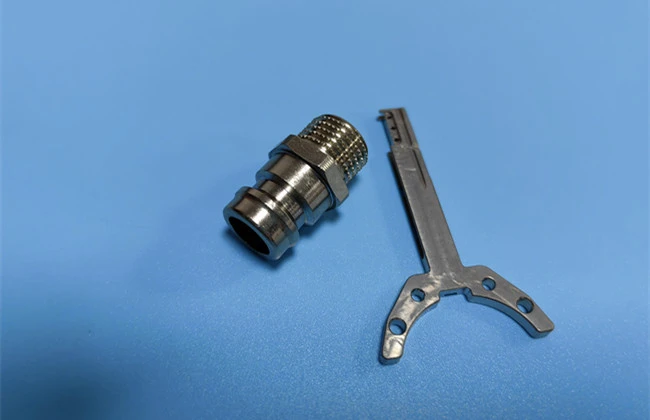
Producing high-quality brass connector fittings requires more than just good material—it requires precision manufacturing. At Falcon CNC Swiss, we specialize in Swiss-type CNC turning and multi-axis machining for complex brass tube fittings, brass tubing connectors, and custom brass connectors.
Swiss-type CNC lathes are uniquely suited for small-diameter brass connectors, with capabilities ranging from 0.5 mm to 32 mm in diameter. The guide bushing system supports the workpiece immediately at the cutting point, eliminating deflection and ensuring tight concentricity between the connector body and its threaded features.
Tolerances down to ±0.005 mm for critical sealing surfaces and thread pitch diameters.
Live tooling for complex features – cross-drilling, hex milling, and slot cutting completed in a single setup.
High-volume production with automated bar feeders and robotic part handling.
Excellent surface finishes – critical for compression fitting ferrules and sealing seats.
In-process CMM verification ensuring every batch meets specifications.
Falcon CNC Swiss offers complete in-house finishing services, eliminating the need to coordinate with outside vendors:
Chrome plating – for chrome plated brass fittings requiring enhanced corrosion resistance and a decorative finish.
Passivation – to maintain corrosion resistance on brass surfaces.
Bead blasting – for uniform matte finishes.
Silk-screening – for part identification and branding.
As an ISO 9001:2015 certified facility, Falcon CNC Swiss follows rigorous quality control processes, including first article inspection (FAI), in-process SPC monitoring, and final CMM verification. For lead-free brass fittings, full material certifications and compliance documentation are available. Learn more about our Swiss machined components and brass and copper machining capabilities.
When sourcing brass connectors, brass pipe joints, or custom brass fittings, the manufacturer‘s capability directly impacts your product‘s performance and longevity.
| Evaluation Criteria | What to Look For |
| Material sourcing | Certified C36000, C46400, or lead-free brass (CW617N) with mill test reports |
| Machining capability | Swiss-type CNC turning for small-diameter brass connectors (±0.005mm tolerance) |
| Thread expertise | Experience with NPT, BSP, metric, and UNF thread standards |
| Inspection equipment | CMM, optical comparator, go/no-go thread gauges, surface roughness tester |
| Finishing services | In-house chrome plating, passivation, or bead blasting (no outsourcing) |
| Quality certification | ISO 9001:2015 minimum; ISO 13485 for medical applications |
| Lead-free compliance | NSF/ANSI 61 and NSF/ANSI 372 certification for drinking water components |
| Volume flexibility | Capability for both prototype quantities (10–100 pcs) and high-volume production (10,000+ pcs) |
The updated NSF/ANSI/CAN Standard 61 includes an additional seven brass alloy compositions under the “Acceptable Materials” sub-section. Manufacturers, therefore, now have a greater range of options when designing potable water products that meet US Federal and Canadian federal regulations for lead-free content.
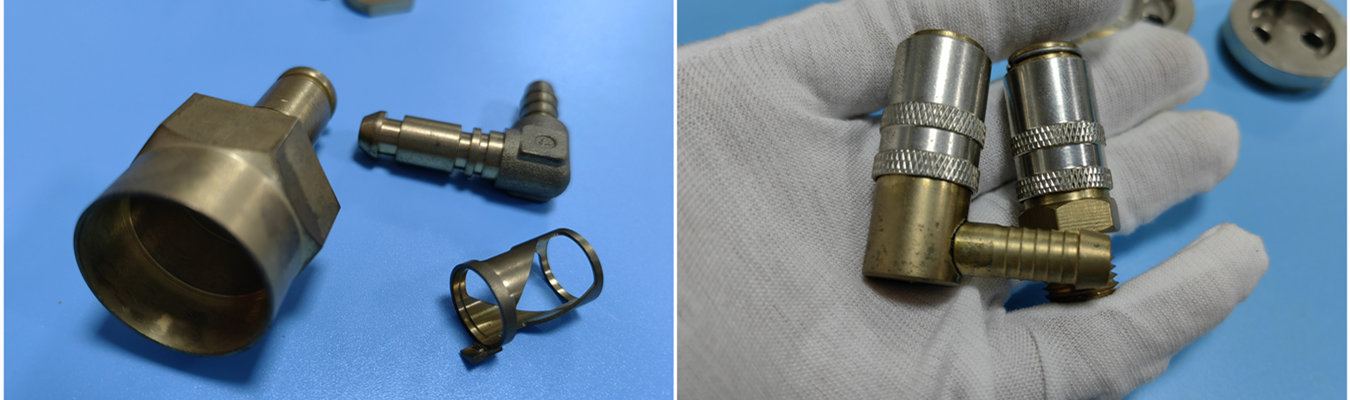
Brass connectors and fittings remain essential components in countless applications—from residential plumbing to industrial hydraulics and pneumatic systems. By understanding the material properties of C36000 and lead-free brass alloys, the variety of connection types available, and the precision manufacturing methods that ensure reliable performance, engineers can make informed sourcing decisions.
At Falcon CNC Swiss, we combine advanced Swiss-type CNC turning, in-house finishing, and rigorous quality systems to produce precision brass connectors, brass tube fittings, and custom brass pipe joints for global OEMs.
Ready to move forward? Upload your CAD file for a free DFM analysis and competitive quote.
A: The NPT threads create a seal from the deformation of the threads where as both NPT and BSP are classified as tapered however the included angle of the thread is different (NPT 60 degrees; BSP 55 degrees) as well as the fact that the BSP threads can be tapered as well as parallel. In addition, when using the BSP threaded fitting a sealing washer or o-ring is also required.
A: Yes, chrome plating provides a hard and abrasion resistant surface resulting in improved corrosion resistance in locations where there is high Humidity or consistent water exposure.
A: The most frequently used brass pipe/dure connectors and fittings for residential and light commercial plumbing applications are 1/2 inch and 3/4 inch. The most frequently used brass connectors or fittings are 12 mm, 15 mm, and 22 mm.
A: Yes, a stiff/rigid sleeve must be used to eliminate the possibility of collapsing the tubing being connected with a brass compression fitting. All manufacturers provide installation instructions that must be adhered to.
A: Dissimilar metals (Aluminum in particular) must not be place in direct physical contact with brass in a wet/moist area. Using dielectric unions or appropriate anti-seize compounds will eliminate the possibility of having galvanic corrosion occur.