English
  日本語
日本語  한국어
한국어  français
  Deutsch
  Español
  русский
  العربية

Dec
Learn More
01

When evaluating the components of anything from the inside of a hearing aid to the inner workings of a pacemaker or even examining how they operate and are held together by tiny screws, bolts, and rivets, you will see small parts that are essential to making all those devices function and perform at such high levels as they do today in precision engineering. Without these tiny parts, many products that have become commonplace today would not have been able to happen until just a few years ago.
This article was written to provide engineers, product developers, and purchasing agents with an understanding of precision micro-hardware — from material selection to manufacturing process, and supplier evaluation. The article includes types of precision micro hardware components available, how to manufacture precision micro hardware using Swiss CNC machining, design considerations for micro-hardware components, and the proper selection of manufacturers who can produce micro-hardware.
At Falcon CNC Swiss, our Swiss machining services are ISO 9001:2015 certified, specializing in custom miniature fasteners down to 0.8mm diameter with tolerances as tight as ±0.005mm. Our Swiss machined components division has extensive experience with titanium, stainless steel, and brass for medical, aerospace, and electronics applications. For threaded components, our bolt and nuts manufacturing capabilities cover both standard and custom thread forms.
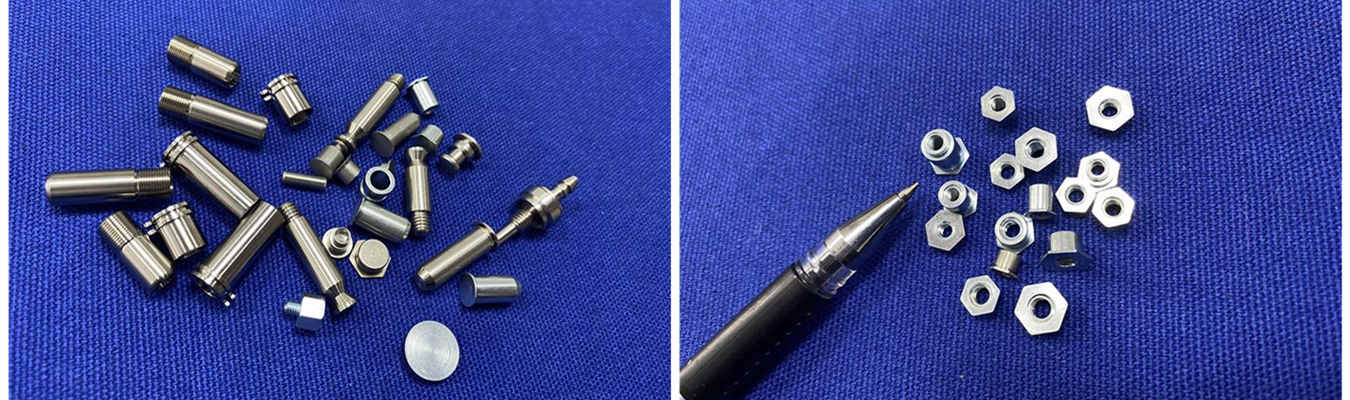
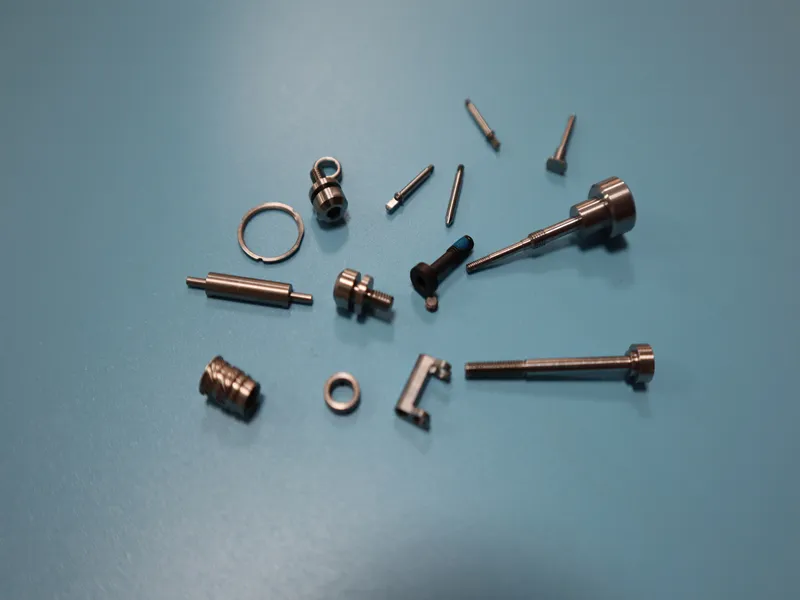
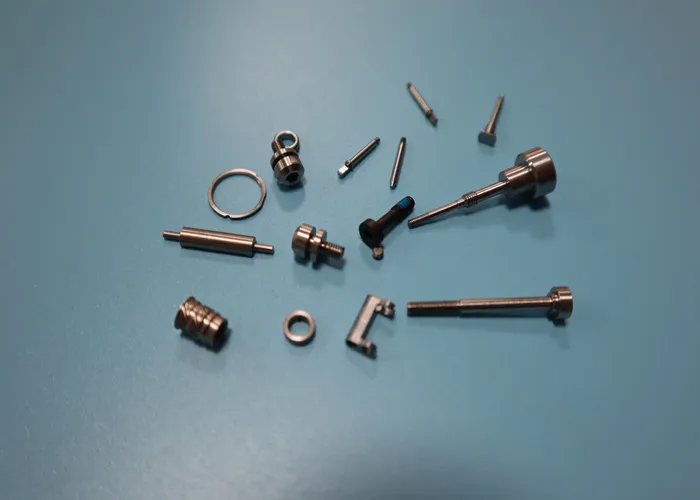
Miniature fasteners are small (less than 6 mm) mechanical devices that are used for connecting or holding together two or more pieces of physical materials. Miniature fasteners can be found in various forms: micro rivets, small nuts and bolts, small screws, micro washers, and precision mini hardware.
| Fastener Type | Diameter Range | Common Applications | Manufacturing Method |
| Micro screws | 0.8mm – 3.0mm | Medical implants, electronics, watchmaking | Swiss CNC turning |
| Micro rivets | 0.5mm – 2.5mm | Permanent joints, vibration‑resistant assemblies | Machined or cold‑headed |
| Tiny nuts and bolts | 1.0mm – 4.0mm | Robotics, drones, precision instruments | CNC turning and milling |
| Micro washers | 0.8mm – 3.0mm | Spacing, load distribution, sealing | Stamping or CNC |
| Miniature screw types | M0.6 – M3.0 | Various head styles (pan, flat, socket, cheese) | Swiss screw machining |
Surgical tools and implantable products require micro-fastenings from biocompatible materials (i.e., usable), such as titanium and stainless steel, with diameters of down to 0.8mm to ensure usability.
Smartphone, laptop, wearable, and IoT devices contain many small screws used for assembling these devices internally within a limited-volume environment.
Avionics, microsatellite, and military comm equipment is manufactured with very small industrial fasteners that must be able to survive high vibration levels, extreme temperatures and corrosion.
Lightweight sensor enclosures, control module and lightweight structure arrangements in vehicles depend on small-scale fastening solutions to reduce overall vehicle weight.
Lightweight industrial grade robotic arms, grippers, and frame assemblies with precision micro-hardware parts provide assembly reliability while minimizing excess weight.
Industrial pneumatic, sensor, and instrumentation applications apply hi-tech fastener solutions for maintaining torque levels under vibration and thermal cycling conditions.
Material selection directly impacts strength, corrosion resistance, biocompatibility, and cost.
| Material | Key Properties | Best Applications | Typical Fastener Types |
| Titanium (Grade 5) | High strength‑to‑weight, biocompatible, corrosion‑resistant | Medical implants, aerospace, high‑performance robotics | Micro screws, tiny nuts and bolts |
| Stainless steel (303/304/316/17‑4 PH) | Corrosion‑resistant, moderate cost, good strength | Medical devices, industrial equipment, electronics | Miniature screws, micro rivets |
| Brass (C36000) | Excellent machinability, good conductivity, corrosion‑resistant | Electrical connectors, plumbing fittings, instrumentation | Brass miniature screws, nuts |
| Aluminum (6061/7075) | Lightweight, good machinability, cost‑effective | Drones, aerospace, consumer electronics | Small fasteners, micro washers |
| PEEK plastic | Lightweight, electrically insulating, biocompatible, heat‑resistant | Medical implants, electronics, chemical environments | Micro screws, insulating hardware |
Titanium fasteners should be the preferred choice for use in medical and orthopaedic implants and aerospace applications (where failure is unacceptable). When it comes to general-purpose small and medium-sized fasteners, stainless steel is the most commonly used fastener material. If you have to manufacture a large number of small, complex-shaped fasteners that require tight tolerances, the recommended material is C36000 brass. If you have special applications such as surgical robotics or submersible sensors, you will need a custom material like PEEK (polyetheretherketone) or Inconel (a high-performance nickel-based alloy).
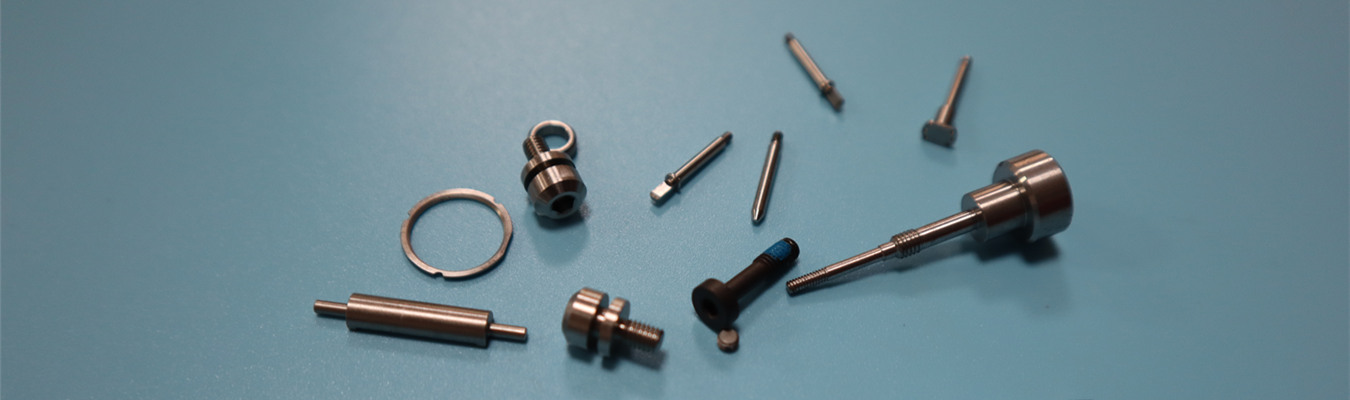
The standard for producing precise micro-components has long been the Swiss-type computer numerical control (CNC) lathe. Small diameter, typically below 3 mm, turned workpieces can be produced with little or no deflection and roundness and thread accuracy, because the guide bushing system supports the workpiece right at the cutting point.
Tolerances down to ±0.0025mm (±0.0001 inch) for critical features.
Part diameters as small as 0.1mm possible on high‑end Citizen, Star, or Tsugami machines.
Live tooling enables milling of hex heads, slots, and cross‑holes in a single setup — eliminating secondary operations.
Micro washers as thin as 0.2mm wall thickness achievable with surface finishes to Ra 0.2μm.
For custom miniature screw types with non‑standard thread forms, special head styles, or exotic materials, CNC Swiss machining provides superior flexibility and precision with minimal tooling investment.
Designing micro hardware parts requires attention to details that become magnified at small scales.
Thread standards: The Unified Miniature Standard (UNM) defines diameters from 0.30 UNM (0.0118″) to 1.40 UNM. Most miniature screw types follow UNM, metric (M0.6–M3.0), or medical/aerospace standards.
Torque control: Over‑torquing a micro screw can strip threads or snap the head. Always specify torque values based on material and thread engagement.
Head styles and drives: Fillister head, pan head, flat head, binding head, and socket head cap are common. Drives include slotted, Phillips, hex socket, and Torx.
| Criteria | What to Look For |
| Machining capability | Swiss‑type CNC turning for diameters down to 0.5mm or smaller |
| Material expertise | Proven track record with titanium, stainless steel, brass, PEEK |
| Quality systems | ISO 9001:2015, ISO 13485 (medical), AS9100 (aerospace) |
| Inspection equipment | CMM, optical comparators, thread gauges, surface roughness testers |
| Thread standards | Experience with UNM, metric, and custom thread profiles |
| Volume flexibility | Prototypes (10–100 pcs) to high‑volume (10,000+ pcs) |
| Finish capabilities | In‑house plating, passivation, bead blasting, or anodizing |
| Traceability | Material certifications and full inspection documentation |
At Falcon CNC Swiss, we meet all the above criteria. Our Swiss machined components division provides full material certifications and inspection reports. For threaded tiny nuts and bolts, our bolt and nuts capabilities cover both standard and custom thread forms.
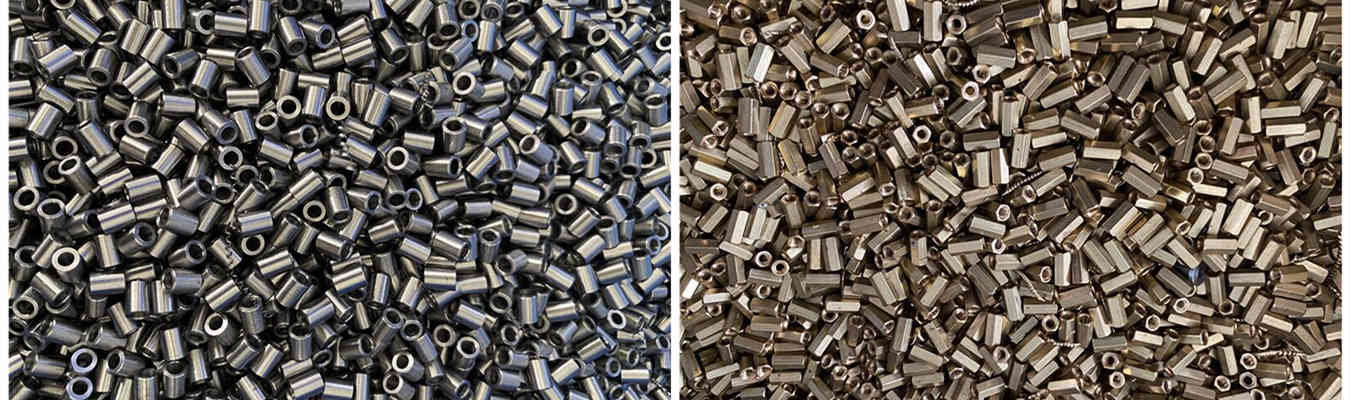
Micro industrial fasteners are the unsighted support structures of modern innovation, they serve many purposes for all industry types. Engineers can find alternatives to sourcing from partner manufacturers by having a full understanding of the material properties, manufacturing processes and design considerations.
If you need micro rivets for your mini-medical devices or titanium screws for use in aerospace applications or even custom brass miniature screws to assemble electronic devices, a qualified partner can greatly impact your business success. Falcon CNC Swiss uses state-of-the-art Swiss-type CNC turning, using our own finishing capabilities and product quality programs to produce precision micro parts that meet OEM standards for many different markets worldwide.
Upload your CAD file for a free DFM analysis and competitive quote.
A: The standard UNM defines diameters at or below 0.30 UNM. This means every screw, bolt, nut, washer, etc., manufactured according to this standard is built using a nominal value of 0.305"; however, custom micro screws can be created down to approximately 0.300 mm using Swiss-type CNC turning method.
A: For implantable medical applications, the material of choice would be titanium with a grade of 5 or Ti-6Al-4V. For the actual operational quick-fastening device (i.e., the fastener itself) used with surgical equipment, grade 316L stainless steel would provide excellent resistance to corrosion when constantly placed through sterilization processing.
A: Micro rivets produce a permanent type of fastener joint while micro screws are removable or serviceable. Micro rivets are very useful when the application may be exposed to any kind of vibrations, and require structural integrity over extended periods.
A: Yes, several custom head specifications can be provided by the manufacturer, i.e., fillister, pan, flat, binding, or socket head. The drive types can be slot, Phillips, hex socket, or Torx.
A: Prototypes are generally produced in 5 to 10 working days, while production lead times vary according to the quantity ordered and will be confirmed during the quoting process.