English
  日本語
日本語  한국어
한국어  français
  Deutsch
  Español
  русский
  العربية

Jan
Learn More
13

If you drive a hot rod or a turbocharged bomber, enjoy gardening with a dedicated water trigger, or work in a plant which uses blowers or industrial fans, then you’ve benefitted from the use of a mechanical impeller. An impeller is a rotating mechanical device situated in a liquid or a gas intended to increase the speed of a fluid or reactor, or to reduce the pressure although it is most commonly designed to increase the pressure. You’d be familiar with the use of the mechanical device in pumps. It is the part inside your machine that pumps out the water. In a turbocharger, an impeller forcees air into the engine to increase the fuel and air mixture and deliver more power. In large form, that of industrial fans, blowers and extractors, the impeller, of horizontal design forces huge quantities of air for cooling or ventilation to operate the machinery that needs cooling or that requires a source of exhaust in use around the machine.
The design and manufacture of an impeller is very responsible. Too rough, and it will cause unnecessary vibratory loss and run hot whilst loading in turn and dampening the engine down. Too slack in manufacture and it will pull leads and burn out early. It is easy to understand why a good CNC impeller would be the token of choice for your own garden variety applications. Unlike gast and crimped impellers; of which many of the problems can be attributed to hidden porosity, mistaken design and manufacture with unbalanced impellers another common trust of inferior quality cast rotary operaors, and burlguard shield holders.
CNC machined impellers values constitute a real and quantifiable reason to switch to them for applications that modern tasks must provide supporting proved or tested standards from the pump handbooks. Formed with great care from solid material, the spinning fans can be relied on with full confidence. We will take you through everything you need to know about impeller design, materials, types and their manufacture through to the best pump manufacturers in selecting the right suitor for your project.
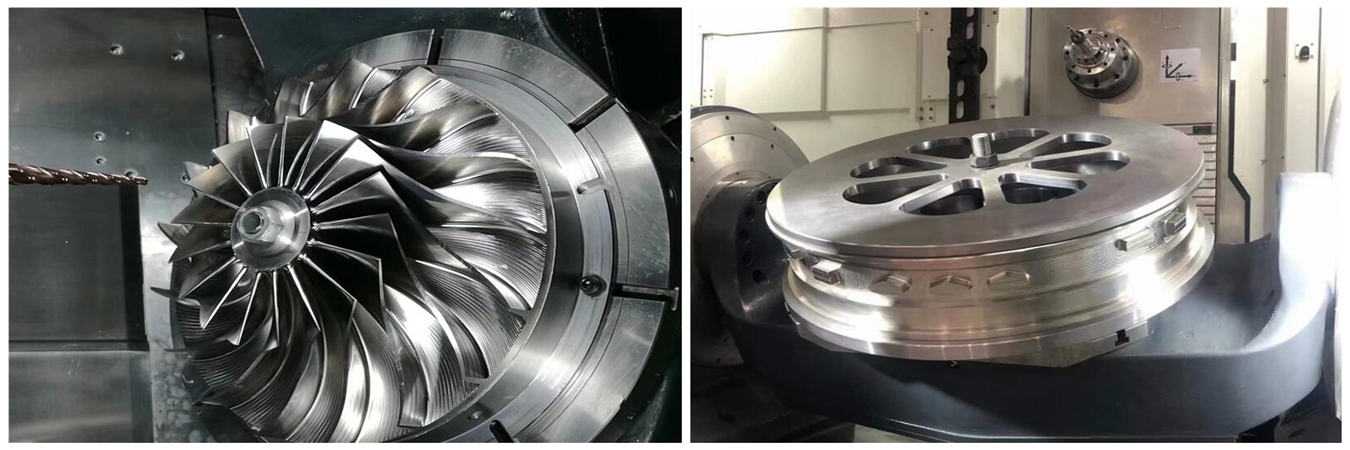
Impellers come in three main design types, each suited for different applications. Understanding these helps you choose the right design for your pump, fan, or turbine.
| Impeller Type | Description | Best For | Common Applications |
| Open Impeller | Blades attached directly to a central hub with no shroud (cover). Easy to clean but less efficient. | Fluids with solids or debris | Wastewater pumps, slurry pumps, food processing |
| Semi-Open Impeller | Blades have a back shroud but no front shroud. Balance between efficiency and solids handling. | Moderate solids, general industrial | Chemical pumps, industrial process pumps |
| Closed Impeller | Blades are enclosed between front and back shrouds. Most efficient but can clog with debris. | Clean fluids, high efficiency | Clean water pumps, turbochargers, compressors, aerospace turbines |
For high-performance applications like turbochargers, compressors, and aerospace turbines, closed impellers are the standard. They offer the best efficiency and pressure generation—but they’re also the most complex to manufacture. That’s where pump impeller manufacturing with advanced CNC machining becomes essential.
Choosing the right material is integral to the performance and lifespan of an impeller. Factors such as the type of fluid, temperature, risk of corrosion, and rotational speed come into play.
Lightweight and easy to machine, aluminum is the material of choice when weight reduction is paramount and corrosion is less of a concern. Best applied to automotive turbochargers, blowers, fans and aerospace components.
Pros: Light weight, good machinability, cost-effective
Cons: Lower strength at higher temperatures, and less of a concern for corrosion than either stainless steel or Titanium
Aluminium Impeller manufacturers: When producing turbine impellers for automotive and blower applications, you should expect and find CNC machined aluminium impellers that are produced from 6061 or 7075 aluminium.
Stainless steel is less prone to corrosion making it the premier choice for pumping water and chemicals. We expect to commonly find this material used in marine environments. Stainless steel is also widely used for food processing equipment, because of its resistance to corrosion.
Pros: Corrosion resistant and tougher than many mild steels.
Cons: Jumping to a stainless steel may bring about a heavier impeller which may not be necessary.
Typical stainless steel impeller manufacturers: 306 or 304L stainless steel commonly used for general-purpose pumps.
For impellers that don’t always require a regular 316 grade, in the medical or food processing industries, we can use a 316L. Higher alloy currently used is 17-4 PH. This high-strength material can be used to make smaller-diameter impellers with very high mechanical properties.
For high performance applications needing a high strength-to-weight ratio, Titanium is the go-to, but it also has very stunning corrosion resistance.
Pros: Titanium is very light and exhibits an extremely high strength-to-weight ratio in loads, while at the same time having great corrosion resistance.
Cons: Pricey, in relation to Aluminium and Stainless steel, however, very easily machinable. A tricky Material but best ASTM standards exist.
Limitations: Most expensive option, requires specialized machining expertise
Potentially best placed for pump impeller manufacturers who’re faced with strict specifications for weight, high corrosion resistance, and a high-performance ethos in the manufacturing of their pumps. Explore our 5 axis CNC machining impellers in different materials →
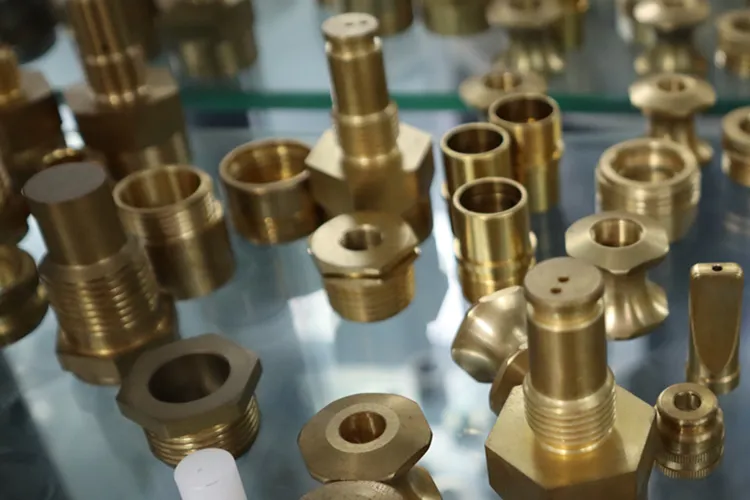
Brass and bronze offer good corrosion resistance and natural lubricity. Brass exhibits good corrosion resistance, such that it machines well, and with it is following on having various degrees of natural lubricity. Use in smaller pumps for mild chemically associated liquids.
Pros: A very good corrosion resistance for mild pumpings
Cons: Bronze/lightweight and supple metals aren’t tough.
Best placed for small pump impeller volumes, for starters.
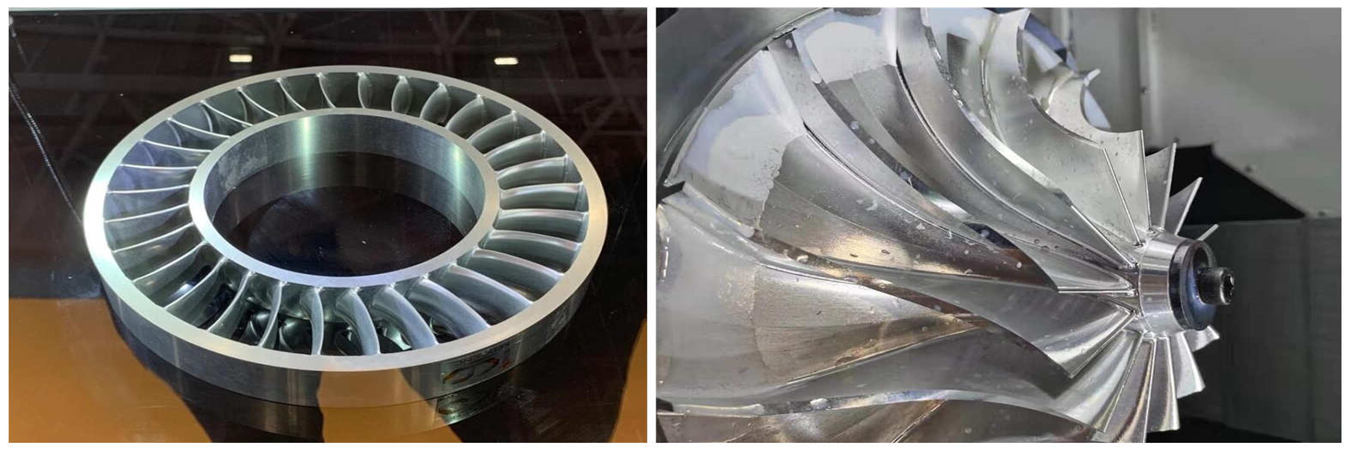
How does a lump of metal become an efficient impeller? Here’s the pump impeller manufacturing process typically used by experienced impeller pump manufacturers.
It starts with a 3D CAD model. Impeller geometry is complex: the angles of blades, how thick they are, how they curve all make a difference to performance, and modern impeller design sometimes uses computational fluid dynamics (CFD) analysis for efficiency optimisation well before any metal is cut.
Depending on the application, the correct material is chosen, and for critical applications material certifications (mill test reports) allow ‘traceablity’ back to the original melt.
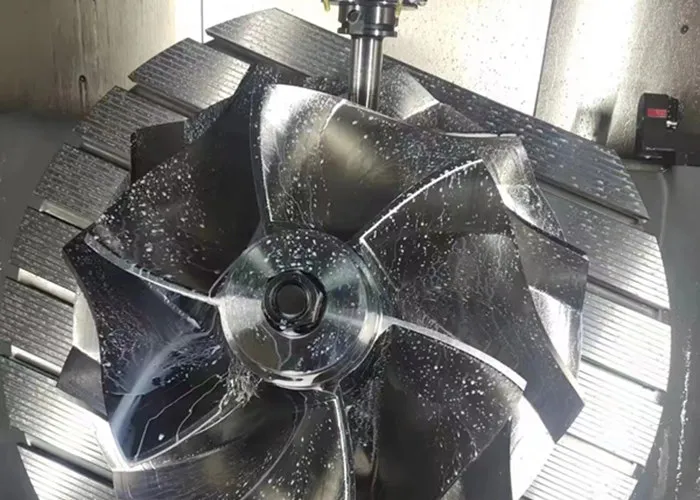
This is where the accuracy comes. Impeller fan manufacturers, and pump impeller manufacturers turn to modern 5-axis CNC machining to cut the impeller from solid material.
Why 5-axis? Because the blades of the impeller are curved, and sometimes even undercut, in ways that would support to regular 3-axis machines, and require the cutting tool to come from surprising angles to get to the workpiece. 5-axis machining permits the cutting tool to attack the part from all angles, enabling it to cut very fast blades as a single process and no additional operations, or hand finishing.
This is always a tricky business with closed impellers, and the in-between passages of the impeller fan blades is ‘machined’ through a small ‘opening’ requiring much special tooling and careful programming.
The unbalanced impeller would vibrate, wearing the bearings, noisily smashing the pump to bits and infuriating its operator before the end of its expected life. Impellers thus go through dynamic balancing; they are spun at operating speeds whilst measuring and correcting any imbalance.
This process is especially vital on small turbine high-speed applications, such as turbochargers and turbine impellers, for even a small imbalance at 50,000 RPM puts out vibrational tentacles.
Surface finish affects efficiency (smoother surfaces follow less resistance to flow) and corrosion resistance. Typical finishing steps include:
Polishing: To achieve smooth surfaces and less friction
Bead blasting: For uniform mattt finish
Coatings: (such as anodizing for aluminium workpieces, or specialised anti-corrosion coatings for more stressful environments)
All critical dimensional dimension is checked. With precision impellers this includes:
CMM (Coordinate Measuring Machine) inspection of ‘blade profiles’ and the positioned accuracy of ‘blades’ and other features
Surface finish measurement formal that the smoothness required
Final balance check before shipping
Check more details of our impller machining services and process →
One of the most common questions from buyers. The candid answer: It depends on complexity, size, and material.
| Factor | Impact on Machining Time |
| Complexity | Simple open impellers: 1–3 days. Complex closed impellers with tight tolerances: 5–15 days of machine time |
| Size | Small impellers (under 100mm): faster cycle times. Large impellers (300mm+): longer cutting time and additional setups |
| Material | Aluminum: fastest cutting. Stainless steel: slower, more conservative parameters. Titanium: slowest due to heat management requirements |
| Quantity | First article includes programming and setup. Additional units add incremental machine time |
General lead times from quoting to delivery:
Simple open impeller, prototype: 2–3 weeks
Complex closed impeller, prototype: 4–6 weeks
Production quantities: Discussed on a case by case basis, volume-wise
Working with experienced pump impeller manufacturers who specialize in 5-axis machining can help reduce lead times because they have pre-optimized toolpaths and proven processes.
Sometimes, yes. But it depends on the type of damage and the impeller’s value.
Repairable damage:
Minor erosion or pitting
Small cracks (in certain materials and locations)
Wear on blade edges
Repair methods include:
Welding: Adding material to worn areas, then machining back to original geometry
Coating: Applying wear-resistant coatings to restore surface
Balancing: Re-balancing after repair
When replacement is better:
Severe cracks or missing sections
Fatigue failure (cracks through critical areas)
High-value applications where reliability is paramount (aerospace, critical pumps)
When repair cost approaches 50–70% of new impeller cost
For critical applications like aerospace turbines or high-performance pumps, most engineers choose replacement over repair. The cost of failure—downtime, safety risks, collateral damage—far outweighs the savings from repair.
CNC machined impellers are used across multiple industries, each with specific requirements.
| Industry | Applications | Typical Materials | Key Requirements |
| Aerospace | Turbine impellers, compressor wheels, fuel pumps | Titanium, Inconel, aluminum | High strength-to-weight, high temperature capability, tight tolerances |
| Automotive | Turbocharger impellers, superchargers, cooling pumps | Aluminum, stainless steel | Lightweight, high RPM capability, cost-effective |
| Marine | Propulsion pumps, water jets, bilge pumps | Stainless steel, bronze | Corrosion resistance, durability in saltwater |
| Industrial | Chemical pumps, cooling towers, ventilation fans | Stainless steel, aluminum | Corrosion resistance, reliability, long service life |
| Water/Wastewater | Submersible pumps, booster pumps | Stainless steel, bronze | Solids handling, corrosion resistance, efficiency |
For submersible applications, working with a submersible pump impeller manufacturer who understands the unique challenges—sealed environments, continuous operation, varied water conditions—is essential. Explore our precision impeller CNC machining service.
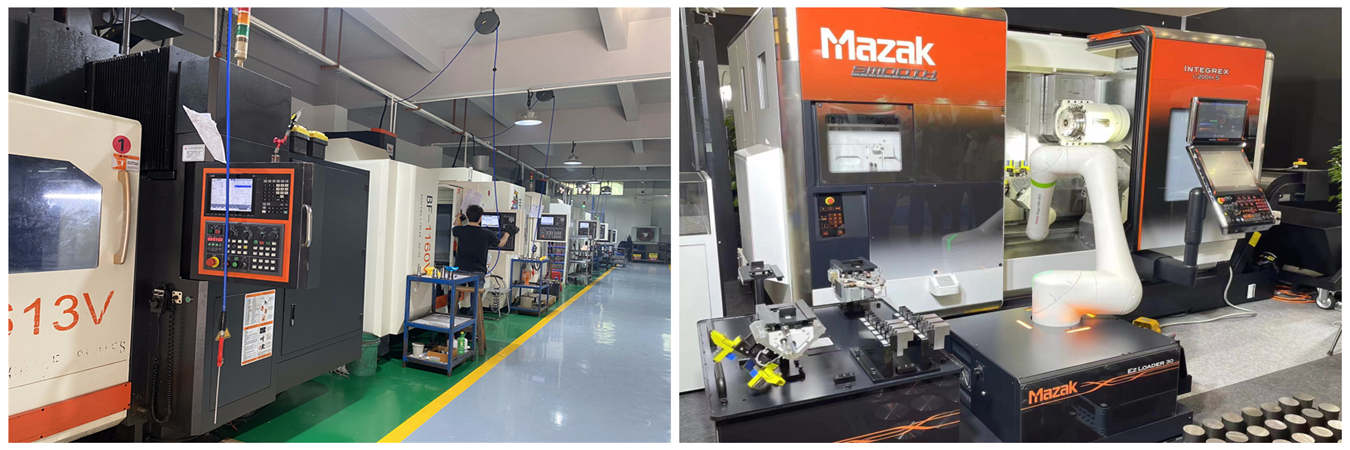
Not all pump impeller manufacturers are equal. Here’s what to look for when selecting a partner for your impeller project.
| Criteria | What to Look For |
| Equipment | 5-axis CNC machining capability—essential for complex closed impellers |
| Material Experience | Proven track record with your required material (aluminum, stainless, titanium) |
| Quality Systems | ISO 9001 certification; CMM inspection; documented processes |
| Balancing Capability | In-house dynamic balancing for high-speed applications |
| Industry Experience | Familiarity with your industry’s requirements (aerospace, marine, industrial) |
| DFM Support | Engineering review to optimize design for manufacturability before quoting |
At Falcon CNC Swiss, we’ve earned our name by precision machining complex components - and we’re right at home with impellers.
What we deliver:
5 axis CNC machining of intricate closed impeller geometries
Materials: Aluminum, stainless steel, titanium, brass
Dynamic balancing in-house: Turbine impellers and turboimpellers
Surface finishing: Polishing, coatings, bead blasting
Quality assurance: ISO 9001 certified; CMM inspection; full documentation
Application experience: Aerospace, automotive, industrial pumps
Need aluminum turbo impellers, stainless pump impellers or titanium turbine impellers? We’ve got the chops to deliver!
The well made impeller is the heart of the pump (fan or turbine). It can largely determine both efficiency, reliability and the life of that equipment. With the background of the types, some general material and manufacturing processes, we can both better specify and better buy appropriate impellers.
Upload your CAD file for a free DFM analysis and quote
Contact our engineering team to discuss your material and tolerance requirements
Explore our CNC machined impeller capabilities and see how we deliver precision for demanding applications
5-axis machining allows the cutting tool to approach from multiple angles, which is essential for closed impellers where blades curve under each other. With 3-axis, you’re limited to straight-line access—fine for simple open impellers but impossible for complex geometries. If your impeller has overlapping blades or tight internal passages, 5-axis is the only way to go.
It depends on the application. For general-purpose pump impellers, Ra 1.6–3.2 μm is standard. For high-efficiency applications like turbochargers or compressors, Ra 0.4–0.8 μm is common because smoother surfaces reduce fluid friction and improve efficiency. Always discuss with your manufacturer—finer finishes add machining time and cost.
If you have a CAD model, a good manufacturer will run a DFM (Design for Manufacturability) review before quoting. They’ll check things like blade thickness (too thin can warp or break), internal corner radii (sharp corners can’t be machined), and access for cutting tools. If your design came from a casting pattern, it may need modifications for CNC machining.
At minimum: material certifications (mill test reports) confirming the metal’s composition, a first article inspection report with actual measured dimensions, and a certificate of conformance. For critical applications, request CMM data files, balance reports, and any non-destructive testing (NDT) results like dye penetrant inspection. A manufacturer that provides documentation without pushback is one you can trust.