English
  日本語
日本語  한국어
한국어  français
  Deutsch
  Español
  русский
  العربية


Mar
Learn More
19

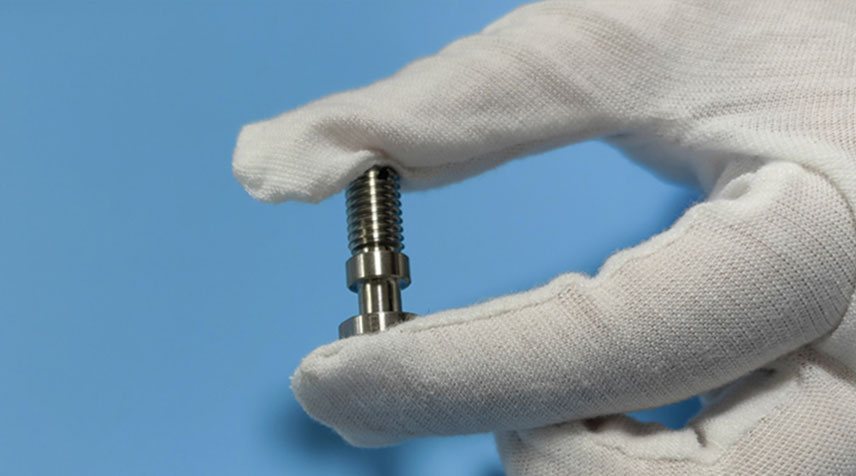
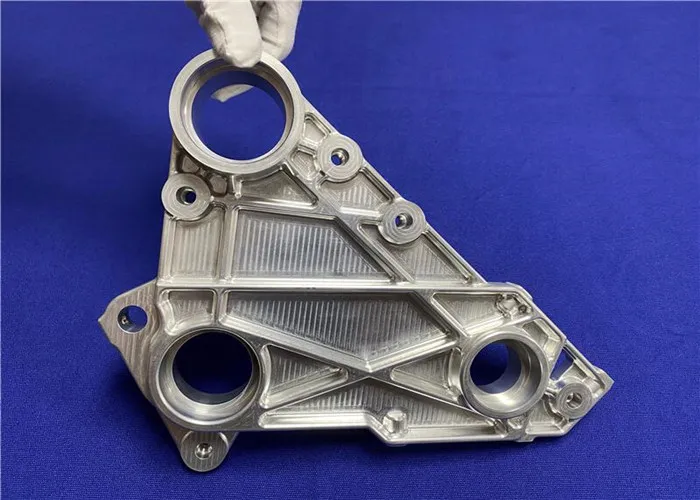
Sensors’ contact pins are a vital part of an electromechanical interface between sensor elements and signal processing electronics. You might need gold-plated contact pins for medical ECG cables, beryllium copper contact pins, which can withstand shocks for automotive applications, or spring-loaded contact pins used in test and measurement applications. The manufacturing process impacts resistance, service life, and signal quality. Falcon CNC Swiss combines various manufacturing technologies like Swiss-style machining, screw machine products, and precision plating to manufacture contact pins at a micron level of precision with an extremely level of consistent electronic performance.
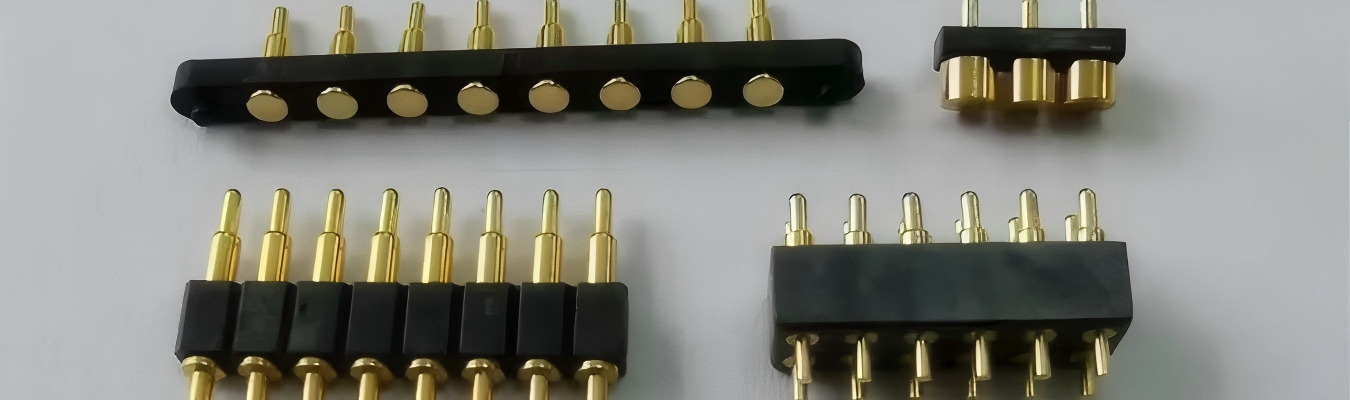
A sensor contact pin is an electrical component, not simply a piece of metal. Sensor contact pins deliver low voltage (often in the range of microvolts or microamps) analog signals, and they need to maintain a consistent amount of contact resistance over a minimum of 10,000 cycles; therefore, they typically exist in conditions that can be considered "harsh" (such as extreme humidity, vibration, and temperature).
Swiss-style automatic lathes (also referred to as Swiss screw machines) are the best manufacturing technique for producing sensor contact pins, particularly those with a diameter of less than eight millimeters and are complex in shape with undercuts, slots, or spring features. By virtue of having a guide bushing that supports the workpiece a few millimeters from the cutting tool, there is virtually no deflection and thus creates a very high degree of concentricity between the pin tip, retention barbs and termination ends. At Falcon CNC Swiss, we offer custom sensor pin manufacturing services ranging from prototype to high-volume sensor pin production with integrated plating and electrical testing capabilities.
Sensor contact pins are conductive parts which can create an electrical connection between there sensor element (i.e. thermocouple, pressure die or photodiode) and either the printed circuit board (PCB), a wire harness or a readout instrument. Sensor contact pins tend are typically used for low current (mA to μA) and low voltage and have low contact resistance (<10 mΩ) as well as low thermal EMF.
Key roles of sensor contact pins in a signal chain:
Signal acquisition – Wiping or spring-loaded contact to the sensor element or electrode
PCB mounting – Solder tail, press-fit, or surface mount termination to PCB pads
Cable interface – Insulation displacement (IDC) or crimp connection to lead wires
Environmental isolation – Sealed within a sensor housing, often with O-rings or potting
As a sensor contact pins manufacturer, Falcon CNC Swiss produces pins for pressure sensors, temperature probes, proximity switches, medical biopotential electrodes, and gas detection modules.
Integrated Precision Electrical Sensors are sensors, or groups of sensors, that utilize the holistic approach to design and manufacture the entire system where the sensor, mounting interface, and downstream electronics operate in unison with one another. This approach includes the reduction of contact resistance, matching of impedances, controlling thermal EMF (Electro-Motive Force) and maintaining mechanical alignment.
Key parameters that Falcon CNC Swiss controls during CNC pin manufacturing and assembly:
| Parameter | Typical Range / Specification | Test Method |
|---|---|---|
| Contact resistance | 10 mΩ (gold or silver plated); 5 mΩ for high-current sensor | 4-wire Kelvin measurement |
| Insulation resistance | 100 MΩ at 500 VDC (between adjacent pins) | Megohmmeter |
| Dielectric withstanding voltage | 500 VAC to 1500 VAC (depending on sensor type) | Hi-pot test |
| Thermal EMF (Seebeck) | 3 μV/°C for thermocouple contacts (copper-copper or matched alloys) | Differential temperature measurement |
| Mating cycle durability | 500 to 10,000 cycles (depending on plating and spring design) | Automated insertion/withdrawal test |
| Insertion/withdrawal force | 0.5N to 5N per pin (spring contact dependent) | Force gauge |
| Contact normal force (spring pins) | 20g to 200g per pin | Force-deflection curve |
Our in-house metrology lab verifies these parameters for every batch of industrial contact pin production. For wholesale sensor contact pins and OEM programs, we provide certified test reports.
Need a reliable sensor pin manufacturer for a new medical device or automotive sensor? Share your electrical and mechanical specifications. Our engineers will recommend optimal material, plating, and contact geometry within 24 hours. Get your free DFM review →
The type of alloy used and how it is finished affect the final electrical conductivity, corrosion resistance, wear life and solderability of the different sensor pins. At Falcon CNC Swiss, the following combinations are the most typical we machine.
| Alloy | Conductivity (% IACS) | Yield Strength (MPa) | Primary Application |
|---|---|---|---|
| C11000 (ETP copper) | 100-101 | 220-260 | High conductivity, general sensor pins, thermocouple contacts |
| C17200 (beryllium copper) | 22-28 | 1000-1300 (aged) | Beryllium copper contact pins for spring force (pogo pins, battery contacts) |
| C36000 (free-cutting brass) | 26 | 340-450 | Low-cost sensor pin manufacturer commodity pins, consumer electronics |
| C19400 (iron copper) | 65 | 400-480 | Automotive sensor pins, high-strength requirement |
| 303/304 stainless steel | ~2.5 | 500-700 | Corrosion resistant contact pins for medical or marine sensors |
| 316L stainless | ~2.5 | 480-550 | Implantable / biocompatible sensor contacts (with gold plating) |
| Titanium Grade 5 (Ti-6Al-4V) | ~1 | 830-970 | High-strength, lightweight, biocompatible sensor pins |
As the common alloy used in the industry for electrically conductive pins that possess good conductivity along with excellent spring characteristics, the preferred material remains beryllium copper grade C17200. After machining, we perform age-hardening (a heat-treating process) of the components to achieve complete transition to the spring temper state.
Plating is a necessary process to protect against oxidization, reduce contact resistance, and ensure ease of soldering. Falcon CNC Swiss offers in-house or certified partner plating services with complete traceability of all materials.
| Plating Type | Thickness | Hardness (HK) | Key Benefits | Best For |
|---|---|---|---|---|
| Gold (hard gold) | 0.5–2.5 μm | 130-200 | Oxidation-free, low contact resistance (10 mΩ), high cycle life (500+ mate/unmate) | Gold plated sensor pins for medical, automotive, test equipment |
| Silver | 2–10 μm | 70-100 | Highest conductivity (5 mΩ), anti-galling, good for high current | Power sensor pins, thermocouple contacts (matched alloy) |
| Nickel (electroless) | 2–5 μm | 180-220许多:Diffusion barrier under gold, moderate corrosion resistance, hard surface | Underplate for gold, industrial sensor pins | |
| Tin (matte or bright) | 3–10 μm | 10-20 | Solderable, inexpensive, low contact force | PCB mount sensor pins (solder tail only) |
| Palladium-nickel (PdNi) | 0.5–1.5 μm | 400-500 | Very hard, good wear resistance, gold alternative | High-cycle automotive sensor pins |
For heat resistant sensor contacts operating above 150°C, we recommend silver plating (which maintains conductivity at high temperature) or nickel plating with a diffusion barrier. For cryogenic applications, gold over nickel is preferred.
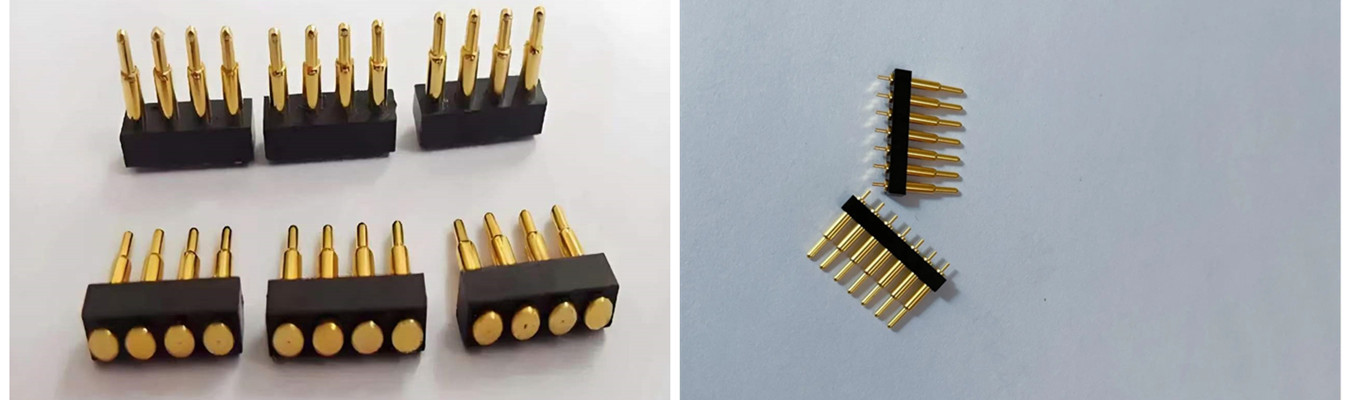
Different sensor applications require different mechanical interface designs. Falcon CNC Swiss manufactures all common types:
With a precision-machined plunger, barrel and spring, pogo pins (spring-loaded contact pins) provide a compliance contact that remains constant in terms of force as the board warps or is vibrated. Important specifications include; spring force: (typically 20 to 200 grams), stroke: 0.5 to 5 mm, current rating: 1 to 5 Amps, contact resistance: (20 mOhm). Spring-loaded contact pins are used with battery testers, medical ECG snap connectors and PCB test fixtures.
contact pins from pressure sensors need to pass through the sensor housing in order to create a pressure seal. So we machine pressure sensor contact pins with glass to metal sealing (GTMS) compatible materials like Kovar and Alloy 52 for matching thermal expansion in hermetic designs or O-ring grooves for non-hermetic designs. These types of contact pins can be found in oil pressure transducers, fuel rail transducers, and HVAC pressure transducers.
There are PCB mount sensor pins that have two types of pins: compliant pins via press-fit (through-hole) as well as SMT (surface-mount contact) pins. The surface-mount contact pins utilize a flat, co-planar pad (COP) machined at the same distance apart as dictated by the PCB footprint tolerance - i.e., coplanarity of less than or equal to 0.1 mm. For compliant press-fit pin(s), we provide an eye-of-needle geometry that is designed to cold weld to the plated through-hole, rather than using solder. Explore our pins and shafts capabilities →
Industrial Sensor Probe Pins Are Generally Larger Than Other Types Of Sensors, And Usually Have Either A Threaded Base Or A Bayonet Lock. Industrial Sensor Probe Pins Are Normally Used In A Thermowell Assembly, For Ph Probes, And For Mounting An Accelerometer. Industrial Sensor Probe Pins Can Be Made Out Of 316 Stainless Steel With Either Gold Or Nickel Coating; Sometimes They Are Made With A Spring Loaded Design That Keeps The Contact Point Consistent.
Falcon CNC Swiss serves customers across five key sectors, each with unique pin requirements.
Automotive sensor connection points need to operate properly while exposed to -40°C and +150°C, sustained high vibration levels, and prolonged exposure to saline water spray. We produce sensor connection points for wheel speed sensors, cam / crank position sensors, knock sensors, and battery temperature sensors. Typical materials used to construct our connection points are beryllium copper (for spring force) or stainless steel (with either a gold or palladium nickel plated finish). All of our processes are compliant with IATF 16949 and include PPAP level 3 documentation.See our automotive precision machining →
ISO 13485 compliant production is required for all medical grade contact sensors, as well as biocompatible materials (such as 316L Stainless Steel, Titanium or Gold Plated Copper Alloys) and packaging that allow for cleanroom manufacturing. We manufacture pins used in ECG/EKG electrodes, pulse oximeter connectors and invasive pressure monitoring catheters. Electropolishing and passivation can be performed to eliminate surface burrs and enhance cleanability.
Industrial sensor probe pins used in factory automation, condition monitoring, and heavy equipment require corrosion resistance (marine/chemical) and high mate cycle durability (10,000+ cycles). We use nickel-plated beryllium copper with a hard gold overplate, obtaining contact resistance after 5,000 contacts 15 mΩ. Explore our precision electronic machining →
As a high-volume sensor pin production specialist, the large volume of sensor pin production we are capable of means we produce between 500000-10 million sensor pins annually for the Automotive and Consumer Electronic markets. The Swiss Machine on which our pins are produced operates continuously with 24/7 production, in-process gaging, and statistical process control (SPC). We also provide wholesale sensor contact pins with kanban delivery and EDI ordering.
Several customers use R and D and test machines and require custom-made pin manufacturing for minimal amounts of these pins (100-5, 000) with extremely complicated features: slots; barbs; knurling; multiple diameter profiles. Falcon CNC Swiss has extensive experience creating large number of different parts in low quantities with no tooling costs. The first article inspection reports (FAIR) for these types of parts are in accordance with AS9102 or as outlined by the customer (s).
As an industrial contact pin production facility certified to ISO 9001:2015, Falcon CNC Swiss implements a multi-stage quality plan for sensor pins:
Incoming material verification – Certifications and positive material identification (PMI) for alloys
In-process inspection – Laser micrometer checks every 30 minutes on critical diameters
First-article inspection (FAI) – Full dimensional report per ASME Y14.5, including geometric tolerances (concentricity, roundness, perpendicularity)
Plating verification – X-ray fluorescence (XRF) thickness measurement; adhesion and porosity tests per MIL-STD-1344
Electrical testing (sample basis) – Contact resistance (low-level, dry circuit per ASTM B667), insulation resistance, dielectric withstanding voltage
Environmental testing (as required) – Thermal shock, salt spray, humidity, vibration per customer specification
For sensor contact pin dimensions as tight as ±0.005 mm on diameter and ±0.01 mm on length, we maintain Cpk ≥1.33. All inspection data is archived for traceability.
In low signal applications, understanding the sensor pins conductivity rating is important. Conductivity is given in terms of the % IACS (International Annealed Copper Standard) with the rating for pure copper set at 100% IACS. The lower the conductivity of the sensor pin, the greater the amount of contact resistance and voltage drop will occur between devices using them.
Typical contact resistance ranges for sensor pins under normal force (50-100g):
| Material + Plating | Conductivity (% IACS) | Expected Contact Resistance (mΩ) | Suitability for Low-Level Signals (μV) |
|---|---|---|---|
| Copper (C11000) + gold | 100 | 5 mΩ | Excellent – minimal thermal EMF |
| Beryllium copper (aged) + gold | 22-28 | 10-15 mΩ | Good – suitable for most sensors |
| Brass + gold | 26 | 10-12 mΩ | Good – cost-effective |
| Stainless 304 + gold | ~2.5 | 40-100 mΩ | Poor – not recommended for low-level analog signals |
| Beryllium copper + silver | 22-28 | 8 mΩ | Very good – but silver tarnishes |
For thermocouple sensor pins, we use the same thermoelement alloys (Type K, J, T, etc.) for the pin material itself to avoid generating spurious thermal EMF at the junction.
We make corrosion resistant contact pins for sensors that operate outdoors, in! marine , or harsh chemical environments. The following is a breakdown of the various materials used in our standard products:
- Stainless steel offers a corrosion-resistant alternative to the brass and nickel-plated contacts, providing (316L or 304) and gold plated (exceeding ASTM B117), 500 hours of salt spray test resistance.
- Nickel-plated brass contacts will also provide resistance to humidity and mild amounts of chemical exposure, (96 - 200 hours) of salt spray resistance when using hard gold.
- Titanium pins offers virtually saltwater corrosion resistance, whether it is unplated or; plated with gold.
In sensors that experience exposures to extreme chemicals (acids, bases, solvents), Inconel 600 or Hastelloy C-276 (with platinum/gold plating) will provide the best heat resistant contacts available. When machining these difficult alloys, Falcon CNC Swiss uses specialized tooling/coolants in our CNC Swiss lathes.
A: Sensor contact pins are conductive components that provide a removable electrical connection between a sensing device (for instance, a die that senses pressure; a thermocouple) and a circuit board or a wire harness. They are designed to have low resistance as well as to maintain the integrity of the signal and withstand environmental conditions.
A: Precision electrical integration is a branch of engineering that designs and manufactures sensor pins, mounting interfaces and signal paths to provide reliable contact resistance, impedance matching, thermal EMF control, and mechanical durability, even when used in real-world situations.
A: The best materials for sensor pins include beryllium copper (C17200) for spring-loaded pins, brass (C36000) for budget -sensitive applications, stainless steel for corrosion resistance, and copper (C11000). Because they have a high conductivity, they are typically plated with hard gold or silver.
A: Pogo pins (spring-loaded contact pins) have a spring-loaded plunger that maintains a constant force in the area of the mating contact, making them ideal for test fixtures, battery contacts and removable sensor modules.
A: Conductivity is indicated by the % IACS. For low-level analog signals, (1 μV to mV), 1% IACS (gold plated copper or beryllium copper) should be used. For digital and/or high-level signals, ½% may be sufficient. Most sensors will function with a contact resistance of 15 mΩ.
A: Yes, Falcon CNC Swiss specializes in creating custom sensor pins from 100 to 10,000. There are no tooling fees for standard Swiss machining. Prototype lead time can be as little as 5-7 days.
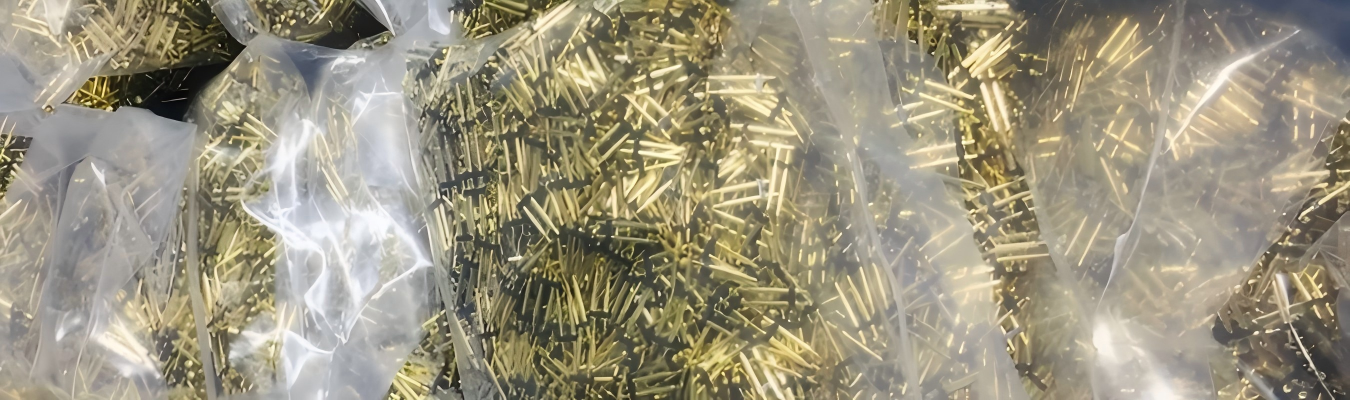
We combine Swiss turning, heat treating, plating, and electrical testing under one roof or with tightly managed partners.
Here’s a summary of our core capabilities for sensor pin manufacturer services:
| Capability | Falcon CNC Swiss Standard |
|---|---|
| Min pin diameter | 0.3 mm (0.012″) |
| Max pin length | 300 mm (12″) |
| Diameter tolerance (turned) | ±0.005 mm (±0.0002″) |
| Concentricity (pin tip to termination) | ≤0.005 mm TIR |
| Surface finish (as-turned) | Ra 0.2 μm |
| Materials in stock | Brass, beryllium copper, copper, 303/304/316L stainless, titanium |
| Plating | Gold, silver, nickel, tin, PdNi – selective or full |
| Spring-loaded pin capability | Plunger, barrel, spring assembly – standard offering |
| Quality certifications | ISO 9001:2015, IATF 16949 (automotive), ISO 13485 (medical on request) |
Our team of Swiss-trained machinists and quality engineers ensures that every pin – whether for a medical ECG monitor or an automotive pressure sensor – meets your electrical and mechanical specifications. Explore our Swiss machined components →
Don’t let poor contact resistance or unreliable connections compromise your sensor design. Contact Falcon CNC Swiss for a no-obligation quote on custom sensor pin fabrication. We provide DFM feedback, plating recommendations, and electrical test validation within 48 hours. Request your quote now →