English
  日本語
日本語  한국어
한국어  français
  Deutsch
  Español
  русский
  العربية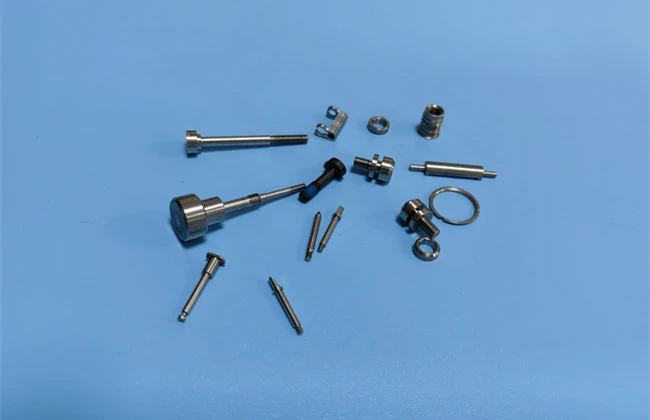


Apr
Learn More
19

The medical, surgical, and high-performance auto parts industry have a strong interest in titanium due to its strength-to-weight ratio, which is unmatched by other metals. This means that titanium parts help planes fly further than ever before; race cars corner faster than ever before, and implanted medical devices work inside the human body without complications. While the requirements for medical-grade titanium fasteners, biocompatible titanium bolts, and surgical-grade titanium bolts are stricter than those for regular metal fasteners, the challenges of machining titanium as a result of its unique atomic structure are just as difficult as machining metals like lead. The combination of high strength and excellent corrosion resistance creates a very challenging environment in which to machine titanium into lightweight, precision fasteners. This article breaks down the steps needed to accomplish the right blend of these characteristics and create high-performance, long-lasting components using titanium fasteners for implants, titanium hardware for medical devices, and biocompatible fastening solutions used in orthopedics, spine, and cardiovascular devices.
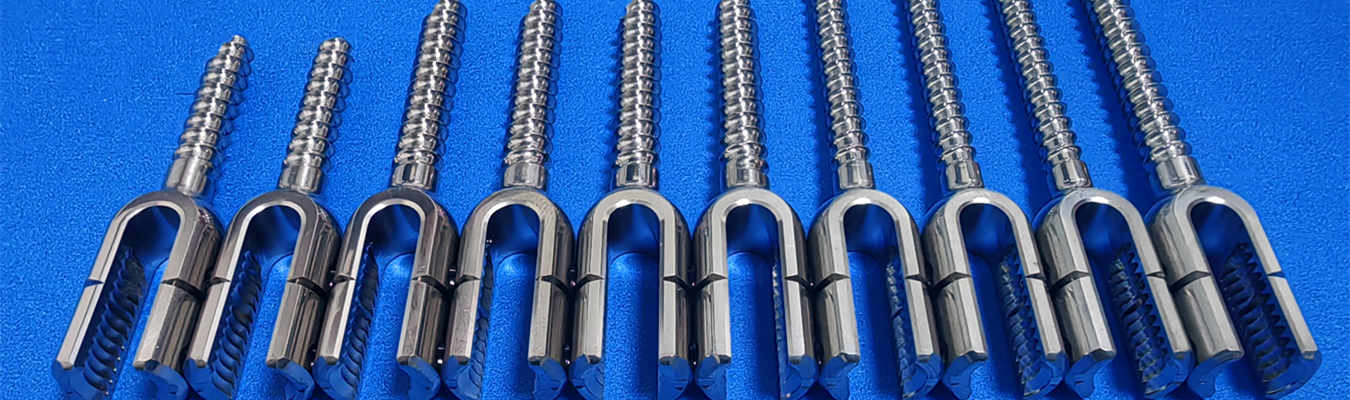
Titanium does not behave like steel or aluminum on the shop floor. Its unique metallurgical makeup fights the cutting tool, often leading to rapid heat buildup and material degradation. Whether you are producing Grade 5 titanium bolts, Grade 2 titanium fasteners, or Ti-6Al-4V medical screws, the same physical rules apply.
In terms of material properties concerning destructive machining, titanium is the best material in terms of reactivity; however, the major drawback of titanium for destructive machining processes is the low thermal conductivity of titanium. When you cut steel, a significant portion of the heat generated by friction will go away with the chips. When cutting titanium, the tool edge remains in contact with the titanium, and therefore the heat generated by friction remains at the cutting edge. The extreme localized temperature at the cutting edge causes two major issues during cutting operations: chip welding and premature wear of the tool.
At elevated temperatures, titanium is very chemically reactive. There is chemical reactivity between the tool and titanium when the titanium bonds to the cutting tool due to elevation of the cutting tool temperature. This creates a condition for a built-up edge (BUE) to form. When a BUE forms, the cutting tool loses its cutting ability, the surface finish of the fastener becomes rough and ultimately the tool will fail completely. For titanium bolts that are corrosion resistant and used in marine or implant applications, maintaining surface integrity is mandatory.
One of the issues when machining titanium is the work-hardening characteristic of titanium. When a cutting tool is cutting titanium, the material immediately adjacent to the cutting tool undergoes plastic deformation. Rather than shearing cleanly as the cutting tool passes through the workpiece, the titanium will become hardened and therefore brittle relatively quickly after being cut. This is especially critical when doing micro machining on titanium or machining small-diameter titanium screws, where there is high cutting force concentrated over a very small area.
If you do not take the proper cutting approach, the hardened layer of titanium will form a wall for your next cut and therefore the next cut will be harder than the first. This increases the cutting force required to cut the workpiece. If your machine setup lacks the required rigidity or torque to push the cutting tool through the workpiece, the cutting tool will vibrate against the hardened layer which will produce inconsistencies in dimensions and poor quality threads.
When machining titanium, it is critical to have a rigid machine. Due to the toughness of titanium, the cutting forces on the cutting tool are very high. If there is any flexibility in the machine or the work-holding setup, the machine will vibrate.
Vibration is detrimental to maintaining tight tolerances. When machining lightweight fasteners, the threads must be accurately cut to avoid galling when the fastener is installed. The introduction of chatter into the fastener will create micro fractures in the material, which will greatly reduce the fatigue life of the fastener. A good approach to control vibration when machining titanium to a tight tolerance is to maintain the shortest possible tool overhang and to use very rigid fixtures to reduce the effects of vibration. Vibration control is essential for high-tolerance machining of titanium.
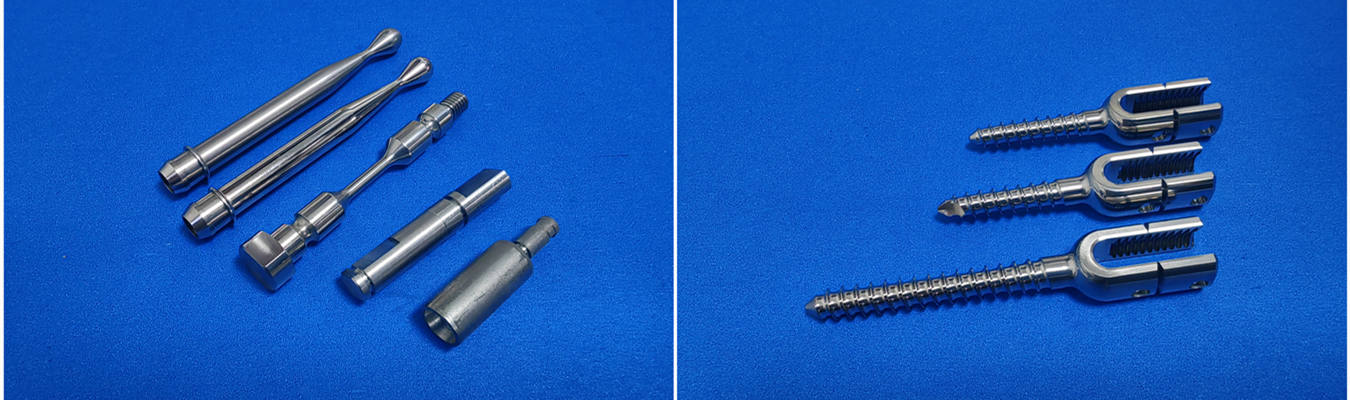
The cutting tool is your primary line of defense against the harsh realities of titanium. You cannot use standard steel tooling for this application and expect results.
Carbide is the most common material used for titanium machining. When selecting a carbide grade, you want to choose one that has a good balance between toughness and heat resistance. Micrograin carbide grades work best for this application because they retain their edge longer and resist the thermal fatigue that leads to tool chipping.
While there are ceramic and polycrystalline diamond (PCD) tools available, these materials are typically too brittle for the interrupting cutting operations required in fastener production. While ceramics can handle high speeds, they do not typically perform well with the vibration produced from making complex threads with small diameters. As a result, carbide is the superior choice for reliability and consistency. This is especially true for custom Swiss precision machined bolts, and precision Swiss turning operations.
The standard tool design geometry will quickly fail when cutting titanium. It is necessary to modify the design to minimize heat generation and friction when cutting titanium:
High Rake Angles (+Rake Angles) elevate chips away from the workpiece surface to reduce cutting forces.
Increased Clearance (c) Angles do not allow the back portion of the tool to rub against the work-hardened material.
Chip Breakers curl the chip and break the chip before it becomes long and stringy.
Use of coatings, such as aluminum titanium nitride (AIN) is ideal for this application as they provide a thermal barrier to protect the carbide substrate tool from the heat produced at the machining interface. Avoid using uncoated tools, as they will have a higher chemical affinity to the titanium than will a coated tool and expose the tool to premature failure.
Speed management is more important than raw speed. Titanium does not respond well to extremely high cutting speeds, which generate too much heat. Instead, use a lower surface footage (SFM) paired with an aggressive chip load.
Chip Load: Keep your feed rates high enough to ensure the tool is always cutting into fresh material, not rubbing on the work-hardened surface.
Depth of Cut: Always ensure your depth of cut is deeper than the work-hardened layer created by the previous pass.
Tool Change Interval: Track tool life closely. If you see the surface finish degrading, change the tool before it chips. A worn tool creates more heat, which makes the titanium harder, accelerating the failure cycle.
Thermal management is the difference between a high-quality part and a pile of scrap. You must remove the heat before it affects the tool or the workpiece.
Traditional flood cooling is rarely enough for titanium. The heat is created exactly where the tool meets the part, and flood coolant often evaporates or deflects before reaching that point.
Through-spindle high-pressure coolant (HPPS) is the gold standard. By delivering the fluid directly to the cutting zone at high pressure, you achieve two things: the heat is removed instantly, and the chips are forcefully flushed away. If chips remain, they get recut, which creates more heat and ruins the surface integrity. For Swiss lathe titanium fasteners and precision turned titanium hardware, HPPS is a must.
Choosing the right coolant formula is critical for lubricity. You need a coolant that provides high lubrication to prevent the titanium from welding to the tool.
Synthetic Coolants: These are excellent for heat transfer but sometimes lack the lubricity required to prevent chip welding.
Semi-Synthetic Coolants: These often provide the best balance. They contain enough oil to improve lubrication while maintaining the thermal properties of water-based fluids.
Always monitor the concentration of your coolant. If the mixture is too thin, you lose lubrication; too thick, and you lose cooling capacity.
In some cases, dry machining or MQL (Minimum Quantity Lubrication) can outperform standard coolants. Cryogenic machining, which uses liquid nitrogen, is a newer approach. It freezes the material at the cutting edge, which keeps the titanium from reaching the temperatures where it becomes gummy and reactive. This significantly extends tool life and can lead to a superior surface finish, though it does require specialized hardware and safety protocols.
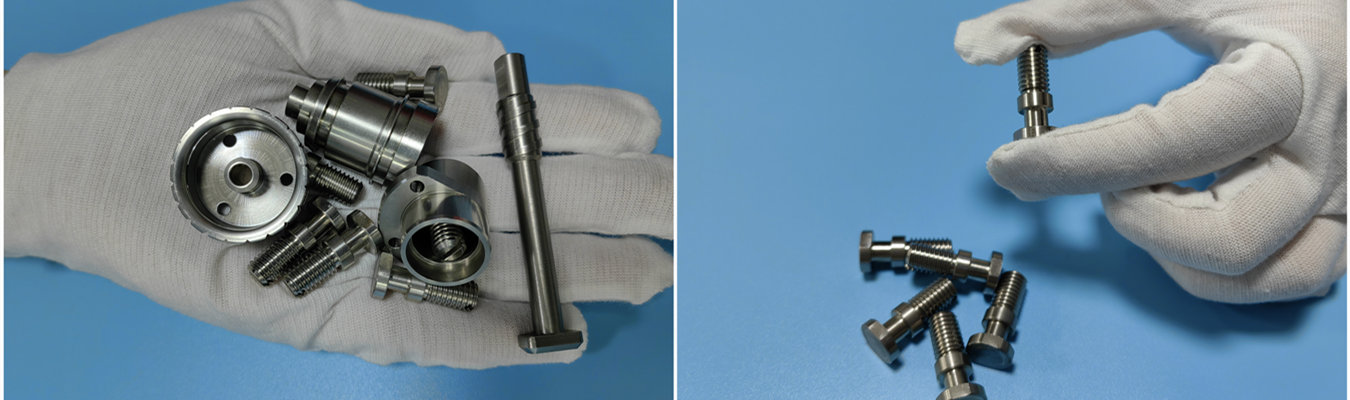
Creating a fastener requires more than just removing material. You are creating a structural component that must survive extreme stress and vibration. This is especially true for orthopedic titanium screws, dental implant fasteners, spinal fixation titanium bolts, cardiovascular device fasteners, medical instrument titanium screws, and prosthetic titanium hardware.
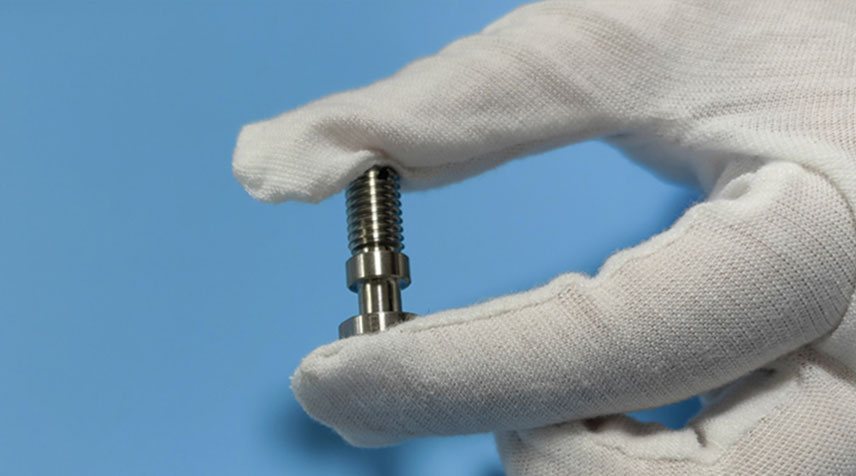
Typically, Titanium fastener thread sections are where most of the failure occurs. For example, thread rolling is sometimes a better option than cutting (on high strength surgical bolts). Cold working the threads through rolling results in the thread surface being placed under compression; this, in turn, has a positive effect on the fatigue resistance of thread sections. This is an important issue to consider when manufacturing titanium fasteners used in implantable devices.
When cutting threads, the most important aspect is to maintain pitch accuracy throughout the entire thread cutting process. Since titanium has a very high modulus of elasticity, the material will elastically recover from the cutting operation slightly. Thus, when designing for elastic recovery, care must be exercised to utilize proper compensating offsets to provide for the anticipated elastic recovery of the material. Failure to produce a correctly pitch threaded fastener will produce stress concentrations and increase the risk of fastener fatigue.
When customizing titanium screws, special care should be taken while calibrating threads so that the highest integrity of the custom fastener can be produced.
The surface finish of the titanium fastener has a direct impact on the fatigue life of that fastener. After machining, there will be a work hardened material layer that is extremely thin, hardened, and brittle, creating an opportunity for cracking.
Fine Turning: The last machining operation will be the final finish pass with the lightest cut possible to remove any work hardened material from the prior roughened machining operation.
Shot Peening: Shot peening involves using small, hard balls to impact and compress the surface of the completed bolt. The impact and compression will close many of the micro defects produced during machining and will substantially increase the ability of the bolt to resist cracking.
To be in compliance with regulatory requirements (i.e., ASTM F136 and ASTM F67) for long-term implantable devices made from medical grade Ti-6Al-4V ELI fasteners, the above-mentioned finishing processes must be completed.
Consider the fasteners used in critical engine mounts, satellite chassis, or spinal fixation titanium bolts for fusion surgery. These components face constant vibration and extreme temperature fluctuations (or corrosive body fluids). In these applications, manufacturers use high-strength titanium alloys like Ti-6Al-4V medical screws and commercially pure titanium bolts (ASTM F67). By using rigid Swiss machined titanium parts processes, high-pressure coolant strategies, and precision medical hardware design, these manufacturers produce parts that meet strict Surgical and FDA standards. Without careful control of the machining process, these fasteners would fail prematurely, putting the entire assembly or patient at risk.
Whether you require OEM medical fasteners, small batch titanium fasteners, or bulk titanium alloy machined fasteners, the principles remain the same. Many leading custom medical titanium screws and biocompatible titanium bolts are now produced using precision swiss turning titanium on swiss lathe titanium fasteners equipment, allowing for high tolerance titanium machining of small diameter titanium screws down to micro sizes.
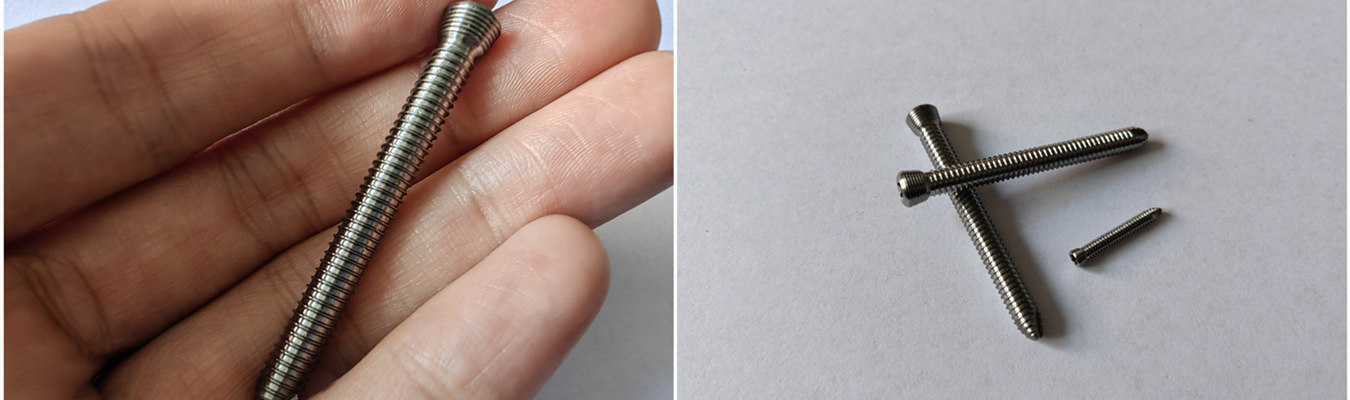
Mastering the machining process of Titanium is a system issue; no one component of the machining process will make up for a poorly designed process unless all three components are in sync. You must take into account each of the three primary components of making Titanium parts; i.e. the rigidity of the machine itself, the geometry of the cutting tool, and lastly, the delivery method of the coolant will all work together in an effective titanium machining process.
In addition to understanding how Titanium reacts to work hardening and how to manage temperature, you will be able to produce the level of precision necessary for lightweight fastening solutions.
In certain critical design applications, such as jet engines or the human spine, utilizing Titanium can produce a significant weight savings in comparison to other materials. However, Titanium must be treated with appropriate care while machining on the shop floor.
With the correct method of fabricating titanium parts manufacturers of high-performance engineering products are obtaining a competitive advantage over their competitors. Manufacturers of medical devices that make use of titanium fasteners, Biocompatible fasteners, and custom swiss machine bolts should invest in rigid swiss lathes, optimise their tool paths, and provide proper coolant delivery.
Falcon CNC Swiss manufactures custom medical titanium screws, precision turned titanium hardware, and OEM medical fasteners for critical medical and industrial applications.
We support:
Small batch titanium fasteners
Custom thread titanium screws
High tolerance titanium machining
Swiss lathe titanium fasteners
Micro machining titanium bolts
Our engineering team can help optimize manufacturability, tolerance control, and thread precision for your custom medical titanium bolt manufacturing project. Request a Quote for Your Titanium Fastener Project Today!